Hepper is reader-supported. When you buy via links on our site, we may earn an affiliate commission at no cost to you. Learn more.
How to Aerate Water Without an Air Pump: Our Vet Explains

In this article
Having good aeration in your fish tank is pretty crucial. Without enough oxygen dissolved in the water, fish can’t breathe, which is, of course, not a good thing at all. However, getting enough aeration going in the aquarium can be a little tricky, especially if you don't have an air pump.
Maybe there is not enough room in your aquarium for an air pump, maybe you cannot afford one, or maybe you just don’t want one. At any rate, not knowing how to aerate water without a pump is a problem that is easily solved, so let’s talk about it right now.

What Is Water Aeration?
Water aeration is the process of increasing or maintaining the oxygen saturation of water in both natural and artificial environments. Aeration techniques are usually used to ensure that pet fish have enough oxygen in their water. A lack of oxygen is detrimental to all fish and while some fish can tolerate low levels of oxygen better than others, no fish can survive in an environment devoid of oxygen.
Determining how much oxygen is dissolved in your aquarium is fairly simple. An oxygen test kit can be used to collect a sample of your aquarium water to determine its oxygen levels. On most test kits, this value is written as DO - an abbreviation for dissolved oxygen. The amount of oxygen your fish needs depends on their species, age, and size.
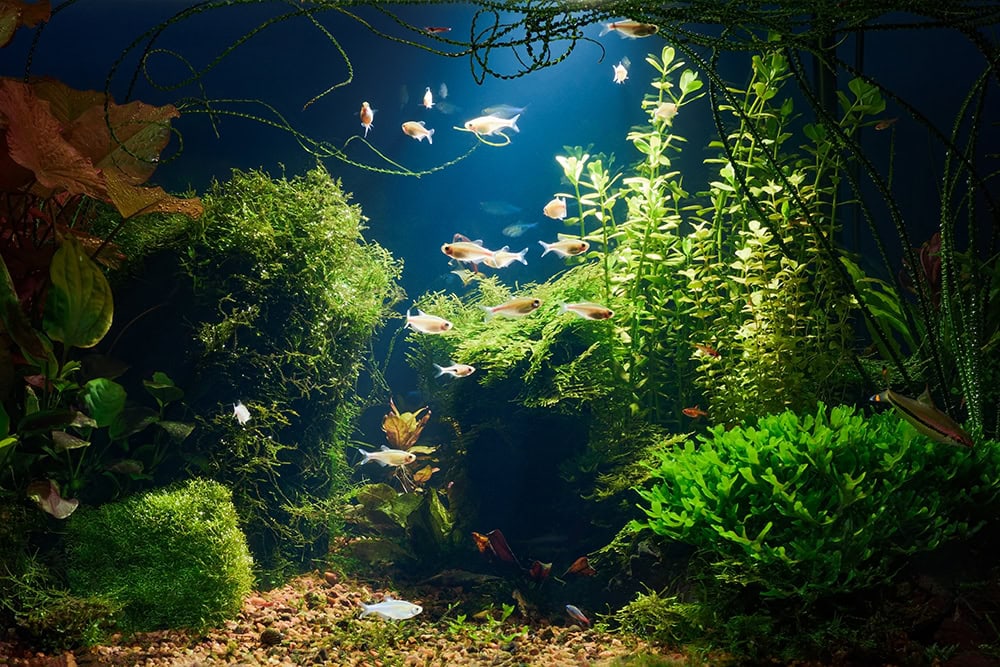
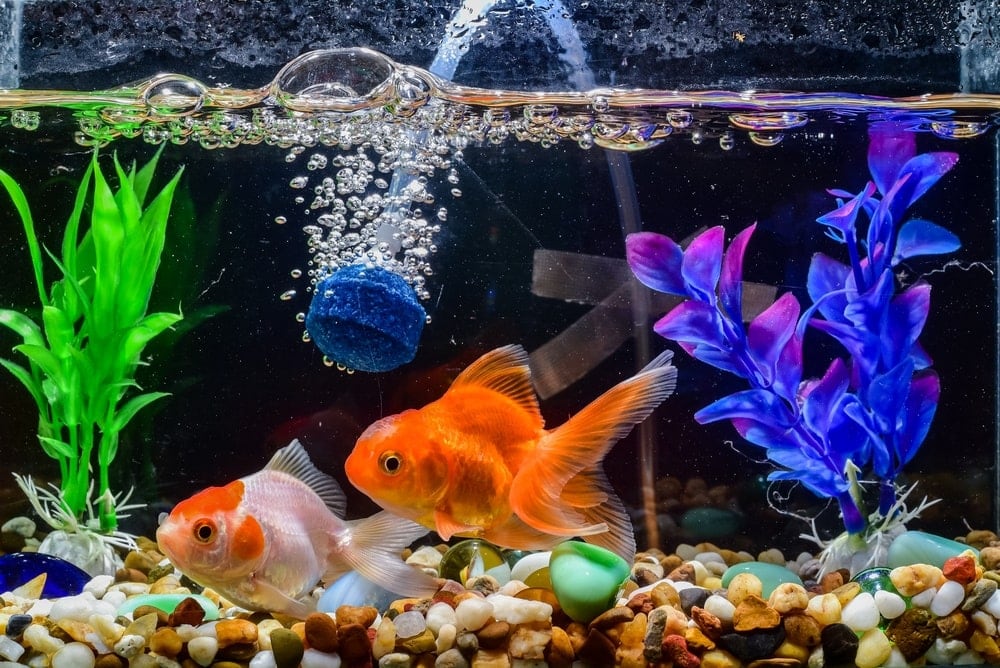
For most fish keepers, air pumps attached to an airstone are the most popular means of aeration. Contrary to popular belief, the bubbles these machines produce are not what aerate the water. Instead, the mechanism of aeration is that the rising bubbles agitate the surface of the water in your aquarium. This increases the surface area of the water at the surface, allows carbon dioxide to escape, and allows oxygen to enter the water.
However, in the absence of an air pump, you might be wondering if there are other ways to aerate your water. Fortunately, there are, and some of them are easy fixes that you might be able to instantly attain with a few minor adjustments in your aquarium.

The 6 Ways to Aerate Aquarium Water Without a Pump
There are some things that you can do in order to increase the overall aeration of your tank. Follow these tips below in order to get the job done.
1. A Good Filter
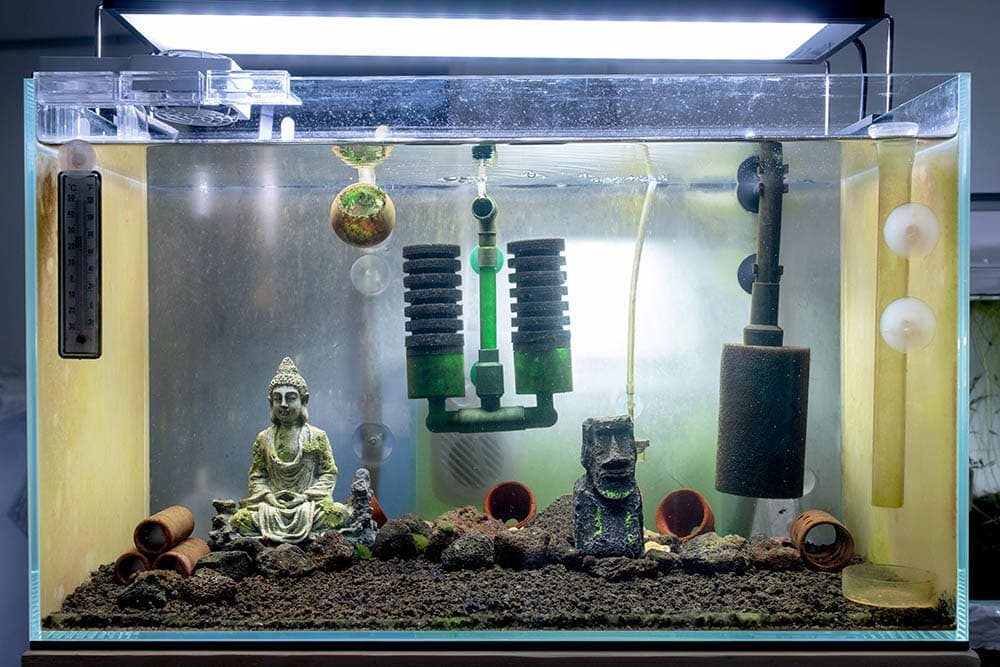
The filter you have is by the far the best tool at your disposal when it comes to aerating your aquarium. Sponge filters work much in the same way as an air pump does, with the added bonus of providing filtration as well. Canister filters can be used to aerate the water by aiming their outlet in a way that it gently agitates its surface. By doing so, a filter offers the same functionality as an air pump does, as it uses its current to agitate the water surface. Hang on back filters can aerate the water by producing a waterfall of sorts near their outflow, this helps shake the water’s surface.
The importance of a good filter is crucial here: a filter not strong enough for your aquarium might not aerate it well enough. On the other hand, a filter too strong for your aquarium might generate a whirlpool effect, which can be stressful for some fish. Nonetheless, most filters can easily aerate an adequately stocked aquarium for you with proper installation and maintenance. The rule of thumb is that the water flow in a filter should be 5 to 7 times the volume of the aquarium.
2. Aquarium Shape
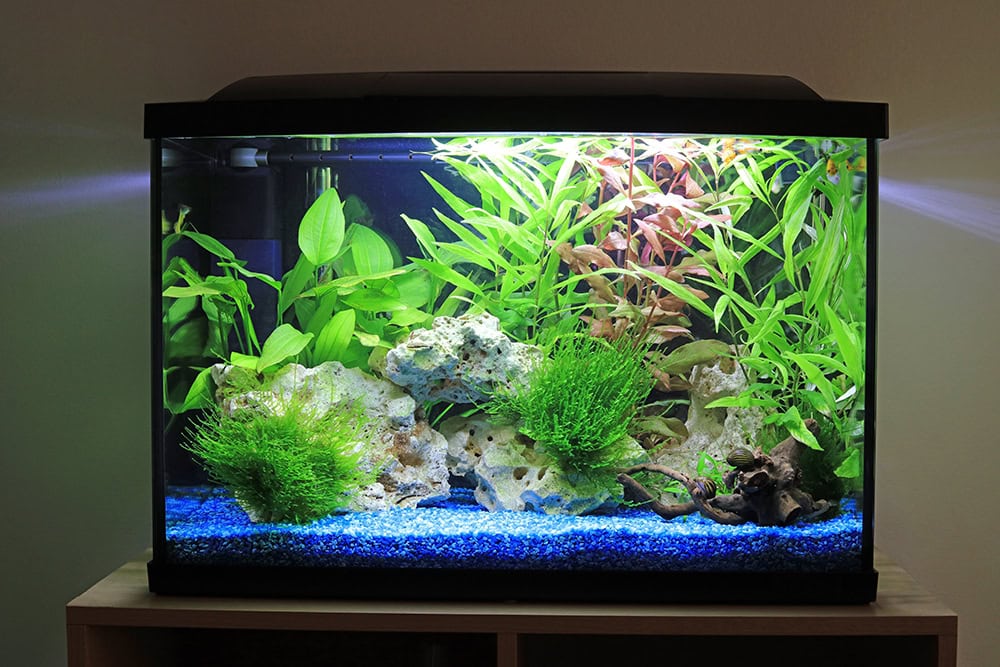
Your aquarium’s shape will play a big role in determining the amount of oxygen the water can hold. Oxygen exchange happens at the water’s surface. A square or rectangular aquarium has a greater surface area exposed to atmospheric air when compared to a bowl or cylinder of the same volume. This is because the narrow neck of a fish bowl or a cylindrical object (such as a vase) reduces the surface area of the water at the top. In other words, opting for the correct aquarium is key when it comes to ensuring that your fish are housed in adequately aerated water.
3. Plants
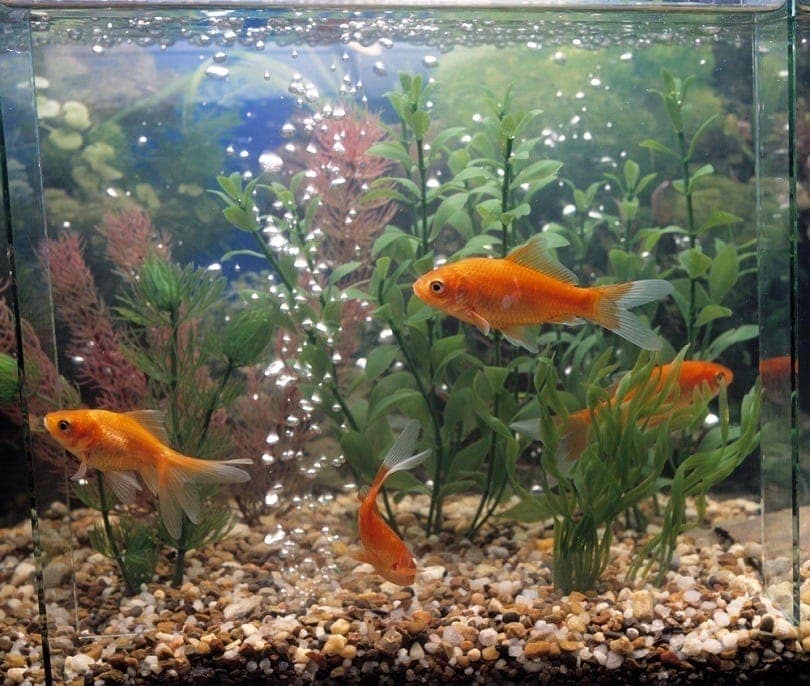
One of the easiest ways to make sure that your fish tank has enough oxygen and aeration is to insert more plants into the water. Plants perform photosynthesis, the conversion of carbon dioxide into oxygen. So, the more plants you have in the water, the more oxygen is created.
Now, plants obviously do not produce any kind of water flow or movement in the water column, but this is not very important because the plants are already spread out along the bottom of the tank. The water flow is not so important because the plants are already in the places where the aeration needs to be.
Keep in mind that light is a precursor of photosynthesis, and therefore photosynthesis stops at night. At night, plants breathe much like fish do (they take in oxygen and release carbon dioxide). In a heavily planted aquarium, oxygen levels are lowest early in the morning after a night of respiration and no photosynthesis. In such an aquarium, oxygen levels peak around the afternoon. Therefore, as a fish keeper, you should run oxygen tests on your aquarium at these times to see how drastic the change (if any at all) is.
If you want your fish to breathe properly but you’re unsure of exactly how to create the best aeration setup in your aquarium, you should check out our best-selling book, The Truth About Goldfish, on Amazon. It covers everything about tank setup and maintenance for all types of goldfish housing!

4. Temperature
Colder water naturally holds more oxygen than warmer water does. If your fish are tolerant of lower temperatures (for example, goldfish prefer cooler temperatures), you can slowly decrease the temperature in their aquarium to help aerate the water more.
Important: you should NOT change the water’s temperature by more than 1 or 2 °C (1.8 - 3.6 °F) per day. A sudden change may inadvertently shock and stress your fish. Gradual temperature changes are advised for your fish’s safety. It is best to adjust the temperature by 1 °C (1.8 °F) every 12 hours until you reach the desired temperature. You should expose fish to temperatures they are not comfortable with. For example, tropical fish should be housed in cold waters.
5. Restock or Resize
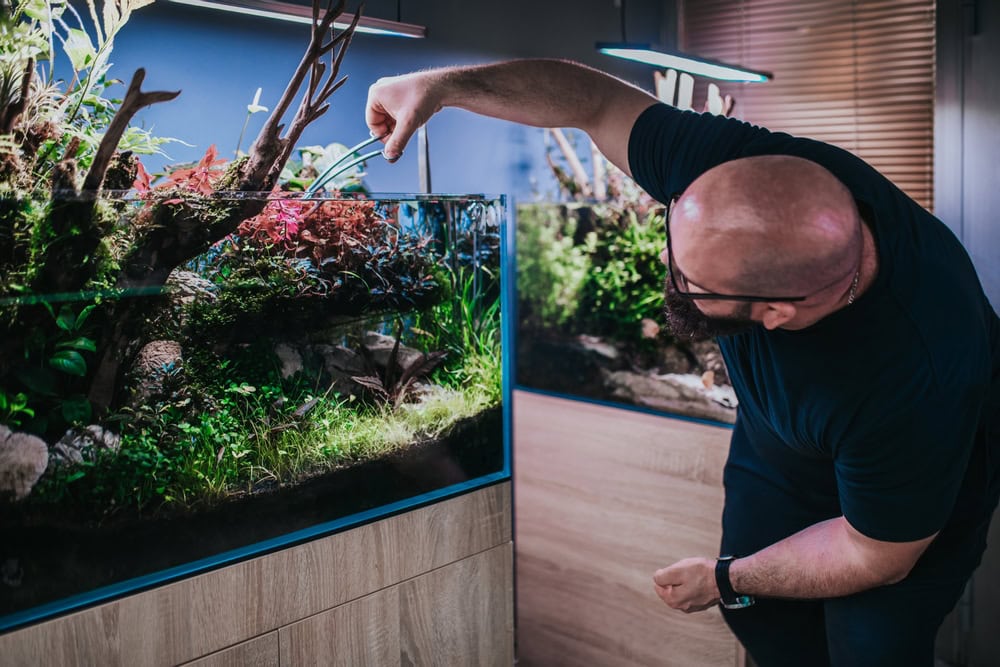
If your aquarium is overstocked, you might find that despite your best efforts, your water isn’t aerated well enough for your fish. In such a scenario, you can restock your aquarium by moving some fish to a new tank (thereby reducing the bioload in the aquarium). Alternatively, you can opt to upgrade your aquarium while maintaining your stock levels.
6. Subsurface Aerators
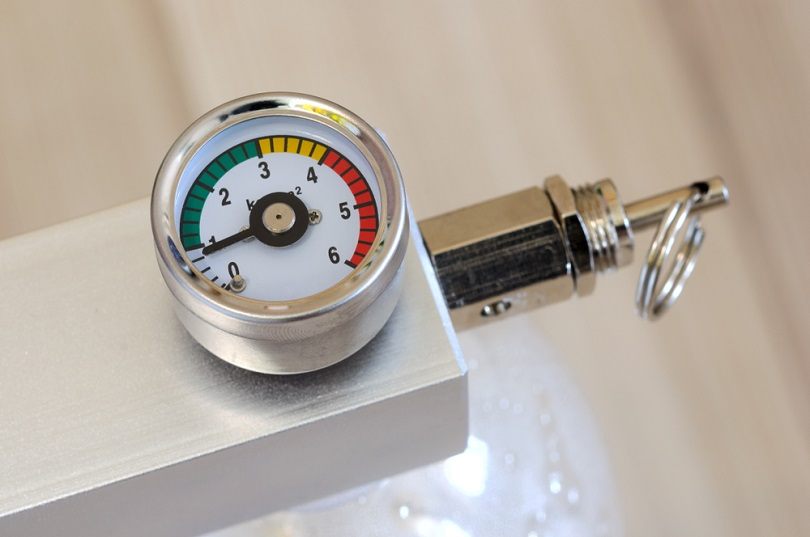
As a final resort, you can use air compressors to directly deliver oxygen into your tank. These products cost more than air pumps and function differently. While the function of an air pump is to just push air into an aquarium, an air compressor works by first compressing air into a concentrated form of oxygen bubbles of varying sizes, which are then pumped directly into the aquarium via a hose. The hose attaches to a diffuser, which allows the oxygen to directly enter your aquarium.
If you opt for this choice, then you should look for a fine bubble air compressor. In industrial standards, such a compressor creates bubbles smaller than 2 millimeters in diameter. There are two main advantages of fine bubbles over large bubbles:
- Fine bubble diffused aeration is able to maximize the surface area of the bubbles and thus transfer more oxygen to the water per bubble.
- Smaller bubbles take more time to reach the surface so not only is the surface area maximized but so is the time each bubble spends in the water, allowing it more opportunity to transfer oxygen to the water.
As a general rule, smaller bubbles and a deeper release point will generate a greater oxygen transfer rate.

Conclusion
Aeration is a necessity for all pet fish, and something which can be tricky to comprehend at times. Many pet owners panic if their aquarium doesn’t have an air pump attached to it. However, at times, a quick fix may be all that’s needed to ensure their aquarium is aerated adequately. In this article, we’ve discussed some ways in which this can be achieved.
See Also:
Sources
Featured Image Credit: you sheng, Shutterstock
Get Hepper In Your Inbox


Pet care tips from our vets and experts, straight to your inbox.
You may opt-out at any time. View our Privacy Policy for more information.
Dr. Luqman grew up with an extreme fondness for animals and turned a childhood dream into reality by becoming a veterinarian. His goals are now focused on helping pet owners understand their pets better in order to ensure the best quality of life for all pets globally. He is passionate about wildlife, exotic pets, pet owner education, and animal welfare. Luqman has 3 years of professional experience working with a variety of animal species. He has skills in demonstrating proper animal husbandry and training some exotic species, such as parrots. Additionally, he has decades of personal experience with keeping many exotic pets: freshwater fish, parrots, songbirds, chickens, ducks, turtles, and hamsters.
Dr. Luqman grew up with an extreme fondness for animals and turned a childhood dream into reality by becoming a veterinarian. His goals are now focused on helping pet owners understand their pets better in order to ensure the best quality of life for pets all around the world. His passions are wildlife, exotic pets, pet owner education, and animal welfare.
Education
Luqman received his degree from Universiti Putra Malaysia.
Experience
Luqman has 3 years of professional experience working with a variety of animal species. He has skills in demonstrating proper animal husbandry and training some exotic species, such as parrots. Additionally, he has decades of personal experience with keeping many exotic pets: freshwater fish, parrots, songbirds, chickens, ducks, turtles, and hamsters.
Join the conversation
Ask a question, share your story, or send private feedback.