Hepper is reader-supported. When you buy via links on our site, we may earn an affiliate commission at no cost to you. Learn more.
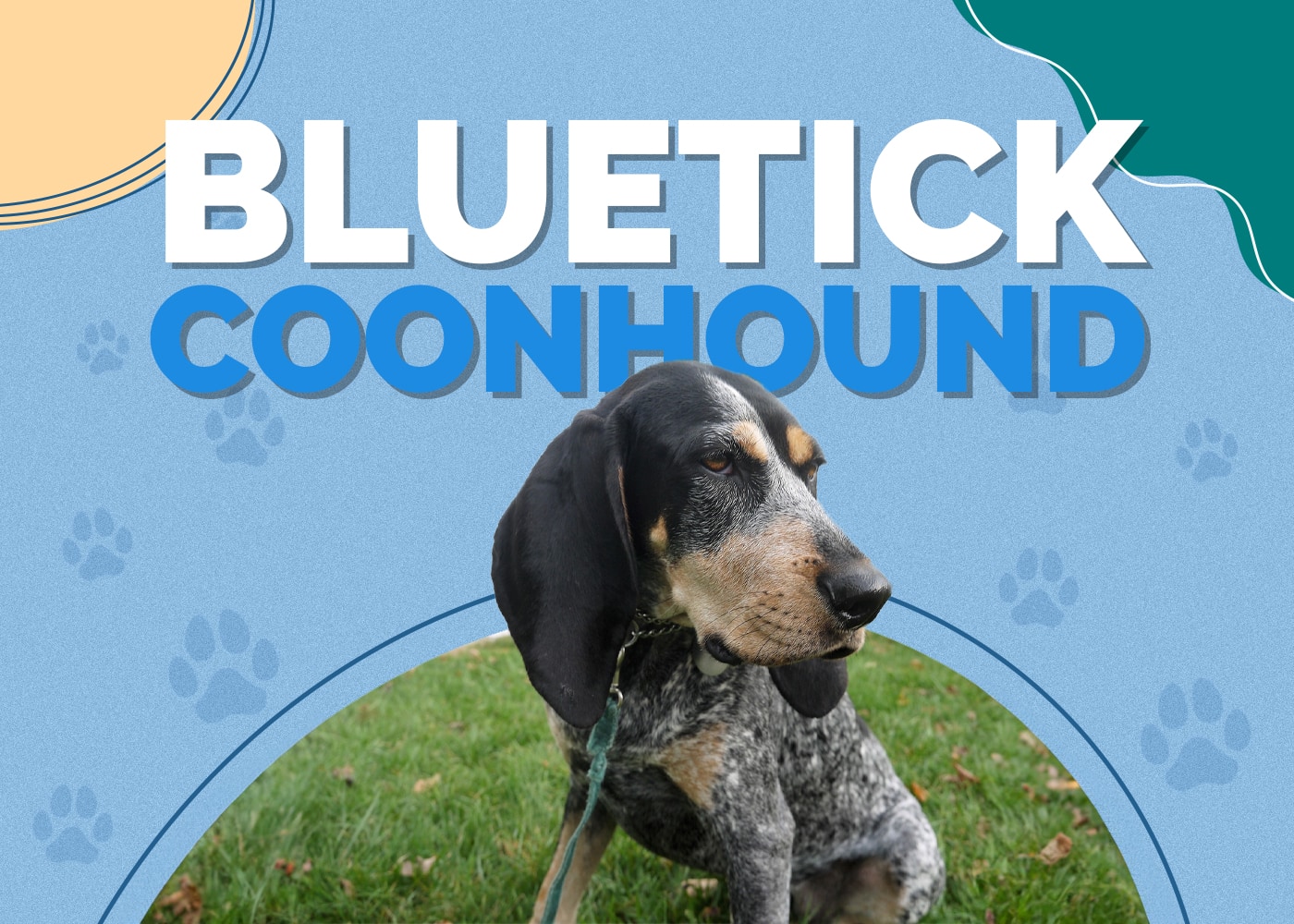
Bluetick Coonhound Breed Info, Pictures, Personality & Facts
In this article
Breed Overview
Height:
Weight:
Lifespan:
Colors:
Suitable for:
Temperament:
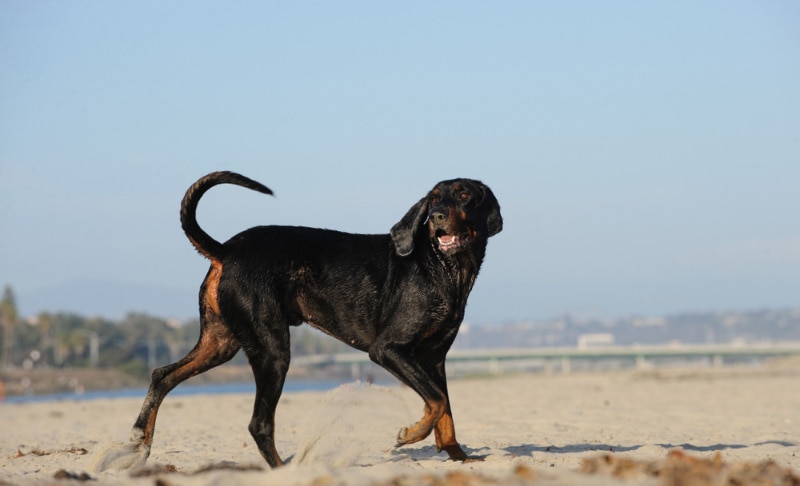
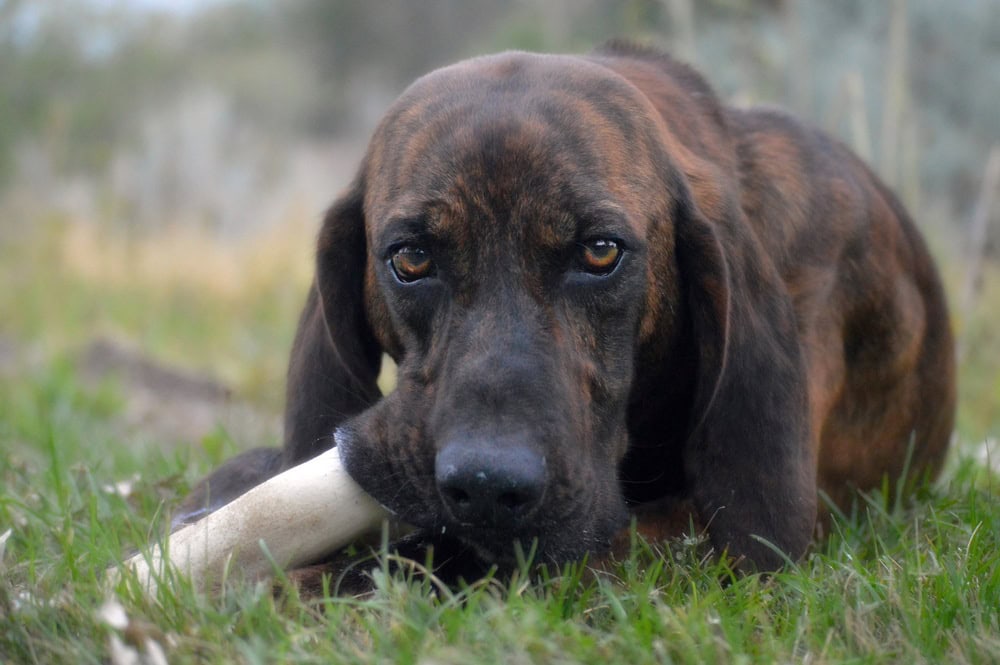
The Bluetick Coonhound is as all-American as any dog gets. Originating in Louisiana, these dogs have become an important part of Southern culture, regardless of whether they’re used for hunting. They love to hunt and will chase anything that runs away from them; they’ll chase it until they either run it down or put it up a tree.
It’s not something that you can train out of them, and you'll be aware of their strong prey drive from day one. Even though any small animal will be viewed as a potential quarry, Coonhounds make fantastic family pets. You'll have your hands full during the training process, and they’re better suited for backyard living than apartment life.
If you’d like to know more about these unique dogs, our guide below will fill you in on everything you need to know.

Bluetick Coonhound Puppies
Bluetick Coonhound Characteristics
Bluetick Coonhounds are hunting dogs. That doesn’t mean they’re always acquired for that purpose or don’t make fantastic pets, but they have a deep desire written in their genetic code to chase down smaller animals.
So, even if it’s not your intention to do so, you should realize that you’re bringing home a hunting dog when you adopt one. If you’re not prepared to deal with that, you’re better off going with another breed.
However, Bluetick Coonhounds make great pets. Understanding their nature will ensure you and the dog are good fits for one another.
3 Little-Known Facts About the Bluetick Coonhound
1. They Are Vocal Dogs.
A Bluetick Coonhound is bred to chase a small animal (usually a raccoon) into a tree. The chase often causes the dogs to get way ahead of their humans, far out of their eyesight range.
So, how do Coonhounds let their owners know where to find them? They bay, of course. Their rumbly howl can be heard for long distances, which is great for hunting but not ideal for making friends at your apartment complex.
With training, you can limit how much they howl. Just know that the temptation to unleash a guttural cry will always be bubbling underneath the surface. The good news, however, is that it makes them excellent guard dogs.
2. A Bluetick Coonhound Is the Official Mascot of the University of Tennessee.
Bluetick Coonhounds are such an important part of Southern culture that the University of Tennessee has adopted them as its mascot. “Smokey” is the official canine representative of the university, and he appears at every football game.
The dogs are just as tough as the players on the field, as evidenced by when one of the Smokeys stood up to Baylor’s mascot—a live bear.
3. They’re Renowned for Having “Cold” Noses — but That Doesn’t Mean What You Think.
The Bluetick Coonhound’s nose feels the same as any other dog's, and it’s not any colder to the touch. So, why is having a cold nose considered such a prized attribute of these dogs?
The phrase refers to their ability to pick up on and follow old scents. While many breeds can follow a fresh trail, Coonhounds are one of the few that can track an odor that’s several days old or more.
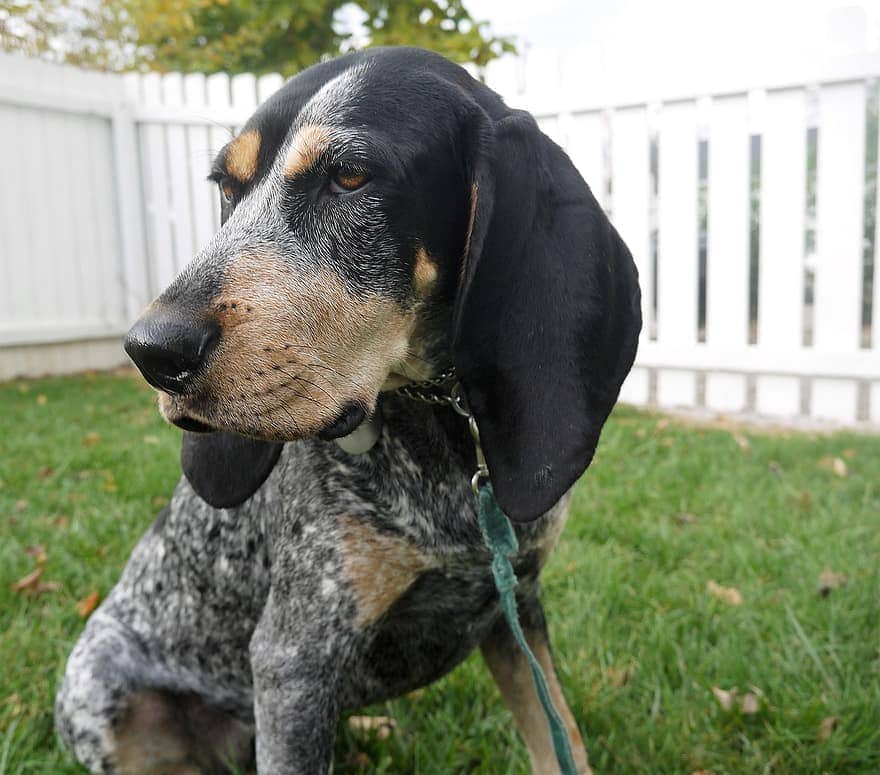

Temperament & Intelligence of the Bluetick Coonhound 🧠
Perhaps more than many other breeds, a Bluetick Coonhound’s temperament will depend in large part on how well they’re socialized as a puppy. If socialization is done well, they will make goofy, loving companions that are fiercely devoted to their owners and guarded yet welcoming toward strangers.
If done poorly, you’ll have a dog that’s suspicious of everyone and isn’t likely to become too attached to anyone. They’re incredibly intelligent, but they often have a hard time focusing on a single person or object for a significant length of time. They’re easily distracted by interesting scents in the area, so you’ll always have competition for their attention.
This can make training difficult, but they’ll learn quickly when focused on you. Blueticks do well in obedience competitions, so the extra effort is well worth it. Fortunately, they seldom use their formidable intelligence to undermine their owners and are not prone to rebelliousness. You’ll just have to be more interesting than all the smells in your backyard.
Are These Dogs Good for Families? 🏡
If properly socialized, Blueticks make fantastic family pets. They’re loving and patient with children and love nothing more than clowning around with the little ones in the backyard.
Just be careful with them around small children. While they’re not prone to aggression, they are prone to rambunctiousness and can easily bowl over a toddler without meaning to. You should also be careful around elderly family members, especially if they have balance or mobility issues.
Older kids should love them, and you may need their youthful exuberance to tucker out the dogs. However, assuming they get enough exercise during the day, they will likely enjoy curling up on the couch with you.
They’re protective of their families, which makes them fantastic guard dogs. They won’t just let you know that there’s an intruder downstairs; they’ll alert the whole neighborhood.
Of course, if you can’t control their vocalization, you’re not likely to make friends with the neighbors, so they may be better suited for families in rural areas.
Does This Breed Get Along With Other Pets? 🐶 😽
Again, so much depends on socialization in this regard. If you raise a Bluetick Coonhound with other small animals from the time they’re a puppy, they can be taught to accept others without issue.
Generally speaking, you don’t want to introduce a Coonhound to smaller animals that could be perceived as prey. That could end poorly for the other pet.
They’re usually tolerant of other dogs. They’re bred to hunt as part of a pack, after all. However, you may see some jostling for rank, so it’s important not to let that get out of hand.
Things to Know When Owning a Bluetick Coonhound
Although Bluetick Coonhounds are common in the South, they’re not well-understood. Below are essential tips on properly caring for these pups.
Food & Diet Requirements
This is an energetic breed, and they need food that will provide enough fuel to power them through their day. Look for a kibble that lists real meat as its first ingredient and has no less than 25% protein. Avoid animal by-products, as they’re usually made from low-grade meat.
Carbs are also important, but you must feed your dog the right ones, such as complex grains and high-quality fruits and veggies. Avoid cheap fillers like corn, wheat, and soy. Ingredients like cranberries, spinach, and fish are all excellent.
Coonhounds are active pups, but they can still get overweight and need daily exercise. Adults can eat two meals daily, but don’t let them free-feed. Also, avoid giving your dog too many treats or scraps.
Bluetick Coonhounds are prone to bloat, so don’t let your dog scarf down their food, and limit their activity after mealtimes. You may even need to buy a special bowl to slow them down as they eat.
Exercise 🐕
Coonhounds are bred to be distance runners, and they’ll appreciate all the exercise you can give them. If you don’t give them enough stimulation (about an hour a day), you could start experiencing behavioral problems.
However, once you give them the necessary exercise, they’re relaxed animals. They love to watch TV after a good workout. They do well in obedience competitions, which challenge their minds and bodies. Similarly, they thrive in agility sports, and installing poles, ramps, or tunnels in your backyard will provide endless entertainment.
Mental stimulation is also critical. Instead of handing them a puzzle toy or a stuffed Kong like you would with other breeds, you need to challenge their noses. Consider hiding food around the house and letting them sniff it out.
Training 🦮
Training a Bluetick Coonhound is extremely important. It can also be highly frustrating. It’s not because the dogs are rebellious or stupid; it’s just that they’re endlessly distracted. You’re competing with every smell in the world for their attention, and you’ll often lose.
If you can hold their focus, you’ll find that they love to learn and can be taught to do just about anything. One of the best ways to train them is to incorporate their sense of smell as much as possible. Many trainers try to get them to obey visual commands, but using their noses is much more effective.
For example, rather than just showing them the treat you’ll use as a reward, let them smell it. In addition to proper training, socialization is critical. Introduce them to as many people, places, and animals as possible while they’re puppies. Making them comfortable around smaller animals while they’re young will save you grief once they’re fully grown.
Grooming ✂️
Bluetick Coonhounds are low-maintenance dogs in terms of grooming. Their short, slick coats aren’t especially prone to shedding, so all they need is an occasional brushing. Bathing isn’t needed often either unless the dog finds something disgusting to roll in outside (and they will).
They do love to run through the brush, so you should check them for thorns, burrs, and other foreign objects and be sure to keep their paws and ears clean. It’s also essential to use a quality flea-and-tick repellent.
You’ll need to brush their teeth once a week and trim their nails as needed (they usually file them down on their own, however).
Health and Conditions ❤️
Bluetick Coonhounds are healthy dogs that are not prone to many illnesses. However, they’re vulnerable to a select few, such as:

Male vs Female
Males are significantly larger than females; they’re a few inches taller and as much as 20-30 pounds heavier. Females generally mature more quickly and can be easier to train. Males are often goofier and more playful.
Opinions are split as to which sex makes a better hunting dog. Some hunters believe that males are more tenacious, while others think that females are more single-minded (meaning they won’t stop to pee on every tree). Ultimately, this comes down to how the dog is trained more than anything else.
Also, it should be noted that all the characteristics above can be affected by spaying or neutering the dog as a puppy.
Conclusion
Bluetick Coonhounds are the quintessential Southern dog, and although they’re excellent hunting companions, they make great family pets. They're loving, loyal, and ridiculous, but they’re all business when it matters.
You’ll need to be confident in your training abilities since they have difficulty focusing on anything other than what’s happening inside their nostrils. They also have high prey drives, so they might not be suitable for homes with small animals.
Overall, Bluetick Coonhounds are fantastic pups, and they’ll quickly ingratiate themselves into your family. Best of all, if you have a tree in the backyard, there’s a good chance they’ll have a new surprise waiting up there for you every day.
See also:
Featured Image Credit: Pixabay
Get Hepper In Your Inbox


Pet care tips from our vets and experts, straight to your inbox.
You may opt-out at any time. View our Privacy Policy for more information.

Nicole is a lover of animals of all sizes but is especially fascinated with the feline variety. She’s the proud mom of Baby, a Burmese, and works every day so he can relax in the sunshine or by the fire. She’s always had a cat in her home and has spent countless days with others, observing behaviors and softening up even the grouchiest of the lot. Nicole wants to share her kitty expertise with you so you and your cat can live happy, healthy, and care-free.
Join the conversation
Ask a question, share your story, or send private feedback.