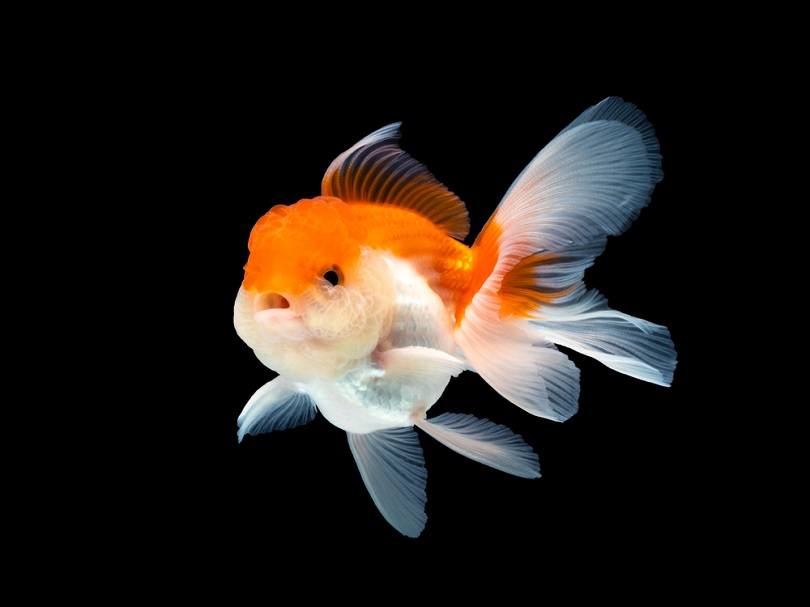
If you’ve ever noticed your goldfish making unusual, tremor-like, or shaky movements, you may have wondered what the behavior was that you were witnessing. Goldfish can do all kinds of things that seem strange to us, so it’s certainly not unusual to look into your goldfish’s tank and think, “What's going on?”
It’s common knowledge that people can have seizures, and even dogs, cats, and other mammals can have seizures. But have you ever wondered if the unusual behavior you saw your goldfish exhibiting could have been a seizure? Can goldfish even have seizures? Goldfish having seizures is incredibly rare, keep reading as we explain further.
Can Goldfish Have Seizures?
Yes, goldfish can have seizures—but seizures and seizure disorders in fish are grossly understudied. In fact, most, if not all, studies related to fish having seizures are studies where fish had seizures stimulated for the sake of studying antiseizure medications or the effect that seizures can have on the brain.
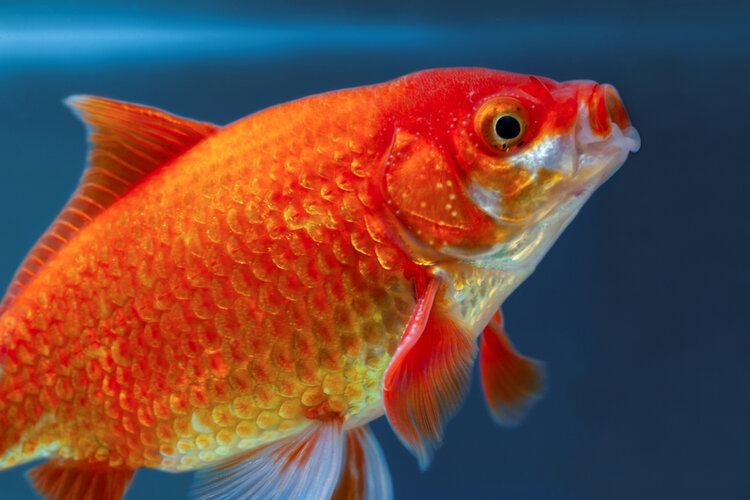
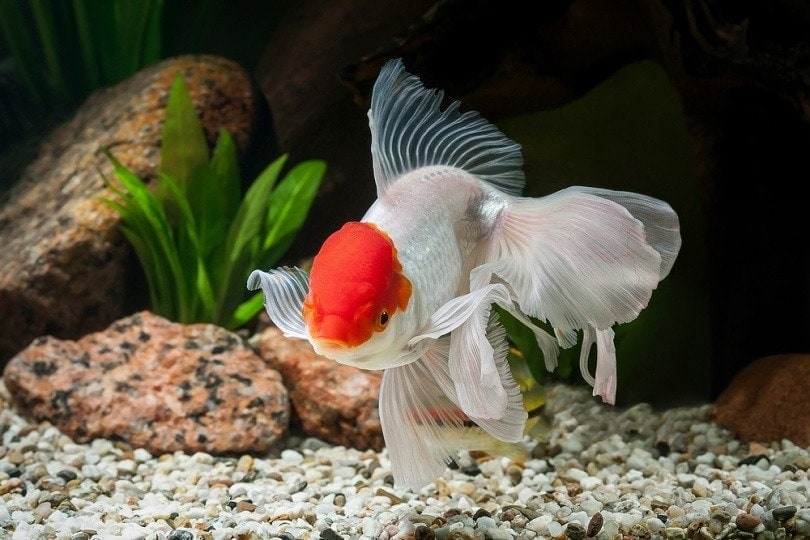
Image By: Dmitri Ma, Shutterstock
Goldfish are smarter than they’re often given credit for and the old belief about them only having a memory that last 3 seconds has been debunked. But we still have a lot to learn about the way goldfish’s brains work. They have more primitive brains than humans, with a heavy focus on instinct and survival while human brains focus on instinct and survival with a heavy dose of emotional and social needs. Regardless of the layout of the brain, though, seizures are caused by inappropriate electrical activity within the brain, so most animals with complete brains could have seizures, including goldfish.
What Causes Seizures in Goldfish?
Seizures in goldfish are somewhat mysterious, but there have been some suggested causes:
Infection or illness: Bacterial, viral, or parasitic infections may lead to seizures due to stress, oxygenation problems, or interference in the normal functioning of the brain. It’s also possible for goldfish to develop tumors, which could also cause seizures.
Fear or being startled: It’s possible that a sudden fright or startle of a goldfish could cause a brief brain “overload”, causing misfires of nerves and creating seizures. Being startled could be caused by sudden loud noises on, in, or near the tank, sudden bright or flashing lights, or even being suddenly attacked or chased by a tankmate.
Stress: Stress in goldfish can be caused by many things, including poor water quality, an overstocked tank, lack of places to hide, relax, or feel safe, and illness.
Changes in water temperature or parameters: Goldfish are extremely hardy fish, but they are still susceptible to shock from rapid changes in environment or water temperature, like during transfers and water changes. They also can have difficulty adjusting to or maintaining health in an environment with water quality problems. If you believe your goldfish may be having seizures, checking your water parameters is probably the first place you should start.
What Can I Do if My Goldfish Has a Seizure?
If your goldfish has a seizure, the best thing you can do for them is to try to determine the cause. There is nothing you can do to stop a seizure while it is happening and it’s possible you won’t be able to prevent more from happening.
If you think your goldfish is having a seizure, do the following:
Immediately check water parameters with a full test kit. Write down your results in a log and make any adjustments needed to your water parameters. Depending on your results, you may need to perform a water change or add chemicals to the water.
Write down everything. It might feel silly while you’re doing it, but it’s the best way for you to monitor the event and any future events. What happened leading up to the seizure-like behavior? Did your goldfish get any new foods that day? Did you recently add a new tankmate? Any information regarding your tank, goldfish’s food, and even behavior during the event can be helpful. How long the behavior lasted and what exactly your goldfish was doing during the possible seizure can be beneficial. Keeping track of dates and how long an event lasts will help you monitor if future events are the same or different.
Check expiration dates on all of your tank products. Make sure your goldfish’s food is still in date, as well as any tank chemicals you use.
Check-in with your aquatics vet if you have one. Aquatics vets can be difficult to find, but if you already have an established relationship with one or can find one near you, calling them about odd behavior is perfectly acceptable. They may want to see your fish for an exam, but they also may be able to give you some guidance over the phone of what their thoughts on the behavior or event are.
What Else Could My Goldfish Be Doing?
There are quite a few goldfish behaviors that could be confused with a seizure:
Flashing: Flashing is exhibited when a goldfish suddenly begins swimming rapidly and erratically around the tank, often bumping into or scraping against objects in the tank. Flashing is a sign of itchiness and is a classic symptom of ich but can be caused by a variety of parasites and illnesses.
Breeding: Breeding goldfish behavior is most often confused with bullying, but it is erratic and unusual behavior. Usually, this behavior consists of one or more male goldfish chasing a female, often bumping or nipping near her vent. For breeding purposes, this is to stimulate the female to release eggs for the male to fertilize. The erratic chase of breeding can be extremely unusual, though, and may even look like one fish chasing or bullying a sick or injured fish as the female attempts to escape from the male’s pursuit.
Stress: Stress in goldfish can exhibit itself in many ways, including unusual swim patterns such as swimming rapidly or erratically, seeming confused, or seeming to be looking for a way out of the tank.
Disorientation: Disoriented goldfish may be seen swimming into the tank glass or objects in the tank. They may also be seen swimming upside-down or sideways, or just having difficulty staying in the same swim pattern as they cross the tank. This can be caused by swim bladder problems, infection, or other illnesses.
Air gulping: This behavior can be normal for goldfish and isn’t always a sign of a problem. Goldfish have the ability to breathe oxygen from the air, they do not have to pull oxygen from the water. Some goldfish just like to swim to the top of the tank and take in big gulps of air, but it can also be a sign of bad water quality or oxygen problems. Take account of your tank and try to determine if your filtration and oxygenation are adequate for your tank.
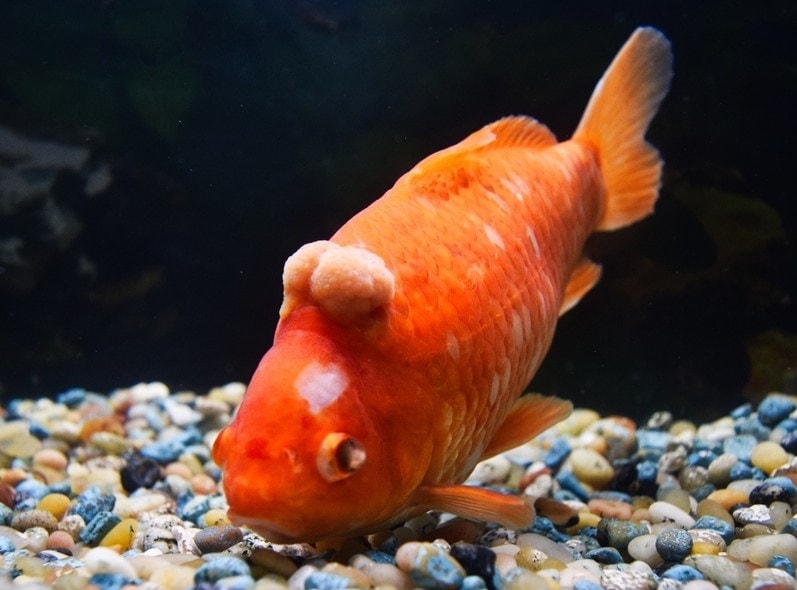
Listlessness: Goldfish are regularly active, so if you notice your goldfish spending a lot of time near the bottom of the tank, check for signs of poor water quality and illness. Listlessness can be lying still near the bottom of the tank, but it can also look like unusual twitching or trembling movements near the bottom of the tank as well.
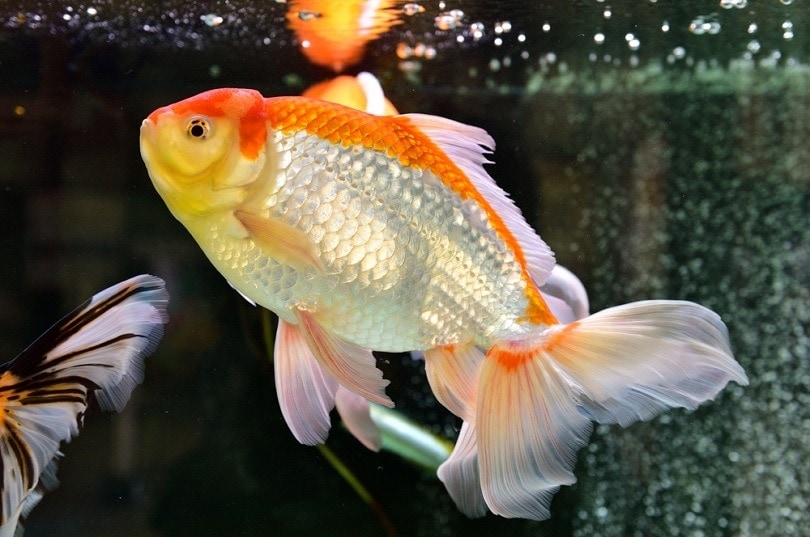
Image credit: Benson Kua, Wikimedia CC 2.0
In Conclusion
Goldfish having seizures is incredibly rare, so rare that it isn’t something that’s actively studied. There are a lot of things you can watch for, though, and that’s a great starting point. If you feel like your goldfish’s quality of life is being negatively impacted by seizures or seizure-like activity, the best place to start is by talking to a veterinarian to determine a course of action. There may be a simple parasite or infection treatment that you can do, or there may be something more serious going on with your goldfish.
If you suspect your fish is sick and want to ensure you provide the right treatment, we recommend that you check out our best-selling and comprehensive book The Truth About Goldfishon Amazon today.
It has entire chapters dedicated to in-depth diagnoses, treatment options, a treatment index, and a list of everything in our fishkeeping medicine cabinet, natural and commercial (and more!)
Lindsey discovered her passion for fish keeping after a junior high school field trip to the Shedd Aquarium in Chicago. Prior to becoming Editor-in-Chief of It's a Fish Thing, Lindsey studied marine biology at the University of California-Santa Cruz. She loves goldfish, tetras, and mystery snails, and recently began experimenting with a saltwater aquarium.
Join the conversation
Ask a question, share your story, or send private feedback.
Rate this post*Required to post. Only our editors see your rating.
Thanks — got it!A human reviews every reply, so it’ll appear here once it’s approved.
Many people don’t know if betta fish suffer from seizures. Like human beings, betta fish have seizures, and the most unfortunate thing is that many don’t survi…
Fish are seemingly simple and straightforward creatures—they only have a small environment to spend their entire lives in. Goldfish will randomly dart around t…
Every so often, you may be watching your goldfish and observe one of them begin to open its mouth incredibly wide, splay its fins in all directions as if stret…
Tumors on goldfish have a habit of popping up out of nowhere, which can be startling and concerning for their owners. Why did they develop? Is there anything y…
They do indeed! Most animals need some time to "recharge their batteries," and goldfish are no exception. FACT: Goldfish actually sleep with their eyes open be…
You look in your tank one morning and realize (with horror) that something is really wrong with your fish. For a second, you think it is dead. Running up to th…
Ever found yourself asking the question, "Why is my goldfish swimming upside down?" If you look in your tank only to see this, it doesn’t necessarily mean they…
If you have perhaps accidentally let your goldfish pond freeze solid during the wintertime, you may be wondering if your goldfish could survive. The simple ans…
Goldfish are usually known as very docile and social fish, but some goldfish break the mold. Aggressive and bullying behaviors can be stressful for all of the…
I've got some bad news: Your goldfish may have come to you with more than fins, scales, and a cute face, and it is likely to have little invisible pests (and t…
Goldfish are lively fish and should be swimming around the tank. If you find that your goldfish is spending most of its time laying at the bottom of the tank,…
These oldie goldies all lived to be over 2 decades old. Some more than double that. Wow! However, such extreme lifespans are uncommon. As goldfish owners, can…