Hepper is reader-supported. When you buy via links on our site, we may earn an affiliate commission at no cost to you. Learn more.
5 DIY Elevated Cat Feeding Stations You Can Make Today (With Pictures)
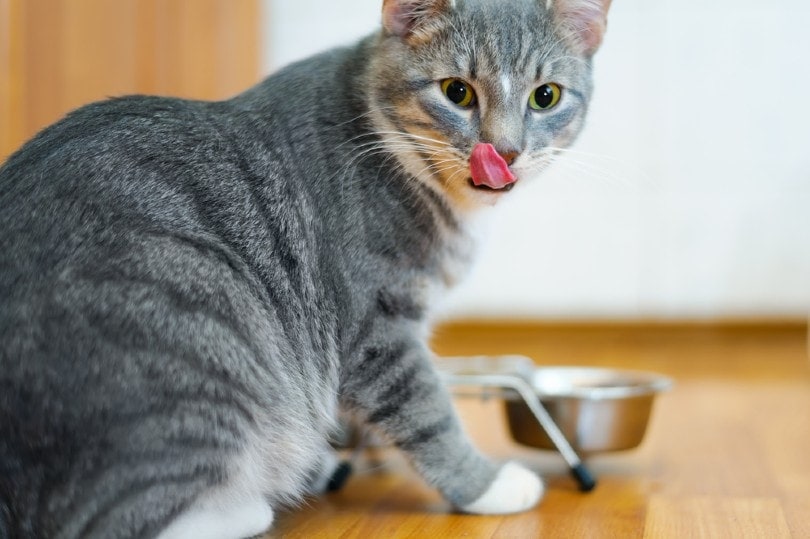
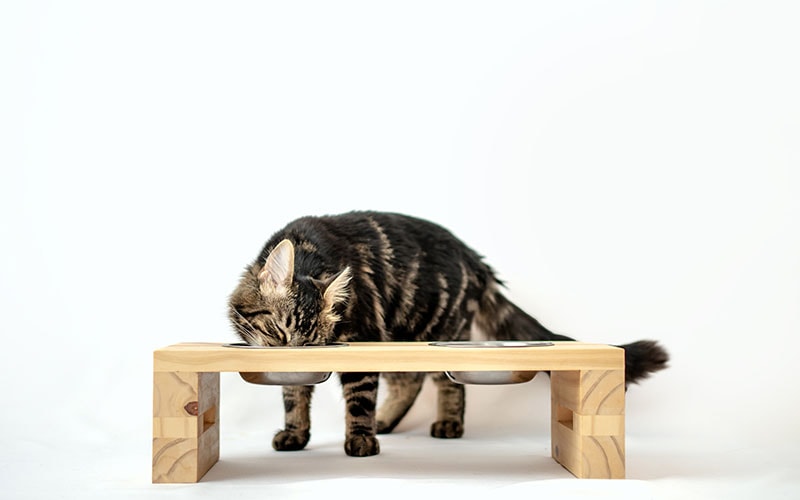
Finding ways to encourage your cat to eat and drink enough is necessary for many cat owners. Some cats consistently don’t drink and eat enough, and one way that owners find works to encourage their cats to eat and drink more is by introducing a raised feeding station.
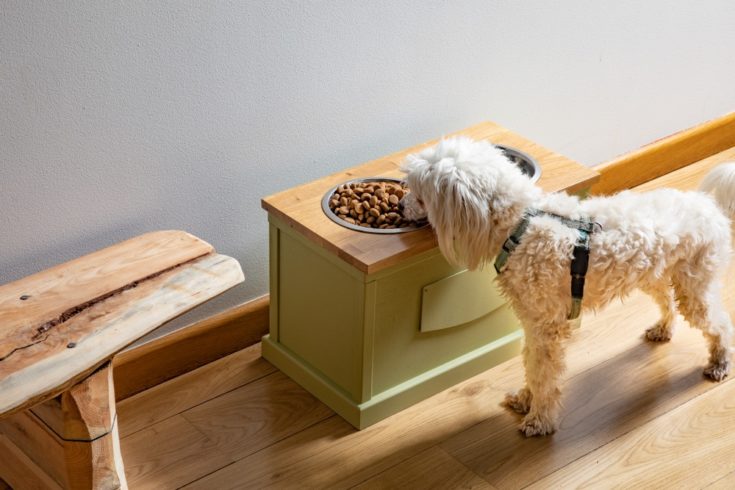
Raised feeding stations can enhance comfort for your cat while they eat and drink, and they can be customized to suit your space and your cat’s size. You can even customize them to accommodate bowls of multiple sizes. Whether you want a raised feeder that stores your cat’s food or one that suits your home décor, there’s an option for you in this article.

The 5 DIY Elevated Cat Feeding Stations
1. Sturdy DIY Raised Feeder by Garrison Street Design Studio
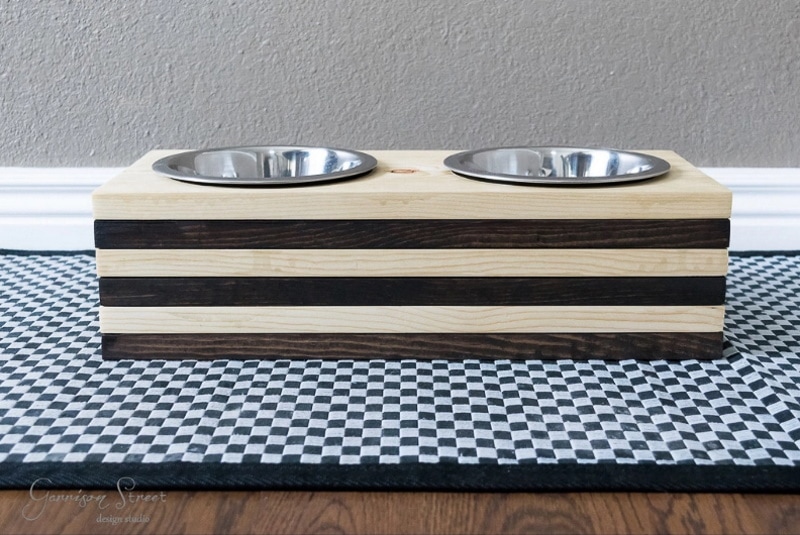
| Materials: | ½” boards, wood glue, paint, or stain |
| Tools: | Jigsaw or hole saw, miter saw, sander, tape measure |
| Difficulty Level: | Moderate to hard |
For someone with scrap wood lying around and a couple of power tools, you can have this raised feeder made in just a few hours. You can determine how tall you’d like the feeding station to be by stacking boards. You can stain or paint the boards and stack them in an alternating fashion, giving them a professional, high-quality appearance.
For this project, you should be comfortable using power tools, including a jigsaw or hole saw. You need to make several precise cuts to complete this feeder, making this DIY project border more complicated than what the average garage DIYer is comfortable with.
2. Simple DIY Pet Feeder by The Inspired Hive
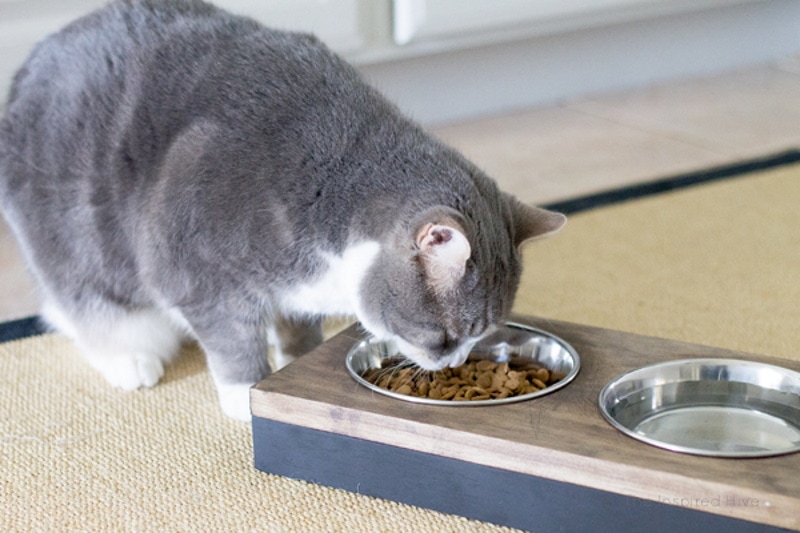
| Materials: | 1” x 2” board, pine wood board, paint or stain (optional) |
| Tools: | Circular saw, jigsaw, nail gun, tape measure |
| Difficulty Level: | Easy to moderate |
As long as you have access to power tools, this is a pretty easy DIY-raised feeding station for your cat. The best part is that if you follow the instructions, it’s the perfect height for just about any cat without making adjustments and customizations.
If you have scrap wood, you may be able to make this project work with minimal alterations, but you’ll still need access to a jigsaw to create the holes for the bowls in the wood, which elevates this from an easy to a moderately difficulty project.
3. Terracotta Raised DIY Bowl Holder by Instructables
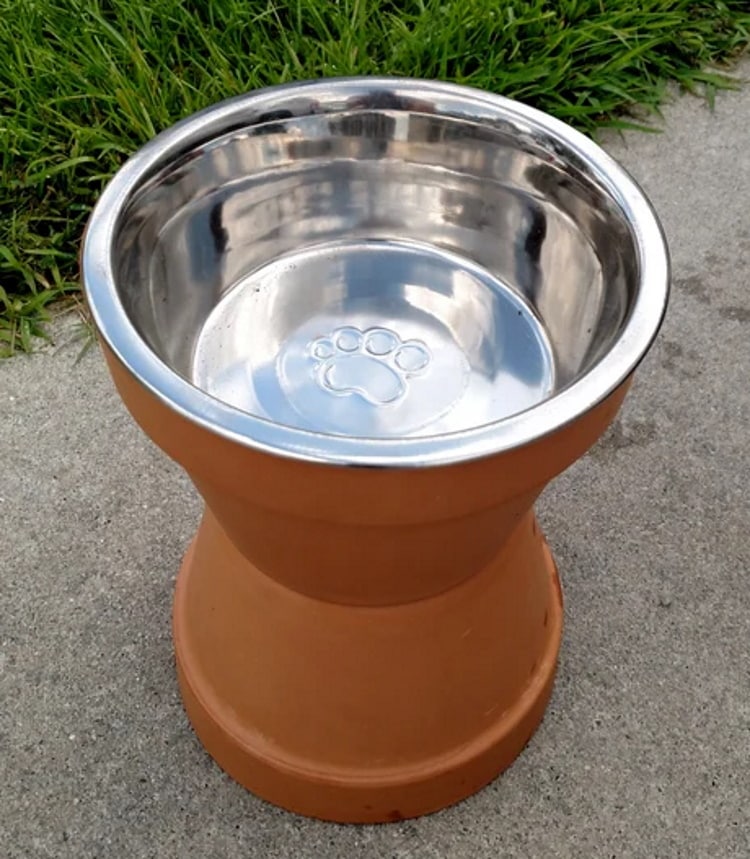
| Materials: | Terracotta planters, nuts, bolts |
| Tools: | Socket wrenches |
| Difficulty Level: | Easy |
It doesn’t get much easier than this raised bowl holder made from terracotta flower pots! This raised bowl holder can be constructed in minutes with the right tools. You can even do it without the aid of the socket wrenches, but they will make the project much easier.
This is a beginner-level DIY project that should last a long time. Remember that terracotta is delicate if dropped or knocked over, so make sure to place it out of the way so it won’t get bumped into.
The instructions are to make a raised bowl holder for a dog, so you will need to carefully select small terracotta pots so it’s not too tall for your cat. If your two pots are too tall, you can use a single terracotta pot and just drop the bowl in.
4. Plastic DIY Planter Bowl Holder by Petwell Supply
| Materials: | Plastic planter |
| Tools: | Box cutter or handsaw, measuring tape |
| Difficulty Level: | Easy |
This raised bowl holder is as simple as cutting through plastic. You'll choose a plastic planter, flip it upside-down, measure it to an appropriate height for your cat, and start cutting. Make sure to choose a bowl with a lip so it can drop straight into the hole you create.
This project is incredibly easy, but it requires some sharp tools to cut through the plastic. It is not a great DIY project for children due to the risk of using a box cutter or handsaw to cut through the plastic.
5. DIY Magnetic Bowls by The Art of Doing Stuff
| Materials: | Bowls, magnets, Superglue |
| Tools: | None |
| Difficulty Level: | Easy |
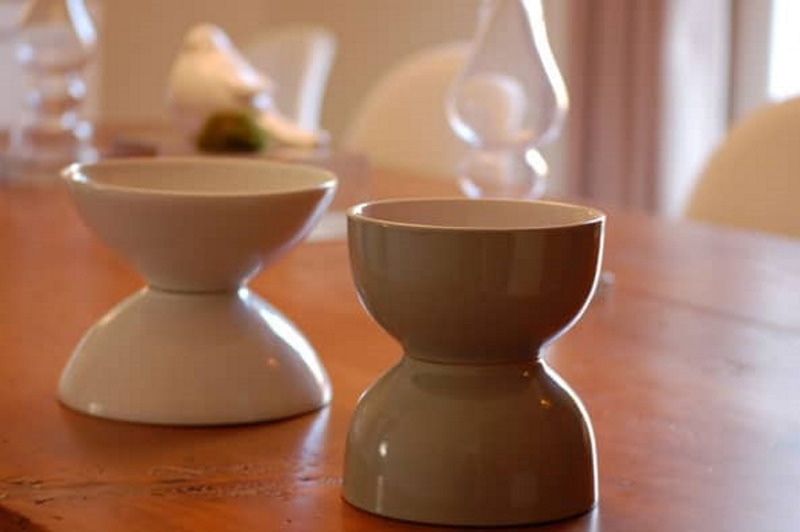
If you've used Superglue, you can make these magnetic bowls. The magnets allow the bowls to separate from each other for easy cleaning. You’ll need to choose two bowls that are either the same or have bases of the same size and don’t have a large lip on the bottom that may prevent the magnets from connecting.
This project can be done with glass, plastic, or metal bowls. If you use magnetic metal, you don't need to attach magnets to both bowls, saving yourself a little bit of time and effort.
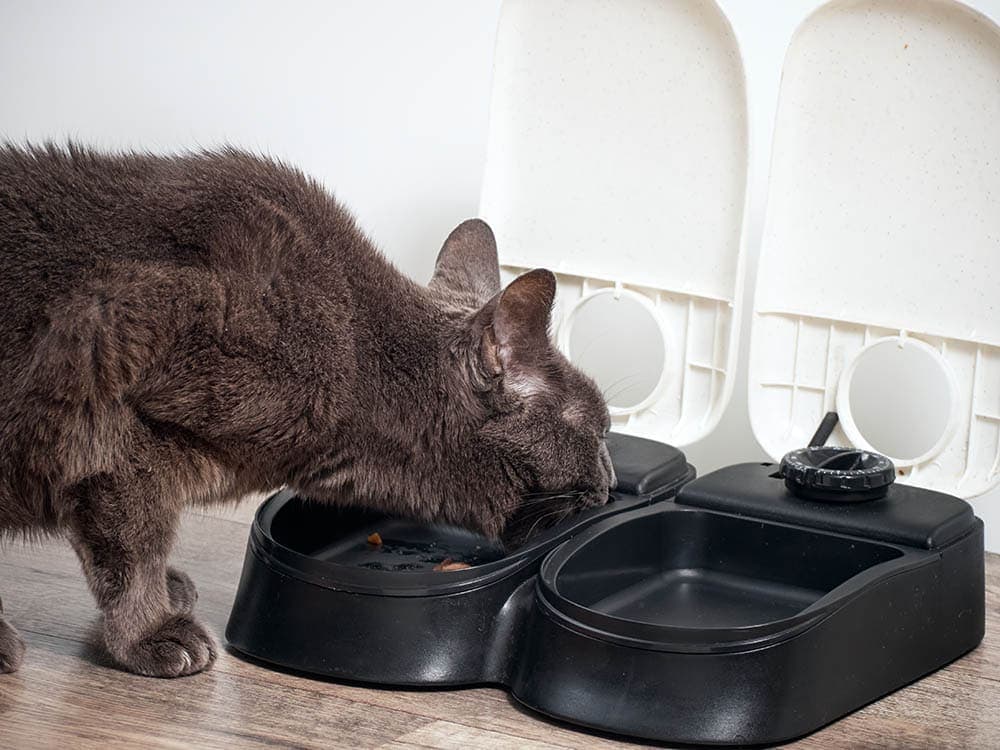
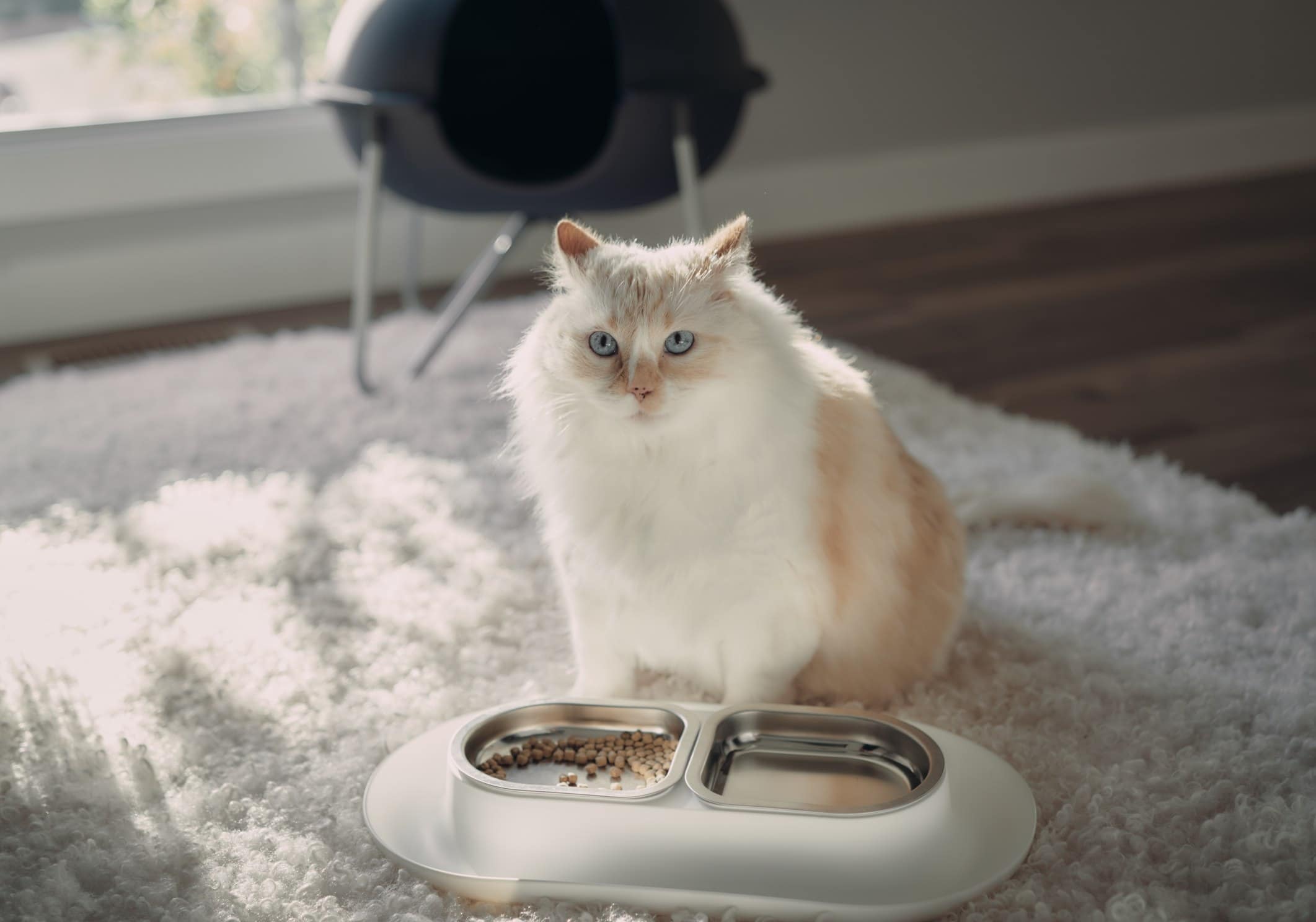
Alternatively, you can opt for a bowl that is practical and modern and was designed to improve your cats' eating habits and benefit their overall health. Our Hepper NomNom Cat Bowl was created with both pet parents and their feline companions in mind. The shallow stainless steel bowls protect your kitty from whisker fatigue and the elevated base brings their food to a height that's comfortable for them to eat. The wrap-around tray ensures that your floors are always clean of mealtime mess. Cleaning is a breeze since the NomNom is entirely dishwasher-safe.

- NO MESS - The 360° tray on this cat food and water bowl set has a raised design to catch and contain stray crumbs and drips. Protect your indoors and floors from wet and messy meals!
- WHISKER FRIENDLY - Shallow and wide metal containers with flat bottoms ensure your kitty can enjoy mealtime free from whisker fatigue!
- CHEW-SAFE MATERIALS - Kittens and cats love chewing on silicone and soft rubber - but it's a choking hazard. Our cat feeding station materials are anti-chew for a 100% safe feeding frenzy!

Final Thoughts
This list of DIY elevated cat feeding stations should help inspire you to channel your inner carpenter and get started on a useful project for your pet. Elevated feeding stations are beneficial for your cat and stylish, too. Good luck with choosing the best DIY feeding station for your favorite feline.
See also:
Featured Image Credit: Mik ulyannikov, Shutterstock
Get Hepper In Your Inbox


Pet care tips from our vets and experts, straight to your inbox.
You may opt-out at any time. View our Privacy Policy for more information.

After nine years as a veterinary assistant, Brooke Billingsley transitioned to a career as a nurse in 2013. She lives in Arkansas with her boyfriend, sharing their home with three dogs, two cats, five fish, and two snails. A dedicated animal lover, Brooke has a special place in her heart for special needs pets, including a three-legged senior dog and a famous cat with acromegaly and cerebellar hypoplasia. Fish keeping is one of her hobbies, and she is constantly improving her knowledge to care for her aquarium pets. Brooke is an active yoga enthusiast, having obtained her 200-hour yoga teacher certification in 2020. She believes in the importance of continuous learning and dedicates time each day to developing new skills and expanding her knowledge.
Join the conversation
Ask a question, share your story, or send private feedback.