Hepper is reader-supported. When you buy via links on our site, we may earn an affiliate commission at no cost to you. Learn more.
Feline AIDS: Our Vet Explains Signs, Causes, Care & FAQ

In this article
AIDS is the terminal phase of FIV (Feline immunodeficiency virus), a contagious viral disease that weakens a cat’s immune system over time 1. It is estimated at 2.5–5% of healthy cats in North America are FIV positive (FIV+) 2. Cats can remain asymptomatic for months to years, whereas other FIV+ cats can progress to the terminal phase of infection where severe illness develops. FIV is not curable, therefore preventative measures and supportive practices are the mainstays of patient care.

What Is FIV/AIDS?
Feline immunodeficiency virus is a retrovirus that causes a weakened immune system in cats, like HIV that occurs in humans. The term AIDS is used to describe clinical disease that occurs secondary to immune system depletion from a chronic FIV infection.
Feline immunodeficiency virus can be spread to kittens in-utero or by nursing from an FIV+ queen. Saliva is the most common route the virus is spread amongst cats, and this is due to fighting. It is uncommon for the virus to spread through grooming or shared food and water bowls; however, it is possible. Blood transfusions can also serve as a route of infection. The majority of FIV infections are seen in intact male cats due to increased chances of fighting.
Once a cat has become infected with the retrovirus, viral replication begins. The virus will slowly weaken lymphocytes, a particular type of white blood cell. The slow depletion and weakening of lymphocytes will eventually negatively affect a patient’s ability to mount an immune response when faced with a challenge.
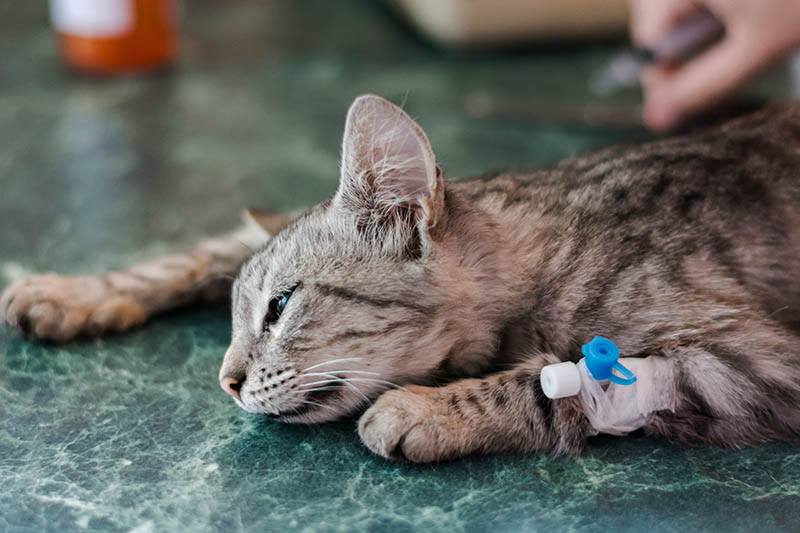
There are different phases to an FIV infection 3. Not all cats will experience all the phases, and it is important to note, not all cats will go on to develop AIDS.
1. Acute Phase
Shortly after the virus is introduced to the feline, the cat’s immune system is alerted, and an inflammatory response occurs. During this time, the cat produces antibodies against the virus. The infected cat may show signs of illness including fever, lethargy, and lymph node enlargement. This phase can often go unnoticed by pet owners.
2. Asymptomatic Phase
After the patient’s body responds to the virus by creating antibodies, the patient enters into an asymptomatic stage where clinical signs of illness are not apparent. During this time, the virus is still at work replicating and slowly weakening the immune system. This stage can last for years in some cats.
3. Progressive/Terminal
As the cat’s immune system continues to be weakened, their body is unable to adequately fight pathogens they encounter, and signs of illness can develop. Illness can be intermittent or persistent. The term acquired immunodeficiency syndrome (AIDS) is used to describe the stage in which patients can develop myelosuppression (decreased bone marrow activity), cancer, severe secondary infections, or neurologic signs. Cats that reach the terminal stage of an FIV infection have a poor prognosis and will succumb to illness.

Signs of AIDS in Cats
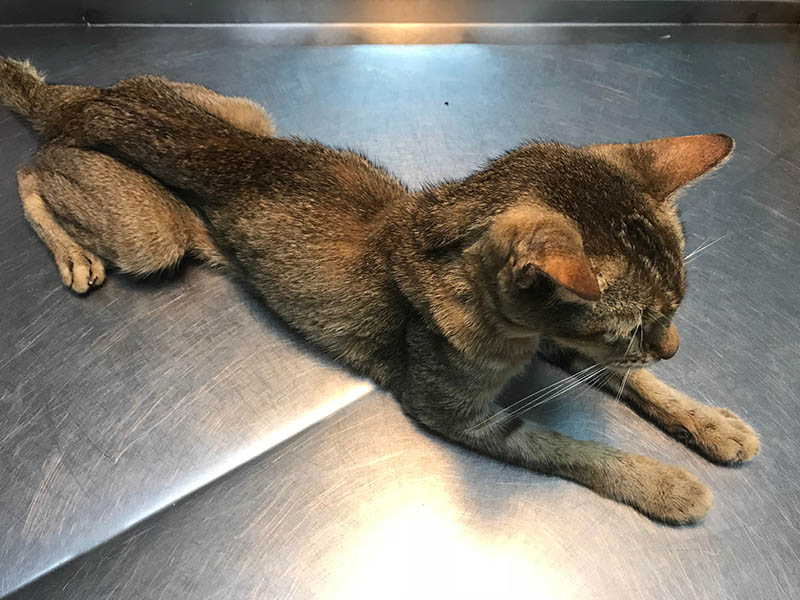
Cats that have progressed to the terminal stage of FIV can exhibit several signs including 4:
- Stomatitis (inflammation of structures within the oral cavity)
- Lethargy
- Fever
- Reoccurring/persistent infections
- Weight loss
- Decreased appetite
- Lymph node enlargement
- Seizures
- Respiratory, skin, and ocular infections
- Diarrhea
- Cancer
Cats with progressive FIV infections are five times more likely to develop lymphoma, a cancer impacting the lymphatic system. Immune-mediated glomerulonephritis and uveitis can occur secondary to viral infection during the terminal phase.
Diagnosing FIV/AIDS
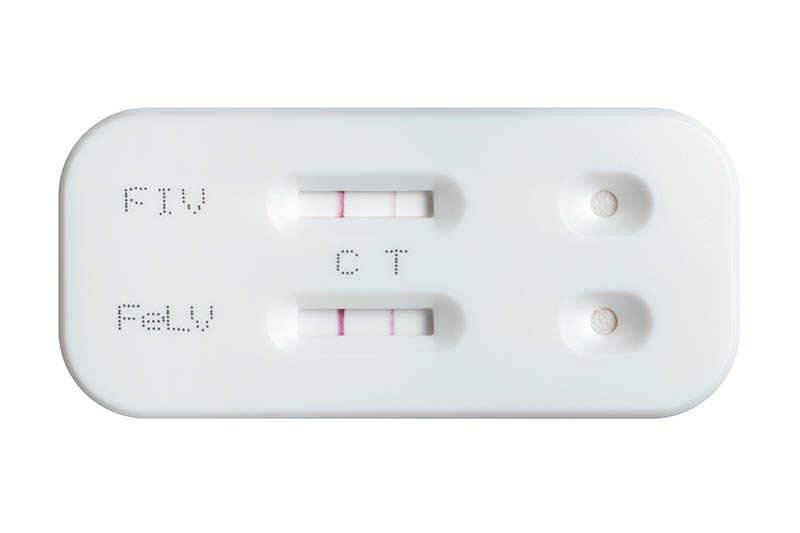
Since patients with FIV can be asymptomatic for a long time, routine screening is important and is the most common way a diagnosis is made prior to the onset of clinical disease. The most common diagnostic test is the enzyme-linked immunosorbent assay (ELISA) test as it detects FIV antibodies in blood. There are different situations in which testing should be pursued.
- Kittens should be tested between 8 and 12 weeks of age. If kittens are positive, they should be retested every month until they are over 6 months of age to confirm true viral infection and not residual maternal antibodies.
- Cats that have a recent fight history should be screened 2 months after the altercation.
- Outdoor cats with a risk of exposure or cats that share a home with FIV positive housemates should be screened annually.
- Prior to introducing a cat into a household with cats, all parties should be tested.
- Clinically ill cats should be screened for FIV, even if previously determined to be negative.
If a patient has tested positive on an initial ELISA test, a confirmatory PCR test may be pursued which identifies viral DNA within the blood.
Routine laboratory bloodwork may show anemia and low white blood cell numbers (specifically reduced lymphocytes and neutrophils). Globulin, a blood protein, may also be elevated due to infection with the retrovirus.
Once the diagnosis of FIV has been made, close observation of the patient will alert them to signs of progression to AIDS.
How to Care for a Cat with AIDS
A cat who has reached the terminal phase of the FIV infection is very vulnerable. Although there is not a cure for FIV, there are ways you can help care for your cat as they maneuver through the final stage of infection.
First, seek veterinary care at the first sign of illness as infections can worsen quickly in patients with compromised immune systems. Your veterinarian may be able to dispense medications to help fight opportunistic infections. Additionally, medications may be dispensed geared towards increasing patient quality of life like appetite stimulants or anti-nausea medication.
Here are some other ways you can care for your cat:

Frequently Asked Questions
Will my FIV+ cat develop AIDS?
Not all cats that have FIV will go on to develop the terminal form of illness referred to as AIDS. The subclinical period can be long, lasting months to years in some. Many cats can live full, happy lives despite having FIV, and may pass from unrelated causes.
If my cat bites me, will I develop AIDS?
Although FIV and HIV (human immunodeficiency virus) share similarities, they are species specific. Your cat cannot transmit the disease to you, or vice versa.
Conclusion
FIV is a retrovirus transmitted amongst cats. The virus quietly works to weaken the immune system, a process that can take years to occur. Eventually, some FIV+ cats develop an incompetent immune system, leaving them susceptible to opportunistic infection and illness. This progression to clinical disease is referred to as AIDS. Unfortunately, a patient cannot be cured of AIDS or FIV. Symptomatic care and veterinary intervention can help support patients through the terminal phase of FIV until the patient’s quality of life is poor and euthanasia is pursued, or a patient succumbs to illness.
Sources
Featured Image Credit: Elpisterra, Shutterstock
Get Hepper In Your Inbox


Pet care tips from our vets and experts, straight to your inbox.
You may opt-out at any time. View our Privacy Policy for more information.
Meet Dr. Marti Dudley, a dedicated small animal veterinarian who possesses a strong passion for preventive medicine and client education. She takes pride in serving as a valuable resource for pet owners, firmly believing that a collaborative approach results in the optimal care for our beloved animal companions. In addition to her clinical work, Dr. Dudley has a fondness for writing, using this skill as an innovative means to educate pet owners beyond the confines of the traditional veterinary office setting.
Meet Dr. Marti Dudley, a dedicated small animal veterinarian who possesses a strong passion for preventive medicine and client education. She takes pride in serving as a valuable resource for pet owners, firmly believing that a collaborative approach results in the optimal care for our beloved animal companions. In addition to her clinical work, Dr. Dudley has a fondness for writing, using this skill as an innovative means to educate pet owners beyond the confines of the traditional veterinary office setting.
Professional Background:
Dr. Dudley has been actively practicing veterinary medicine since 2014, accumulating a wealth of experience. Her special interest lies in preventive care, and she places significant emphasis on the importance of educating clients about the well-being of their pets. Dr. Dudley's professional journey in veterinary medicine has been diverse, having worked as a general practitioner, affording her the opportunity to encounter and address a wide array of medical conditions in animals.
Educational Achievements:
Dr. Dudley's academic background includes a bachelor's degree in biology earned from Longwood University in Virginia. She further pursued her passion by obtaining a Doctor of Veterinary Medicine (DVM) degree from Ross University.
Join the conversation
Ask a question, share your story, or send private feedback.