Hepper is reader-supported. When you buy via links on our site, we may earn an affiliate commission at no cost to you. Learn more.
Koi Betta Fish: Care Guide, Varieties & Lifespan (With Pictures)
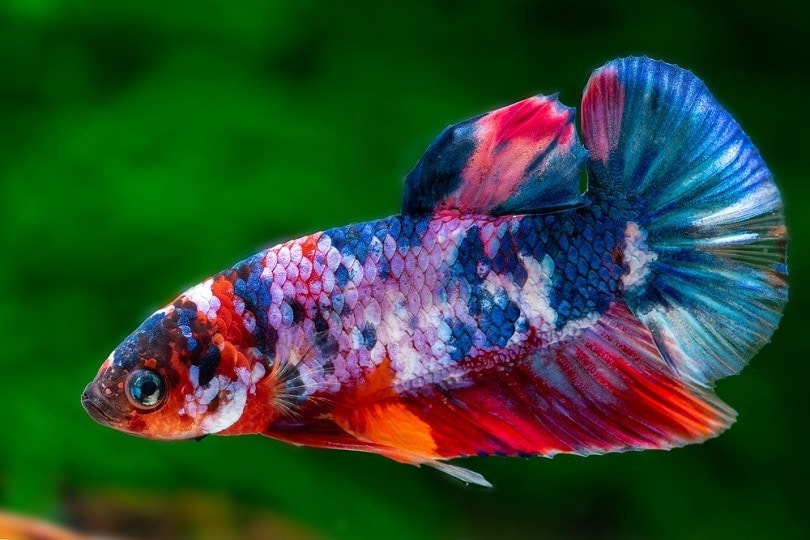
If you’re considering a unique, colorful betta fish, a Koi betta may be a good pick for you. They have relatively short fins in the betta world, but their unique color patterns make them stand out, even without long fins. Both males and females have lovely, marbled patterns and can really brighten up a tank. If you are interested in an out-of-the-ordinary betta fish, the Koi betta may be right up your alley!

Quick Facts about Koi Betta
| Species Name: | Betta splendens |
| Family: | Osphronemidae |
| Care Level: | Easy |
| Temperature: | 75–82˚F |
| Temperament: | Semi-aggressive to aggressive |
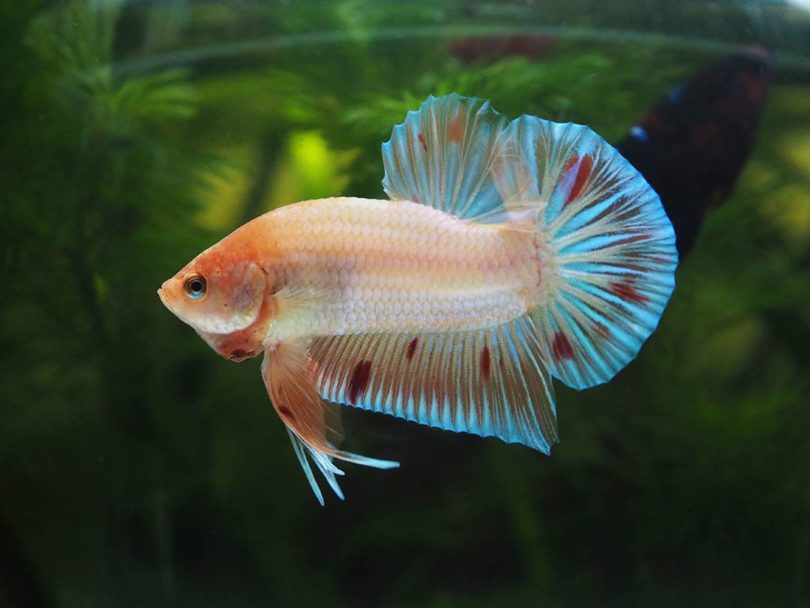
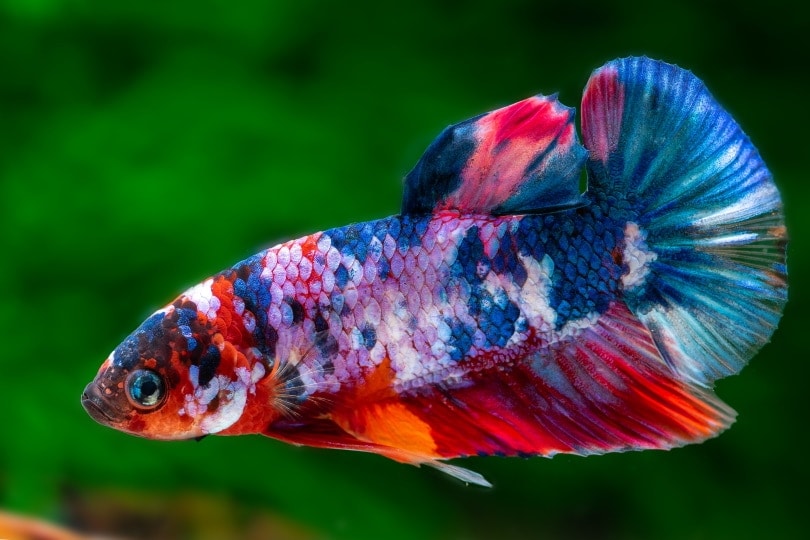
| Color Form: | White or silvery body with marbled patterns of two to three colors in shades of blacks, reds, oranges, and blues |
| Lifespan: | 3–5 years |
| Size: | 3 inches |
| Diet: | Carnivorous |
| Minimum Tank Size: | 5 gallons |
| Tank Set-Up: | Tropical freshwater tank with lots of plant cover |
| Compatibility: | Females may be compatible in community tanks; Male compatibility is variable |
Koi Betta Overview
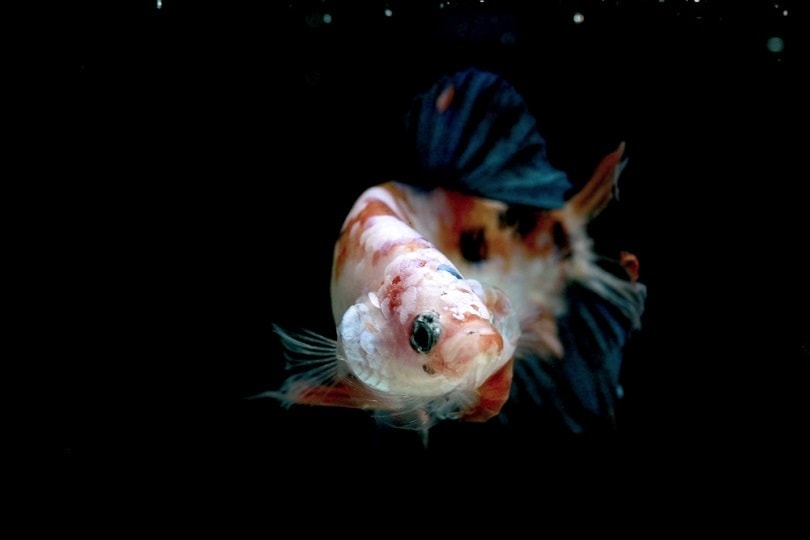
Koi betta fish are a selectively bred betta fish variety that does not occur in nature. These fish were selectively bred from marble bettas, which are a variety of betta fish with white bodies and a marbled, colorful pattern. These fish can have a broad variety of color combinations.
Koi bettas are similar in appearance to marble bettas, except their colors and patterns are more distinct because they give them an appearance similar to that of a Koi fish, which is where their name comes from. To maintain the specific Koi-like appearance of Koi betta fish, enthusiasts continue to selectively breed them.
This selective breeding approach ensures the characteristics of the fish are continued into new generations. When allowed to freely breed without selection, some fish will revert back to “wild” colors, which are naturally occurring colors and patterns they often have in the wild.
Like other bettas, Koi bettas are semi-aggressive to aggressive fish, and this is especially true of the males. Males are often poor tankmates with other fish, while females can be kept in community tanks or sororities. With proper planning and education ahead of time, they make great fish for first-time fish keepers.
How Much Do Koi Betta Cost?
Koi betta are sometimes carried in big box pet stores, but they can be difficult to snag, which increases the value of the fish. Females frequently sell for $15-20, but males can cost up to $50. Additional costs associated with getting a Koi betta include getting a proper tank setup and a heater and filter that creates a gentle flow in the tank.
Typical Behavior & Temperament
Male Koi bettas tend to be aggressive and are best kept alone. They usually do fine when kept with invertebrates that are too large for them to eat, like bamboo shrimp and snails. If kept with other fish, they should be short-finned fish that are peaceful and do not resemble bettas, as it can lead to aggression.
Male Koi bettas should not be kept with female Koi bettas except during breeding as they can injure or kill females. Female Koi bettas are more laid back than males and often do well in community tanks. Some females are appropriate for sororities or groups of all female bettas, but others may be too aggressive for this setup.
Appearance & Varieties
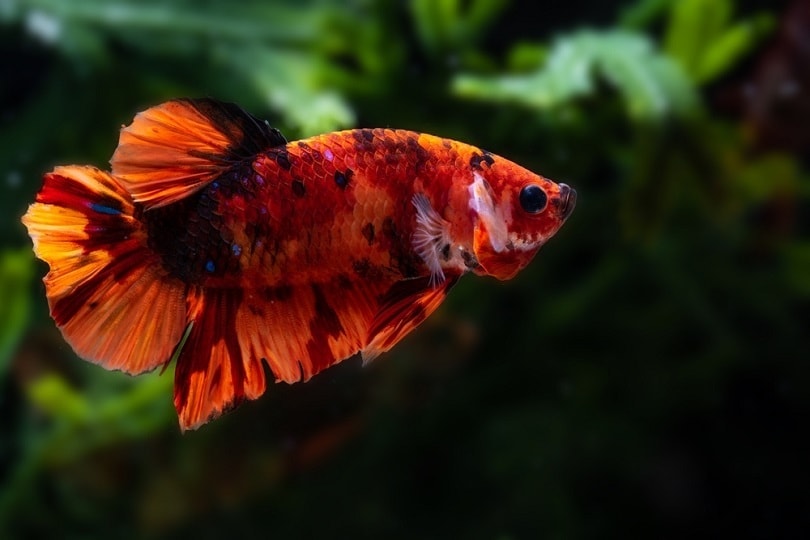
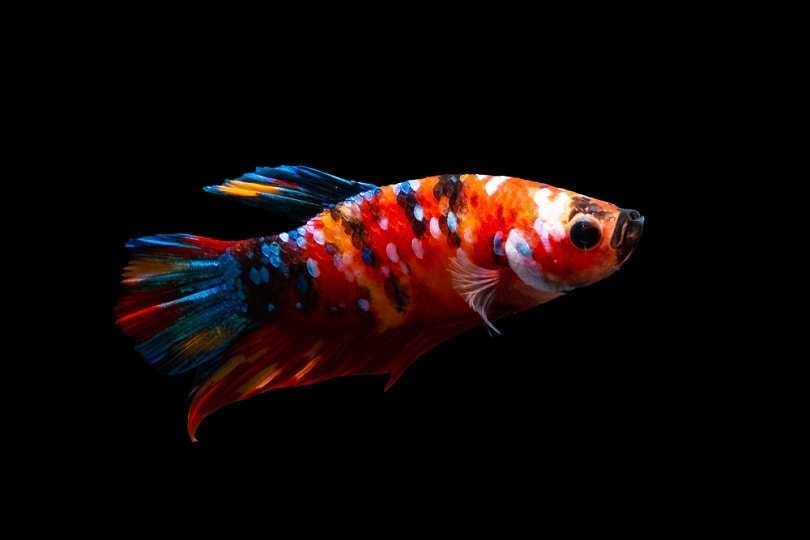
Koi bettas are beautiful fish that each have their own unique markings and color combinations. Marble bettas are usually only two marbled colors on top of their base color, but Koi betta fish can be three marbled colors on top of their base color.
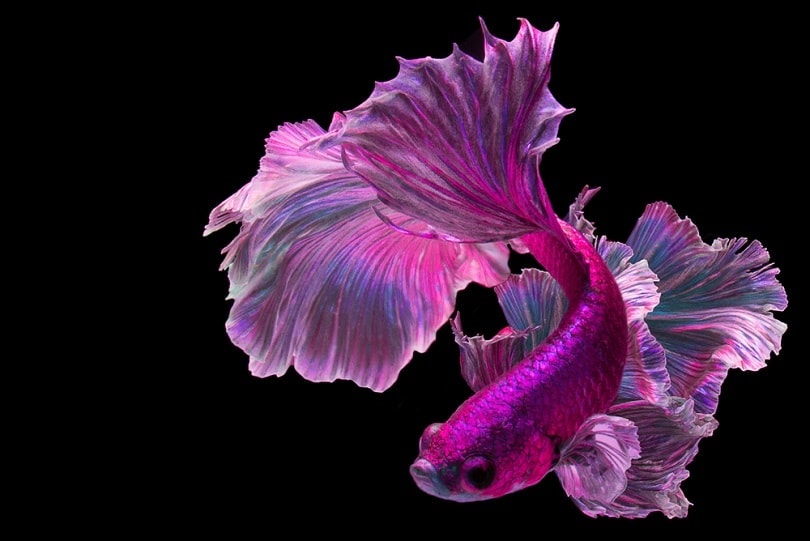
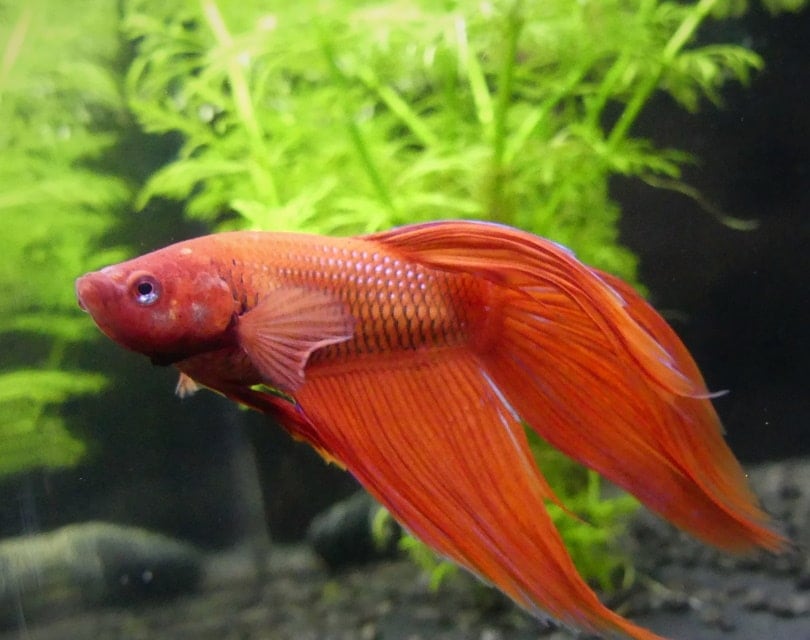
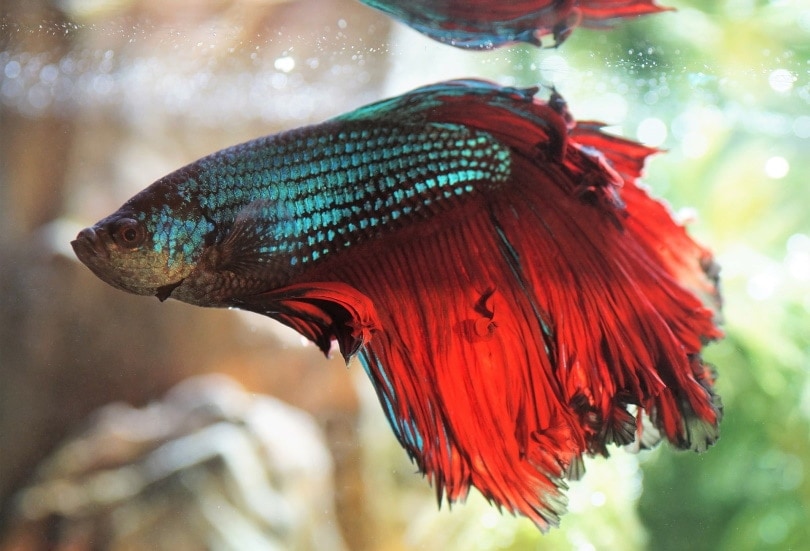
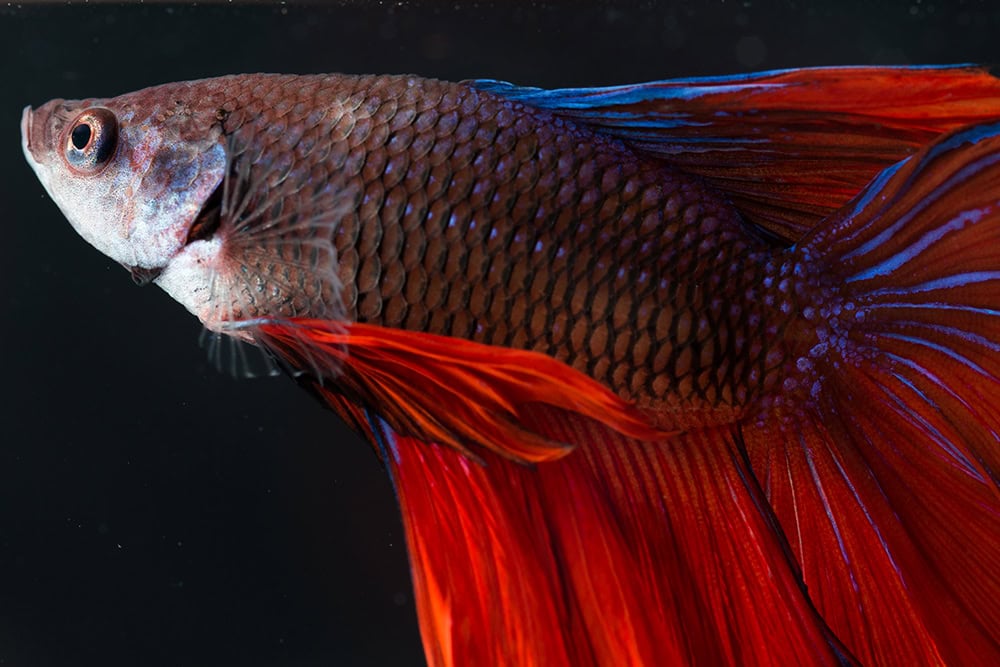
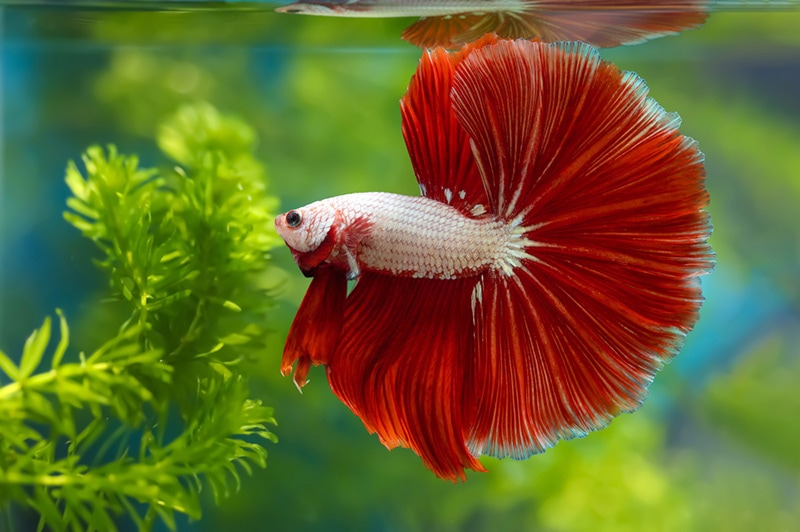
They have distinct scales and Koi-like markings with black, white, orange, red, and even blue. The males can have long fins or short fins, but they are usually half-moon, plakat, delta, or veil tails. Female Koi bettas have short fins, like most female betta fish, but they still have attractive coloration on their bodies. Color patterns and combinations can change with your Koi betta’s environment, mood, and age.
How to Take Care of Koi Betta
Habitat, Tank Conditions & Setup
Tank/Aquarium Size
Koi betta fish should be kept in a tank that is at least 5 gallons. They like to have space to swim and can be stressed by tanks that are too small.
Water Temperature & pH
Koi bettas are tropical fish, so they should be kept in tanks with heaters since room-temperature water is often too cool for them. They can be kept in tanks as warm as -86˚F but do best in tanks that are 75–82˚F. They should not be kept cooler than 75˚F. They prefer a neutral pH of around 7.0, but they can survive and even thrive in a pH range of 6.0–8.0 if it stays stable.
Substrate
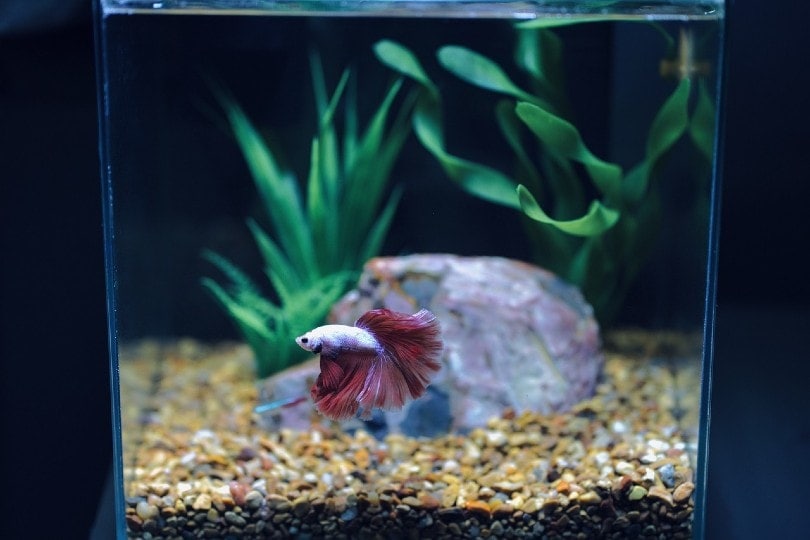
Most substrates are appropriate for Koi bettas. They do best in planted tanks, and a substrate that plants can grow in is necessary. They should not be kept with a sharp substrate of any kind as this can catch and tear their fins.
Plants
Any tropical plants that survive in the Koi betta’s preferred water conditions can be kept with them. Mosses and other ground covers, like dwarf hair grass, are good picks, as well as hardy plants like Anubias, Java ferns, water sprite, and Cabomba. Tall plants or floating plants with trailing roots, like water lettuce, are also good picks.
Lighting
Koi bettas do not have specific lighting needs outside of a normal day/night cycle to maintain their health. Tall plants and floating plants can help block out some of the lighting, allowing your fish to have shady spots if they want them.
Filtration
Betta fish need filtration that keeps their water healthy and colonizes beneficial bacteria. However, in the wild, bettas live in places with a gentle flow or no flow, and they need filtration that will not create a strong flow in their tank.
Are Koi Betta Good Tank Mates?
Koi bettas are generally not considered to be good tank mates, especially males. They tend to be aggressive and territorial toward other fish, and they are known to relentlessly chase female bettas. They sometimes do this for breeding purposes, but other times it is aggression.
It is not recommended to keep male Koi bettas with females or other fish that resemble bettas, like guppies, since this can trigger aggression and territorial behaviors. Female Koi bettas are usually considered semi-aggressive, but many people are able to safely and successfully keep them in community tanks.
While males should not be kept with other bettas regardless of sex, female Koi bettas are sometimes kept in groups of females called sororities. They are not schooling fish, but some of them appreciate the companionship of other bettas.
What to Feed Your Koi Betta
Koi bettas are carnivorous fish and require high-protein diets. This can be achieved through high-quality pellets or flakes as their base diet. You can also feed your Koi betta fish live food, like daphnia and baby brine shrimp, and thawed frozen foods, like bloodworms.
To ensure your fish gets all vitamins and minerals needed to maintain their health, it’s important to feed them commercial food as the base of their diet since feeding proteins available to you may not fully meet their needs.
Unlike some other commonly kept fish, like goldfish, Koi bettas will not benefit from the addition of fresh foods, like fruits and vegetables, in their diet. Treats in moderation are safe, but Koi bettas are true carnivores and should be fed as such.
Keeping Your Koi Betta Healthy
The basis of keeping your Koi betta fish healthy is providing a clean tank and a healthy diet. Like most fish, Koi bettas are sensitive to poor water quality, including high nitrites and ammonia levels. It’s important to fully cycle the tank before the addition of fish, but if you already have the fish in the tank, it’s a good idea to perform a fish-in cycle.
This will establish colonies of beneficial bacteria and improve the water quality. A healthy, high-quality diet is almost as important to maintaining your Koi betta’s health as clean water. Feeding inappropriate foods, whether fresh or commercial, can lead to nutritional deficiencies and a shortened life expectancy. It’s important to feed betta-specific food or a tropical carnivore diet to ensure your betta gets all the needed nutrients.
Breeding
Breeding Koi betta fish is a delicate process that should only be undertaken if you’re intending to do it safely and correctly. Otherwise, you may end up with injured or dead fish. Your male and female bettas should have separate homes set up and should not permanently share a tank.
The breeding tank should be a separate tank from either of the other tanks, and it should be complete with a heater and a seeded sponge filter from an established tank. A tank divider is also necessary, so your male and female can get used to each other’s presence before sharing the same space.
Once moved into the breeding tank, your fish will need around 2 weeks to get used to the new environment and each other. Once the male takes an interest in the female, he will create a bubble nest, which will be the home of the eggs until they hatch.
The male places the fertilized eggs after spawning into the nest and will care for them until they hatch. The female can go back to her original tank after spawning is complete. Once the eggs hatch, the male should go back to his original tank, so he doesn’t attack the fry. At this point, you will care for the fry until they are large enough to be put in their own tank or sold.
Are Koi Betta Suitable For Your Aquarium?
Koi betta fish can be a beautiful centerpiece to your tank, and they are beginner-friendly fish. It is important to understand the undertaking of owning a Koi betta before getting one. This will ensure the health and longevity of the Koi betta you bring home.
Understanding their behaviors and needs will help you create the perfect tank environment for your new Koi betta fish and add beauty and interest to your home. Watching Koi betta fish can be relaxing, and their odd behaviors, like bubble nest building and gill flaring, can be entertaining. Keep in mind that your Koi betta will be with you for 3–5 years, and some in captivity have lived to 10 years old, so it requires a firm commitment to keep your tank healthy and Koi betta fish happy.
See Also:
Featured Image Credit: Ron Kuenitz, Shutterstock
Get Hepper In Your Inbox


Pet care tips from our vets and experts, straight to your inbox.
You may opt-out at any time. View our Privacy Policy for more information.

Lindsey discovered her passion for fish keeping after a junior high school field trip to the Shedd Aquarium in Chicago. Prior to becoming Editor-in-Chief of It's a Fish Thing, Lindsey studied marine biology at the University of California-Santa Cruz. She loves goldfish, tetras, and mystery snails, and recently began experimenting with a saltwater aquarium.
Join the conversation
Ask a question, share your story, or send private feedback.