Hepper is reader-supported. When you buy via links on our site, we may earn an affiliate commission at no cost to you. Learn more.
What Is Ash in Dog Food? Our Vet Answers

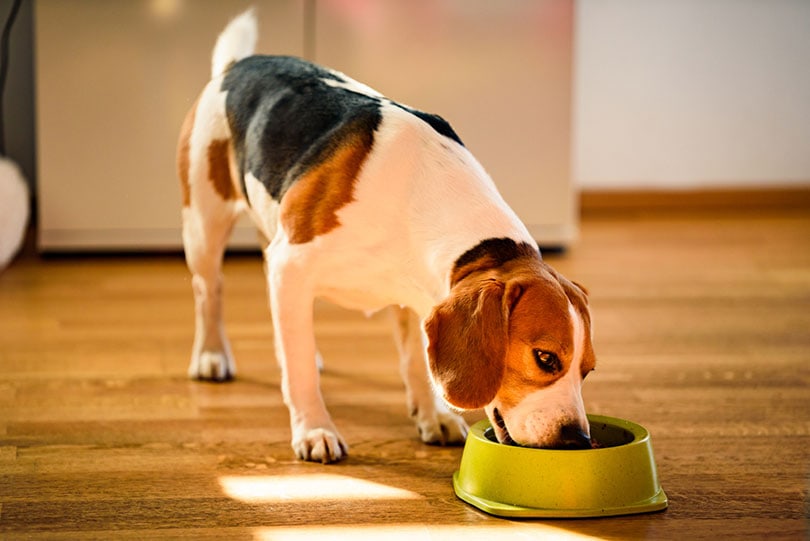
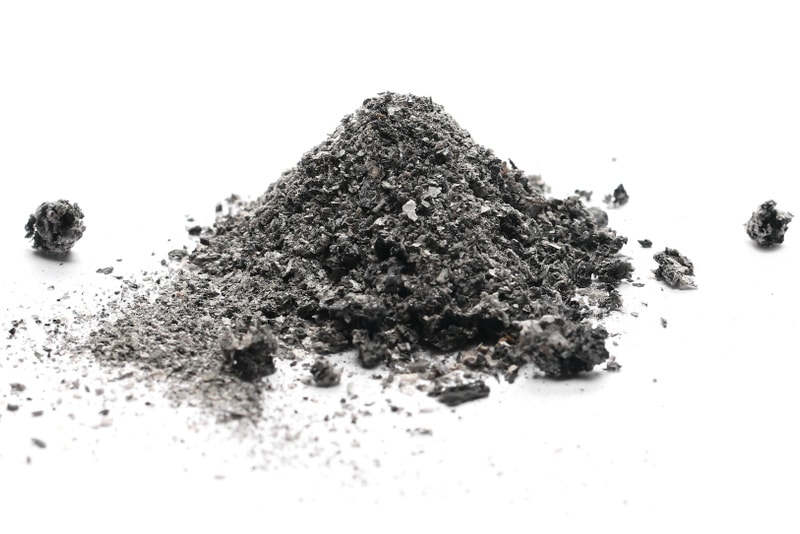
When you think of the word “ash,” dog food probably doesn’t come to mind. However, the fact is that ash can be listed in your dog’s food. This may sound odd, but ash in dog food is not something manufacturers put in as a filler to save money, and it’s not ash from a fire pit or fireplace either. Ash in dog food refers to the compound content of minerals in the food.
Here, we unveil the importance of ash in dog food, so if you want to learn about this mysterious component, read on!

What Is Ash in Dog Food?
Ash, sometimes labeled as “crude ash,” “incinerated residue,” or “inorganic matter,” is an analytical component in your dog’s food. Think of it as a type of measurement pertaining to the daily minerals required for your dog to stay healthy.
Ash is the non-combustible mineral residue leftover from incinerated food, such as calcium, phosphates, and magnesium. For example, if you were to burn the entire contents of a bag of kibble, most of the nutrients, which are proteins, carbs, and fats, would disappear, along with its moisture content. The leftovers would be minerals turned into ashes.
The ash measurement is also how food scientists calculate the macronutrient content. This information is an important part of the guaranteed analysis of food.
Why Is Ash Measured in Dog Food?
Dogs need a certain amount of minerals daily for optimal health, and the ash in dog food is a measurement of them as a whole. These minerals are necessary for your pet’s health and are part of important body functions, such as aiding in the development of strong bones and teeth, proper immune system function, muscle and nerve function, preventing blood clots, etc. The mineral content also contributes to the food being 100% complete and balanced.
Is the Ash Content Found in the Dog Food Label?
Now that we know what ash is, how do you find it in your dog’s food? Ash is not always included in the label because it is not technically an ingredient in dog food. Instead, ash is a result measurement found only after the dog food has been tested.
Ash is listed in some, but not all, dog food labels. When you look at a label, the element may be labeled as “crude ash” in the guaranteed analysis section of the label on the back of the package.
How Much Is Too Much?
The normal amount of ash ranges from 5% to 8% for dry kibble and 1% to 2% for wet food. This information is important because too much ash in food would indicate that there is a problem with the formula: Either it is over-supplemented, or it contains more bone and less meat. However, this analysis is done during the formulation and testing process of a recipe. These tests are known as bromatological tests.
The Bottom Line
Ash is an analytical component in dog food formulation and testing, not an ingredient in your dog’s food. Ash is the broad representation of the compound mineral content in a dog’s food and one of the many measurements used by nutritionists and formulators to evaluate a recipe or formula to determine that it contains what they expect.
We hope that if you've ever seen the word "ash" on your dog's food label and it concerns you, you now understand what it is and why it is important in dog food guaranteed analysis.
Related Read: Healthiest Dog Foods – Reviews & Top Picks
Featured Image Credit: Przemek Iciak, Shutterstock
Get Hepper In Your Inbox


Pet care tips from our vets and experts, straight to your inbox.
You may opt-out at any time. View our Privacy Policy for more information.
Paola Cuevas is a veterinarian and animal behaviorist, with over 18 years of experience working with a variety of species. Her passion is animal welfare and focuses on the importance of preventive medicine. Paola has skills in the fields of nutrition, microscopy, clinical pathology, diagnostic imaging, and endoscopy as well as extensive experience in animal training through positive reinforcement. As our in-house veterinarian, Paola is very happy to share her knowledge and experience with our readers and hopes to be helpful with any issue presented by your non-human family members.
Join the conversation
Ask a question, share your story, or send private feedback.