Hepper is reader-supported. When you buy via links on our site, we may earn an affiliate commission at no cost to you. Learn more.
Are White Cats With Blue Eyes Deaf? Our Vet Answers

In this article
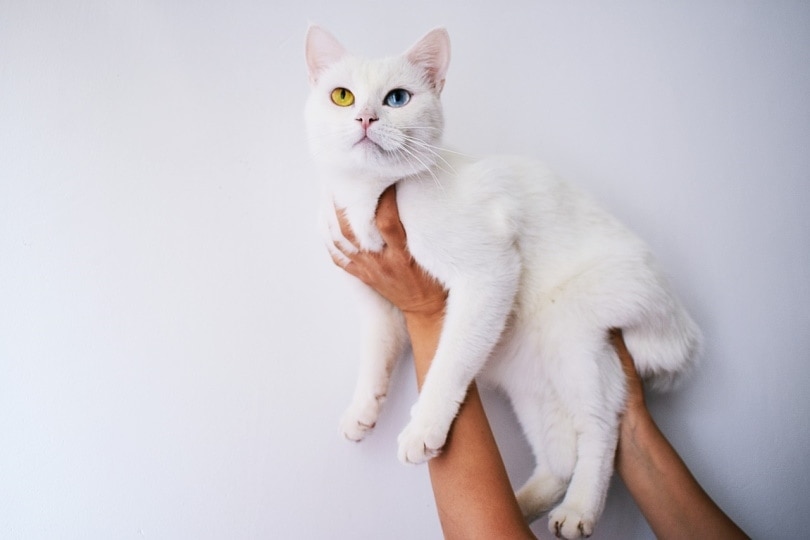
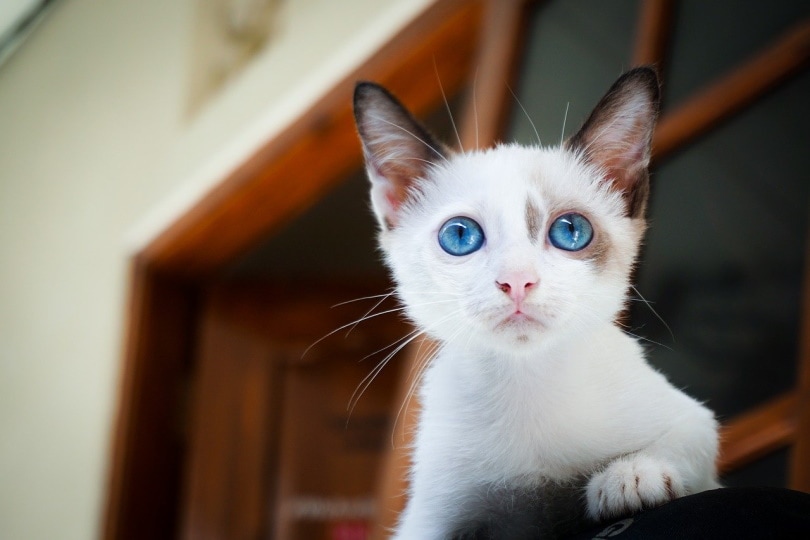
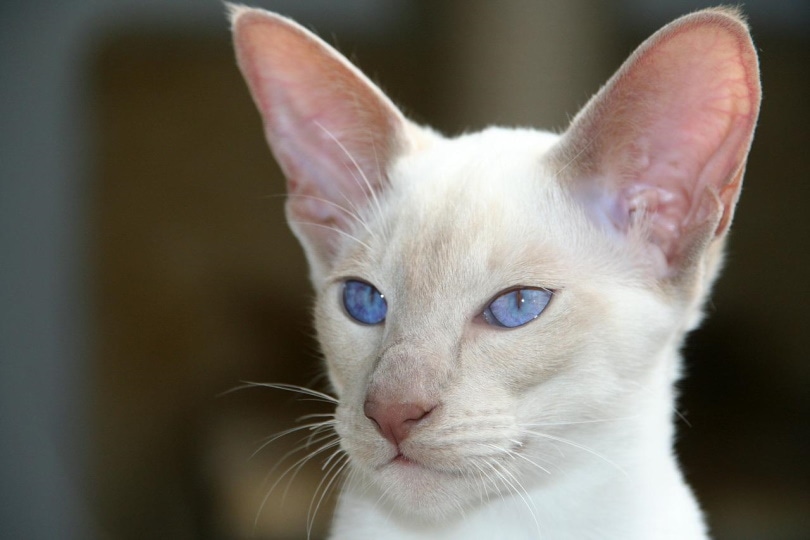
White, fluffy fur, and striking blue eyes—cats and kittens with this color combination are undoubtedly beautiful and may have you hooked the moment that you lay your eyes on them. But did you know that there is a hidden health issue associated with this distinctive look?
Congenital sensorineural deafness is a hereditary condition that causes hearing loss in many white, blue-eyed cats. Here, we cover the prevalence, diagnosis, treatment, and prevention of this condition.

What Is Congenital Sensorineural Deafness?
Congenital sensorineural deafness, or CSD, is a well-known condition affecting blue-eyed white cats, and it has been studied since the 19th century. This condition is hereditary, meaning it is determined by genetic factors and may be passed down from parents to offspring. CSD specifically affects cats that possess the autosomal dominant pigment gene W. Deafness in affected cats may either be unilateral (affecting one ear) or bilateral (affecting both ears).
How Does CSD Occur?
In cats with the dominant W pigment gene, white skin and hair and blue eyes occur as a result of melanocyte (pigment-producing cell) suppression. If the W gene acts strongly, it also suppresses melanocytes in the stria vascularis (a component of the cochlea), which leads to strial degeneration and cochlear hair loss in the inner ear. This ultimately leads to cochleosaccular neuronal degeneration and subsequent deafness that develops approximately 1–3 weeks after birth.
Are All White Cats With Blue Eyes Affected?
While deafness is commonly seen in white cats with blue eyes, not all cats with this specific coloring will be affected. From studies of mixed-breed white cats, the following prevalence of deafness was noted:
A recent study of purebred kittens in the United Kingdom found the following with regard to the prevalence of CSD:
This study also noted differences in the breed-specific prevalence of CSD. The prevalence of deafness was noted to be higher (greater than 40%) in solid white Norwegian Forest, Maine Coon, and Turkish Vankedisi kittens and lower (less than 17%) in Russian, Persian, and Devon Rex kittens.
How Is Deafness Diagnosed in Cats?
Deafness may be difficult to diagnose in young kittens or in cats kept in groups, as these animals' reactions will often mimic those of the others in their group. To evaluate for deafness, a kitten should be observed individually, after 3–4 weeks of age, when responses to sounds become more predictable. The following signs may indicate that your kitten or cat may be affected by hearing loss:
If you have any concerns that your blue-eyed white feline may be deaf, a visit to your veterinarian is recommended. They will perform an examination and observe your cat's response to various sound stimuli in the exam room. While this may provide a general idea of your cat's ability to hear, the most reliable method of diagnosing deafness is with brainstem auditory evoked response (BAER) testing at a referral center. BAER screening is a non-invasive, electro-diagnostic test that can be used to diagnose CSD in cats greater than 20 days of age.

Treatment for CSD
There is unfortunately no effective treatment for congenital, hereditary deafness in cats. While sensorineural deafness cannot be reversed, there is thankfully no evidence that deaf animals suffer discomfort or pain from the condition. Many cats affected by deafness are still able to live full, long lives.
Prevention of CSD
At present time, there is no DNA testing available to identify genetic carriers of deafness in cats. To reduce the prevalence of this condition, BAER testing and selective breeding should be strongly considered for cats with commonly affected phenotypes.
In Conclusion
While not all blue-eyed white cats are deaf, deafness is commonly noted in cats with these striking physical characteristics, and it is a phenomenon that has been noted for centuries. While prevention and treatment options are unfortunately limited, affected felines can still be happy, healthy, and engaged members of your family.
See Also:
Featured Image Credit: Pexels, Pixabay
Get Hepper In Your Inbox


Pet care tips from our vets and experts, straight to your inbox.
You may opt-out at any time. View our Privacy Policy for more information.
Dr. Leigh is a US-based veterinarian with over 9 years of experience. She is a lifelong animal lover who grew up with all kinds of pets, including dogs, hamsters, and fish. Leigh received her Doctor of Veterinary Medicine degree from the University of Minnesota and has specialized in shelter medicine and small animal clinical practice ever since. She enjoys small animal preventative medicine and surgery and loves helping pet owners by sharing her knowledge on a wide variety of veterinary topics. Leigh lives with her husband, two young children, and Hershey, her elderly pug mix. Outside of work Leigh likes traveling, reading, and hanging out with her family.
When Dr. Leigh was a child, her passion for animals started. She grew up tending to hamsters, guinea pigs, rats, fish, and dogs. She now shares her home with her husband, her two young children, and Hershey, her geriatric pug mix. When she's not working, Leigh loves spending time with her family, reading, and traveling.
Education
Leigh graduated from the University of Minnesota, where she received her Doctor of Veterinary Medicine degree. She has worked in both small animal clinical practice and shelter medicine since graduation.
Experience
Dr. Leigh has over 9 years of veterinary experience. She enjoys small animal preventative medicine and surgery and is passionate about helping pet owners through sharing her knowledge on a wide variety of veterinary topics.
Check out some of our top posts written by our veterinarian team:
Can I Put Vaseline on My Cat’s Paws? Is It Safe?
Join the conversation
Ask a question, share your story, or send private feedback.