Hepper is reader-supported. When you buy via links on our site, we may earn an affiliate commission at no cost to you. Learn more.
Dog Paw Problems: 9 Common Issues & Solutions (Vet Answer)

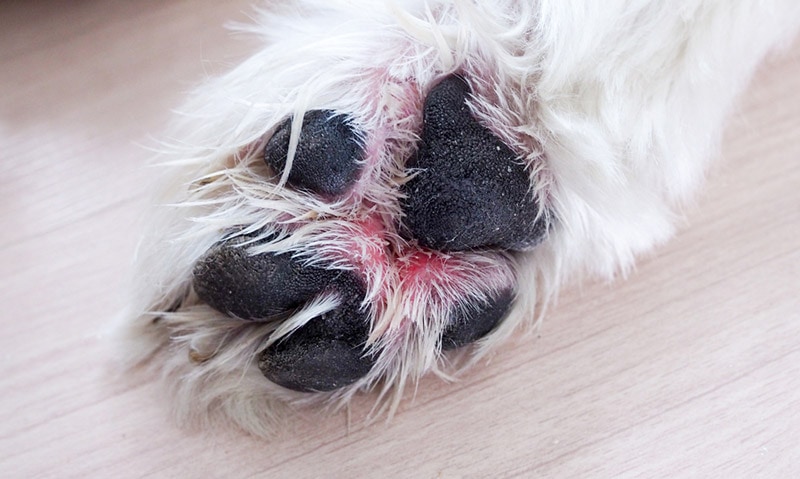
It is important to keep your pup’s paws in tip-top shape so they can walk, run, and play! Before getting into common paw problems, here are some facts about dogs’ feet:
- Dogs walk on their toes (digitigrade),1 like cats, rather than the soles of their feet (plantigrade), like people.
- Most dogs have four weight-bearing digits on their front and hind feet, plus a dewclaw on the inside of each front paw (like a thumb).
- Some dogs have dewclaws on their hind feet as well; this is most commonly seen in livestock guardian breeds like the Great Pyrenees.
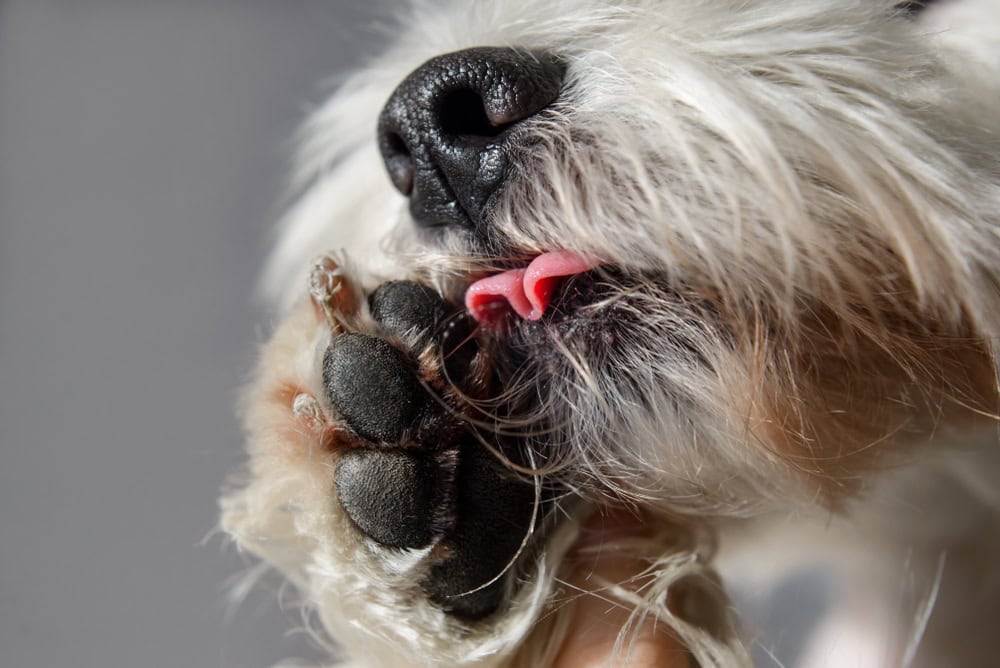
- Dogs’ paw pads provide grip and absorb the shock of movement.
In this article, we'll review some common paw issues that can affect our canine friends and what can be done to help. We'll also offer some tips for keeping your dog’s paws happy and healthy!

The 9 Dog Paw Problems
1. Excessively long or ingrown nails

While dogs’ nails naturally get some wear through their normal activities, it is important to check them regularly and trim them when needed. Long nails can cause your pup discomfort and they are also at risk of getting caught on things, which can lead to injury.
Some breeds (e.g., Pugs and Dachshunds) have quite curved nails, which can grow into the foot pads if they become too long. In most other breeds, this problem tends to be limited to dewclaws. Ingrown nails hurt and often become infected.
What To Do:
2. Broken nails

As previously mentioned, long nails (especially dewclaws) are at risk of getting caught and torn/broken. Keeping your dog’s nails trimmed nice and short is the best thing you can do to prevent broken nails.
If your pup seems to have particularly brittle nails that are prone to breaking or splitting even when they are short, ask your veterinarian if there could be an underlying medical condition that needs to be addressed (e.g., lupoid onychodystrophy).3
What To Do:
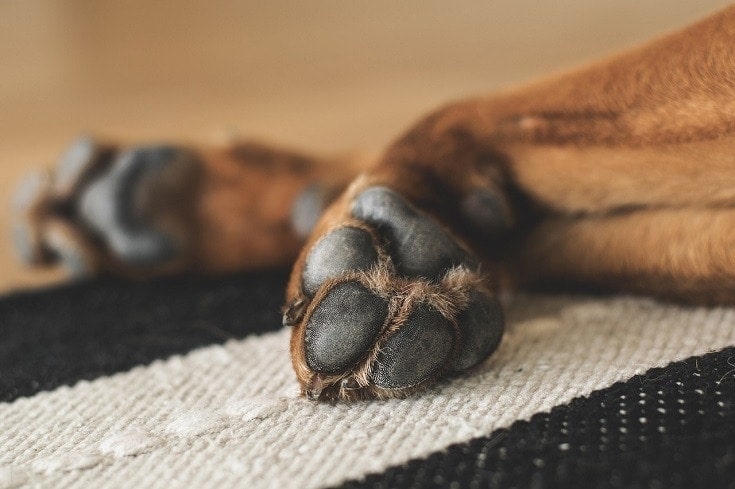
3. Dry, cracked foot pads

Dogs’ foot pads are important because they provide traction and act as shock absorbers. They are designed to withstand normal wear and tear caused by everyday activities, but they can become dry and cracked from the following:
- Exercise in rugged terrain
- Exposure to extremely hot or cold surfaces
- Contact with road salt, chemical de-icers, and residue from household cleaning products
You can help protect your dog’s paws by having them wear boots outside or applying a protective wax/balm before heading outdoors. It is a good idea to rinse or wipe their feet with warm water after they come inside, especially in the winter.
What To Do:
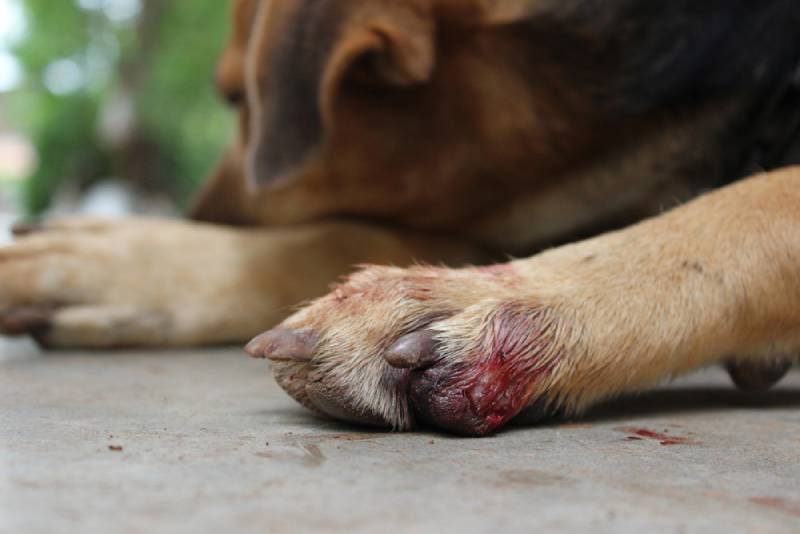
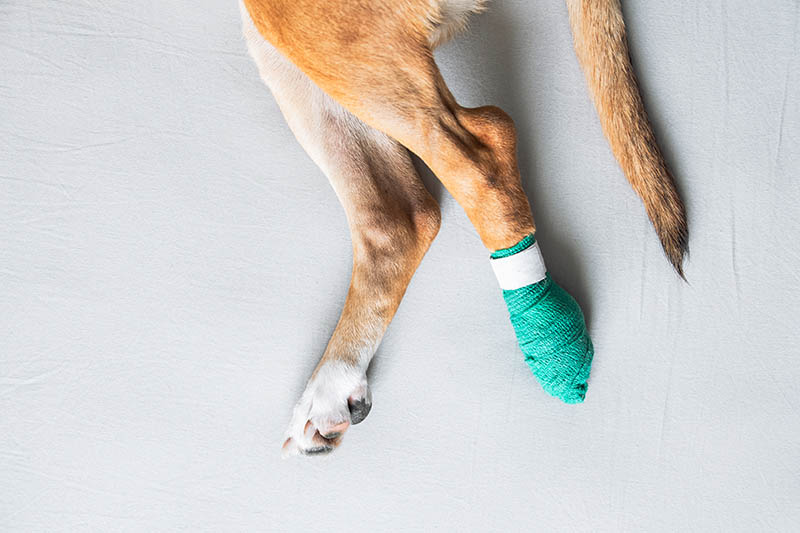
4. Abrasions, lacerations, and puncture wounds

Just like people, dogs can get scrapes and cuts when they are out and about enjoying life. These types of wounds may result from walking on hot pavement, running on rough surfaces, or stepping on something sharp. Injuries like this generally cause discomfort, so you will likely notice your pup favoring the affected paw(s).
What To Do:
5. Musculoskeletal injuries

The word musculoskeletal refers to something affecting your dog’s muscles, tendons, ligaments, or bones. These types of injuries are often the result of accidents, such as:
- Getting caught in something (e.g., fence, door, wildlife trap)
- Jumping or falling from an unsafe height
- Being stepped on, crushed by something heavy, or hit by a car
Injuries of this nature usually cause fairly obvious pain and swelling.
What To Do:
6. Insect bites/stings

Bees, wasps, hornets, biting ants, and spiders can all give a nasty bite/sting if accidentally stepped on. If this happens to your pup, you may notice that they suddenly start limping or chewing at the affected paw.
What To Do:
7. Allergies

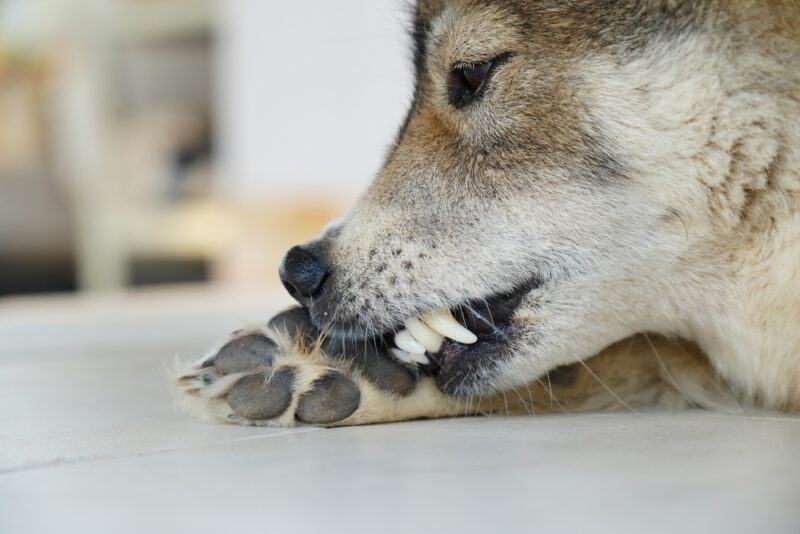
Veterinary dermatologists typically often describe allergy symptoms as showing up in “ears, feet, and rears”. If your pup frequently chews at his or her paws, this could be a sign of an adverse reaction to something in their food, environment, or both.
It is important to identify and treat allergies because they can cause significant discomfort! They often also lead to secondary infections when the skin is damaged by excessive licking, chewing, and scratching.
What To Do:
8. Pododermatitis

The term “pododermatitis” simply refers to inflammation of the skin between the toes. This is usually the result of an infection with bacteria, yeast (or both) but can also be “sterile” (meaning no infectious agent is identified).
Dogs who experience frequent bouts of pododermatitis often have an underlying condition, such as allergies.
What To Do:
9. Interdigital cysts (furuncles)

Interdigital cysts (more correctly called furuncles) are firm lumps that can develop between dogs’ toes as a result of hairs being forced deep into the skin. The body mounts an inflammatory response to keratin, and infection often follows.
Breeds with short, bristly hair (for example, English Bulldogs) seem to be at higher risk. Allergies and demodectic mange can be contributing factors. This condition is painful and affected dogs will often limp.
What To Do:
Conclusion
Now that we have discussed some of the common problems that can affect dogs’ paws, here are some tips for keeping your pup’s feet in good condition:
- Trim their nails regularly to prevent ingrown nails, reduce the risk of torn/broken nails and other injuries.
- Avoid walking your dog on hot surfaces (e.g., pavement, sand).
- Consider boots to protect your dog’s paws from harsh terrain and extreme temperatures.
- In winter, use pet-safe ice melt products and rinse or wipe your dog’s paws with warm water after spending time outdoors.
- Practice handling your dog’s paws so you can check them frequently for signs of trouble.
If you have any concerns about your dog’s paws, please schedule an appointment with your veterinarian.
See also:
Sources
https://veterinarypartner.vin.com/default.aspx?pid=19239&catId=102899&id=9767513
https://vcacanada.com/know-your-pet/first-aid-for-insect-stings-in-dogs
https://www.vetderm.ca/storage/app/media/597b60444c4f3_NWVDS_Food_Trial.pdf
https://canadawestvets.com/forms/DermatologyIntradermalAllergyTestProtocol.pdf
https://vetmed.illinois.edu/2021/05/11/canine-atopic-dermatitis-updated-treatment-options/
https://itchypetvet.com/files/2018/06/Treatment-Options-for-Environmental-Allergies-in-Pets.pdf
https://veterinarypartner.vin.com/default.aspx?pid=19239&id=8713573
https://www.frontiersin.org/articles/10.3389/fvets.2022.880349/full
Featured Image Credit: Kittima05, Shutterstock
Get Hepper In Your Inbox


Pet care tips from our vets and experts, straight to your inbox.
You may opt-out at any time. View our Privacy Policy for more information.
Dr. Sharon (as she is known by her clients) has had an intense love for animals for as long as she can remember. She grew up in Guelph, Ontario and fulfilled her childhood dream by obtaining her Doctor of Veterinary Medicine (DVM) degree from the Ontario Veterinary College in 2009. She has since found joy working in a variety of small animal clinics, focusing on cat and dog care. She loves sharing her expertise and empowering pet owners to take the best possible care of their fur babies!
Sharon currently lives in beautiful British Columbia with her husband, daughter, and Parker, her loveable Great Dane. When she’s not at work, she enjoys clogging, photography, and exploring the outdoors with her family.
Dr. Sharon (as her clients call her), was raised in Guelph, Ontario, and has loved animals for as long as she can remember. She fulfilled her childhood dream when she obtained her Doctor of Veterinary Medicine (DVM) degree. Sharon now lives in British Columbia, Canada with her husband, daughter, and Parker, their loveable Great Dane. When she’s not working, she enjoys clogging, photography, hiking, and camping with her family.
Education
Dr. Sharon obtained her DVM in 2009 from the Ontario Veterinary College in Ontario, Canada.
Experience
Dr. Sharon loves sharing her knowledge and empowering people to take the best possible care of their fur babies, which she has been able to do through her work. She has practiced in a variety of small animal clinics since graduating, with a main focus on cats and dogs.
Check out some of our top posts written by our veterinary team:
Why Does My Dog Snore? Should I Act?
My Cat Ate Paint! Our Vet Explains What to Do Now
How Common is Heartworm in Cats? 7 Things to Know About Heartworm Disease
Join the conversation
Ask a question, share your story, or send private feedback.