Hepper is reader-supported. When you buy via links on our site, we may earn an affiliate commission at no cost to you. Learn more.
How to Tell if Your Cat Is Deaf? 5 Vet-Approved Signs to Look For



In this article
Deafness in pets, but specifically cats, might be more common than you'd think. Senses can deplete as any creature ages. These are just facts of life. If your cat is advancing in years or some oddity made you curious about your cat’s hearing abilities, this article is for you.
After reading this article, regardless of your verdict, know that we aren't diagnosing or giving you medical advice. If you suspect your cat is deaf, you should always consult your veterinarian. But here are some confirmation points in case you need them.

The 5 Signs Your Cat Is Deaf or Losing Hearing
If your cat is deaf or losing its sense of hearing, you might notice a handful of signs. Here are five.
1. Your Cat Might Ignore Commands
If you tell your cat to get down off a counter or come to eat their food, they might not skedaddle or come running like they once did. Are you beginning to realize that they aren’t just ignoring you like they sometimes do?
If your cat isn’t acknowledging your voice anymore, it could be more than just a cold war for not filling up their food dish on time.
2. Your Cat May No Longer Respond to His or Her Name
If they can’t hear you, they can’t really acknowledge their name, right? It makes sense. But if all is well and then all of a sudden, your fuzzy friend isn’t batting an eyelash at their own name even when from a short distance, you might have a cause for concern.

3. Your Cat Might Startle Easy
If your cat doesn’t hear you coming, they might spook much easier than before. While this is normal and will probably lessen with time, it might cause eventual aggressive responses.
Your best bet is to make sure your cat has a complete visual of you before reaching to pet or feed them. Comfort them and let them know it’s safe. Do not try to shake them awake, they may react in a hostile or defensive fashion.
4. Your Cat Might Not Have Good Balance
Because the ears are directly responsible for balance, your cat might develop issues in this department after they start to lose their hearing. When there is a problem with the inner ear, it can greatly impact the ability to receive sound.
When your cat jumps, you might notice they can’t make it to another spot like they used to. Or they might seem a little unstable on their feet.
5. Your Cat Is White
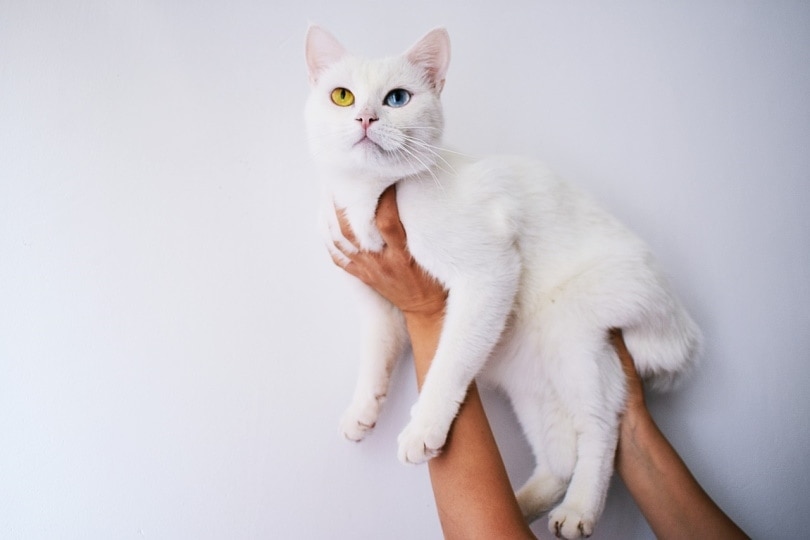
When it comes to congenital deafness, this condition is far more common in white cats than any other coat color. If that white cat has two blue eyes, they are even more likely to be deaf than a cat with another iris color.
White cats can have a gene termed W that is pleiotropic, which increases the likelihood of deafness when combined with blue eyes. In fact, 60% to 85% of cats with white coats and blue eyes are born deaf.
However, not all white-coated cats are deaf. It is simply much more likely. These cats are also more likely to have vision issues, including blindness.

Why Do Cats Lose Their Hearing?
Cats can lose their hearing for various reasons—there is no one specific cause. However, some factors can make it much more likely in some.
The 6 Frequent Triggers of Hearing Loss in Cats
Certain factors make deafness more likely in cats.
1. Trauma to Inner Ear
If anything damages the inner ear involving injury or forced trauma, it can cause significant hearing loss. There are very sensitive components in the ear that do not recover well if disrupted.
2. Birth Defect
Certain cats are genetically more likely to have deafness than others. There is a chance a kitten can be born without the ability ever to hear. If it is a congenital disability, you might notice an obvious difference in their progression over their siblings.
3. Exposure to Frequent Loud Noises
Over time, if cats are exposed to loud noises—like us—their hearing will naturally decline. They have an even better sense of hearing than humans, making them even more sensitive to long-term noise.
4. Tumors
If your cat has a tumor pressing on a vital nerve or component of the ear, it can cause total loss of hearing. Some other symptoms include waxy or bloody discharge, head tilting, abscesses, and foul odor. They can also develop both malignant and benign tumors in the ears.
5. Certain Medications or Procedures
Certain medications can cause hearing loss, like antibiotics and other meds that are ototoxic and vestibulotoxic. Also, when cats undergo anesthesia, they can spontaneously wake up with some hearing loss.
6. Old Age
Our senses don't get better as we get old—and neither do our cats. Just the natural bodily decline will cause the senses to weaken.

Testing and Diagnosing Deafness in Cats
At home, you can try a few exercises to get a reaction. Try jingling keys or clapping your hand up close. If there is no reaction, it might be time for a vet visit.
Vets can check for anything that might be obstructing their hearing. While vets cannot diagnose deafness precisely, they can get to the underlying cause.
Handling Your Deaf Cat
When interacting with your deaf cat—just use a little more precaution than usual.
When it comes to approaching your cat, there are things you need to do a little differently. Remember they cannot hear anyone coming, which means they might be a little jumpy or more aggressive than before.
You might find that your cat uses other senses to compensate for lack of hearing. They might increase vocalizations. Acknowledge your cat by making lots of eye contact and comforting physically. A once quiet cat could be a little more talkative than before.
Try not to spook your cat. Always engage with him or her with respect and make sure they lock eyes before touching or picking up.

Final Thoughts
So, now you know that cats can lose their hearing in multiple ways and be born deaf. If you suspect that your cat can’t hear, you might want official confirmation from your vet.
Even though losing hearing might affect your cat in a few ways, it's nothing that you can't work around. You can make a few accommodations so your cat can safely enjoy their life. Cats are resilient creatures. You’ll be surprised at how well they acclimate over a short time.
See also: Are Deaf Cats More Affectionate?
Featured Image Credit: Helen Bloom, Shutterstock
Get Hepper In Your Inbox


Pet care tips from our vets and experts, straight to your inbox.
You may opt-out at any time. View our Privacy Policy for more information.
Ashley Bates, a freelance writer with a passion for pets, is currently studying animal therapy. She is a mother to four children and 23 pets, both furry and feathery. Ashley actively volunteers at local shelters, advocates for animal welfare, and rescues animals in distress. Her mission is to promote awareness, education, and entertainment about pets to help prevent animal homelessness. She specializes in the care and well-being of dogs and cats.
Join the conversation
Ask a question, share your story, or send private feedback.