Hepper is reader-supported. When you buy via links on our site, we may earn an affiliate commission at no cost to you. Learn more.
How Long Can Australian Shepherds Be Left Alone? Time Limits & Considerations
In this article
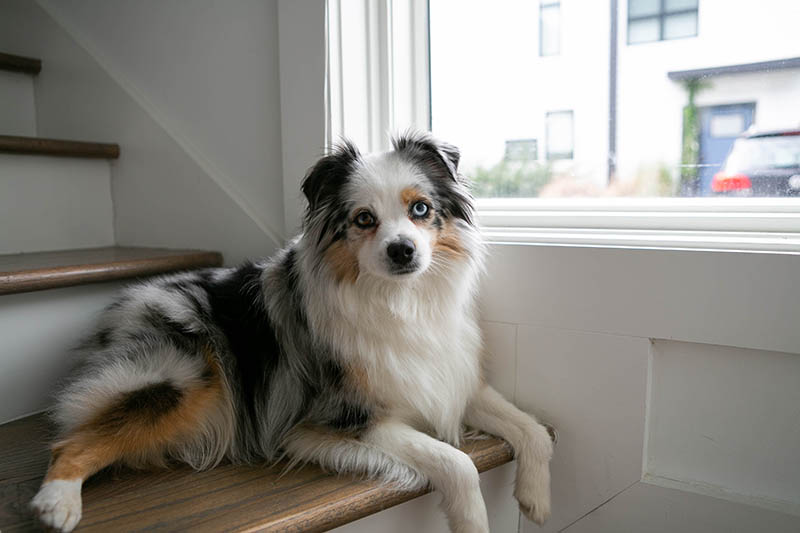
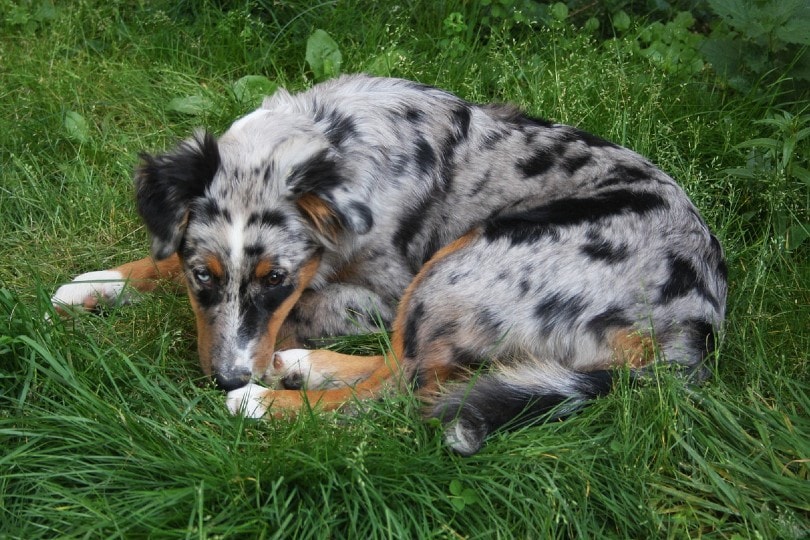
Something that all dog owners need to deal with at one time or another is leaving their dog at home to attend appointments or errands that can't be moved or missed, despite making every accommodation for your dog. Australian Shepherd owners know that the dogs are intelligent, sensitive, and prone to suffering from separation anxiety and shouldn't be left alone for long.
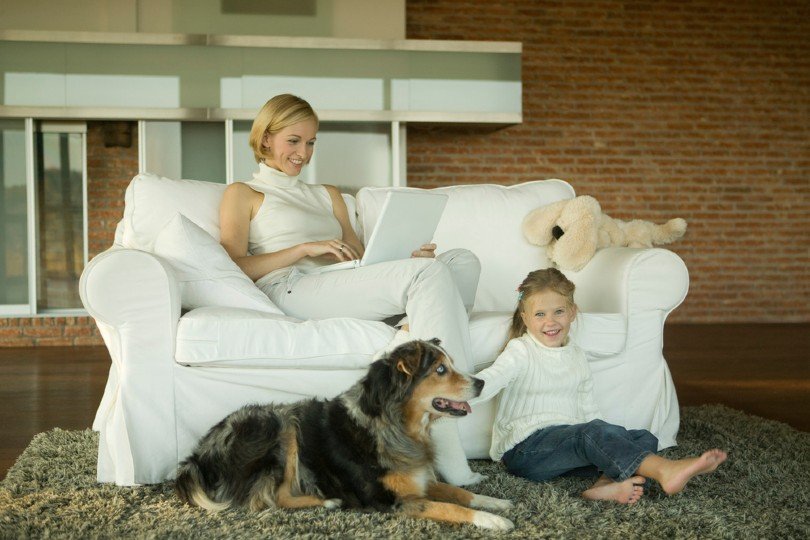
Australian Shepherd owners shouldn't leave their dogs alone for more than 3 to 4 hours at most, as these devoted and loyal dogs won't be happy without their owners. They can sometimes even be destructive, causing potential damage to themselves or their home.
Dog sitting (either at home or doggy daycare) can be an excellent remedy for this, allowing your Australian Shepherd the human interaction time they need to be confident and stay calm, and allowing owners to relax, knowing their dogs are safe and being cared for while they're out or at work.
Australian Shepherds thrive on routine, so getting them used to a dog sitter gradually before leaving them for extended periods can significantly reduce anxiety and help them adjust.

Do Australian Shepherds Suffer From Separation Anxiety?
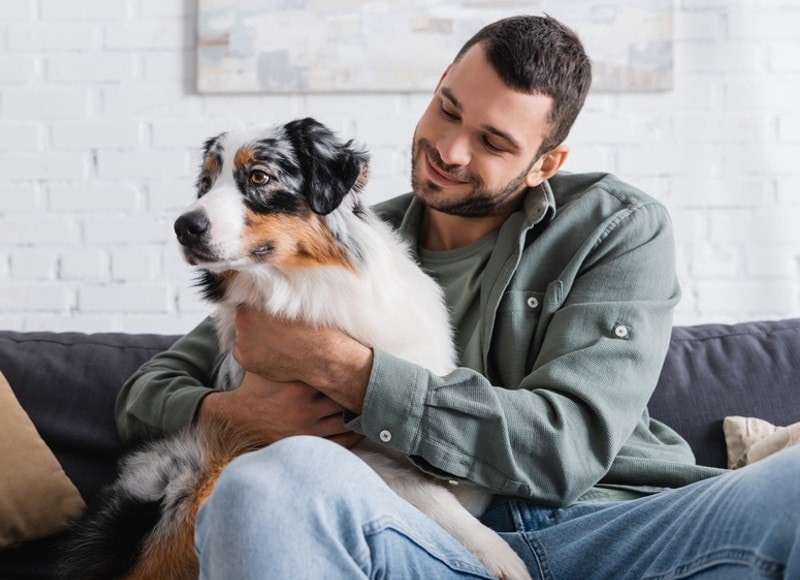
Not all Australian Shepherds will suffer from separation anxiety, but they're generally well known for being sensitive dogs that form deep attachment bonds to their families. This sensitivity and depth of attachment can cause separation anxiety when they are left alone, causing overwhelming feelings of stress if the routine is broken.
Aussies were bred to assist humans and crave human interaction and reassurance, although they're not difficult dogs to manage. A good routine and understanding paired with limited time alone can be all you need to reassure your Australian Shepherd that it's okay when you're not around.

Do Australian Shepherds Ever Calm Down?
Australian Shepherds calm down and become more confident and relaxed with age. When they're around two years old, Aussie Shepherds tend to calm down to a degree since they can manage their energy levels better and are fully cognitively developed.
Australian Shepherd owners can help this process along by providing enough mental and physical exercise and stimulation to help the dogs expend their energy in a healthy way, such as through training or exercise, like flyball.
How Do You Calm An Australian Shepherd?
To help your Australian Shepherd calm down, you must first identify the behavior you want to reduce and its cause. For example, is boredom the culprit of nervous barking? Or is anxiety the cause of destructive behavior? Once you discover the reason for your Aussie’s problem, you can start to work on remedying it.
Australian Shepherds react well to mental stimulation and physical exercise, which can include:
Pairing these exercises with a wind-down routine in the evening can reassure your Australian Shepherd and settle them down for the night.

How Often Should You Walk an Australian Shepherd If Left Indoors?
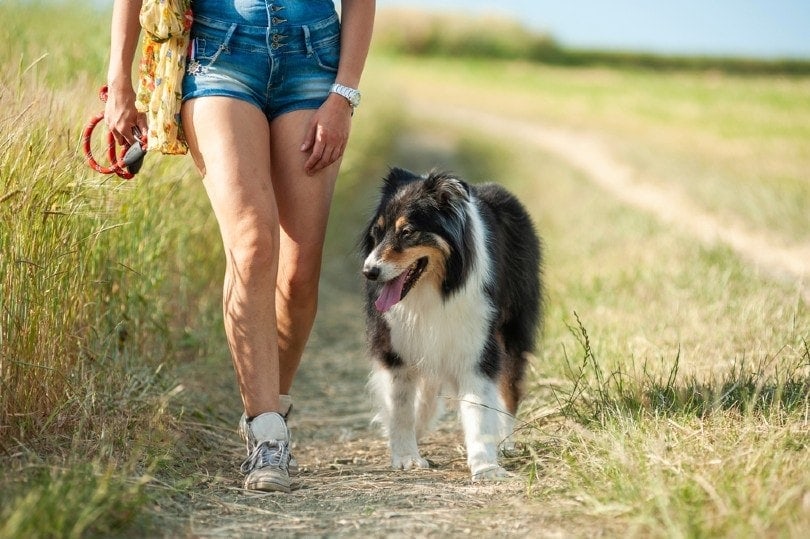
Each Australian Shepherd will need a personalized amount of exercise per day, but the American Kennel Club (AKC) recommends that Australian Shepherds get upwards of 2 hours of walks per day since they are highly energetic, active dogs.
These walks are best split into two one-hour walks during the day (morning and evening, for example) or longer, giving your dog plenty of time for burning energy off.
Tips For Keeping Your Australian Shepherd Safe Indoors
Conclusion
Australian Shepherds are wonderful, devoted companions that thrive on human interaction, but it comes at the price of potential separation anxiety. Sufficient exercise, lots of loving interaction, and limited time alone can manage this. Making use of a doggy daycare can also ensure your Aussie isn't left alone for long.
If you're worried about leaving your Australian Shepherd alone or have any concerns about their behavior when they're on their own in the house, speak to your veterinarian so they can provide pointers and even a referral to a behavioral specialist if needed.
Related Read:
Sources
Featured Image Credit: Ermolaeva Olga 84, Shutterstock
Get Hepper In Your Inbox


Pet care tips from our vets and experts, straight to your inbox.
You may opt-out at any time. View our Privacy Policy for more information.

Nicole is a lover of animals of all sizes but is especially fascinated with the feline variety. She’s the proud mom of Baby, a Burmese, and works every day so he can relax in the sunshine or by the fire. She’s always had a cat in her home and has spent countless days with others, observing behaviors and softening up even the grouchiest of the lot. Nicole wants to share her kitty expertise with you so you and your cat can live happy, healthy, and care-free.
Join the conversation
Ask a question, share your story, or send private feedback.