Hepper is reader-supported. When you buy via links on our site, we may earn an affiliate commission at no cost to you. Learn more.
How to Build a Fish Tank: Easy 12-Step Guide That You Can Follow
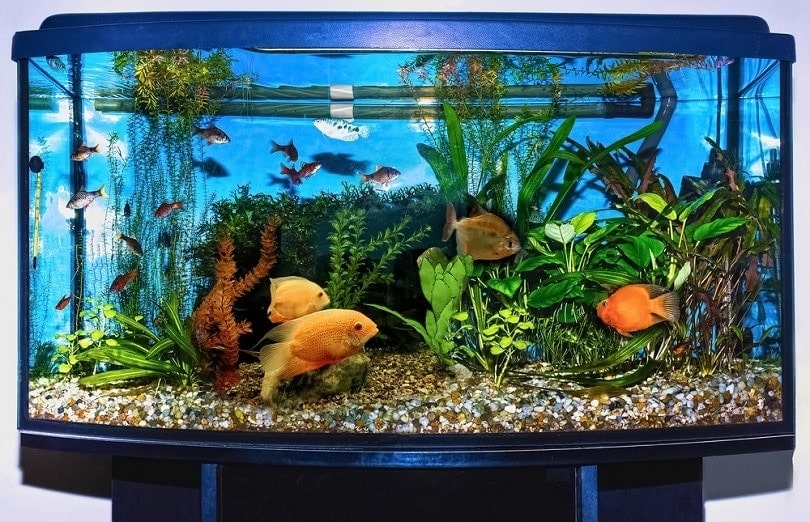
If you want a custom fish tank and you enjoy a challenge, building your fish tank may be just the project for you! It's no secret that fish tanks can be pricy, especially large tanks. Building your tank may save you money and will give you a sense of pride and accomplishment.
This isn’t a project for the faint of heart, though. Building a fish tank is time-consuming and not the type of project you can take shortcuts on. It’s also a project that can help you grow and develop new skills, like glass cutting and the use of a caulk gun.
Here are the materials you need and steps to take to build your fish tank!

Important Note
You must get the right glass for your fish tank. Tanks less than 20 gallons can usually be made with plexiglass, but anything larger than that needs thicker, stronger glass. Using the wrong glass can lead to leaks, flooding, and even a broken tank. Depending on the size and shape of your tank, you may even need glass almost 1 inch thick. Buying glass in person instead of ordering online will help you get the right glass. You’ll also need to decide on pre-cut glass or cutting your own.
You also need to get the right silicone for the aquarium building. Silicone with additives like anti-mold agents can be unsafe for aquatic life. Aqueon silicone is an aquarium-safe product that is available in many stores and online.
Materials:
The 12 Steps to Building a Fish Tank
1. Pick Tank
Decide on the shape and size of your tank and gather all materials.
2. Sand
Sand down any rough or uneven edges on the glass.
3. Prepare Tape
Cut pieces of tape and place them face-up under the base glass. Leave tape tabs sticking out from the base. This tape will be used to help hold the glass sides in place while the silicone cures. Only lay the glass pieces on a padded, flat surface.
4. Wipe
Wipe down each edge where the silicone will be laid with rubbing alcohol or acetone and allow it to fully dry.
5. Lay silicone
Lay down a strip of silicone about the width of the glass panels along the top edge of the glass base. The sides need to sit on top of the base glass.
6. Set Sides
Set the first side into place and use the tape tabs to help secure it. Lay a strip of silicone down one side of the side piece and a strip on the next side of the base piece and place the next side in place, using tape tabs to secure it. Repeat this step for all four sides.
7. Adjust
Once all sides are in place, use the square inside the tank to ensure all sides are squared away and straight. Adjust the pieces as needed.
8. Lay Silicone
Once you’re sure all pieces are straight, begin laying strips of silicone along each interior seam, starting with the base. Run your finger or a paper towel along each interior seam to flatten the strip and create a stronger seal.
9. Attach Brace
Long or large tanks are most secure with a brace in the middle across the top of the tank. This can be accomplished with a piece of glass cut to the width of the tank from the outer edges of each side. Use silicone to place this brace across the top of the glass. Gently press it into place and adjust the location as needed to ensure it is flush with the edges of the tank.
10. Silicone Curing
Once each seam is sealed, allow the silicone to cure for the length of time listed on the package. Usually, this will be 24-48 hours at minimum. Be aware that humidity, temperature, and airflow will affect how long silicone takes to cure. In cold weather or high humidity, silicone may take 5-7 days to fully cure.
11. Test
Once the silicone has fully cured, begin to test the water-fastness of the tank by filling it with small amounts of water at a time to watch for bowing and cracking. Once you’ve filled the tank, allow it to sit for 12-24 hours to ensure there are no leaks. If your tank has leaks, you can seal over the outer edge of the tank where the leak is, allow it to cure, then try again. If a leak is still present, you can use a razor blade to scrape the area of silicone on the interior where the leak is and re-seal it. Don’t cut through the seal. Just remove the interior piece of silicone. If this is not successful, you will need to strip the silicone and repeat step #10. Silicone will not adhere well to dry silicone.
12. Extras
You can build frames and lids as you like, fill and cycle your tank, and you’re ready to go with your new custom tank!
Final Thoughts
Building your fish tank is a labor of love, but if done well, the payoff is beautiful. You can build just about any size or shape of the tank with this step-by-step guide, with some minor adjustments for very large, very small, or unusually shaped tanks.
This is a project that will take time and effort and should only be done if you have a safe place for your tank to cure and test. Always test your tank before using it or you may come home to a flooded room. For practice and safety, get comfortable using the caulk gun or silicone squeeze tube before starting on the glass. If you’re cutting your glass and are not experienced, use extreme caution and practice multiple times with “scrap” glass before attempting to cut your glass pieces to size. Wear cut-proof gloves when handling glass. The raw glass edges can be extremely sharp.
As long as you carefully follow all of these steps to build your tank and don't take any shortcuts, you and your fish will be pleased with the outcome. Every day you’ll get to radiate the pride of your hard work when you look at your DIY tank.
You might also like:
Featured image credit: Solarisys, Shutterstock
Get Hepper In Your Inbox


Pet care tips from our vets and experts, straight to your inbox.
You may opt-out at any time. View our Privacy Policy for more information.

Lindsey discovered her passion for fish keeping after a junior high school field trip to the Shedd Aquarium in Chicago. Prior to becoming Editor-in-Chief of It's a Fish Thing, Lindsey studied marine biology at the University of California-Santa Cruz. She loves goldfish, tetras, and mystery snails, and recently began experimenting with a saltwater aquarium.
Join the conversation
Ask a question, share your story, or send private feedback.