Hepper is reader-supported. When you buy via links on our site, we may earn an affiliate commission at no cost to you. Learn more.
Kidney Stones in Dogs: Our Vet Explains Signs, Causes & Treatment


In this article
You’ve probably heard of people developing kidney stones, but did you know that dogs can get kidney stones too? Kidney stones are crystalline structures that form in one or both of a dog’s kidneys. Although they’re not that common in dogs, when they do occur, kidney stones have the potential to cause serious health complications for our canine companions.
Let’s discuss the topic in more detail, including the signs of kidney stones, their causes, and how the condition is treated.

What Are Kidney Stones?
Kidney stones are hard objects, made up of millions of tiny crystals that form inside one or both of a dog’s kidneys. Kidney stones vary in size and shape ranging from millimeters to several centimeters 1. These stones may be smooth or jagged, depending on their composition.
Kidney stones may be clinically silent and not cause any issues at all or they may be associated with serious complications such as urinary tract obstruction, recurrent infections, and chronic kidney disease (CKD)2..
Do Kidney Stones Have Another Name?
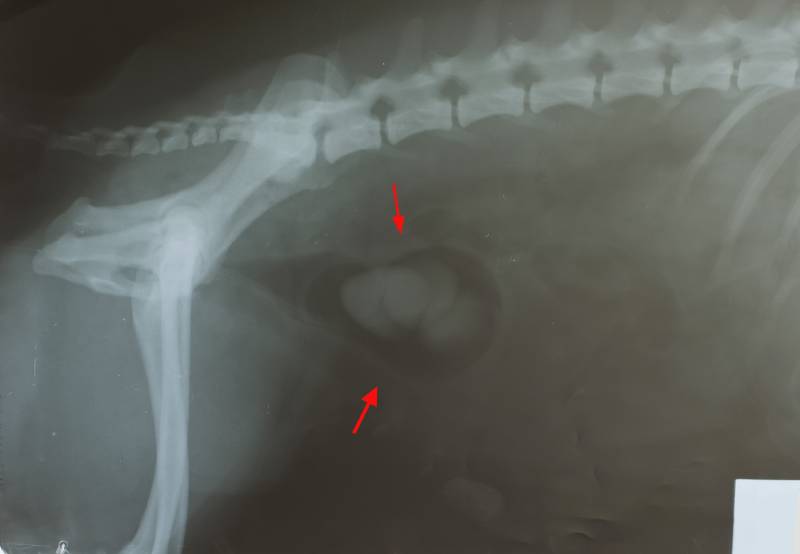
The medical term for a kidney stone is renal calculus or nephrolith. “Nephro” means kidney and “lith” means stone, so the word nephrolith quite literally means “kidney stone”. You may hear your veterinarian refer to the condition as nephrolithiasis.
What Type of Kidney Stones Can Dogs Have?
Kidney stones come in a variety of mineral types, including calcium oxalate, struvite, uric acid, and cystine 3. Calcium oxalate and struvite are the most common types of stones in dogs.


What Are the Signs of Kidney Stones in Dogs?
Not all kidney stones cause issues. In some cases, a dog may have kidney stones and show no clinical signs. These stones may be detected incidentally on X-rays or ultrasound when an unrelated condition is investigated.
When kidney stones do cause issues, the clinical signs depend on the size, location, and number of stones present, as well as whether there is an infection, and/or a urinary tract obstruction.
In these cases, the following signs may be seen:
- Blood in the urine
- Pain in the region of kidneys
- Recurrent urinary tract infections
- Vomiting
- Lack of appetite
- Frequent urination
- Weight loss
- Fever
- Lack of energy
What Are the Causes of Kidney Stones in Dogs?
The kidneys are two bean-shaped organs that help to maintain a healthy balance of water, salts, and minerals in a dog’s body. Kidneys also remove waste through a filtering process. The product of this filtering process is urine. Under certain conditions, substances normally dissolved in the urine become too concentrated and separate out as crystals. The crystals link together and increase in size to form even larger crystals and, eventually, a stone.
Although it’s not entirely known why this process takes place, kidney stones are likely caused by a combination of genetic, dietary, and environmental factors, including:
- The type of food the dog is eating
- Urinary tract infections
- Metabolic diseases
- Genetic predisposition (breed of animal)
- Long-term use of certain medications

How Are Kidney Stones Treated in Dogs?
Kidney stones are treated medically or surgically, depending on the stone type and the severity of the clinical signs.

1. Medical Management
Certain types of stones can be dissolved by feeding your dog a special diet. The diet will be tailored to the specific type of stone that is present. Unfortunately, not all stones are able to be dissolved. In these cases, your veterinarian will advise regularly monitoring the stones and removing them if they become a problem.
Your veterinarian may also prescribe antibiotics to treat any underlying urinary tract infections.
2. Surgical Management
Surgery is usually only advised for kidney stones causing significant obstruction or infection, as the procedure has the potential to negatively affect kidney function.
Some referral institutions offer a procedure known as lithotripsy. Lithotripsy uses shock waves to break up stones in the kidney and parts of the ureter (the tube that carries urine from the kidneys to the bladder). After the procedure, broken pieces of stone pass out of the dog’s body in their urine.
3. Subsequent Management and Monitoring
Kidney stones have a tendency to recur so your veterinarian may advise periodic monitoring with X-rays, ultrasound, and urine tests to check for the recurrence of stones.
If your dog is predisposed to developing kidney stones, your veterinarian may also advise feeding a special maintenance food to prevent the stones from recurring.

Frequently Asked Questions (FAQs)
How are kidney stones diagnosed?
Kidney stones are diagnosed on X-ray or ultrasound. As part of the investigation, your veterinarian will likely advise running blood tests to assess your dog’s kidney function and to look for underlying conditions that may have resulted in stone formation. Your veterinarian will also analyze your dog’s urine and send a urine sample for culture and sensitivity to look for an underlying urinary tract infection.

Which breeds are predisposed to developing kidney stones?
Certain dog breeds are more susceptible to developing kidney stones due to genetic factors and metabolic abnormalities. For example, Dalmatians, Bulldogs, and Yorkshire Terriers are predisposed to developing uric acid stones, while Dachshunds are predisposed to cystine stones. Struvite and calcium oxalate kidney stones typically affect Miniature Schnauzers.
Conclusion
While not all kidney stones cause issues, they can become problematic. The most common signs seen include blood in the urine, fever, and recurrent urinary tract infections, and signs of chronic kidney disease include frequent urination, a lack of appetite, and vomiting.
Kidney stones are likely caused by a combination of genetic, dietary, and environmental factors. Certain breeds of dogs are also predisposed to developing kidney stones.
Kidney stones are treated medically with special diets, or surgically. Your veterinarian will formulate a treatment plan based on your dog’s unique situation. If your dog is showing any signs of kidney stones, it’s important to book an appointment with your veterinarian right away.
Sources
Featured Image Credit: Zontica, Shutterstock
Get Hepper In Your Inbox


Pet care tips from our vets and experts, straight to your inbox.
You may opt-out at any time. View our Privacy Policy for more information.
Lindsay is a veterinarian who lives in the beautiful city of Cape Town, South Africa with her husband and their rescue cat and dog, Harrison and Blizzard. Lindsay obtained her bachelor's degree in veterinary science from the University of Pretoria and currently works in small animal practice. When she’s not at work, you can find her out in nature, hiking with Blizzard, or following some kind of creative pursuit, such as writing, playing the piano or sewing.
Lindsay is a veterinarian living in Cape Town, South Africa with her husband and their rescue animals, Harrison and Blizzard. You can find her hiking with Blizzard, enjoying time in nature, or writing when she’s not working.
Education
Lindsay graduated from the University of Pretoria, receiving her bachelor's degree in veterinary science.
Experience
Lindsay currently works in small animal practice.
Join the conversation
Ask a question, share your story, or send private feedback.