Hepper is reader-supported. When you buy via links on our site, we may earn an affiliate commission at no cost to you. Learn more.
Can Urinary Incontinence be Caused by Dog Food? Our Vet Answers

In this article
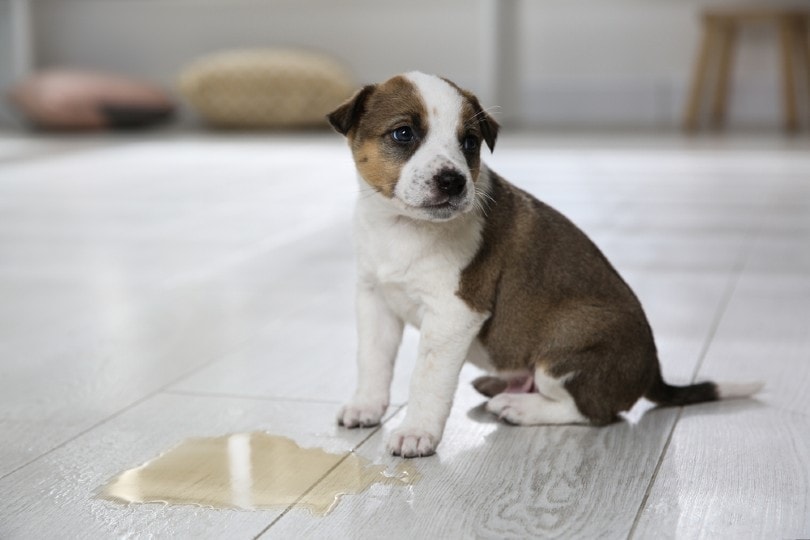
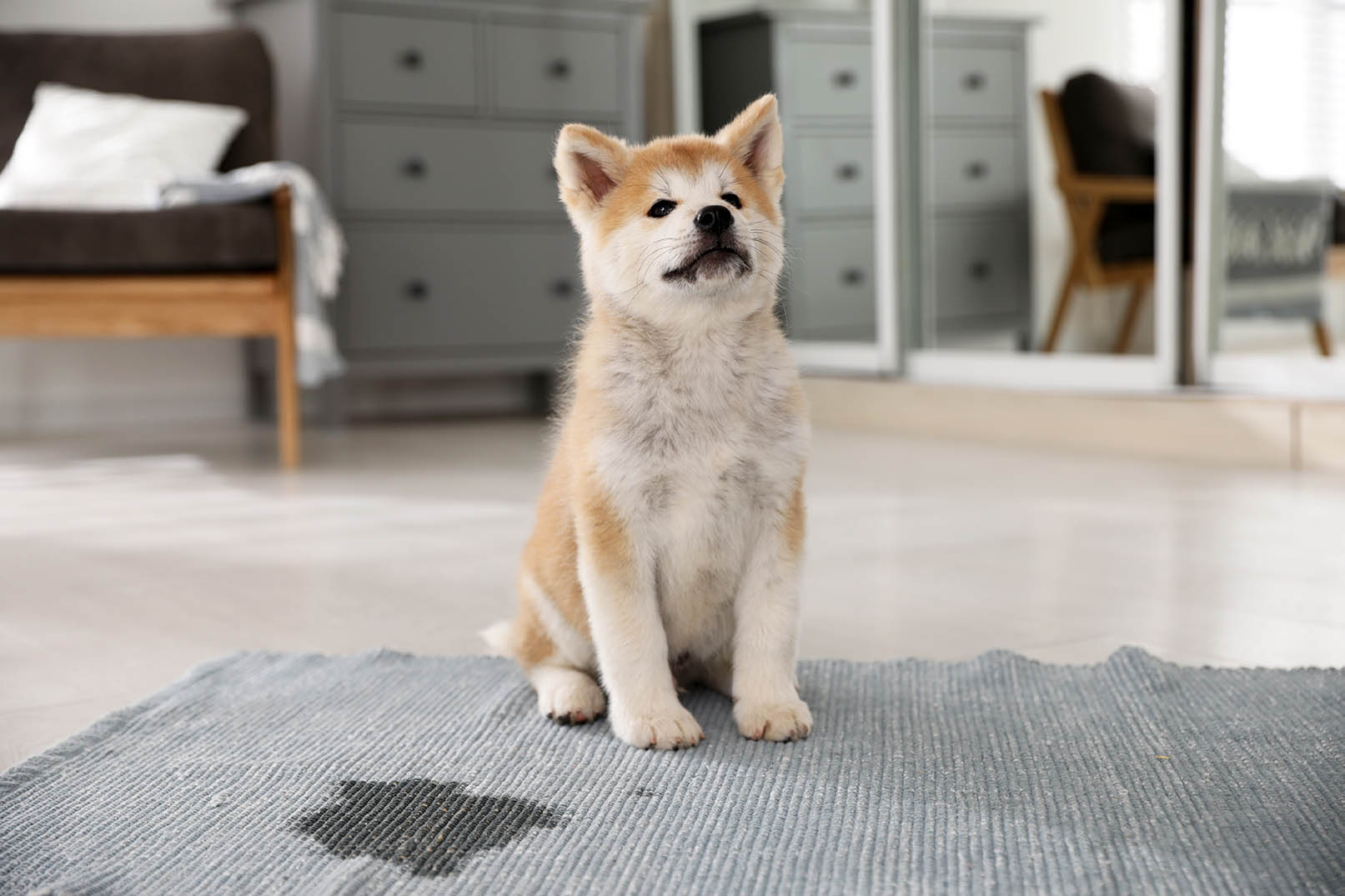
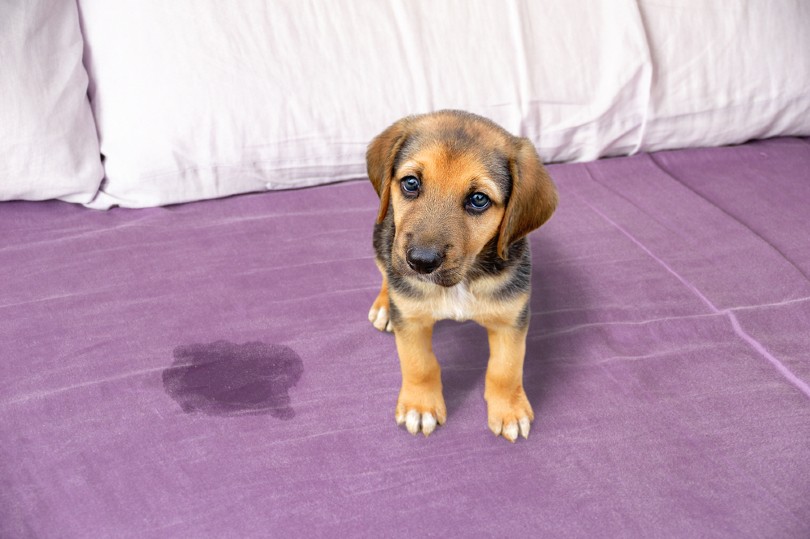
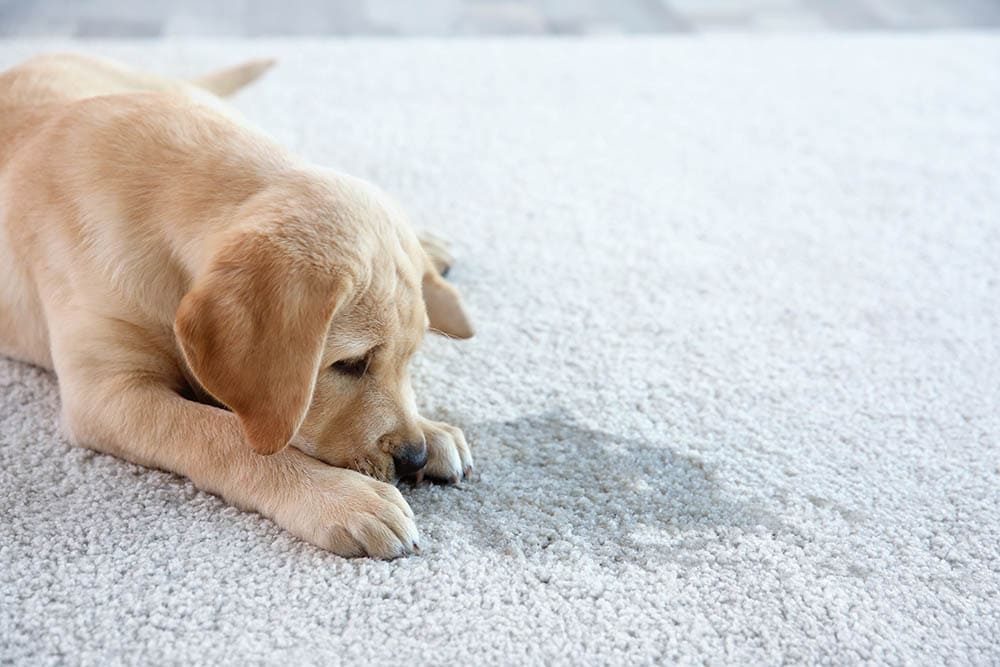
Puddles of urine on the floor, sofa, dog bed—or worse, your bed—are something that no owner wants to deal with. Your dog is potty-trained, so what could be going on? Urinary incontinence is a frustrating, yet common issue primarily affecting female dogs. While a variety of causes have been identified as contributing to this condition, dog food is thankfully not a documented cause of urinary incontinence.
The following article will discuss urinary incontinence in dogs, including its causes, symptoms, diagnosis, and treatment options, to keep you up to date on the latest information regarding this condition.

What is Urinary Incontinence?
Urinary incontinence (UI) refers to the involuntary passage of urine, with affected dogs often unaware that they are leaking. UI may vary in severity, with mild cases demonstrating normal urination with occasional leakage, while more severe cases can experience more continual dribbling of urine.
Signs of Urinary Incontinence in Canines
Symptoms of UI in dogs are fairly easy to identify, and may include the following observations:
- History of being difficult to housetrain, or never achieving continence indoors
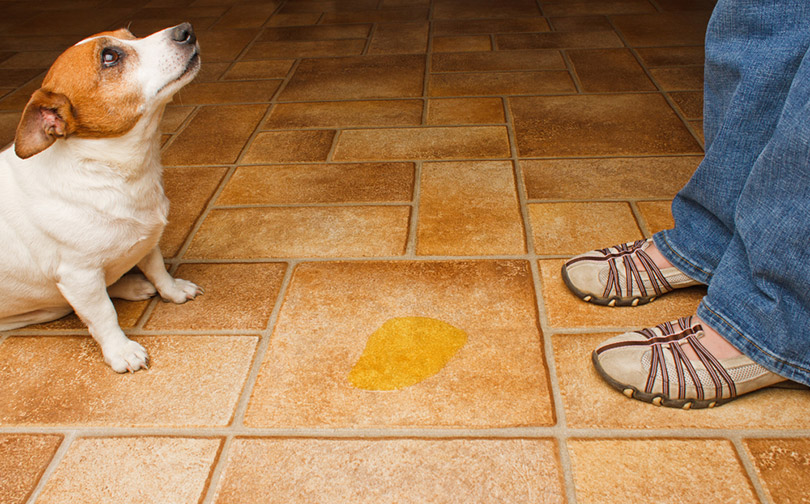
- Dribbling of urine (may range from occasional to constant)
- Noting small to large puddles of urine after sleeping or lying down
What Causes Urinary Incontinence in Dogs?
Multiple causes of canine UI have been identified, including the following relatively common conditions:
- Ectopic ureters (EUs): EUs represent the most common cause of UI in young dogs. An Ectopic ureter is an anatomical abnormality, present at birth, in which a ureter (the small tube that connects the kidney to the bladder) is attached to the bladder in an abnormal location. Ectopic ureters are more common in female dogs, and are considered to be a heritable condition—with at-risk breeds including the Golden Retriever, Siberian Husky, Newfoundland, English Bulldog, and Labrador R
- Urethral sphincter mechanism incompetence (USMI): USMI is the most common cause of canine UI, affecting between 5–20% of spayed female dogs. USMI is most common in middle-aged, spayed females; however, this condition may also be noted in younger intact female or male dogs. The exact cause of incontinence in cases of USMI is unclear, however, it’s thought to involve a weak urethral sphincter (a muscular structure that controls the flow of urine), abnormal anatomy of the lower urinary tract, or weakness in the anatomic structures supporting the urethra (the tube that transports urine from the bladder to the outside of the body).
In addition to the above-noted conditions, diseases affecting the spine or spinal cord, trauma, cancer, prostatic disease, urethral obstruction, or other anatomic abnormalities affecting the urinary tract may also lead to incontinence in canines.
Can Dog Food Cause UI?
But what about dog food—could that be a potential cause of canine UI? As noted above, diet is not considered to be a cause of UI in dogs.
However, while not a cause of UI, diet could be a contributing factor to the development of bladder stones in canines—a condition which can often lead to frequent urination, and less commonly, UI. A variety of types of bladder stones have been identified in dogs, including those made of struvite, urate, calcium oxalate, and cystine. Once a dog has undergone treatment for bladder stones, a prescription veterinary diet will likely be recommended long-term, to reduce the frequency of stone recurrence.
Strategies employed by prescription diets to minimize the risk of stone recurrence include altering the pH of the urine and closely controlling the levels of protein, calcium, and other minerals in the diet. If a dog with a history of bladder stones is not maintained on a prescription diet (or a diet formulated by a veterinary nutritionist), it may have a higher likelihood of stone recurrence, and subsequent return of urinary signs.

How is Urinary Incontinence Diagnosed?
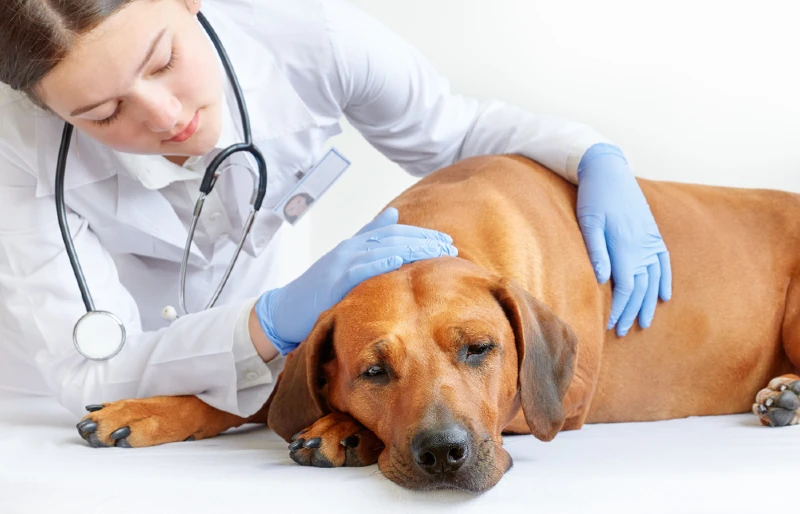
A diagnosis of UI requires an evaluation by a veterinarian. During this consultation with your veterinarian, they will obtain a detailed history by asking a variety of questions regarding your dog’s symptoms.
Next, they will perform a complete physical exam, taking special care to evaluate for any orthopedic (bone-related) or neurologic abnormalities that may be contributing to your dog’s symptoms. Careful palpation of your dog’s bladder will also be performed.
In addition to a history and physical exam, diagnostic testing is an important part of identifying the underlying cause of UI. Initial testing recommended by your veterinarian for further evaluation of urine leakage may include blood work, urinalysis, urine culture, and abdominal x-rays.
Depending on your dog’s results, more advanced imaging studies (such as ultrasound, contrast radiography, cystography, or cystourethroscopy) may also be recommended. Lastly, urodynamic testing can be considered to obtain a definitive diagnosis of USMI.
Treatment Options for Dogs with Urinary Incontinence
Treatment for canine UI will depend on the underlying cause behind the incontinence. For dogs with USMI, medical management with drugs, such as phenylpropanolamine (Proin) or estriol (Incurin), is often used as first-line therapy.
Patients that are non-responsive to medical management may be candidates for surgical treatment, such as urethral collagen injections, or artificial urethral sphincter placement. For canines with incontinence secondary to EUs, surgical correction of the abnormality has traditionally been the treatment of choice.
What is the Prognosis for Urinary Incontinence?
Treatment with medications, surgery or a combination of the two therapies is often successful in managing cases of canine UI. In cases of USMI treatment with phenylpropanolamine, symptoms are effectively controlled in 74–92% of affected dogs.
Unfortunately, success rates for surgical treatment of EUs are lower; approximately 44–67% of patients displayed signs of UI following surgery. However, in those canines, medication was often able to manage mild symptoms of UI that persisted after surgery.
Final Thoughts
In conclusion, a variety of causes of UI exist in canines, with USMI and EUs occurring relatively commonly. While not a direct cause of UI, diet may play a role in the development and recurrence of bladder stones in dogs; a condition which can present with a variety of urinary signs.
If you are concerned about UI in your canine companion, a veterinary visit and thorough medical workup are recommended to obtain an accurate diagnosis, and to start your furry friend on the road to recovery.
Sources
Urinary Incontinence in the Dog | School of Veterinary Medicine (ucdavis.edu)
Nutritional Management of Uroliths | School of Veterinary Medicine (ucdavis.edu)
Urinary Incontinence in Dogs: Diagnostics and Management Strategies - WSAVA2008 - VIN
Urinary Incontinence in dogs | Veterinary Teaching Hospital | Washington State University (wsu.edu)
Urinary incontinence in dogs -- diagnosis and treatment (Proceedings) (dvm360.com)
Incontinence: Urethral Sphincter Mechanism Incompetence - DVSC
Featured Image Credit: Africa Studio, Shutterstock
Get Hepper In Your Inbox


Pet care tips from our vets and experts, straight to your inbox.
You may opt-out at any time. View our Privacy Policy for more information.
Dr. Leigh is a US-based veterinarian with over 9 years of experience. She is a lifelong animal lover who grew up with all kinds of pets, including dogs, hamsters, and fish. Leigh received her Doctor of Veterinary Medicine degree from the University of Minnesota and has specialized in shelter medicine and small animal clinical practice ever since. She enjoys small animal preventative medicine and surgery and loves helping pet owners by sharing her knowledge on a wide variety of veterinary topics. Leigh lives with her husband, two young children, and Hershey, her elderly pug mix. Outside of work Leigh likes traveling, reading, and hanging out with her family.
When Dr. Leigh was a child, her passion for animals started. She grew up tending to hamsters, guinea pigs, rats, fish, and dogs. She now shares her home with her husband, her two young children, and Hershey, her geriatric pug mix. When she's not working, Leigh loves spending time with her family, reading, and traveling.
Education
Leigh graduated from the University of Minnesota, where she received her Doctor of Veterinary Medicine degree. She has worked in both small animal clinical practice and shelter medicine since graduation.
Experience
Dr. Leigh has over 9 years of veterinary experience. She enjoys small animal preventative medicine and surgery and is passionate about helping pet owners through sharing her knowledge on a wide variety of veterinary topics.
Check out some of our top posts written by our veterinarian team:
Can I Put Vaseline on My Cat’s Paws? Is It Safe?
Join the conversation
Ask a question, share your story, or send private feedback.