Hepper is reader-supported. When you buy via links on our site, we may earn an affiliate commission at no cost to you. Learn more.
My Dog Ate Styrofoam: Here's What to Do (Vet Answer)

In this article
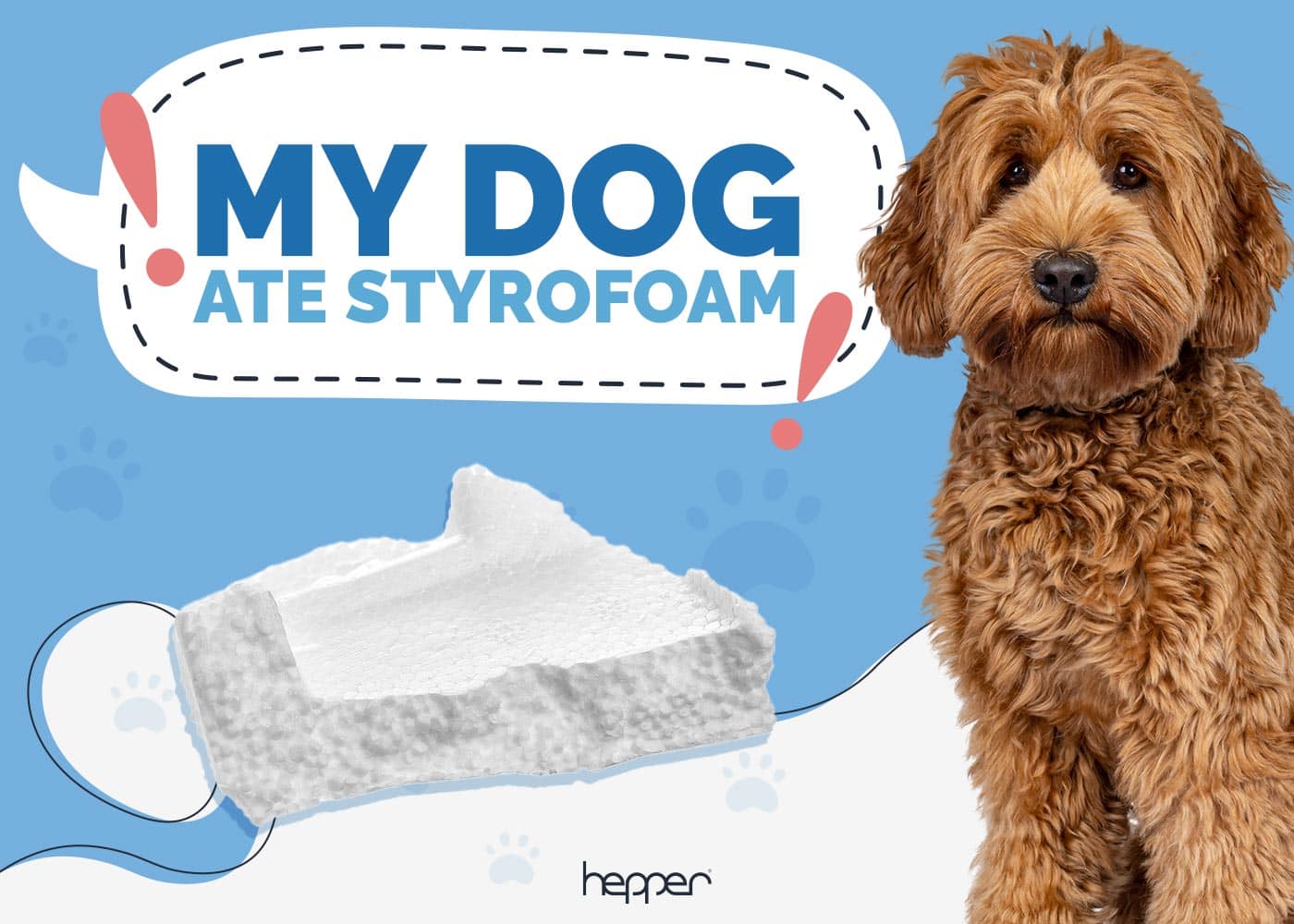
Styrofoam or polystyrene foam is bad for dogs because they don't have the ability to digest plastic. Pieces of polystyrene foam can block your dog's intestines or get stuck in their throat, suffocating your pet. Both cases can put your dog's life in danger.
If you suspect or have caught your dog chewing greedily from a Styrofoam board, contact the veterinarian immediately.
If your dog has consumed small amounts of Styrofoam, it should not be a cause for concern, as these will most likely pass through their digestive tract. That said, you should contact your veterinarian, just in case.

What Is Styrofoam?
Styrofoam is a polymeric material (plastic) used for a wide variety of applications, being particularly useful for product packaging or wall insulation. It is found in several forms: blocks, peanuts, or beads.
Polystyrene beads are mostly used as stuffing for toys (including pet toys), pet beds, or bean bags. Your dog can tear these objects apart and ingest their contents. Styrofoam food packaging (especially meat), cups, or plates can also cause damage to your dog if ingested.
For these reasons, it is recommended not to keep Styrofoam (in any form) in areas that your dog can easily reach.
Why Is Styrofoam Bad for Dogs?
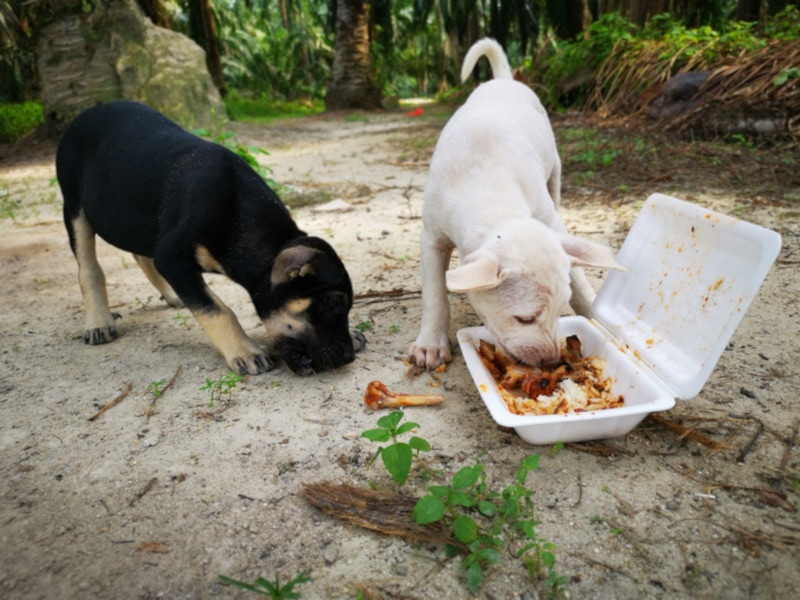
Being made of plastic, Styrofoam cannot be digested by your canine. Large pieces of Styrofoam can get stuck in their digestive tract, causing gastrointestinal obstructions. They can also get stuck in your dog's throat, causing suffocation.
Both conditions are dangerous for your dog, and if you don't intervene in time, your pet can even die.
What Are the Clinical Signs of Intestinal Obstruction in Dogs?
Maybe you are not sure if your dog ate Styrofoam, but you do suspect it. Here are the clinical signs that your dog has ingested a piece of Styrofoam that has caused an intestinal blockage:
- Vomiting (often frequent)
- Diarrhea (if there is a partial blockage)
- Loss of appetite
- Abdominal discomfort, distension, and pain (your dog will act aggressively or vocalize when you touch their abdomen)
- Bloating
- Lethargy
- Weakness
- Dehydration
Dogs with partial obstructions may show mild clinical signs at first. It can initially seem that the cause is food indiscretion (vomiting, diarrhea, and lack of appetite).
Intestinal obstructions are life-threatening because if they are not diagnosed and treated in time (only through surgical intervention), the objects stuck in the intestines can cause tissue necrosis and the rupture of the intestinal wall, spilling the contents into your dog's abdomen.
As a result, your dog can develop peritonitis and septicemia, which can lead to the death of your pet.
Signs That Your Pet Is Choking Due to Styrofoam
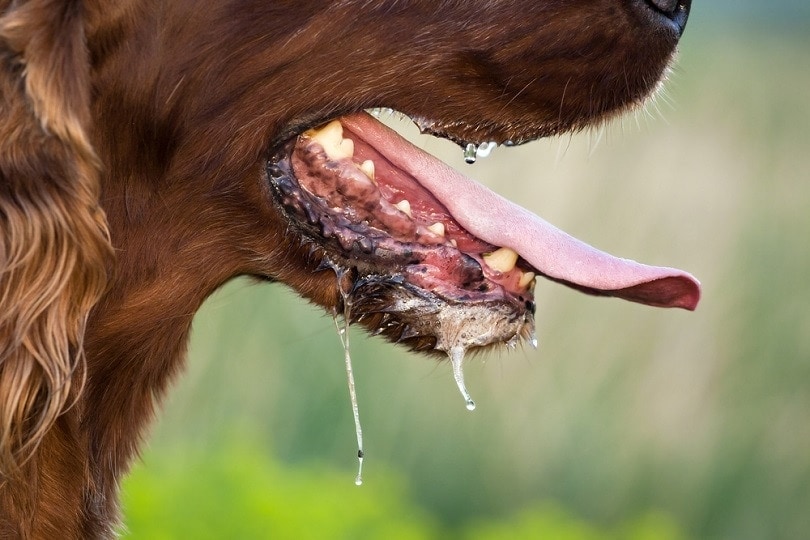
If the piece of Styrofoam is too big to be swallowed, it can get stuck in your dog's throat, causing suffocation. Clinical signs occur immediately and may include:
- Pawing at the mouth
- Blue mucous membranes
- Rubbing their face against the surrounding object or ground
- Gagging or retching
- Distress
- Hypersalivation
- Coughing
What to Do If Your Dog Is Choking on Styrofoam
Here's what you can do if your dog is choking on a piece of Styrofoam.
1. Removing the Object From Your Dog’s Mouth
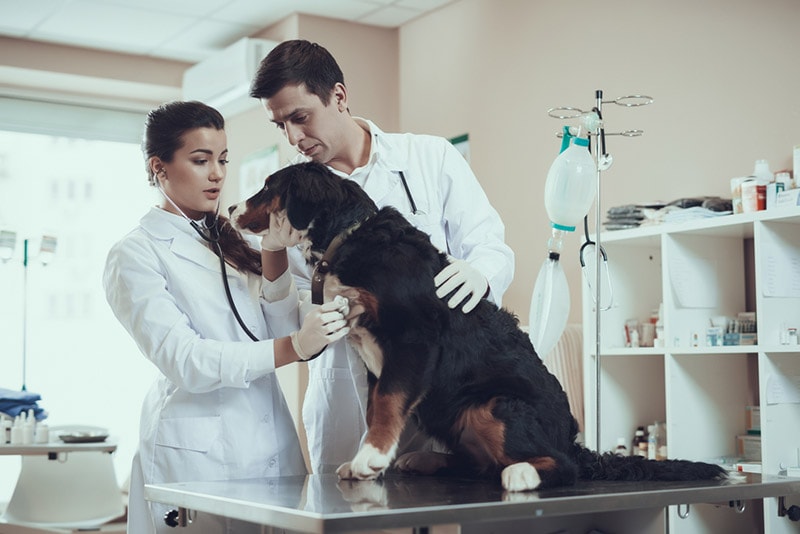
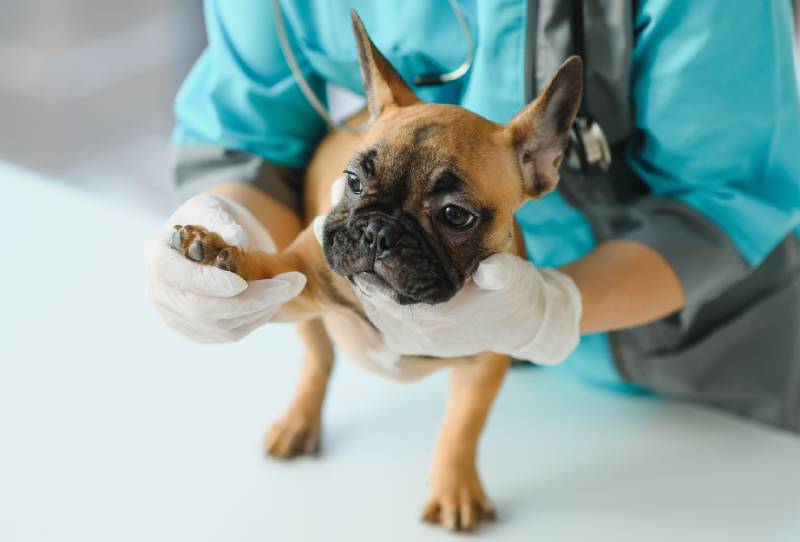
First, ask someone to contact the nearest emergency veterinary hospital. During this time, try to remove the object from your pet's mouth. To be able to do this, you will have to restrain your dog because they will most likely struggle and fight.
Open your dog's mouth to locate the piece of Styrofoam. If you can see it, put your finger in your dog's mouth to remove the piece of foam and unblock their airways.
Don't insert your fingers in your dog's mouth and throat if you can't see the Styrofoam piece, as you can injure yourself or cause more harm. Also, do not push the object down their throat.
2. Applying the Heimlich Maneuver
If you do not see or fail to remove the piece of Styrofoam from your dog's mouth, you can try the Heimlich maneuver.
The Heimlich maneuver for small dogs includes:
For large dogs, the Heimlich maneuver is performed as follows:
3. Performing CPR
If the Heimlich maneuver doesn't work and your dog loses their pulse, you can try performing CPR.
- Turn your dog with their right side up.
- Where your dog’s elbow touches their chest is where the heart is located.
- Remove their elbow from your way.
- Perform CPR at approximately 120 chest compressions per minute.
- Perform 30 chest compressions, and give two rescue breaths. Close your dog’s mouth, extend their neck to open the airways, and cover their nose with your hand. Give your dog air until you see their chest rise.
- Check your dog's heartbeat and breathing every 2 minutes.
- Continue CPR until you reach the nearest emergency veterinary clinic.

Frequently Asked Questions
Will My Dog Be Fine After Eating Styrofoam?

If your dog has ingested a small piece of Styrofoam, it will usually pass through the digestive tract without causing any damage. But if your dog has ingested large pieces, which could have caused an intestinal blockage, you will have to pay attention to the clinical signs and take your dog to the vet as soon as possible. The treatment is surgical and consists of removing the foreign object from your dog's digestive tract.
Before surgery, your dog will have a set of X-rays taken to locate the piece of Styrofoam. After the surgery, they will be hospitalized for a few days. The longer you delay treatment, the more you put your dog's life in danger. Therefore, go to the vet as soon as you see or suspect that your pet has ingested Styrofoam.
How Can I Stop My Dog From Ingesting Styrofoam?
Try to keep all Styrofoam packaging away from your dog's eyes. If your pet plays with toys filled with Styrofoam, supervise them while they are playing, and put those toys away after your dog has finished. Use dog beds with a different filling. Put a muzzle on your pet in case they like to chew and eat Styrofoam or other inedible items when you take them out for a walk.

Final Thoughts
Styrofoam is dangerous for dogs, and they should not be allowed to consume it. It is a plastic material that once swallowed, can cause intestinal blockage and put your dog's life in danger. If the piece of Styrofoam is too big, it will not reach the digestive tract, but it can choke and suffocate your dog.
To prevent such an incident, muzzle your dog when you go out for a walk if they have the habit of ingesting inedible items, keep the Styrofoam packaging away from your pet, and supervise them when they play with toys filled with Styrofoam. Contact your veterinarian or the nearest emergency veterinary hospital if your dog chokes on Styrofoam or shows signs of intestinal obstruction (abdominal pain, vomiting, lethargy, depression, bloating, and dehydration).
Related Reads:
Sources
Featured Image Credit: Naronta,Shutterstock
Get Hepper In Your Inbox


Pet care tips from our vets and experts, straight to your inbox.
You may opt-out at any time. View our Privacy Policy for more information.
Iulia Mihai is a veterinarian with more than 13 years of experience in pet pathology, laboratory, and cancer. She studied at the University of Agronomical Sciences and Veterinary Medicine of Bucharest, Romania Iulia earned a master’s degree in equine and pet pathology and studied epithelial cancer for her Ph.D. Dr. Mihai's passions for internal medicine and parasitology inspired her to volunteer at the faculty’s clinic in her third year of college. She has worked in a couple of veterinary clinics over the years as an internal medicine specialist, and loves to write and educate pet parents about pet nutrition, behavior, and diseases.
Iulia is a passionate veterinarian with a strong affinity for veterinary parasitology, internal medicine, and laboratory. She is excited to share her experience and knowledge with pet owners around the world through her writing and hopes to educate people on pet nutrition, diseases, and behavior.
Education
Iulia graduated from the University of Agronomical Sciences and Veterinary Medicine, Bucharest, Romania, in 2012 and has a Master’s degree in Small Animals and Equines Pathology and is certified in HAACP food safety system implementation. Iulia started her Ph.D. in epithelial cancer in dogs and cats in 2013. Her research is published in national and international veterinary journals.
Experience
Dr. Iulia has been a veterinarian for more than 14 years. She is experienced in animal pathology and laboratory and has experience with exotic animals, such as pet rats and ferrets. She also has skills in the field of clinical pathology, laboratory, microscopy, cancer, and imaging.
Join the conversation
Ask a question, share your story, or send private feedback.