Hepper is reader-supported. When you buy via links on our site, we may earn an affiliate commission at no cost to you. Learn more.
Intestinal Blockage in Dogs: Vet-Reviewed Signs, Causes, and Treatment


In this article
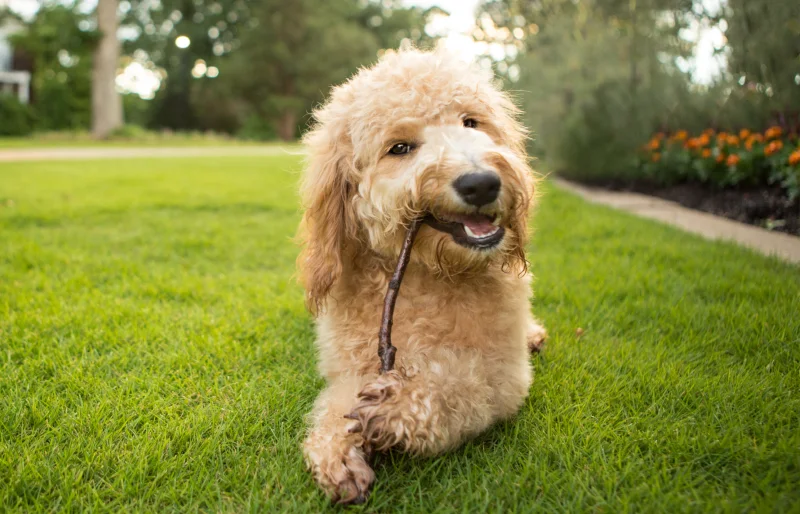
Dogs are curious creatures, and that curiosity can lead to dangers that all canine parents should be aware of. One such danger is an intestinal blockage. All dogs are at risk of intestinal blockage, but puppies are the most vulnerable because they are so curious and more prone to chew on and eat things than older dogs. If your dog eats a foreign body or you suspect an intestinal blockage, it’s a very serious matter and the problem should not be overlooked. Here’s what you should know.

What Is Intestinal Blockage in Dogs?
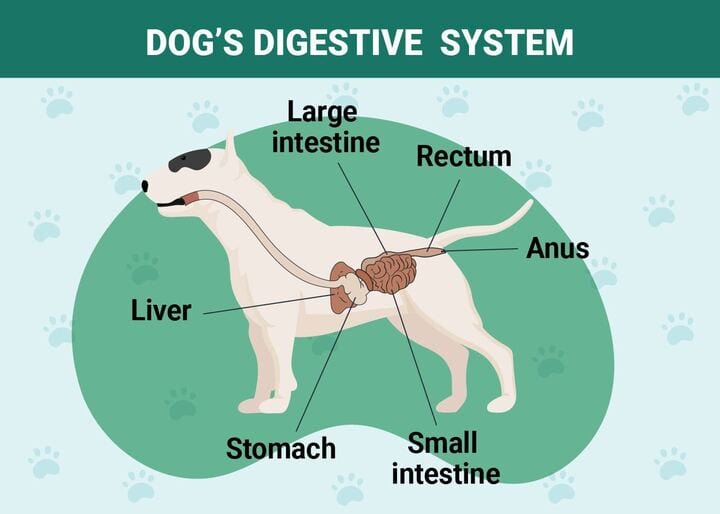
Intestinal blockage in dogs is a common condition that affects the gastrointestinal system. It happens when a dog eats something (an object or a bone, for example) that cannot be properly digested, and it gets stuck in their system where it cannot naturally be eliminated. This can cause all kinds of problems. An intestinal blockage is dangerous and can even be deadly.
An obstruction can be complete or partial and can happen in the mouth, throat, esophagus, stomach, or intestines. These blockages prevent solids and liquids from being able to make their way through the gastrointestinal tract and cause distention of some parts of the intestine. This impairs normal blood flow and damages the wall of the portion of the bowel where it gets blocked, which can result in bacteria and toxin passage to the bloodstream.
What Are the Signs of Intestinal Blockage in Dogs?
A dog might display several signs if they have developed an intestinal obstruction. The problem is that the first signs that usually show up can be easy to overlook or pass off as merely an upset stomach. You can’t be there to witness everything that your dog does in a day, so always keep an eye out for signs of an obstruction, including:
- Nausea
- Drooling
- Vomiting
- Diarrhea
- Weakness
- Lethargy
- Loss of appetite
- Straining to defecate
- Whining
- Bloating
- Restlessness
- Aggressive protection of the abdomen
If your dog displays any of these signs, contact your veterinarian as soon as possible for guidance and advice. A call to the vet is just as important if you see your dog eat something that they shouldn’t, even if they are not displaying any signs of obstruction.
What Are the Causes of Intestinal Blockage in Dogs?
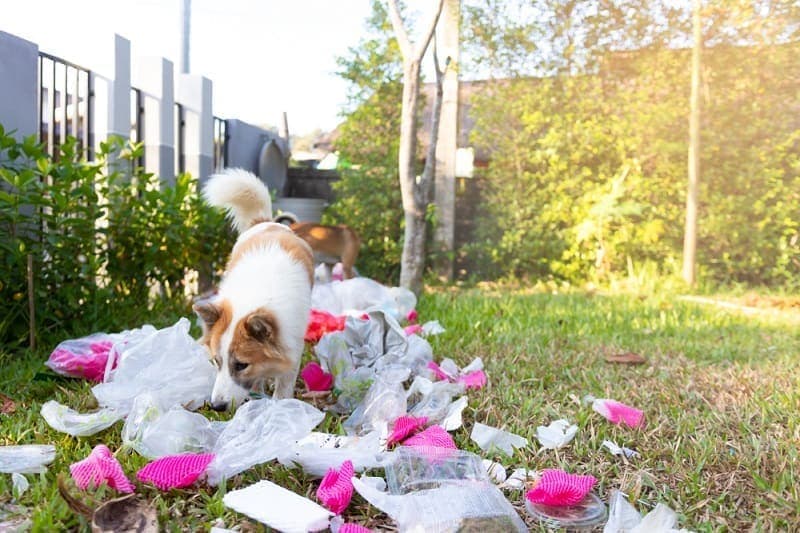
Anything that your dog consumes that is not food has a risk of blocking the gastrointestinal system. It could be a piece of foil or a bone from the garbage, an avocado pit or corn cob from the compost pile in the yard, or anything else that your dog gets their paws and mouth on. Things like string are especially dangerous since it can cause the intestines to bunch up and perforate. It may happen that your dog passes whatever it is they eat that they shouldn’t (so be sure to check their poop for a few days). However, there is always a high chance of obstruction, so your dog should be closely looked after if you see them eat something that isn’t their regular food.
In some cases, an intestinal blockage can be due to the growth of a tumor. This tends to happen in senior dogs but can happen at any age
How Do I Care for a Dog With Intestinal Blockage?
It is vital to seek veterinary care immediately if you suspect that your dog has eaten something that could obstruct their gastrointestinal system. If the obstruction is not treated, it could cause serious consequences involving pain, ruptures in the intestinal tract, and even death. It is important not to feed your dog until your veterinarian has verified that there is no blockage, or the blockage has been treated.
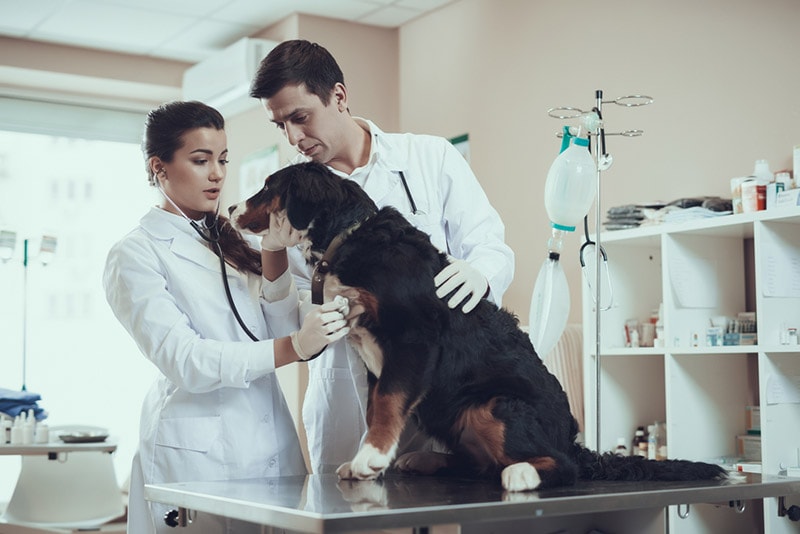
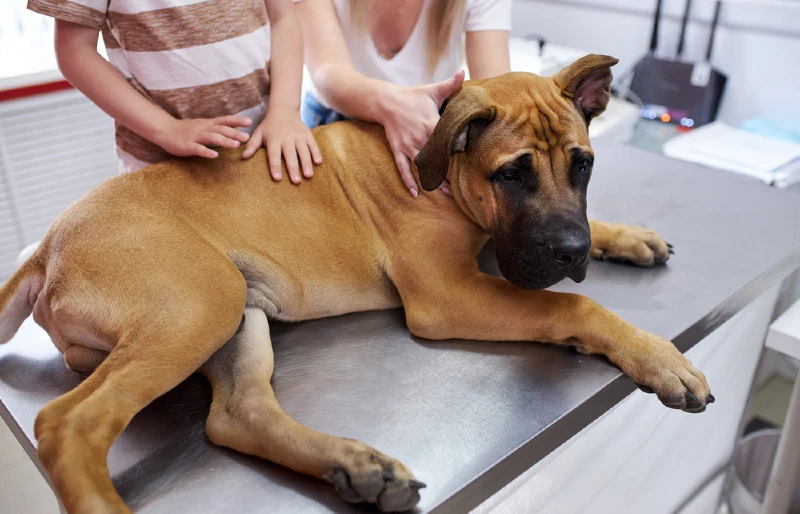
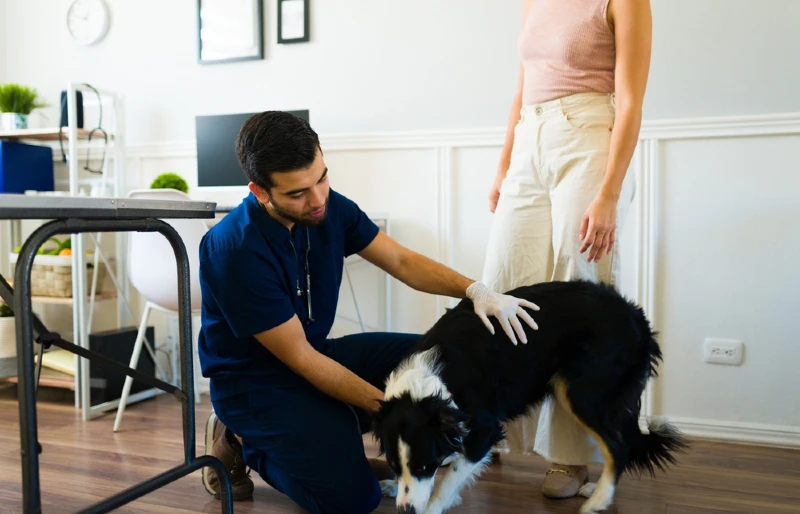
Your veterinarian will likely want to complete a physical exam and may recommend that an ultrasound or radiograph be performed. This can help them see whether there is a blockage and if so, how big the object is and where it is located.
On certain occasions, depending on your dog’s health situation, the type of foreign body, where it is located, or the time it’s been present in your dog’s body, your veterinarian may decide to wait and see if the object makes its way out. If this is the case, intravenous fluids, a special diet, and pain medications might be prescribed to help your dog feel better until the object passes.
If the object that your dog consumed is sharp or small yet won’t pass on its own, your vet might be able to retrieve it by performing an endoscopy. This is when a thin tube with a camera and forceps attached to it is inserted into the gastrointestinal system, where hopefully the object can be found, retrieved, and removed. If the object is too large to pass on or be retrieved or if it’s been lodged for too long, your veterinarian may have to resort to surgery for the removal of the object.
If surgery is required, anesthesia will be administered, and a stay at the hospital, until your dog is fully recovered, will be necessary. Your dog is likely to be uncomfortable for a few days afterward, so they should rest at home where they will be safe and comfortable. Your vet should give you discharge recommendations to guide you through post-operative care.

Frequently Asked Questions (FAQs)
What Should I Do to Care for My Dog After Surgery?
After your dog gets surgery, the first 72 hours are very important and your dog should be kept quiet and closely monitored. Signs of complications like sepsis, wound opening, or problems with the function of the intestine will show themselves approximately within that time. You’ll need to keep a close eye on your dog and follow all the discharge instructions that you were given.
How Can Intestinal Blockage Be Avoided?
The best way to avoid this problem is to keep a close eye on your dog when they’re hanging out in the house or outdoors to make sure they don't eat anything that they shouldn't. Also, ensure that bones and other items that could cause an obstruction are not left around the house or loose in the garbage. Always wrap up things that your dog might take an interest in, and throw them away in the trash can outdoors.
Are Some Dogs More Susceptible to Intestinal Blockage Than Others?
All dogs are susceptible to intestinal obstruction, as any breed can eat something that they should not. No matter their size, age, health, or lifestyle, all dogs should be protected from the possibility of eating an item that could cause an obstruction. Having said so, puppies are usually at higher risk due to their curious nature. Some dog breeds or individual dogs tend to look for foreign materials more than others.

Conclusion
Intestinal blockage in dogs is a serious condition that should not be taken lightly. It can happen to any dog and at any time, so it’s important to watch what your dog is getting their paws on. If you suspect that your dog has eaten something that they should not have or you observe signs of obstruction, contact your veterinarian right away.
Sources
Featured Image Credit: Brad K Covington, Shutterstock
Get Hepper In Your Inbox


Pet care tips from our vets and experts, straight to your inbox.
You may opt-out at any time. View our Privacy Policy for more information.
Rachael has been a freelance writer since 2000, in which time she has had an opportunity to research and write about many different topics while working to master the art of fusing high-quality content with effective content marketing strategies. She lives off the grid in Hawaii with her husband, her garden, and her rescue animals including 5 dogs, a cat, a goat, and dozens of chickens. She is an artist at heart and loves to read, paint, and make jewelry in her spare time. As a vegan, Rachael is obsessed with helping animals in need both in her community and anywhere in the world where she feels she can make a difference. Animals also happen to be her favorite topic to write about!
Join the conversation
Ask a question, share your story, or send private feedback.