Hepper is reader-supported. When you buy via links on our site, we may earn an affiliate commission at no cost to you. Learn more.
Osteosarcoma in Cats: Signs, Prevention & Treatment (Vet Answer)

In this article
Osteosarcoma is the most common type of bone cancer in cats, and it usually occurs in cats between 8–10 years of age but may appear in young cats as well. Bone tumors are much less frequent in cats compared to dogs. It can also affect non-bone tissues, mainly the subcutaneous tissue but also the mammary glands and eyes, and this is called extraskeletal osteosarcoma.
Pets suffering from osteosarcoma can have a wide variety of clinical signs, including lameness, swelling of the affected bone, weakness, and general signs of pain and discomfort. The most common clinical sign encountered in cats suffering from osteosarcoma is intermittent lameness. If osteosarcoma has affected the bones of the skull, this type of cancer can manifest with neurological signs such as wobbly gait or seizures.

What Is Osteosarcoma?
Osteosarcoma is the most common form of malignant bone tumor, which destroys the bony tissue. Fortunately, primary bone tumors in cats are rare, representing 0.05% of all cancer cases. Of this percentage, 70–80% is represented by osteosarcoma. This type of cancer has the same appearance as human osteosarcoma in adolescents (where it occurs most frequently). Osteosarcomas are thought to occur when there is an abnormal balance of cells that create bone (osteoblasts) and break down bone (osteoclasts).
- Osteoblasts are young cells with a role in the formation of bone.
- Osteoclasts are cells with a role in the resorption of bone tissue.
The long bones are most likely to be affected by osteosarcoma, especially those of the hind legs (tibia and femur). However, other bones can also be affected:
In addition to bones, osteosarcoma can very rarely affect soft tissues. Extraskeletal osteosarcoma is usually located in the interscapular region and flank and can affect:
Although it is a type of cancer with a high rate of metastasis in dogs, fortunately, the rate of metastasis has been estimated to be between 5–10%, depending on the studies.

What Are the Signs of Osteosarcoma in Cats?
Osteosarcoma is a type of cancer that causes inflammation and pain in the affected area. The most common localization of osteosarcoma in cats is in the hind limbs. In most cases, the affected cats will show intermittent or acute lameness and swelling of the respective area. The intermittent lameness can become constant within 1–3 months after the onset of the disease.
Other clinical signs may include:
When osteosarcoma occurs in other areas of the body, the following clinical signs can be noticed:
- Jaw swelling and difficulty eating and opening the mouth (when osteosarcoma affects the jaw)
- Nasal discharge (when the osteosarcoma affects the nasal cavity)
- Swelling in the rib area, breathing difficulties, and/or lameness (when the osteosarcoma affects the ribs)
- Neurological signs like wobbly walking and convulsions and/or pain in the head or along the back (when the osteosarcoma develops on the vertebrae or the skull)
If the osteosarcoma spreads to other regions, it most commonly spreads to your cat's lungs and lymph nodes.
Metastatic cancer can have the following clinical signs:

What Are the Causes of Osteosarcoma in Cats?
The causes of cancer are not fully understood. However, it is known that environmental and genetic factors play a role in the occurrence of cancer. The same thing can happen in the case of osteosarcoma. Therefore, prevention of this type of cancer is not possible.
How Is Osteosarcoma Diagnosed in Cats?
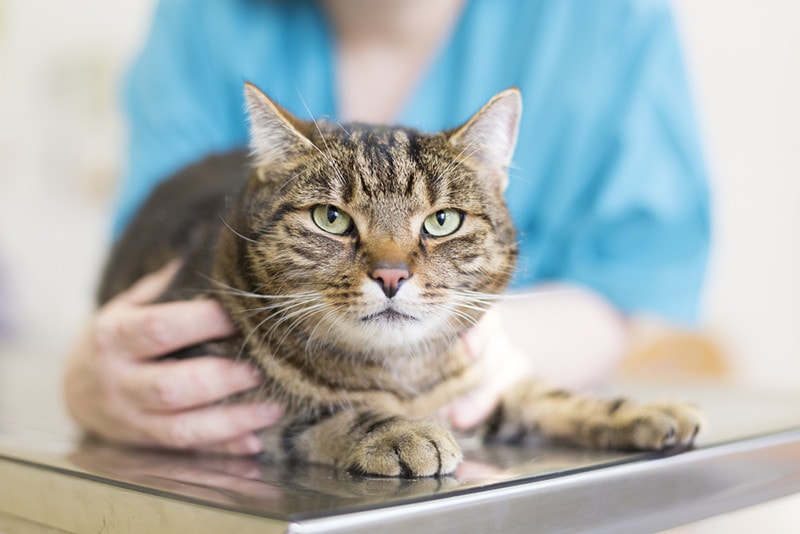
Certain tests are performed to diagnose and stage this type of cancer. Diagnostic tests help identify the type of cancer present in the bone or soft tissues and where it has metastasized. Here are the tests that a veterinary oncologist can perform to establish a definite diagnosis:
- Physical examination: This is necessary to assess the general health of your cat.
- Orthopedic examination: This is to identify the affected bone and exclude other diseases that can have the same clinical signs. In the case of osteosarcoma in one of the limbs, an orthopedic examination is important to evaluate the adaptation potential of your cat to a three-legged lifestyle (if amputation of the affected limb is considered).
- Blood tests (complete blood count and biochemistry): These are necessary to evaluate the general state of health of your pet.
- Radiographs of the affected limb/bone and chest: These are for localizing the tumor and potential metastases (lungs, lymph nodes, etc.).
- CT scans of your cat's chest and abdominal ultrasounds: These are to discover metastases.
- Fine-needle aspiration (FNA) of the tumor: This test is useful in the case of soft tissue osteosarcomas and helps establish a definite diagnosis. If the result of this test is inconclusive, a biopsy is recommended.
- Biopsy of the affected tissue: A biopsy involves taking a fragment of affected tissue and examining it under a microscope to establish the diagnosis (type and grade of tumor). Your cat can only be diagnosed with osteosarcoma after FNA or a biopsy is performed.
How Is Osteosarcoma Treated in Cats?
There is no single, standard treatment for all cats suffering from osteosarcoma. In general, in the case of osteosarcoma of the limbs, amputation of the affected limb and treatment to reduce the pain are recommended and result in longer survival times.
Treatment combining chemotherapy and radiotherapy can also be recommended.
How Do I Care for a Cat With Osteosarcoma?
If your cat has been diagnosed with osteosarcoma, you’ll need to follow your vet's advice and instructions. Proper pain management will be necessary as directed by your vet. If your cat has undergone radiation treatment or chemotherapy, they will need additional and special care, such as long-term medication, regular checkups, etc.
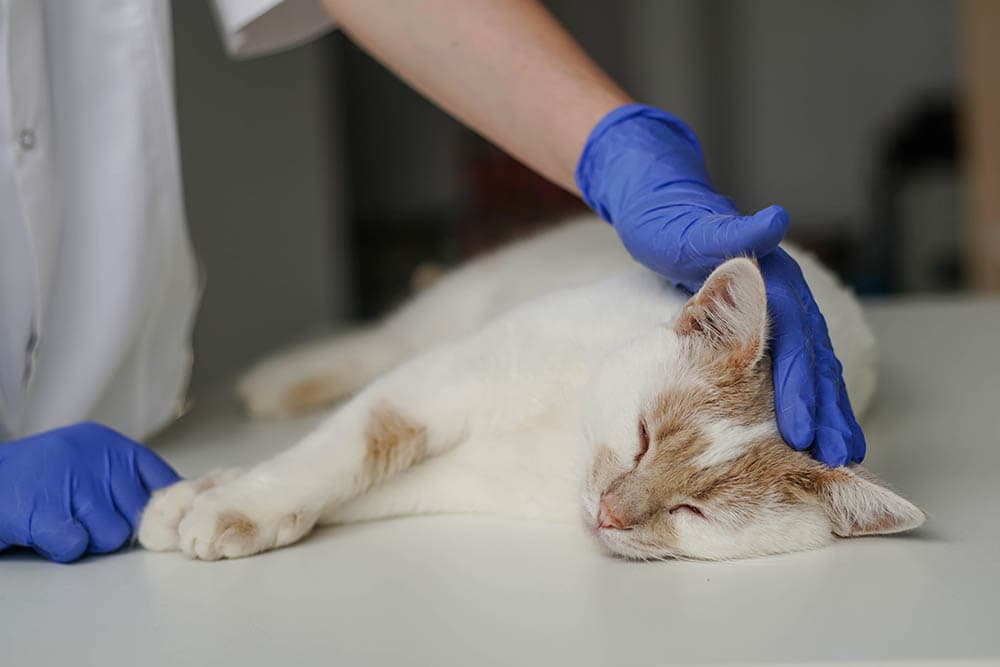
If your cat has surgery for limb amputation, the vet will recommend keeping your cat in a cage and limiting their movement for a few weeks (recovery time). Also, make sure you feed your cat a quality, balanced diet that will help them maintain an optimal weight and provide a healthy energy level. To help your three-legged pet climb higher places (bed, sofa, etc.), you can install ramps or stairs.
Be patient with your cat, and don't hesitate to ask the vet for advice when you face a problem or if you have questions.
Frequently Asked Questions (FAQ)
How Long Can a Cat Live With Bone Cancer?
The prognosis of bone cancer in cats varies depending on several factors, such as the severity of the condition, the type of therapy used, and the general condition of your cat. In general, cats with osteosarcoma that undergo limb amputation can live between 1.5–4 years, but this interval will vary depending on the affected location and how early the treatment was started.
Is Bone Cancer Painful in Cats?
Bone cancer is extremely painful, with pain being one of the reasons that amputation of the affected limb is recommended. If, for various reasons, you need to postpone the amputation or your cat can’t be operated on, remember that they will at least need anti-pain medication. Your cat's quality of life will decrease when they are in extreme pain, and they may stop eating and become lethargic, aggressive, and withdrawn.
Conclusion
Osteosarcoma is the most common type of primary bone tumor in cats. Fortunately, cats are rarely affected by this type of cancer. Osteosarcoma doesn’t usually spread (metastasize) to other tissues, but when it does, it prefers the lungs and the regional lymph nodes.
Cats suffering from osteosarcoma will experience extreme pain, and depending on the location, you may notice intermittent lameness, inability to chew, lethargy, weight loss, etc. When it is located in the bones of the limbs, the most recommended treatment is amputation. When the osteosarcoma is inoperable, radiotherapy (followed by chemotherapy, in some cases) and anti-pain treatment will be recommended.
If your cat has been diagnosed with osteosarcoma, follow the vet's instructions, and provide your cat with a less stressful life and a balanced diet.
Sources
Featured Image Credit: Ro_ksy, Shutterstock
Get Hepper In Your Inbox


Pet care tips from our vets and experts, straight to your inbox.
You may opt-out at any time. View our Privacy Policy for more information.
Marta has been a veterinarian for over sixteen years working across the UK and Spain and as a remote veterinary consultant. She has wide experience in small animal internal medicine and surgery with a soft spot for cats.
Her main fields of interest are ophthalmology and critical care medicine enjoying every single aspect of animal’s care, and she is a member of the Royal College of Veterinary Surgeons. Marta enjoys sharing the most helpful information with pet parents across the world about every aspect of their life with their beloved ones.
As one of our in-house veterinarians, Marta enjoys sharing the most helpful information with pet parents across the world about every aspect of their life with their beloved ones. She loves knowing that she can support our readers and communicate about any medical topic that might be relevant to your pet’s health and well-being.
Education
Marta graduated from Cardenal Herrera-CEU University in Valencia, Spain. She holds two Ophthalmology Certificates, GPCert Ophthal from ESVPS and UAB.
Experience
Marta has been a veterinarian for over sixteen years working across the UK and Spain and as a remote veterinary consultant. She has wide experience in small animal internal medicine and surgery with a soft spot for cats. Her main fields of interest are ophthalmology and critical care medicine enjoying every single aspect of animal’s care. Marta is a member of the Royal College of Veterinary Surgeons.
Join the conversation
Ask a question, share your story, or send private feedback.