Hepper is reader-supported. When you buy via links on our site, we may earn an affiliate commission at no cost to you. Learn more.
Ryukin Goldfish: Care, Needs, Photos, History, Tank Mates, Facts & More
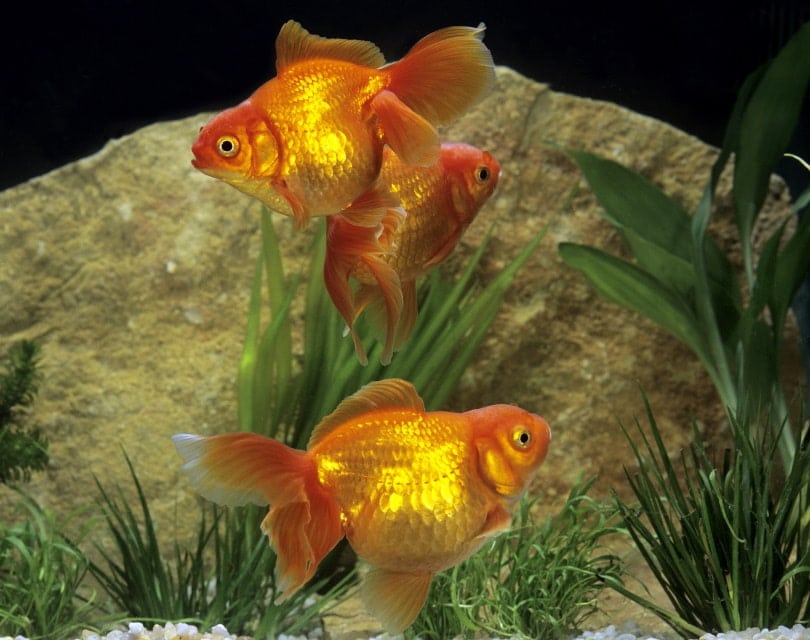
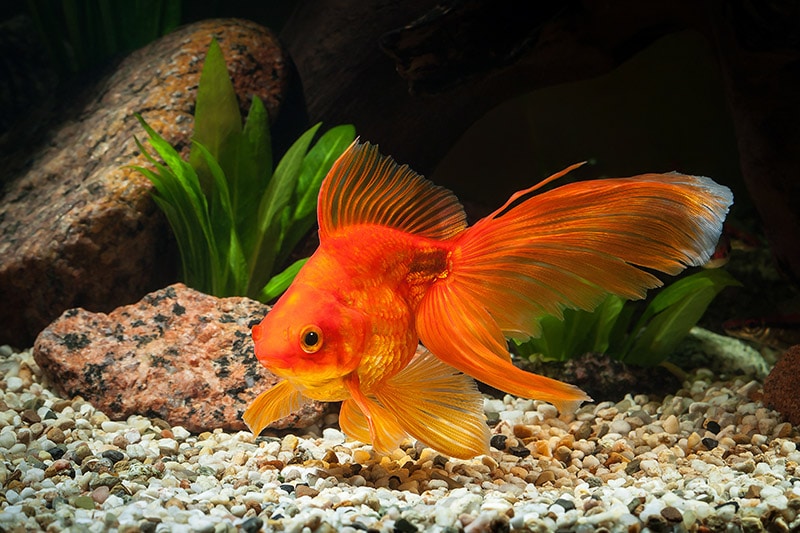
The ryukin goldfish is a distinctive short-bodied fish. It’s a far cry from the more streamlined and slim common goldfish, but many people prefer goldfish with a more unique appearance. Since they’re an active and agile fish, they’re a pleasure to observe, too.
What you must remember about any fish of this type is that they have more health problems, so you should be prepared to deal with one or two issues, should they arise.
Read on to find out all the basics, and more, about the ryukin.

Ryukin Goldfish Overview
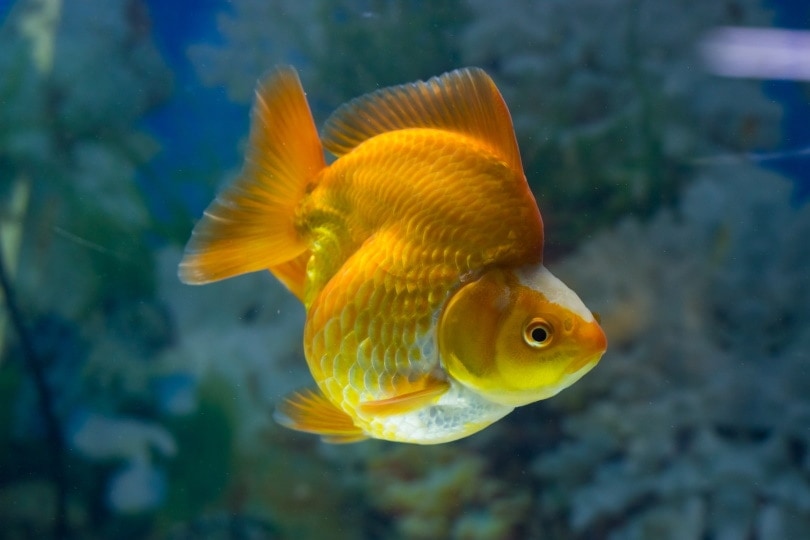
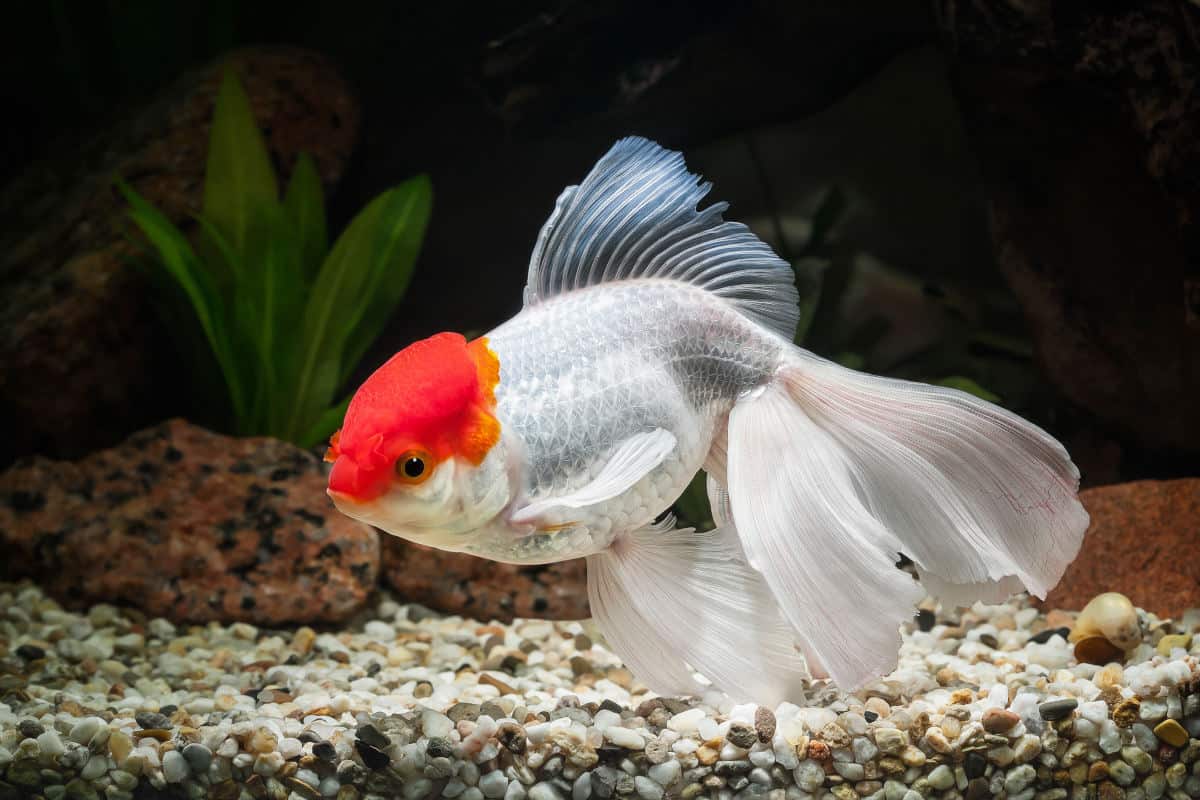
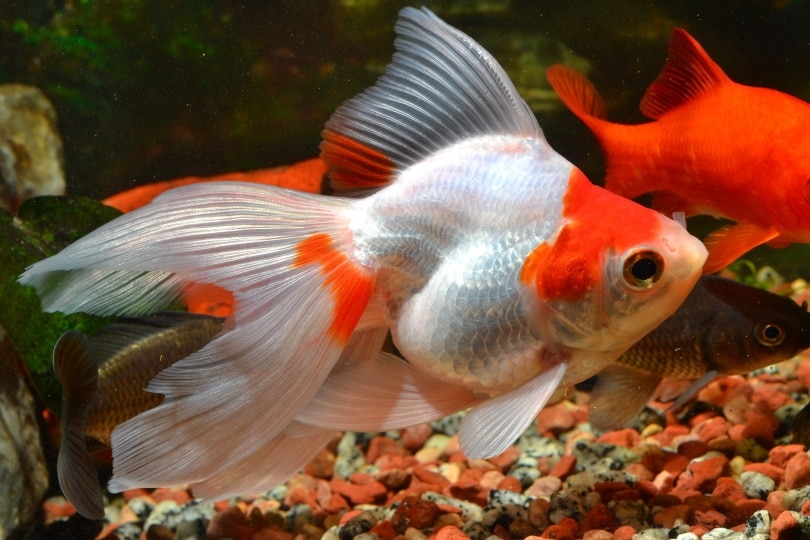
While similar to the Fantail goldfish in many respects, the Ryukin has a deep, tall body that is relatively compact. It is the only goldfish breed whose body is taller than it is long. Bred to be viewed from the side and admired for this confirmation, Ryukins are most commonly kept in indoor aquariums for that purpose. The body itself is very narrow, much like a discus fish. The head is triangular and pointed more than most goldfish breeds, and distinctive from the rest of the body.
It is characterized by the hump that protrudes from the base of the fish's head and curves upward to the base of the dorsal fin. This hump is called by breeders the "dorsal hump," and has been bred to be very tall as to give the fish more height in the aquarium. High backs are sought after among enthusiasts, and they can be found in even many chain stores.
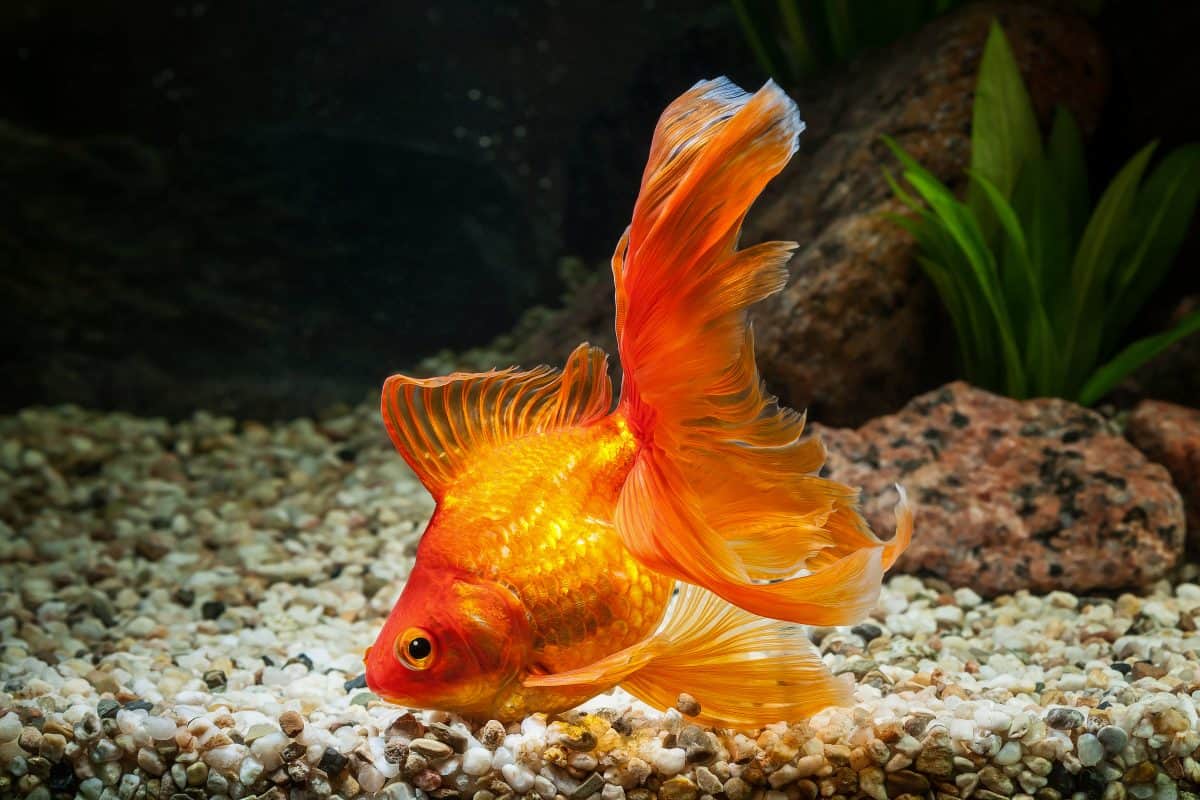
The Ryukin's fins are also similar to the Fantail's, but a higher dorsal fin and perhaps shorter or longer tail fins make it distinct. Droopy dorsal fins are seen as undesirable. Fantail, ribbontail, veiltail and fringetail finnage are known variants. Ryukins come in the same color variations as the Fantail, the most common hues being solid reds and reds and whites.
Defining Features
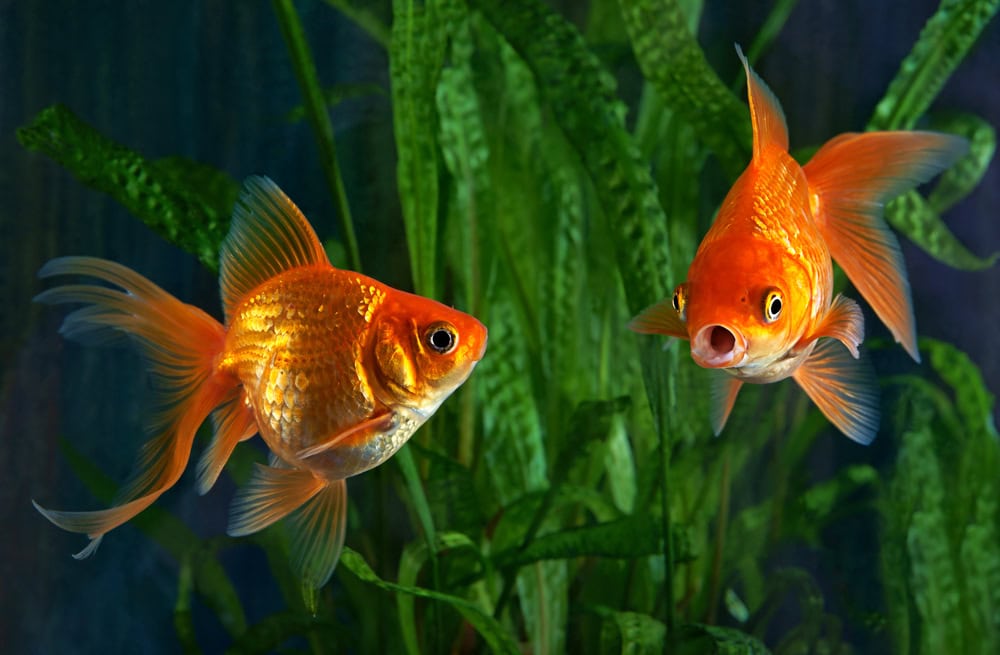
The Ryukin goldfish has a similar appearance to the fantail, but for the impressive hump that begins just behind the head.
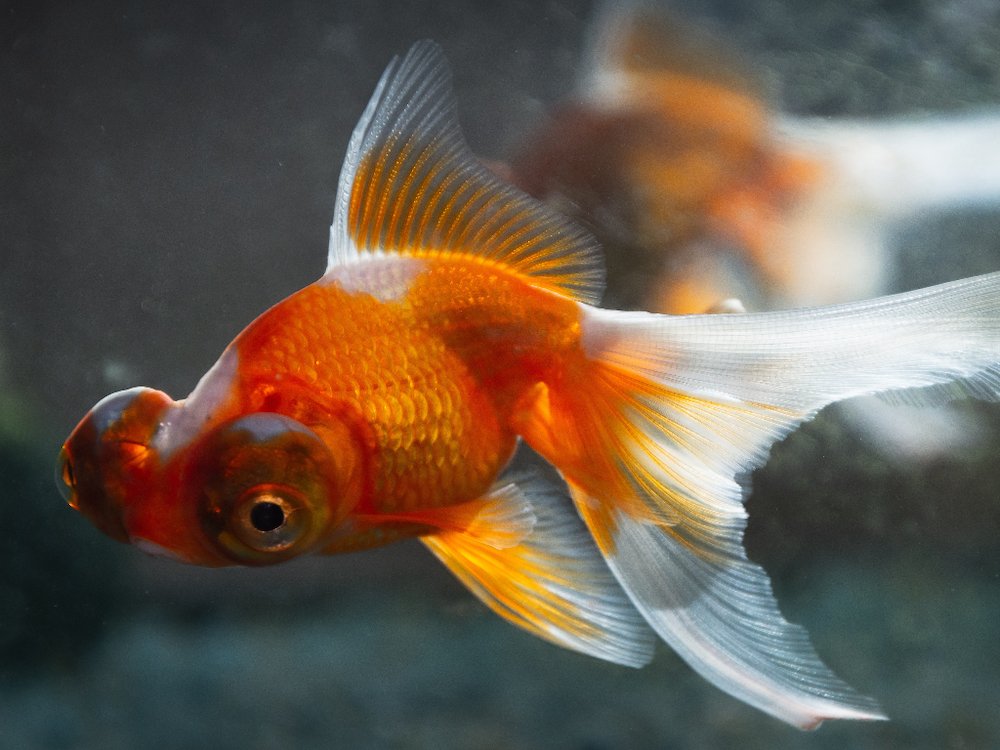
Like a fantail, this type of goldfish has a split caudal (tail) fin, which is fairly long and flowing in a standard ryukin, but can be almost twice as long as the body in different varieties.
An egg-shaped goldfish with a short and stubby look, but a very deep body, the Ryukin’s high back is often referred to as a “dorsal hump.” The very best specimens have a prominent dorsal hump, but it’s much subtler in some fish.
Tail Types:
Ryukin Goldfish Colors and Variations
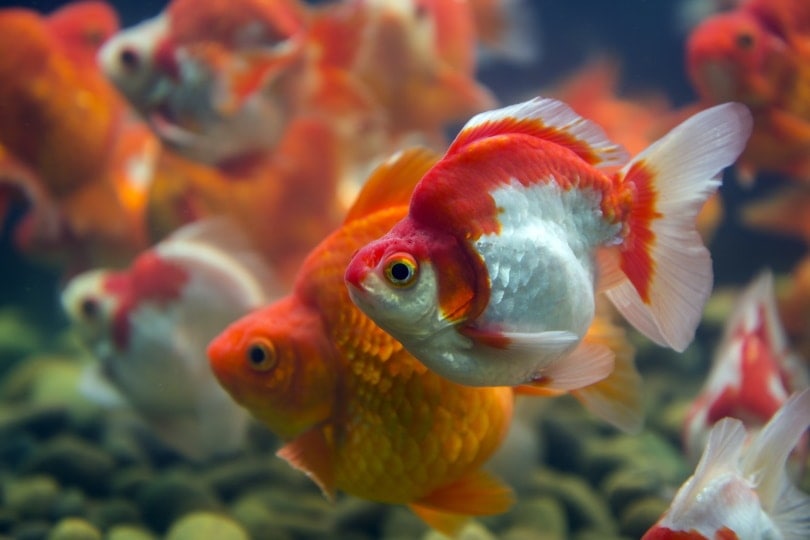
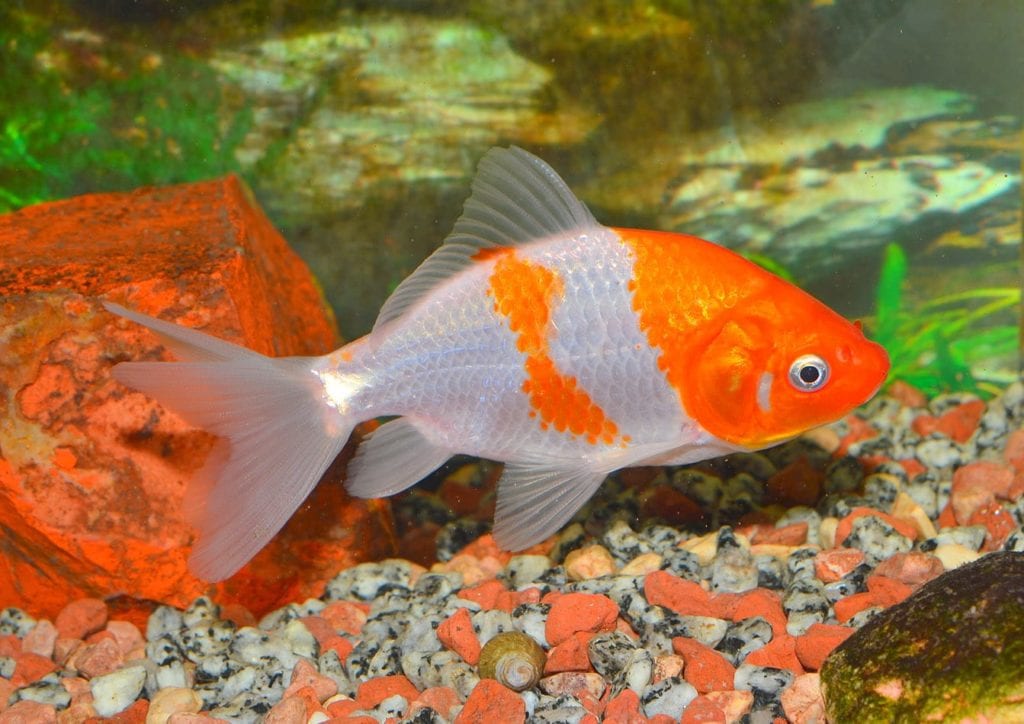
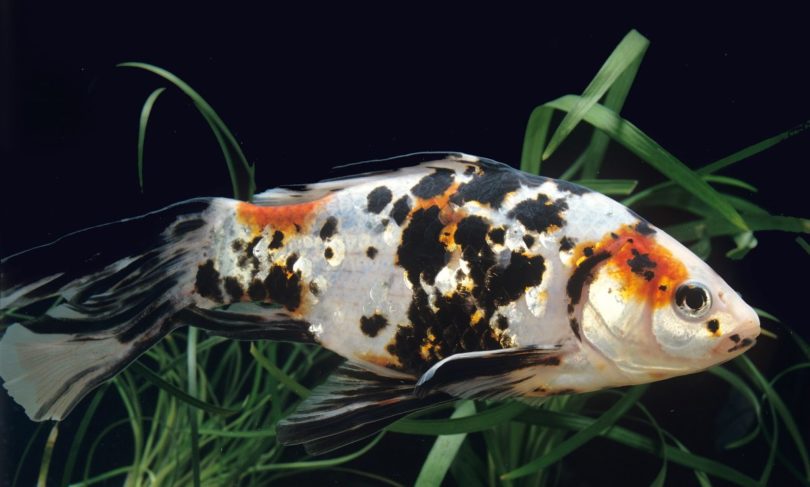
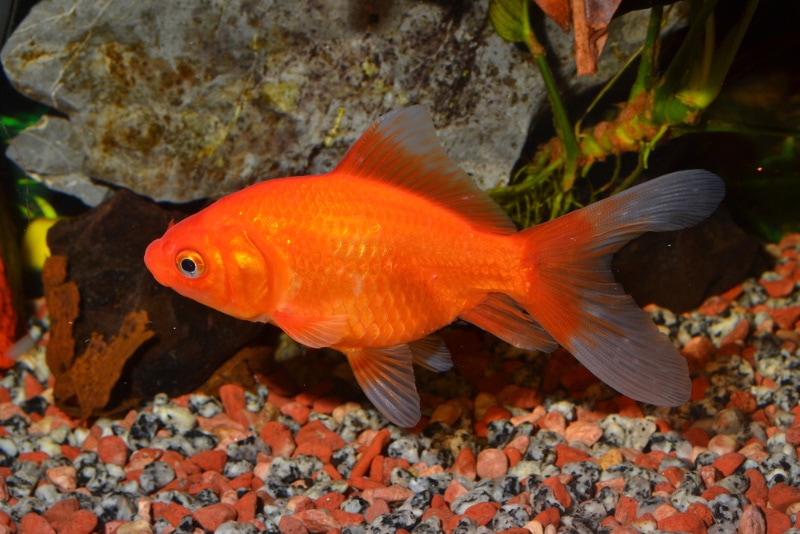
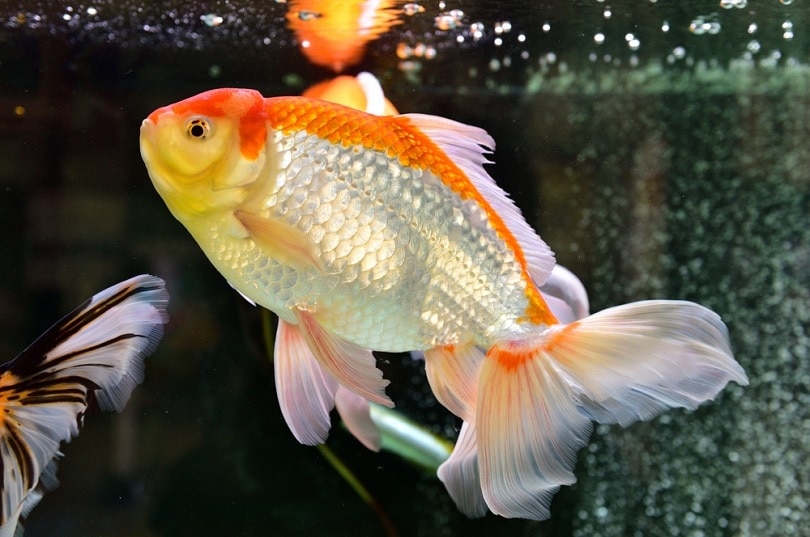
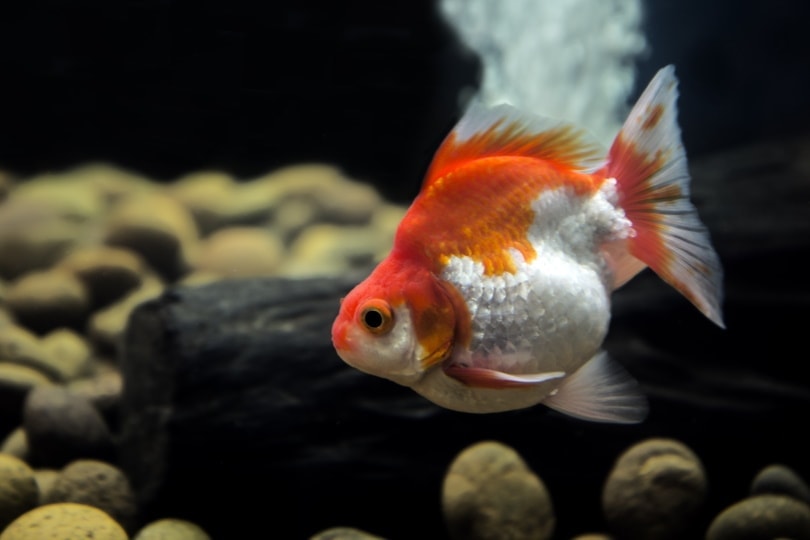
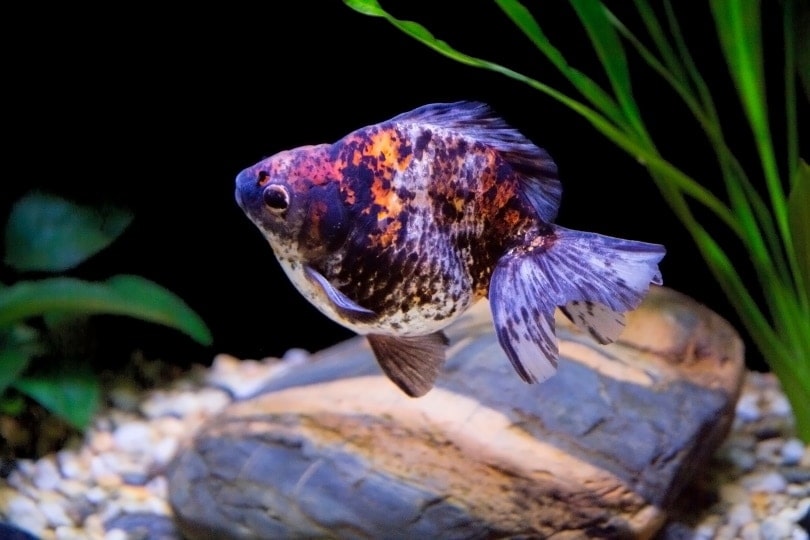
Ryukins originally only came in red, but can now be found in a range of colors. This includes blue, black, white, chocolate, calico, and bi-color.
A standard Ryukin goldfish has a relatively short tail, but you can also find long-tailed varieties known as Fringe-tail or Ribbon-tail Ryukins.
How Big Can Ryukin Goldfish Get?
The average Ryukin goldfish reaches a size of about 6 inches in length. However, they can grow larger. Some owners have reported their Ryukin growing to as much as 10 inches long, but only when kept in a pond or a large, well-maintained aquarium.
How Long Can They Live?
Goldfish live far longer than most people assume. If properly cared for, a ryukin should live for at least 10 to 15 years, but it’s not unheard of for them to reach as old as 20.
Origins & History of the Ryukin Goldfish
All modern goldfish are descended from carp kept in ponds in China, which were gradually domesticated and bred to type.
But, in their slightly more recent history, Ryukins were descended from the Fantail goldfish and brought to Japan in the mid 1700s. Their name is derived from the Ryukyu Islands but the breed is said to have originated first in China. Certainly much effort has been undertaken by the Japanese to develop the characteristics of the Ryukin, especially its dorsal hump and tall body. The breed has a history of over 1,000 in cultivation!
If you're new to the world of goldfish or are an experienced goldfish keeper that loves to learn more, we recommend you check out our best-selling book, The Truth About Goldfish, on Amazon.
From diagnosing illnesses and providing correct treatments to ensuring your goldies are happy with their setup and your maintenance, this book brings our blog to life in color and will help you to be the best goldfishkeeper you can be.
Is My Fish a Ryukin?
It is easy to mistake a Fantail for a Ryukin or the other way around if the dorsal hump is very slight. Examining the body very closely for the presence of this hump and analyzing the proportions of the body can sometimes prove helpful. Comparing your fish with photographs of known breeds can also help in identifying your fish as a Ryukin.
Sometimes it becomes apparent as the fish ages that it is a Ryukin, as young goldfish have often not developed the very deep bodies that they will when they get older. Mature Ryukins are very easily identified by their towering back and very deep belly. In some cases, only time will tell!
Where to Buy Ryukin Goldfish
We love the ease and selection that eBay offers for purchasing Ryukin Goldfish. eBay has terms and conditions for the sellers, which ensure the prompt and safe delivery of the fish. Of course, as with any online purchases, you should always read the reviews from any individual seller you are considering before you purchase to protect your newest addition to your fishtank family.
Good for Home Aquariums?
Ryukin are one of the hardier types of goldfish, so in that respect, they’re quite easy to keep.
That said, because of the shape of their bodies, they’re prone to swim bladder issues so you should take precautions when feeding them – but more on that later.

How to Take Care of Ryukin Goldfish
Ryukins are one of the most hardy of the fancy goldfish, and make wonderful first goldfish for beginners. They are able to withstand a wide range of temperatures and have been known to tolerate fluctuations in water parameters easier than other more sensitive varieties.
Some things you need to know about caring for a Ryukin is that they will need more vertical space than longer types of fancy goldfish, such as the Oranda. They have not been very hybridized, unlike dorsal-less goldfish, and thus are not very fragile - though they are not as hardy as the common goldfish. But as their body shape has been selectively modified to be very short, their intestinal tract is vulnerable to constipation.
As Ryukins age, their swim bladders may not function as they should and they might swim with their nose pointing down or up to the surface of the water - or even with their stomachs dragging on the substrate of the tank!
Housing
Ryukins can reach a size of 8 inches long and in some cases be even taller than they are long. Because of their hardiness, they will do quite well in outdoor ponds, but are bred to be viewed from the side. A tall tank of at least 20 gallons would be ideal for one. Be sure that the fish has enough room to swim without its belly brushing against the tank decorations or the substrate. If you choose to keep yours in a pond, be sure that no area of the pond is too shallow for them to swim without getting stuck and picked off by predators.
Temperament
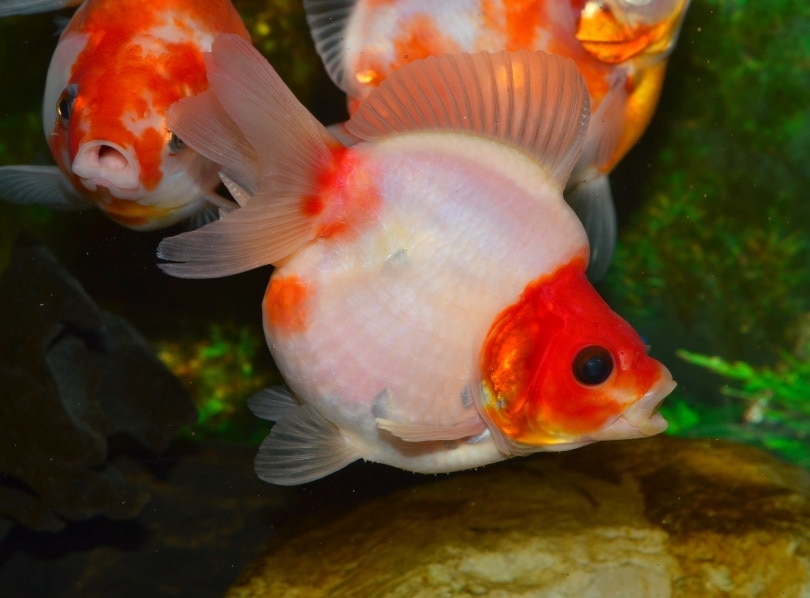
Because of their pointed head shape, Ryukins have been known to be very "pecky" fish and will bite and nibble on the others. Aggression is unfortunately a characteristic of many Ryukin temperaments. They are generally very active and full of energy. A Ryukin sporting breeding tubercles may move at such a high rate of speed he is a blur in the tank (this is only a slight exaggeration).
Diet
All goldfish are somewhat prone to swim bladder issues – some of which are caused or exacerbated by food.
If goldfish take in too much air when feeding, eat the wrong kinds of foods and become constipated, or have food ferment in their guts, it can restrict their ability to control their swim bladder. The result of which is they might end up floating to the top of the tank and be unable to move lower in the water, or they may flip over so they’re swimming around on their back.
Because of the Ryukin’s unusual body shape and caudal hump, they’re even more likely to get swim bladder issues than your average goldfish. The good news is, if you’re careful about what, how much, and how often you feed them, you should be able to prevent these problems occurring.
Avoid feeding your Ryukin floating flakes and pellets, as they might take in too much air from the surface when feeding. If you’re going to feed sinking pellets, make sure you soak them first so they don’t expand in your fish’s digestive system, causing blockages and/or constipation. You should also feed your Ryukin goldfish a small amount several times a day rather than a large amount once a day.
Apart from this, try to feed your ryukin a varied, well-balanced diet, just like you would any other goldfish. Since they’re omnivores, they thrive on consuming a range of plant-based and animal-based foods, in addition to a commercial goldfish food.
Aquarium Requirements
The correct aquarium set-up will help keep your ryukin healthy, as well as providing adequate mental and physical stimulation.
Recommended Tank Size and Shape
Ryukin might not be the largest of all goldfish, but they still reach 6 to 10 inches and need plenty of space to move around.
Start out with a tank of a minimum 20- to 30-gallon capacity for a single ryukin, then add another 10 gallons per additional fish in the same aquarium. So, for example, you’d need a 60- to 70-gallon tank to house five Ryukin (or a mixture of Ryukin and other suitable tank mates).
Remember this is the minimum size required – bigger is always better if you have the space and the budget, plus you then have the option to add more fish in future without having to upgrade your tank.
We’d generally recommend a cuboid tank that’s longer than it is wide. This gives your fish plenty of horizontal room to swim and means the water is oxygenated better due to the larger surface area.
Should you Add a Filter?
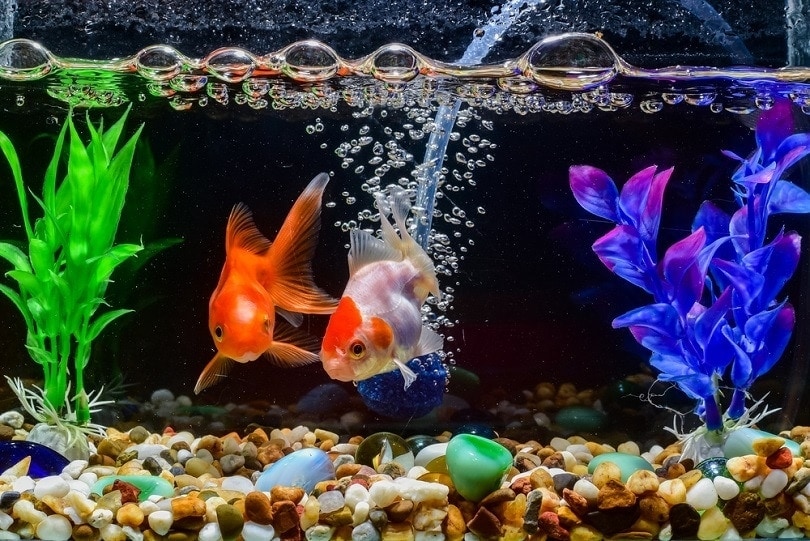
Goldfish produce a lot of waste comparative to their size, so an effective filtration system is a must-have for your Ryukin.
All fish-keepers have their preferences when it comes to water filters, so choose a method that works for you, but we would recommend some form of biological filtration.
Make sure whatever filter you choose is strong enough to deal with the volume of water in your aquarium, and remember it’s better your filter is slightly too strong than not strong enough.
Preferred Substrate
Substrate isn’t essential for your ryukin, but you might find a tank with a substrate looks more attractive than a bare-bottomed tank. That said, substrate is somewhat beneficial for a couple of reasons.
Goldfish are natural foragers, and you’ll notice them rooting around in the substrate looking for morsels, which helps keep them occupied. Plus, good bacteria may live among the substrate, which helps maintain a healthy aquarium eco-system.
When picking a substrate, either choose fine sand or smooth gravel that’s too large for your fish to swallow.
Do they Need Lights?
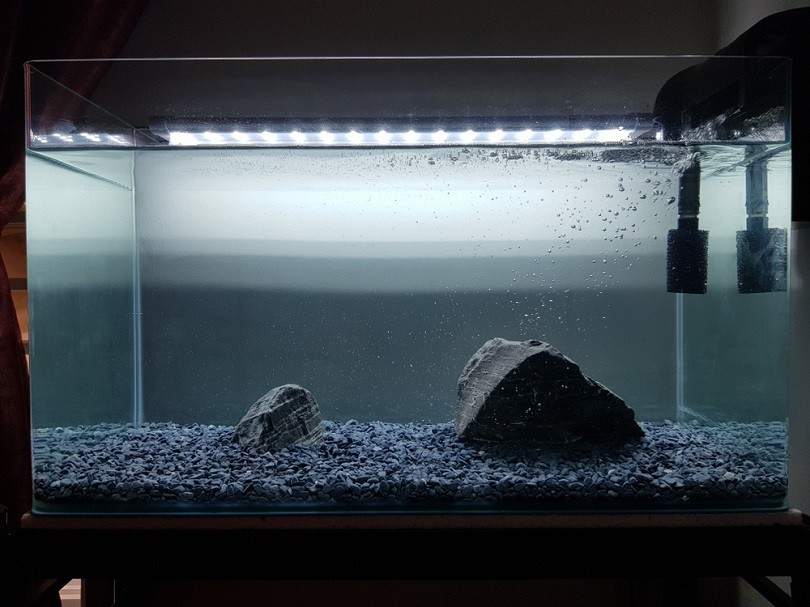
Aquarium lighting helps to create a day/night cycle, plus it means you can view your fish better at night or when it’s gloomy out.
If your fish are kept somewhere with a lot of natural light, you don’t have to have artificial lighting, but since most aquariums come with a light built-in to the lid of the tank, most fish-keepers opt to use it. Plus, it makes your tank look brighter and more interesting.
Try to keep the lights on for roughly 12 to 16 hours a day, and off for 8 to 12 hours a day. Ideally, use a timer to regulate this so you don’t accidentally forget.
Water Temperature
Your Ryukin should be kept at a temperature between 65 and 78 degrees Fahrenheit. That means, in most cases, you won’t require a heater.
In fact, Ryukin are rather hardy and can tolerate lower temperatures than this – for instance, if they live outdoors in a pond – but a very sharp drop in temperature can be fatal, so it’s best to maintain your tank within the above parameters.
Compatibility With Other Fish
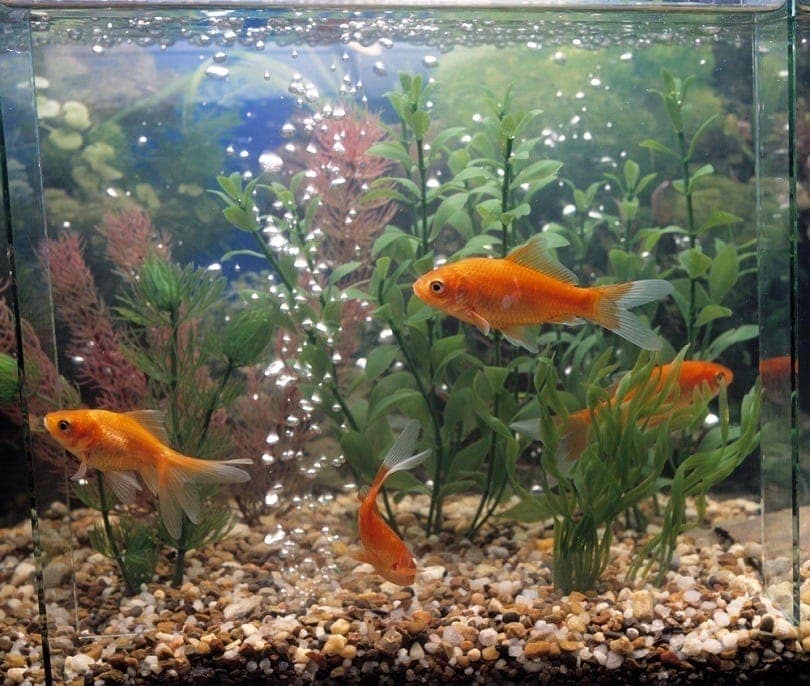
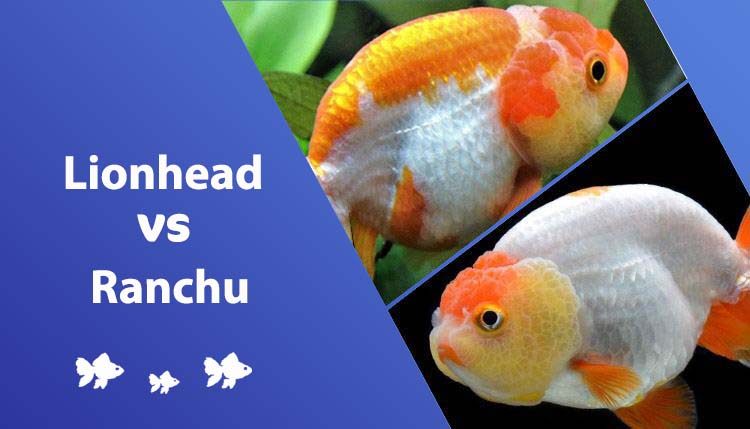
While not aggressive, Ryukin are fast swimmers, so they’ll outcompete most other types of fancy goldfish for food. Therefore, suitable tank mates include other quick, agile fancy goldfish, including oranda goldfish, lionheads, fantails, and other ryukins.
Some people claim they can even compete for food against long-bodied single tail varieties, such as shubunkin and common goldfish, but it might be a bit too risky, as your ryukin could end up malnourished if they don’t get their share at meal time.
Video: A Look at the Ryukin Goldfish
The video below shows how Ryukin goldfish grow and change over time. This is especially note-worthy if you get a young ryukin and want to know if their development is on track.

Final Thoughts
The Ryukin is an attractive and popular choice of goldfish, that doesn’t have too many specific requirements to meet their needs, beyond being mindful of their propensity toward swim bladder issues when feeding them.
As long as you’re prepared to look after a fish that could live for up to 20 years, the Ryukin would make an excellent addition to your aquarium.
Featured Image Credit: slowmotiongli, Shutterstock
Get Hepper In Your Inbox


Pet care tips from our vets and experts, straight to your inbox.
You may opt-out at any time. View our Privacy Policy for more information.

Jeremy has been a fish keeping enthusiast for more than 2 decades. He loves to share his knowledge with others, to aid in the enjoyment of fish keeping, and to get as much fun and joy out of the hobby as he does.
Join the conversation
Ask a question, share your story, or send private feedback.