Hepper is reader-supported. When you buy via links on our site, we may earn an affiliate commission at no cost to you. Learn more.
Veiltail Goldfish: History, Pictures, Facts & More
In this article
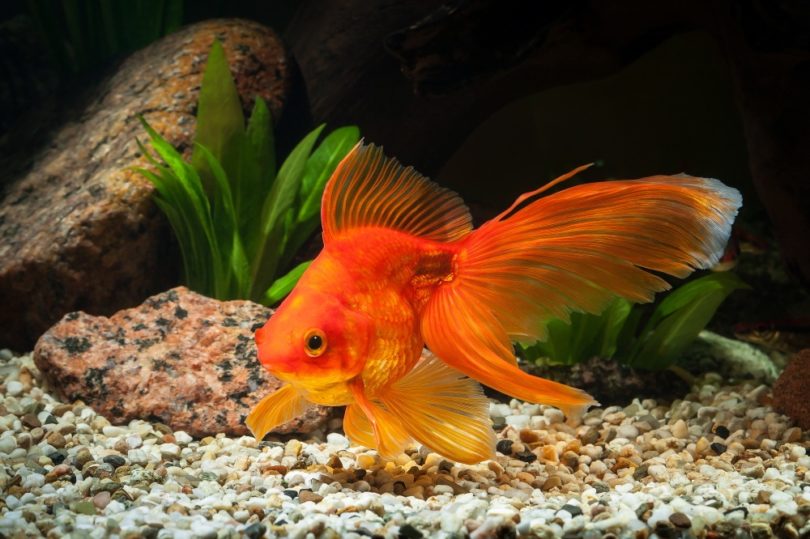
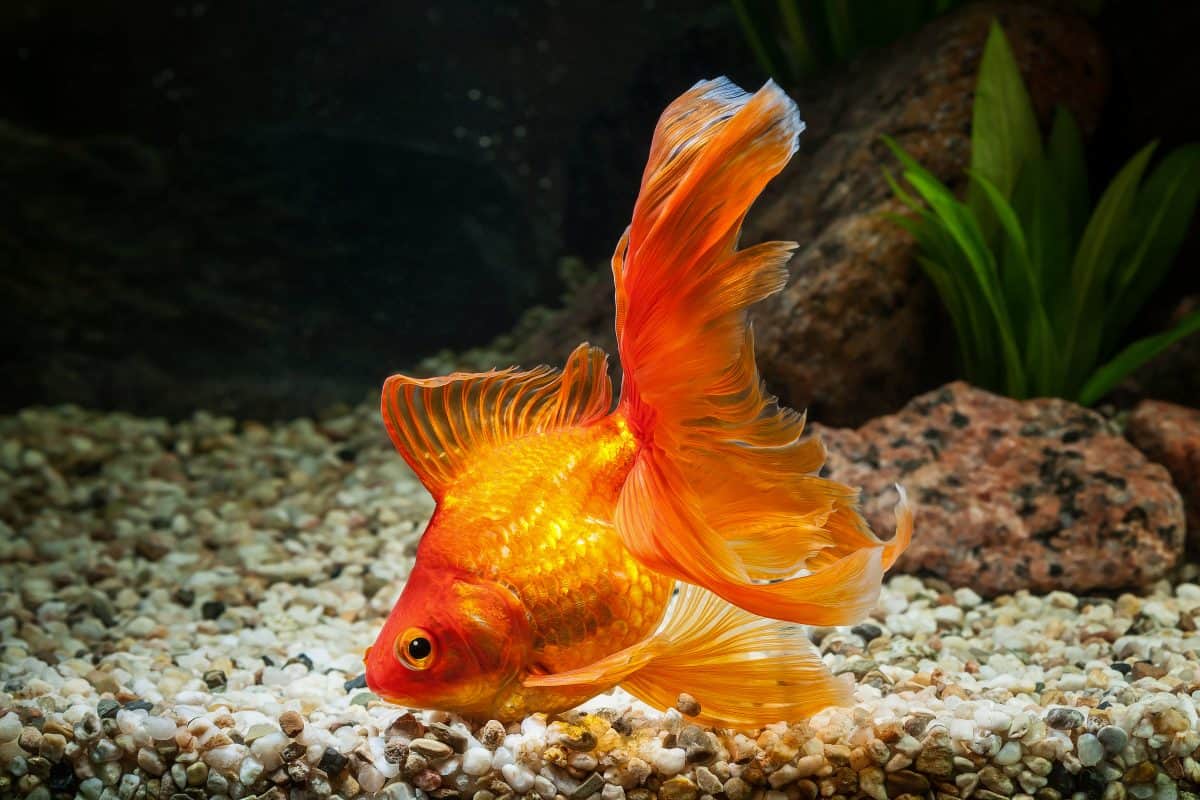
A beautiful goldfish with a delicate, flowing tail, the veiltail is a pleasure to watch and makes a lovely addition to a home aquarium. It’s worth noting other similar long-tailed fancy goldfish are sometimes incorrectly referred to as veiltails. But true veiltails are uncommon and pricier than an average fancy goldfish. If you’re looking to add a veiltail to your collection, learn more about the type and go to a reputable breeder to make sure you’re getting what you pay for. For now, let’s find out more about this beautiful and striking goldfish.

Basic information
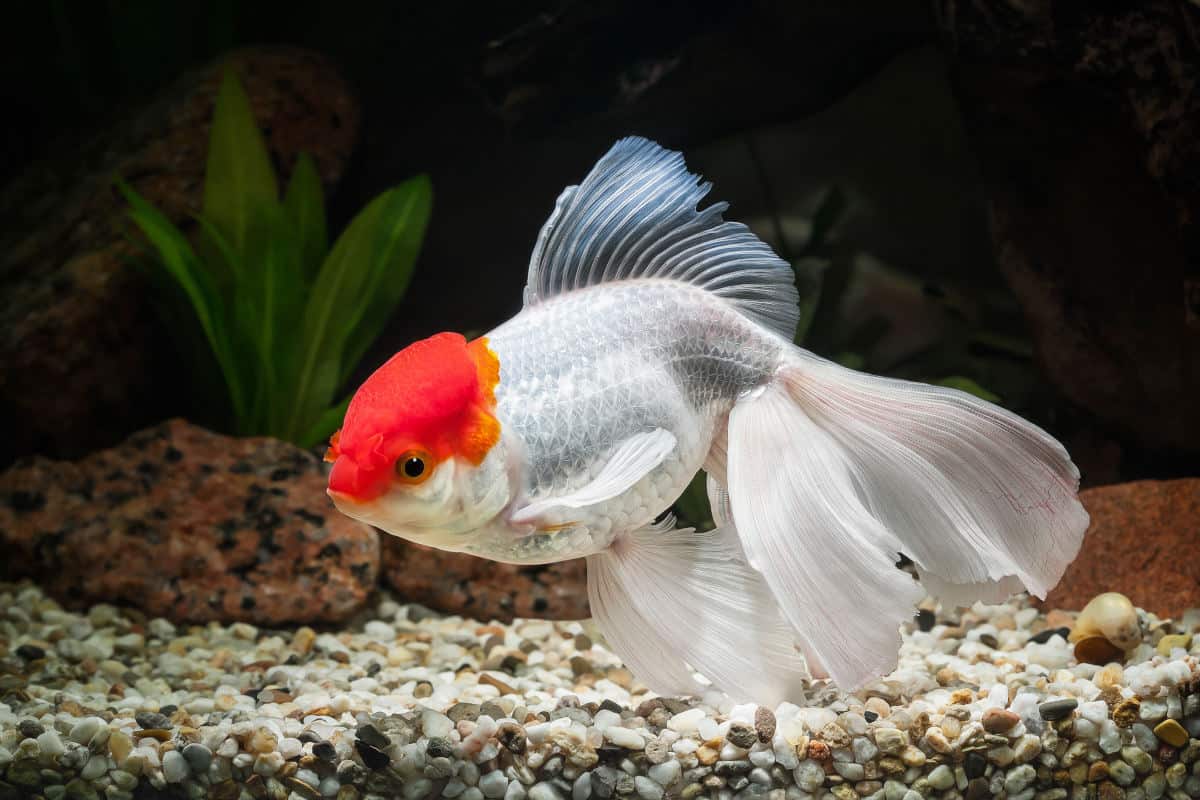
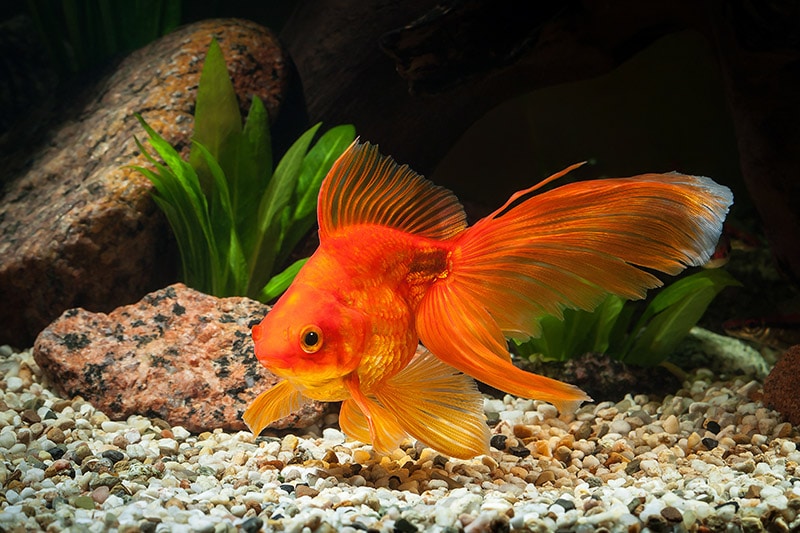
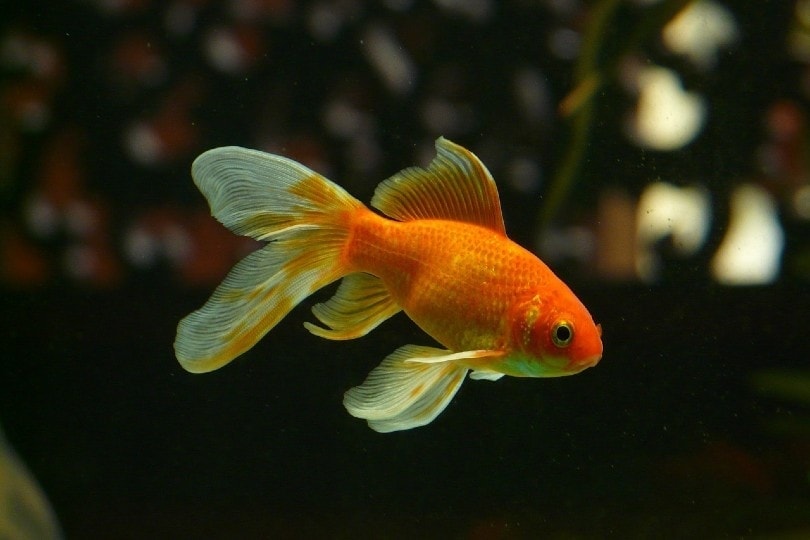
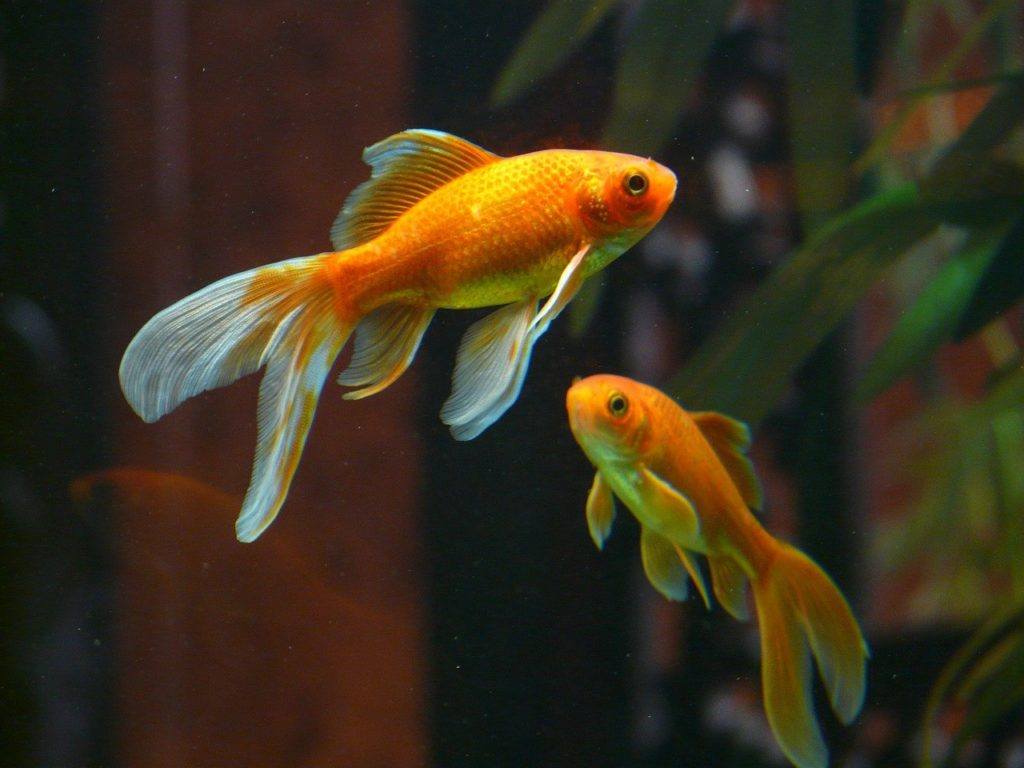
Several features distinguish veiltails from other fancy goldfish with flowing tails. Veiltails have stout, balloon-like bodies with a depth of at least two-thirds of the length. Their long, flowing caudal (tail) fins are delicate and translucent, have no apparent forks or lobes, and should be at least three-quarters of the length of their bodies (though longer is better). Their dorsal fins are single, but all other fins are paired, and their caudal fins should be well-divided.
What Colors Do They Come In?
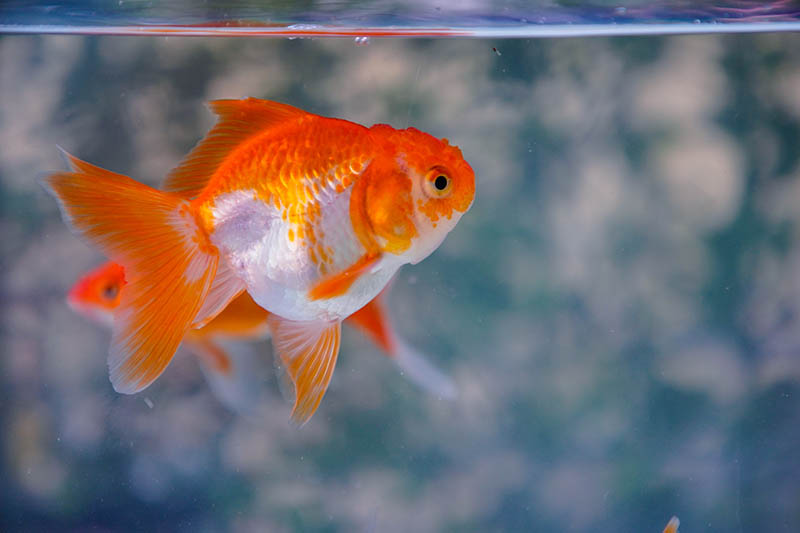
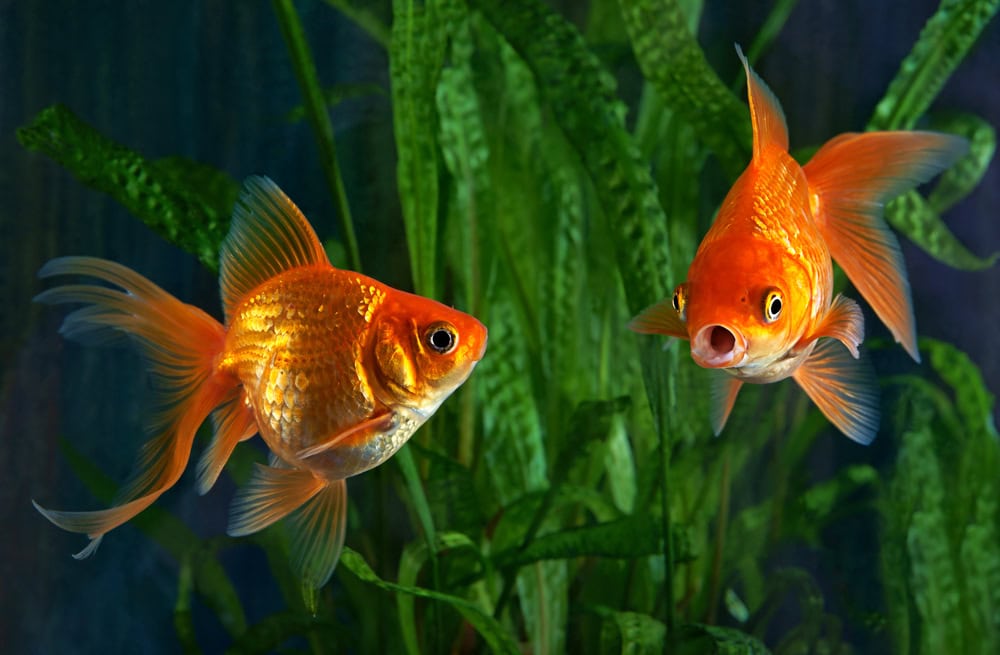
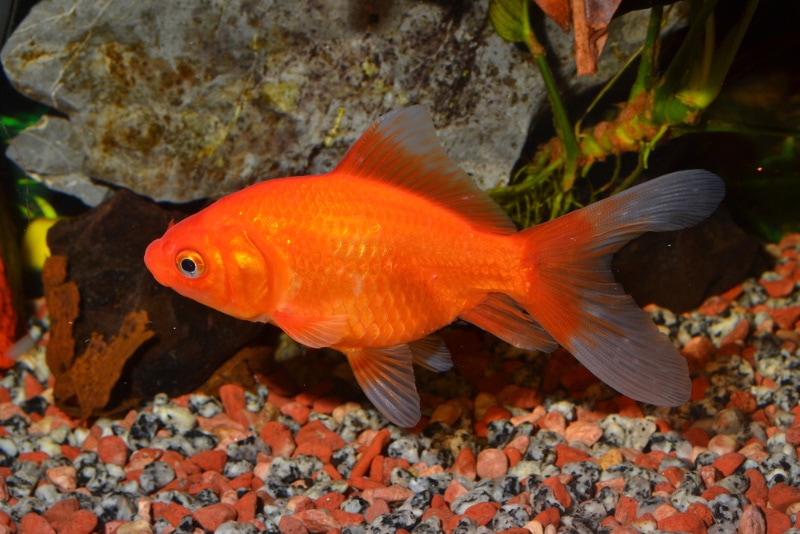
Veiltail goldfish may be solid red or orange, red and white, or calico. Some have metallic scales, whereas others are matte.
What Size Can They Grow To?
The average length of a veiltail is about 6 inches, but bear in mind about 3 inches of that is their tail. The maximum length is about 10 inches total, with a body length of 5 inches; however, you may find the odd exception that grows slightly larger.
Life Expectancy?
A well-looked-after veiltail goldfish can live for around 10 to 15 years, though it’s not unheard of for them to live for 20 plus years.
History
Today’s veiltails are thought to descend from a type of metallic goldfish imported to the U.S. from Japan in 1893. They first appeared in Philadelphia in the 1920s, at which time they were known as Philadelphia Veiltail Goldfish. Further development of the breed took place in Britain, starting in the 1960s and 1970s. It’s worth noting. However, even today, these fish are one of the hardest varieties of goldfish to breed to type.
Are they Hard to Care for?
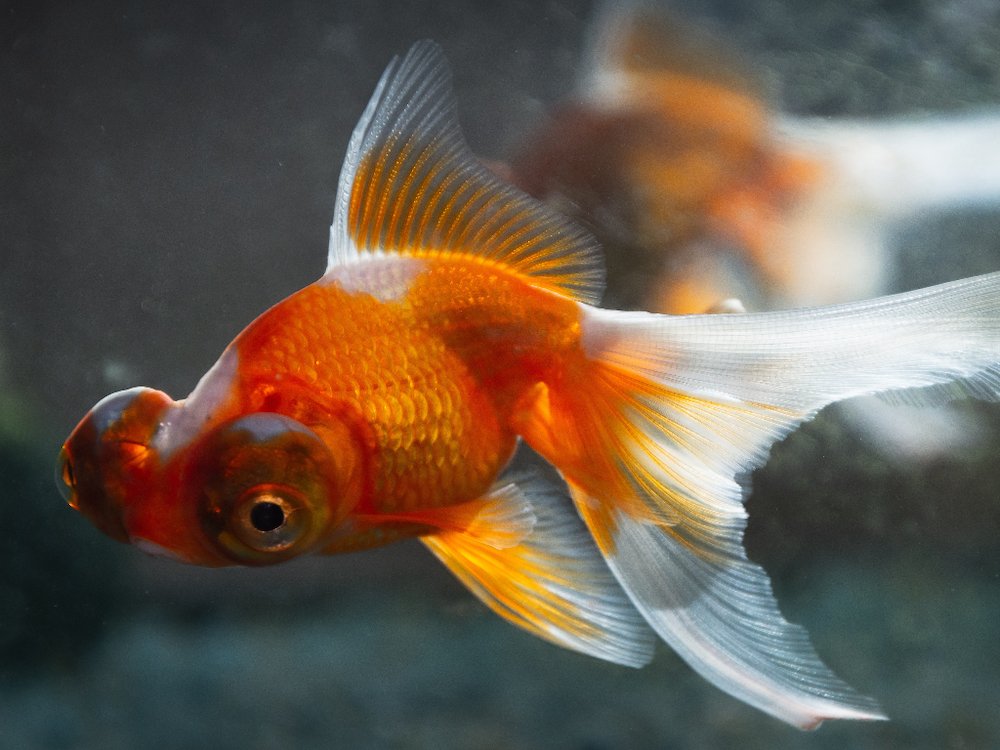
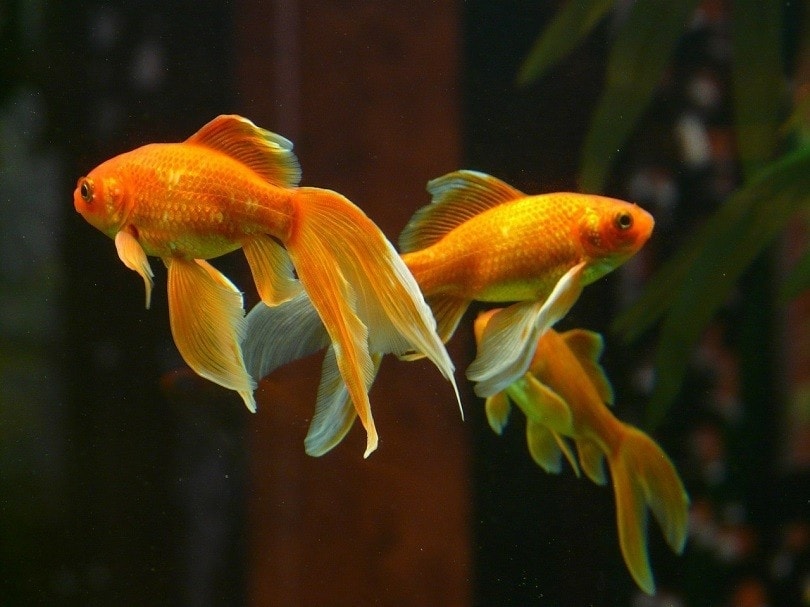
Compared to other types of goldfish such as the bubble eye goldfish or telescope eye goldfish, veiltails aren't the easiest to keep, but they are still relatively difficult to keep compared to common goldfish and other varieties, so they aren’t recommended for beginners. Their balloon-shaped body causes a deformity of the swim bladder, so veiltail-keepers need to be careful to avoid swim bladder disease. Their delicate fins are also susceptible to injury and infection.
If you're new to the world of goldfish or are an experienced goldfish keeper that loves to learn more, we recommend you check out our best-selling book, The Truth About Goldfish, on Amazon.
From diagnosing illnesses and providing correct treatments to ensuring your goldies are happy with their setup and your maintenance, this book brings our blog to life in color and will help you to be the best goldfishkeeper you can be.
Veiltail Goldfish Care Considerations
Due to the veiltail’s swim bladder issues, you need to make sure the temperature of their water doesn’t drop too quickly – as this can cause a chill that may lead to swim bladder disease – and ensure their diet doesn’t cause blockages, which can also exacerbate swim bladder problems. As a veiltail-keeper, you should also do your best to prevent injuries to their long, delicate fins. Therefore, avoid placing plastic plants, jagged rocks, or any other ornaments on which a veiltail could snag their fins. Try to use live plants suitable for goldfish tanks - there are many benefits to live plants - and also, avoid housing them with fish that might nip at them.
Feeding Veiltail Goldfish
As mentioned above, you need to take precautions when feeding your veiltail, due to their propensity to swim bladder trouble. Feeding vegetables may help avoid swim bladder disease. It’s also important not to overfeed your veiltail, so feeding a few small meals throughout the day is better than feeding a lot at once. Your veiltail needs a healthy, balanced diet to help keep those impressive fins in good condition, so start with a high-quality food designed for fancy goldfish. If you choose pellets over flakes, soak them in water for a few minutes before feeding them; if they expand in your veiltail’s stomach, this can affect the swim bladder. You shouldn’t, however, feed a commercial food alone – a balanced diet should also contain a range of plant and animal foods, such as worms, mosquito larvae, zucchini, and shelled peas.

Tank Requirements
Getting the right aquarium set-up for your veiltail will provide them with a healthy and enriching environment in which to live out their days.
Size and Shape of Tank?
While veiltails aren’t the largest of goldfish, they still produce a lot of waste, so they need bigger tanks than you might think. Also, consider a goldfish’s aquarium is their entire world, so keeping them in a cramped environment just isn’t fair. We’d recommend starting out with a tank of 20 to 30 gallons for a single fancy goldfish, then increasing that size by 10 gallons for each additional fish. So, if you wanted to keep four fancy goldfish, you’d need a 40- to 50-gallon tank. But, as ever, the bigger, the better, so select the largest tank you can. Choose a tank longer than it is tall, as this provides more surface area, which equals more oxygen in the water, plus it means there’s more horizontal space for your fish to swim.
Should you Add a Filter?
We’ve said it before, and we’ll say it again: goldfish produce a lot of waste. As such, you should never keep a goldfish in a tank without a decent filtration system. All aquarists have their own filter preferences, and you’ll find pros and cons to all methods, but if you’re unsure, we’d recommend a canister filter or hang-on-back filter that provides both chemical and mechanical filtration. It’s essential to ensure your chosen filter is of an appropriate size and capacity to deal with the size of your aquarium, and it’s always better to have one that’s too powerful rather than not powerful enough.
Do They Need Substrate?
Goldfish are foragers who like to root around on the floor for food, so having some variety of substrate in their tank offers enrichment and a chance to go about their natural behavior. However, any rough or sharp substrate is an absolute no-go for veiltails due to their delicate fins that are easily damaged. Look for a substrate of large, smooth rocks or stones too large for your veiltail to swallow.
Should you add Lights to the Tank?
Veiltails need to have a proper day-night cycle established in their tank. Ideally, they need about 12 to 16 hours of “daylight” (either real or artificial) and 8 to 12 hours of darkness. If kept somewhere with plenty of natural light, you won’t necessarily need aquarium lighting; just remember to keep your veiltail’s tank out of direct sunlight. However, many aquarists choose to light their tanks anyway since an aquarium can look dull without artificial light. When selecting lighting for your veiltail, choose a bulb that provides roughly 1 to 2 watts per gallon of water. However, if you’re planning on keeping a planted aquarium, your lighting requirements may vary.
What Temp Should Their Water Be?
Veiltail goldfish do best with water of between 65 and 72 degrees Fahrenheit. While they can withstand lower temperatures than this, it’s not ideal, and if the water temperature drops too quickly, it can wreak havoc with their swim bladders. Therefore, some veiltail-keepers—especially those who live in cold climates—choose to heat the tank to an even temperature, even though it isn’t strictly essential.
Preferred Tank Mates
Goldfish are social creatures and prefer to be kept with other fish rather than alone. However, veiltails can’t just be housed with any old fish you like the look of. Veiltails are peaceful themselves, but their long tail makes them a target to any fish who like to nip fins. They’re also particularly slow-moving, even compared to many other fancy goldfish, so they can easily be out-competed for food by faster tank mates. Therefore, it’s best to keep them with other slow, egg-shaped fancy goldfish, namely celestial goldfish, telescope eye goldfish, lionhead goldfish, bubble eye goldfish, and, of course, other veiltails.
Video: A Close Look at the Veiltail
Let’s take a look at some veiltails doing their thing in a community tank.
Final Thoughts
Veiltails aren’t the easiest goldfish to look after or to get hold of, so you must be committed to keeping one. Not only do they need a lot of room, but they have special needs to be met to keep those long fins healthy and to avoid other health issues. However, if you are ready to take one on, these are beautiful fish that could bring you decades of enjoyment. Happy fish keeping!
Featured Image Credit: dien, Shutterstock
Get Hepper In Your Inbox


Pet care tips from our vets and experts, straight to your inbox.
You may opt-out at any time. View our Privacy Policy for more information.

Jeremy has been a fish keeping enthusiast for more than 2 decades. He loves to share his knowledge with others, to aid in the enjoyment of fish keeping, and to get as much fun and joy out of the hobby as he does.
Join the conversation
Ask a question, share your story, or send private feedback.