Hepper is reader-supported. When you buy via links on our site, we may earn an affiliate commission at no cost to you. Learn more.
What Do Betta Fish Eat In the Wild? Our Vet Explains What & How Often to Feed Them

In this article
Bettas have solidified their place as one of the most popular pet fish all over the world. As with all fish, knowing the nutritional needs of your beloved betta is important. The pet food market isn’t short of food options for a betta, but all the options make it complicated to how much and how often a betta needs to be fed. Indeed, wrinkling out the details of a betta’s nutrition can be cumbersome!
In this article, we’ll briefly explain the nutritional science of bettas and help you determine the best possible feeding schedule for your betta.

Betta Nutrition: An Overview
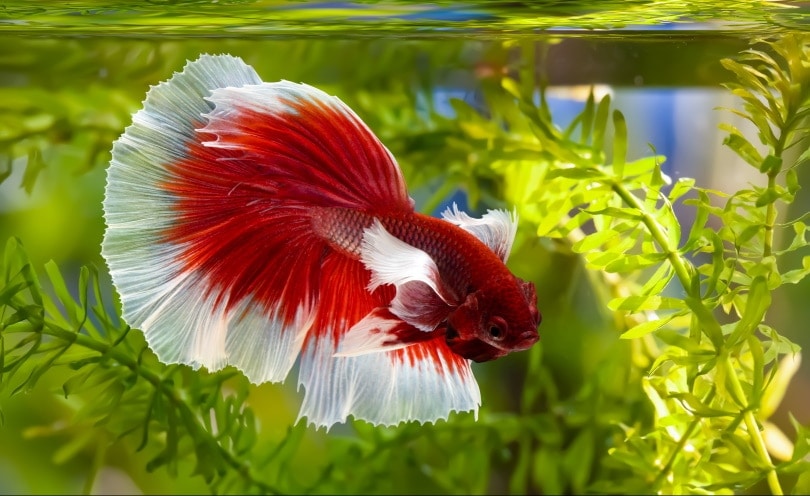
When kept as pets, the nutritional requirements of bettas are slightly different from wild bettas. Fundamentally, they are still carnivorous; this trait has not been lost despite the amount of rigorous selective breeding done with the species. However, unlike wild bettas, bettas kept as pets can be fed on a daily basis.
Furthermore, they don’t have to hunt for their prey, and even when offered live prey, they have an advantage over the prey in that the prey is confined to the space available in the aquarium. Therefore, the “hunt” doesn’t last long.
With regards to protein, research on bettas nutrition has yielded the following results:
With regards to fat, bettas require around 8–18% fat in their diet. Bettas do not have a carbohydrate requirement because they don’t handle cellulose and starch (common forms of carbohydrates in commercially available diets) well.
Finally, bettas require many vitamins and minerals that are often derived from the protein sources incorporated into their foods or added into food during the manufacturing process.
For most pet owners, feeding a juvenile or adult betta requires the following:

Feeding Your Betta
Feeding Betta Fry
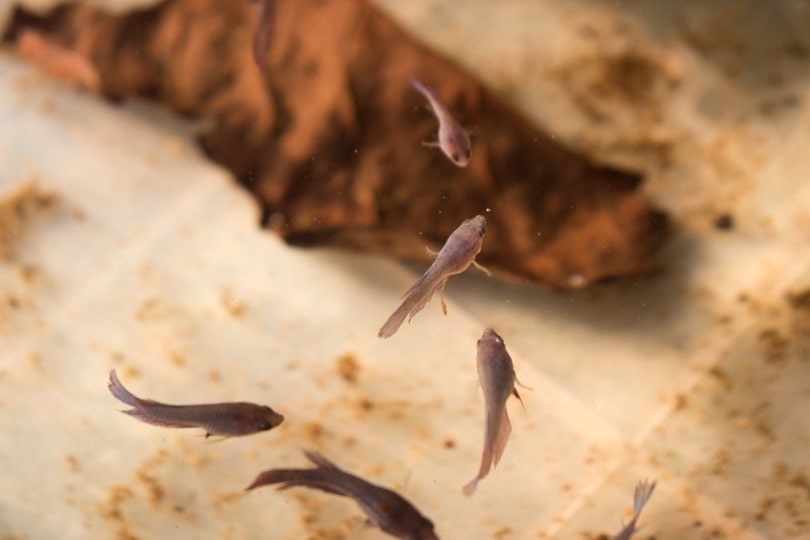
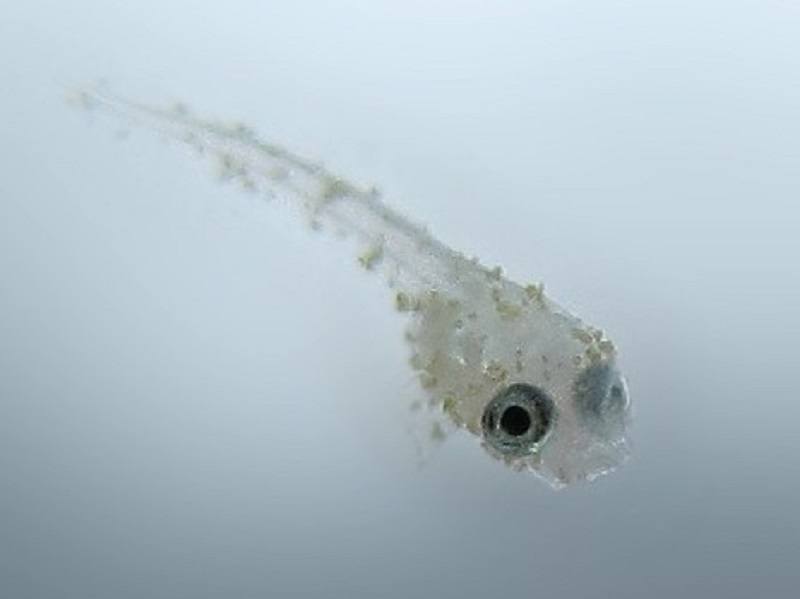
Newborn bettas (also known as fry) require frequent feeding and usually don’t accept pellets or flakes easily. Before deciding to breed bettas, it’s important to set up a good supply of rotifers or infusoria and brine shrimp to ensure that you’ll have something to feed the fry. The following table summarizes a feeding schedule for betta fry:
| Fry Age | Feeding |
| 0–4 days after spawning | Not necessary |
| 5–14 days after spawning | 25 mL of concentrated rotifers or infusoria, once a day |
| 15–30 days after spawning | Baby brine shrimp 2-4 times a day, ~4mL per feeding period of around 10 minutes |
| 31–62 days after spawning | Baby brine shrimp 2-4 times a day, ~10mL per feeding period of around 10 minutes |
Feeding Juveniles & Adults
Bettas are juveniles from about 6 weeks to 4 months of age and generally are done growing by the time they are close to 6 months of age.
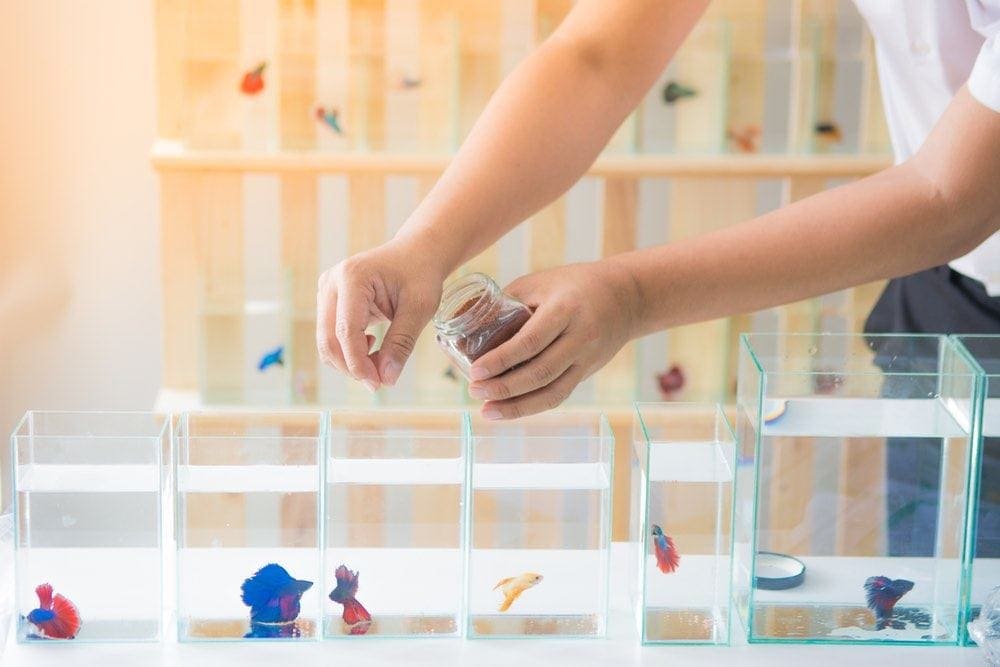
In order to maximize efficiency, it’s recommended to feed bettas according to their weight. Juvenile and adult bettas should be fed around 5% of their body weight per day. This can either be fed as a single meal or split over the course of two meals.
Understandably, determining the weight of a pet fish can be very difficult. This has led to the introduction of feeding guidelines that propose feeding your fish as much as they like over a few minutes and removing any uneaten food before it spoils. While often acceptable, this process may also lead to wastage of food and, in some cases, overfed fish. Here’s a convenient table that can help you estimate your betta’s weight.
| Betta Age | Betta Weight (Grams) | Betta Weight (Pounds) | Betta Weight (Ounces) |
| 2 Months | 2 | 0.0044 | 0.0705 |
| 3 Months | 2.5 | 0.0055 | 0.0881 |
| 4 Months | 3 | 0.0066 | 0.1058 |
| 5 Months | 3.5 | 0.0077 | 0.1234 |
| 6 Months or more | 4 | 0.0088 | 0.1410 |
Please note: This table is not accurate for giant bettas. Females bettas usually weigh slightly less than males.
With the table above, it should be relatively easy to estimate your betta’s daily requirement if you wish to maximize the efficiency of their food and minimize unwanted waste in their tank. Simply calculate 5% of the weight unit of your choice based on their age, and feed that much to your betta on a daily basis. You can split the meals into two if you wish to feed your fish twice a day instead of just once.
If you’re unsure about your betta’s weight, another good estimate is the size of their eye, assuming their eye is normal and your fish isn’t suffering from pop-eye.
People usually want the best for their pets, and this might involve assuming that a growing betta would benefit most from a very high protein diet. However, research shows that protein diets rated over 33.4% but under 44% yield similar results when it comes to growth. Interestingly, feeding juveniles a diet too high in protein at this age tends to slightly lower their growth. This is because all protein consumed by your fish must be broken down into their basic units, known as amino acids, through deamination.
The deamination process itself requires energy, meaning that diets very high in protein aren’t necessarily as effective for juveniles (though they usually are more expensive). Adult bettas don’t have this restriction (as they have little growing to do), and adults being conditioned for breeding readily utilize excess protein in order to boost their reproductive success rates.
Like all pets, bettas are fond of treats. These are usually invertebrates and insects, which can be fed around 3–4 times per week. Anecdotally, many breeders have found phenomenal success by feeding bettas 2.5% of their body weight in pellets once a day and offering them live treats as their second meal.
Though live feeds are the preferred treats by most breeders, it’s acceptable to feed your betta frozen or freeze-dried foods as well.
The feeding schedule is the same for adults you wish to breed; however, as mentioned previously, such adults should be fed a diet high in protein.
The Fish Flake Debate
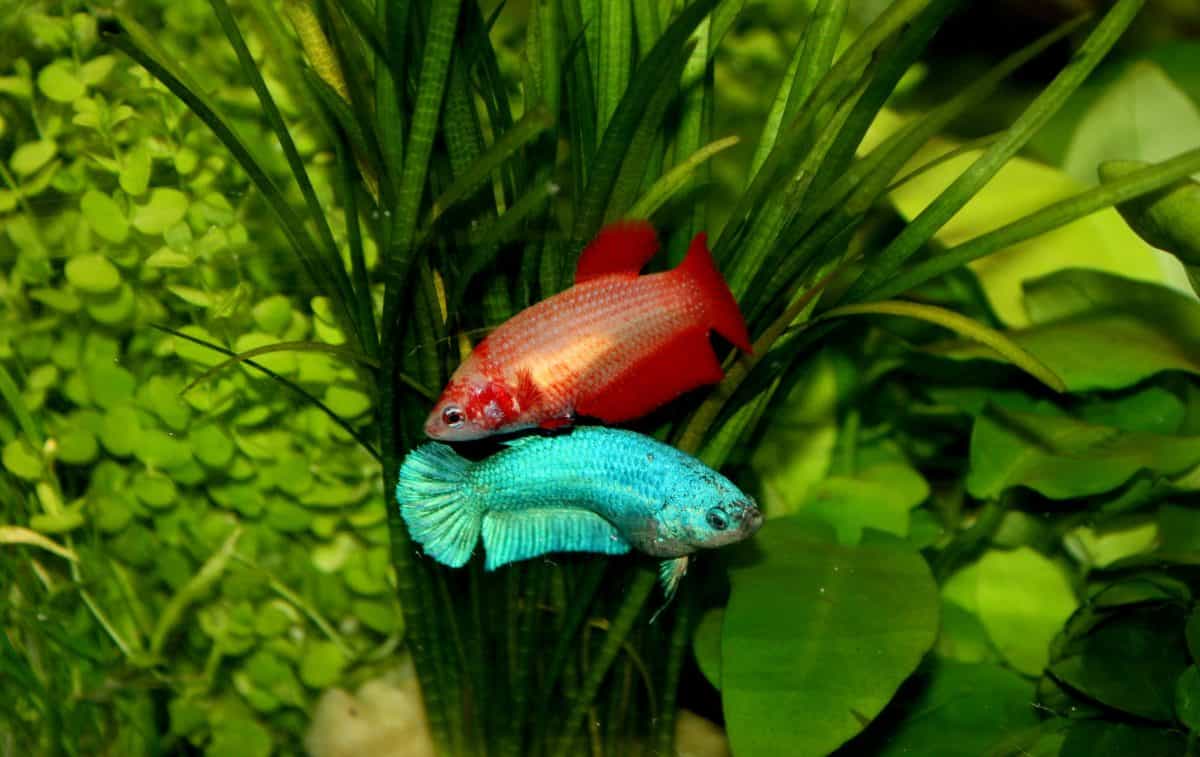
Many fish keepers are vehemently against feeding their fish flakes, as they consider most pellets to be superior in both quality and in terms of their price point. There have been no definitive studies linking a flake diet to poor growth and development in bettas. However, it is very difficult to find a flake diet with good protein content, and flakes tend to spoil quickly in a water environment.
Ultimately, the decision comes down to analyzing each product you offer your betta for their merits and drawbacks. We recommend consulting with your aquatic veterinarian or fisheries department for more information about your betta’s diet.
In Conclusion
When it comes to feeding your betta, a good quality pellet and treats should be offered once or twice a day, according to your preference, and portioned with an estimation of your betta’s weight.
There is no right or wrong product when it comes to your fish, provided it meets their minimal requirements and is acceptable to your beloved pet. For best results, we recommend consulting with your aquatic veterinarian to clear any doubts and confusion about your betta’s diet.
Related Read:
Featured Image Credit: Alexander Geiger, Shutterstock
Get Hepper In Your Inbox


Pet care tips from our vets and experts, straight to your inbox.
You may opt-out at any time. View our Privacy Policy for more information.
Dr. Luqman grew up with an extreme fondness for animals and turned a childhood dream into reality by becoming a veterinarian. His goals are now focused on helping pet owners understand their pets better in order to ensure the best quality of life for all pets globally. He is passionate about wildlife, exotic pets, pet owner education, and animal welfare. Luqman has 3 years of professional experience working with a variety of animal species. He has skills in demonstrating proper animal husbandry and training some exotic species, such as parrots. Additionally, he has decades of personal experience with keeping many exotic pets: freshwater fish, parrots, songbirds, chickens, ducks, turtles, and hamsters.
Dr. Luqman grew up with an extreme fondness for animals and turned a childhood dream into reality by becoming a veterinarian. His goals are now focused on helping pet owners understand their pets better in order to ensure the best quality of life for pets all around the world. His passions are wildlife, exotic pets, pet owner education, and animal welfare.
Education
Luqman received his degree from Universiti Putra Malaysia.
Experience
Luqman has 3 years of professional experience working with a variety of animal species. He has skills in demonstrating proper animal husbandry and training some exotic species, such as parrots. Additionally, he has decades of personal experience with keeping many exotic pets: freshwater fish, parrots, songbirds, chickens, ducks, turtles, and hamsters.
Join the conversation
Ask a question, share your story, or send private feedback.