Hepper is reader-supported. When you buy via links on our site, we may earn an affiliate commission at no cost to you. Learn more.
What to Feed Betta Fish Fry: Our Vet's Feeding Guide & Growth Tips!

In this article
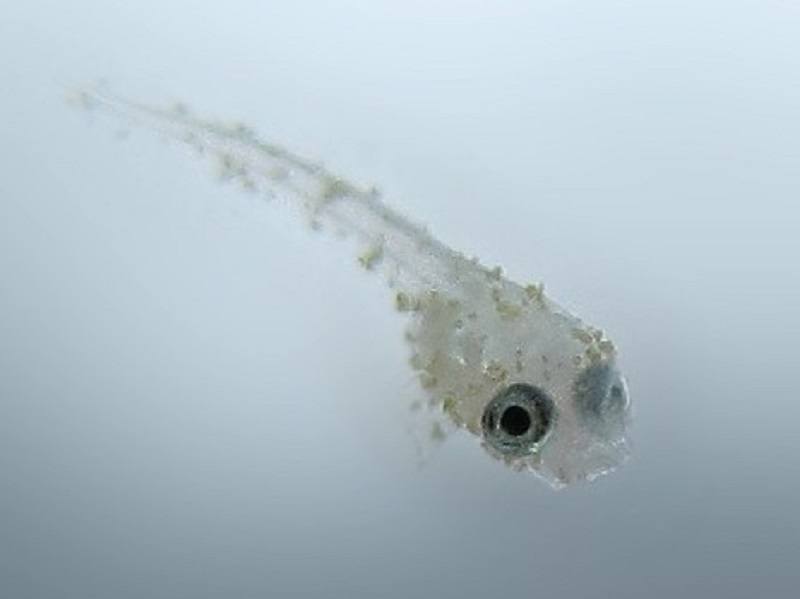
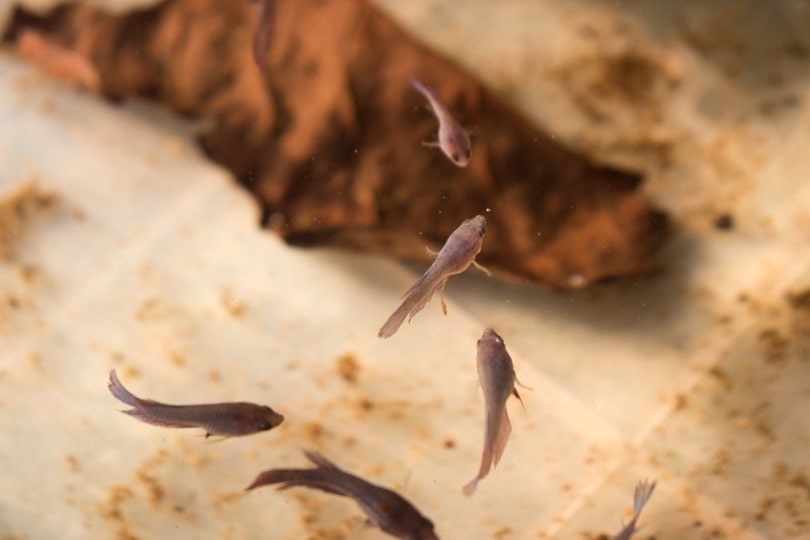
Raising betta fish fry is a rewarding experience, and they can rapidly develop into colorful and beautiful versions of their parents. Ensuring they eat a proper diet is important if you want them to grow up healthy and reach their full-color potential. Betta fry are tiny and cute with a hearty appetite. Getting their diet right in the beginning may be tricky, but it gets easier as you learn what foods they do not like and which foods seem to have the most beneficial effect on the growth rate of the fry.
This article will help you determine the best foods to feed betta fish fry whether you are new to raising betta fry or interested in learning more about growing betta fry fast in a short period.

Raising Betta Fry - A Simplified Guide
Please Note:
Betta Fish Eggs in The First Few Days
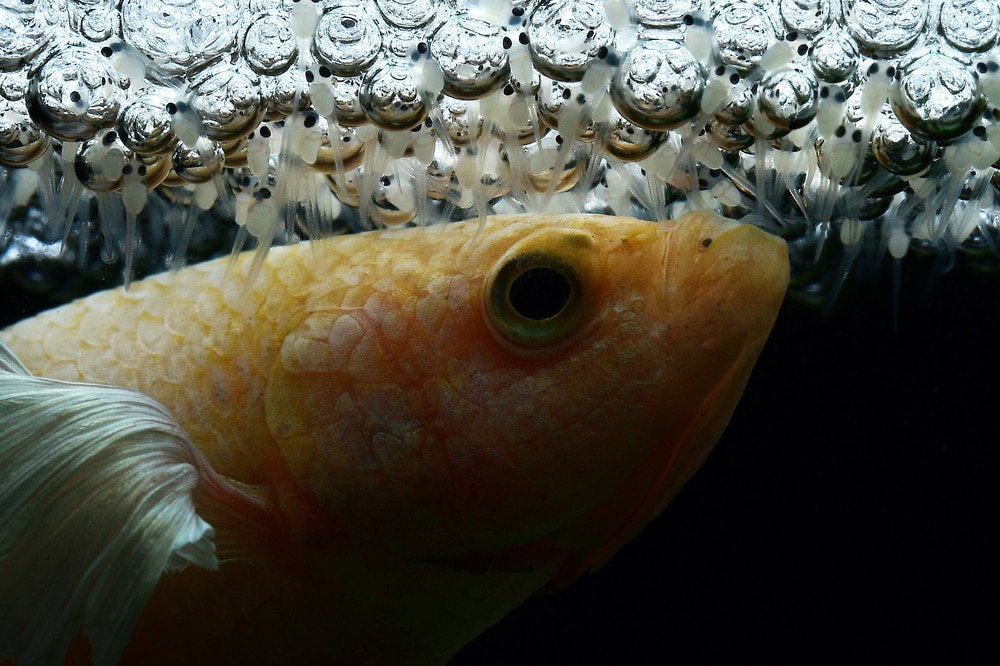
Betta fish eggs typically hatch 24 to 48 hours after the breeding pair spawn. The male usually chases the female away after she has released her eggs, it’s not advisable to keep the female with the male after they have spawned. The female does not participate in guarding the eggs or helping the fry and doesn’t recognize them as her “children”. Given the opportunity, she will eat them. This is often why the male chases her away once they’ve spawned. The male will play a parental role in caring for the eggs by guarding the bubble nest against potential predators.
Once the eggs hatch, it is very important to not remove the male immediately. At this point, the male plays a very important role by picking up the babies (also known as fry) and placing them back into the bubble nest. This is important because, until the fry learn to orient themselves properly in the water, they cannot come up to the surface to breathe and therefore, require the male to assist them by placing them back inside the bubble nest. The male will also repair and reconstruct the nest as needed during this period. The male is needed for this purpose for about a day. After this time period, the male should be removed from the tank. He doesn’t have a strong paternal instinct once his fry are swimming properly, and may resort to eating them too.
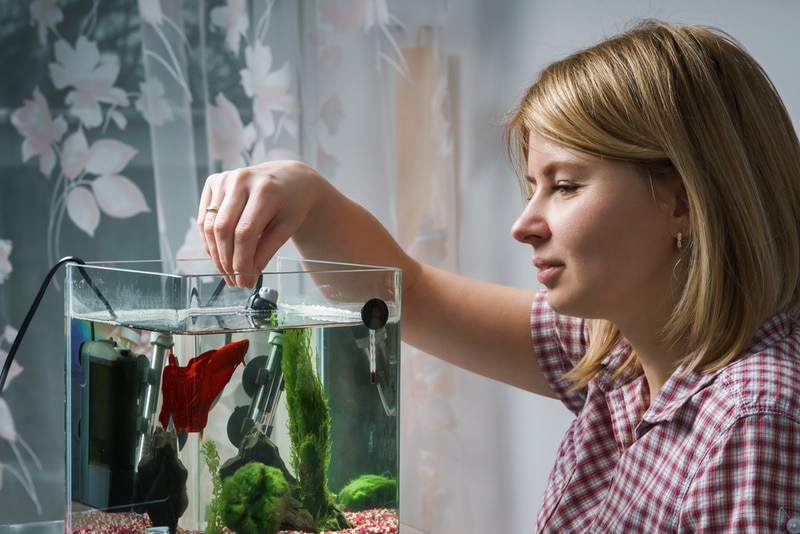
Fry can be raised in either tank they were born in, or can be moved into individual nurseries for better care and attention. A shallow tank that can hold around a liter (0.3 gallons) of water at a 5 centimeter depth should be enough for around 30 fry. The tank should have a small sponge filter and live plants like hornwort, java moss, and other bushy plants. You should not turn the filter on for the first 2 weeks (the fry are often too weak to swim against the current it produces). Instead, the tank should be filled with water sourced from a cycled, established aquarium that is problem and disease-free.
After the fry hatch from the eggs, they will receive essential nutrients from their yolk sac and do not need additional foods until they are swimming around the nursery tank and actively searching for sources of food. Fry should be fed on day 5 after the Betta pair spawns, their absorbed egg yolk is sufficient enough to sustain them for up to day 4 post-spawning.
Up Until Day 14: Rotifers
This is the first food you can feed Betta fish fry, once they are about 5 days old. 25 mLs of concentrated rotifers should be fed to about 30 fish fry once a day.
Rotifers, sometimes referred to as Brachionus spp. (such as Brachionus rotundiformis) are tiny organisms that are highly nutritious and easy for baby fish to digest. These can be purchased from a pet stored and can be easily propagated at home in a separate aquarium (around a 5 gallon aquarium) the following way:
Propagating Rotifers
Betta fry should be fed rotifers until about 2 weeks post-spawning date. That means if the adults spawned on the 1st of a month, you would feed them rotifers until about the 14th of the month.
An alternative to rotifers is infusoria. The small size of infusoria can easily be eaten by the fry.
You can easily raise an infusoria culture from the pet store or an online fish store. An infusoria hatchery should be started as soon as the eggs have been laid and deemed fertile. Infusoria move fast through the water, which will appeal more to the betta fish fry, and they will have fun catching the infusoria.
To feed your fry the infusoria culture, you can catch them in an eyedropper and squeeze them directly into the fry nursery tank. You only need to feed a few infusoria at a time, depending on the number of fry in the tank.
In addition to feeding your fish every day, you should also do a water quality check everyday to ensure that the ammonia levels are always under 0.25 ppm (ideally at 0 ppm).
Day 15-30: Baby Brine Shrimp Nauplii
Once the betta fish fry are around 2 weeks old, it is time to feed them a more protein-rich food that is slightly larger. By this time, they are also strong enough to withstand the current of a sponge filter, so you can turn on the filtration system in your nursery (it should still be set at the lowest setting).
Baby brine shrimp are a good food source that are high in meat-based protein and can easily be eaten by week-old fry. You should feed your fry these shrimp 2-4 times a day, instilling around 4 mL of shrimp-water in their tank (enough for them to consume within 10 minutes on average). This works out to about approximately 20-50 shrimp per fish (per feeding session).
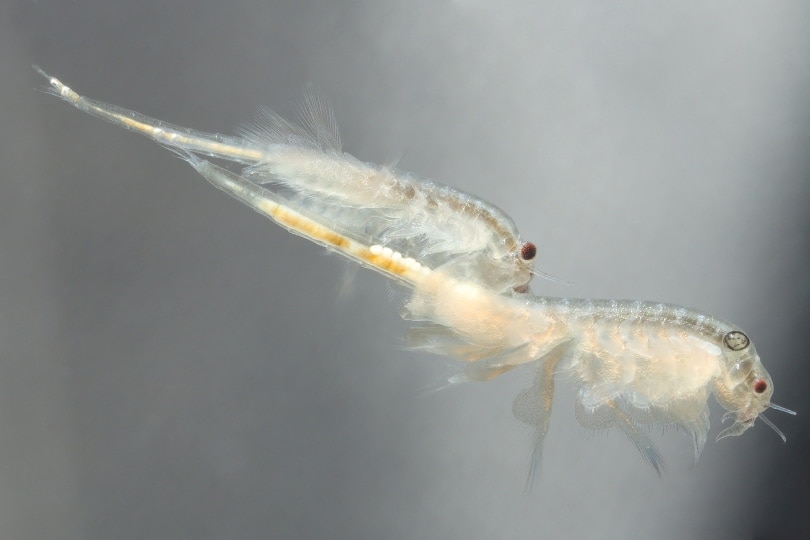
The baby brine shrimp can be collected the same way as the infusoria or rotifer culture using an eyedropper. Starting a brine shrimp hatchery system can ensure that you have a constant food source on hand for the betta fish fry. Adult brine shrimp will be too large for the fry to consume and should only be used as breeding pairs. This should be their staple diet until they are about a month old. Also, throughout this stage, the water level in their nursery can slowly be increased to more than 5 centimeters of depth.
Day 31-62: Isolation & Continued Feeding
Once the babies are about a month old, they should be separated in individual holding tanks. These tanks should contain rocks, terracotta pots, and silk and/or live plants. Each tank should also have filtration, heating, and a lid.
Each fish should still be fed baby brine shrimp 2-4 times per day, however with a larger volume per feeding. The fish should now be given around 10 mLs of shrimp-rich water per feeding session (each session should last around 10 minutes or so).
If you feel that it is too confusing to deal with live cultures, you can purchase commercially created foods that are marketed as fish fry food if the fry is over a month old. They will typically come as micro pellets or in the form of a powder.
Commercial foods are not the best source of nutrition for betta fry and can cause them to grow much slower than if they were being fed live protein-rich foods. Some fry will not eat micro fry pellets or flakes, so you should feed them a sample before buying the whole container of fry food only to find out that the fry does not accept it.
In that case, you can ask the pet store if they have live cultures of insect larvae that have already been established.
Day 63 Onwards
Once your fry are 2 months old (day 63 post-spawning), the amount of brine shrimp they are fed can be reduced to once a day (around 0.5 mL of shrimp-rich water). However, this reduction MUST coincide with the introduction of other foods in their diet (often a pellet about 1 mm in size), also fed at least once a day. We’ll explore more food options in the sections that follow.
Summary of Feeding Betta Fry
| Fry Age | Housing | Feeding |
| 0-4 days after spawning | In the birthing tank or a nursery | Not necessary |
| 5-14 days after spawning | A shallow tank filled with about a liter water (0.3 gallons) for 30 fry | 25 mL of concentrated rotifers or infusoria, once a day |
| 15-30 days after spawning | Nursery can slowly be filled up to around a gallon in volume to house 30 fry | Baby brine shrimp 2-4 times a day, ~4mL per feeding period of around 10 minutes |
| 31-62 days after spawning | Individual Tanks | Baby brine shrimp 2-4 times a day, ~10mL per feeding period of around 10 minutes |
| 63rd day after spawning onwards | Individual Tanks | Baby brine shrimp once a day, around 0.5 mL per feeding period and pellets at least once a day |

Food Options
Pellets
As mentioned above, pellets made specifically for Bettas are the best option for your fry. These pellets should have a protein rating of around 35-40% and a fat rating under 10%. Good quality Betta pellets should have a fish or invertebrate as the main ingredient in the mix. Foods with protein ratings over 43% are not recommended as a daily staple.
Frozen and Freeze-Dried Foods
Frozen foods should be thawed out overnight and then ground into powder before feeding. Ground food can be stored in the freezer for several days so that you do not have to grind the food every day. Some good frozen or freeze-dried betta fry foods are:
These foods are high in protein and mimic a similar diet the fry will eat in the wild.
Foods to Avoid
Betta fish cannot digest plant matter well, and it can lead to bloat. Bloating can also cause a delay in the digestion and absorption of protein foods which will cause your betta fry to grow slowly. Avoid feeding the betta fish fry algae or leaf matter.
Commercial fry foods can contain algae in the formula, which makes it important to check the ingredients before purchasing fry foods. Carnivore micro pellets for fry are the best option in this case. There should be little to no traces of plant matter in the ingredients list.

Conclusion
The amount and type of food you feed your betta fish fry is going to determine the growth rate of your fry. Betta fish fry grow faster when they are fed a varied diet that includes several types of protein-based foods, whether live, frozen, or freeze-dried meals. Live foods seem to increase their growth rate after the first few weeks, whereas rotifers or infusoria nourishes betta quickly in the first and second weeks
See also:
Sources
Featured Image Credit: airdone, Shutterstock
Get Hepper In Your Inbox


Pet care tips from our vets and experts, straight to your inbox.
You may opt-out at any time. View our Privacy Policy for more information.
Dr. Luqman grew up with an extreme fondness for animals and turned a childhood dream into reality by becoming a veterinarian. His goals are now focused on helping pet owners understand their pets better in order to ensure the best quality of life for all pets globally. He is passionate about wildlife, exotic pets, pet owner education, and animal welfare. Luqman has 3 years of professional experience working with a variety of animal species. He has skills in demonstrating proper animal husbandry and training some exotic species, such as parrots. Additionally, he has decades of personal experience with keeping many exotic pets: freshwater fish, parrots, songbirds, chickens, ducks, turtles, and hamsters.
Dr. Luqman grew up with an extreme fondness for animals and turned a childhood dream into reality by becoming a veterinarian. His goals are now focused on helping pet owners understand their pets better in order to ensure the best quality of life for pets all around the world. His passions are wildlife, exotic pets, pet owner education, and animal welfare.
Education
Luqman received his degree from Universiti Putra Malaysia.
Experience
Luqman has 3 years of professional experience working with a variety of animal species. He has skills in demonstrating proper animal husbandry and training some exotic species, such as parrots. Additionally, he has decades of personal experience with keeping many exotic pets: freshwater fish, parrots, songbirds, chickens, ducks, turtles, and hamsters.
Join the conversation
Ask a question, share your story, or send private feedback.