Hepper is reader-supported. When you buy via links on our site, we may earn an affiliate commission at no cost to you. Learn more.
What to Do When Your Cat Won’t Eat (Vet Answer)

In this article
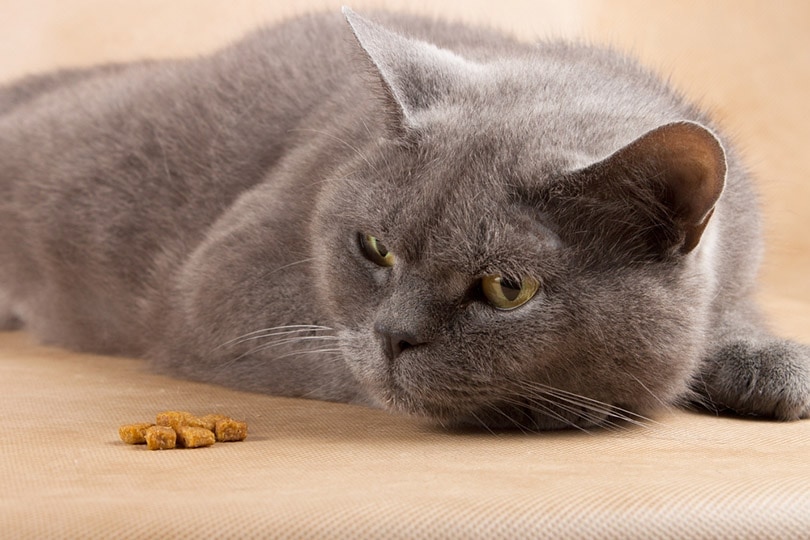
Food is a basic need for all animals and under normal circumstances, pets are really looking forward to food and treats. As a rule, if a cat refuses to eat, this is a very clear indicator that something is going on.
The medical term for this condition is “anorexia”. Anorexia is a sign of a very large list of possible causes and underlying diseases. A cat refusing to eat for 2 to 3 days is at extreme risk of dehydration and organ damage. If you've noticed that your cat has not eaten, please do not wait until tomorrow when it might be too late. If your cat is refusing to eat, take them in for medical consultation immediately.

What Are Some of the Possible Causes of Anorexia in Cats?
What Are Some of the Risks of Anorexia in Cats?
Dehydration and organ damage are a risk. In overweight cats, hepatic lipidosis is a great concern because after a period of anorexia, the cat’s liver begins breaking down fat from the body to supply energy and nutrients to maintain its functions.
Because in overweight cats the fat percentage of their body is high, it can overwhelm the liver’s ability to process it, so the fat is stored in the liver. A fatty liver is not able to carry on with the diversity of metabolic functions and chemical processes that this organ is responsible for.
How Will the Veterinarian Diagnose the Cause of the Anorexia?
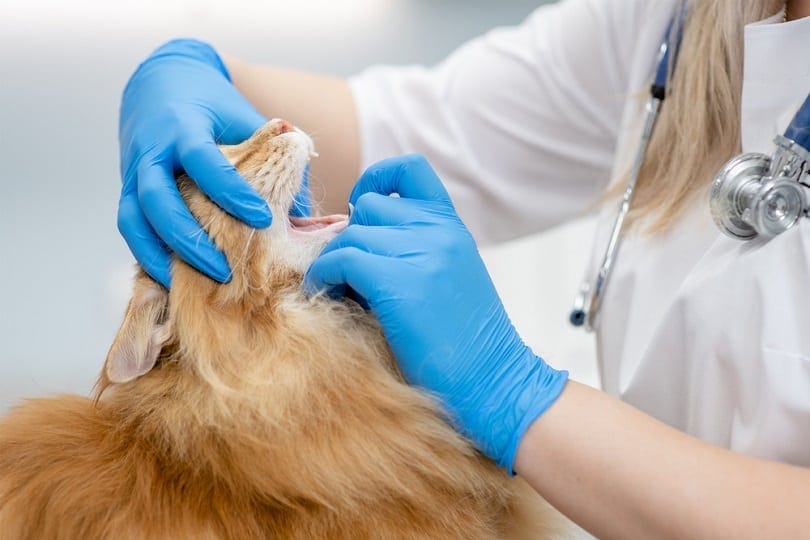
Once at the clinical consultation, all the specific information you can share with your veterinarian can be very useful for the case history. The veterinarian will proceed to perform a complete physical examination, checking the mouth, eyes, and nose of your cat, and they will palpate their abdominal area while looking for inflammations, masses, or any other abnormalities. The veterinarian might request a blood sample and possibly some diagnostic imaging, such as X-rays or abdominal ultrasounds. In addition, the veterinarian might test your cat for retrovirus.
What Will the Treatment for the Cat’s Anorexia Be?
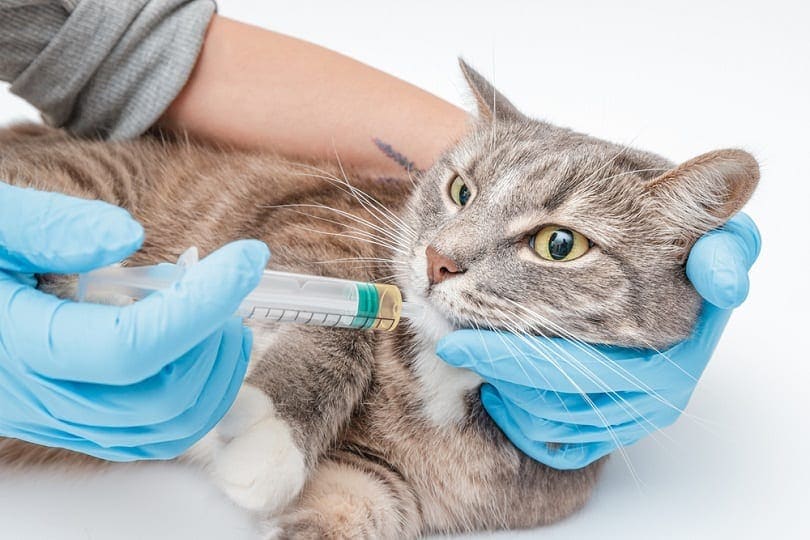
The treatment will largely depend on identifying the underlying cause. Bacterial Infections such as gastroenteritis or respiratory infections can be treated with oral antibiotics. Abscesses will need incision, drainage, and debridement, followed by oral therapy. Masses, polyps, fractures, tumors, and some obstructions often require surgical treatment. In some extreme cases, your cat might need to stay in the hospital with intravenous therapy to restore hydration and electrolyte balance.
Complex cases of gastrointestinal disease might need the cat to be fed using a tube. The details of tube placement and feeding technique depend largely on the specific case some of these cases require days of hospitalization. In addition, the veterinarian might prescribe some pain management medication to your cat.
The veterinarian will find an appropriate treatment for your cat’s specific case after identification of the underlying cause of the anorexia. It is important to get professional advice and follow the veterinarian’s recommendations and prescriptions. Please never try to medicate your cat with medicine that works for you, as many human medications are toxic for cats.
What if the Veterinarian Thinks the Cat is Healthy?
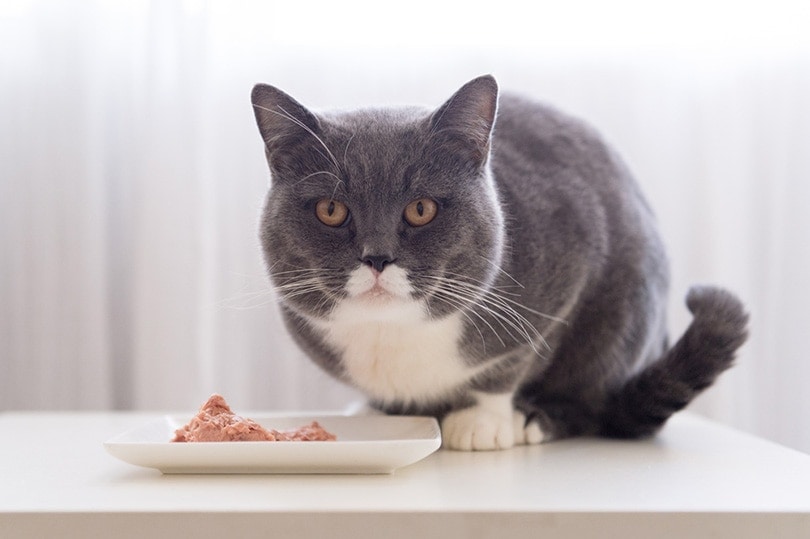
If the veterinarian finds out that the cat is not suffering from any underlying disease and all test results are within normal parameters, this is very good news—your cat is healthy! However, the case is not over until the cat resumes normal eating habits.
Once you have ruled out any potentially life-threatening situation, the veterinarian might recommend any of the following:
Do not leave the cats without food under any circumstances. As an owner, it is your responsibility to provide a safe space for each cat to feel comfortable and free of stress. You might have to consider keeping the cats apart and work towards gradual socialization. Consult a specialized cat behaviorist if the problem persists.
Additional Important Information & Recommendations

Summary
Any time that your cat won’t eat, you need to take it seriously. Cats can become dangerously dehydrated rather quickly, and this can result in organ damage. While there are many potential causes, the risks are high, so if your pet isn’t eating for more than 2 or 3 days, you need to get them checked out immediately. Your vet will eventually be able to give a diagnosis and will hopefully have your cat feeling good as new in no time.
See also:
Featured Image Credit: Elena Kutepova, Shutterstock
Get Hepper In Your Inbox


Pet care tips from our vets and experts, straight to your inbox.
You may opt-out at any time. View our Privacy Policy for more information.
Paola Cuevas is a veterinarian and animal behaviorist, with over 18 years of experience working with a variety of species. Her passion is animal welfare and focuses on the importance of preventive medicine. Paola has skills in the fields of nutrition, microscopy, clinical pathology, diagnostic imaging, and endoscopy as well as extensive experience in animal training through positive reinforcement. As our in-house veterinarian, Paola is very happy to share her knowledge and experience with our readers and hopes to be helpful with any issue presented by your non-human family members.
Dr. Paola is our Senior In-House Veterinarian at Hepper, and she loves sharing her knowledge and experience with our readers. Paola hopes to provide helpful information for any issue presented by your fur babies.
Her passion is animal welfare and she focuses on the importance of preventive medicine.
Education
Paola graduated from the University of Guadalajara, Mexico.
Experience
Dr. Cuevas has over 18 years of veterinary and animal behaviorist experience and has worked with a variety of species, from companion animals to exotics. She has skills in the fields of nutrition, microscopy, clinical pathology, diagnostic imaging, and endoscopy as well as extensive experience in positive reinforcement animal training.
Things You Didn't Know About Dr. Paola:
As a student, Paola received an outstanding student scholarship. She had the opportunity to travel to Canada and learn about aquaculture diagnostics and pathology.
Paola and another colleague trained gentoo penguins to recognize shapes and colors and their project achieved an international first-place award in research.
Paola has trained several species of animals to voluntarily accept medical procedures such as ultrasound examinations, X-rays, and the collection of biological samples with the goal of improving their healthcare without additional stressors or the need for physical restrain.
Join the conversation
Ask a question, share your story, or send private feedback.