Hepper is reader-supported. When you buy via links on our site, we may earn an affiliate commission at no cost to you. Learn more.
White-Fronted (White-Browed) Amazon Parrot: Info, Pictures, Personality, Food & Care Guide


In this article
Disclaimer
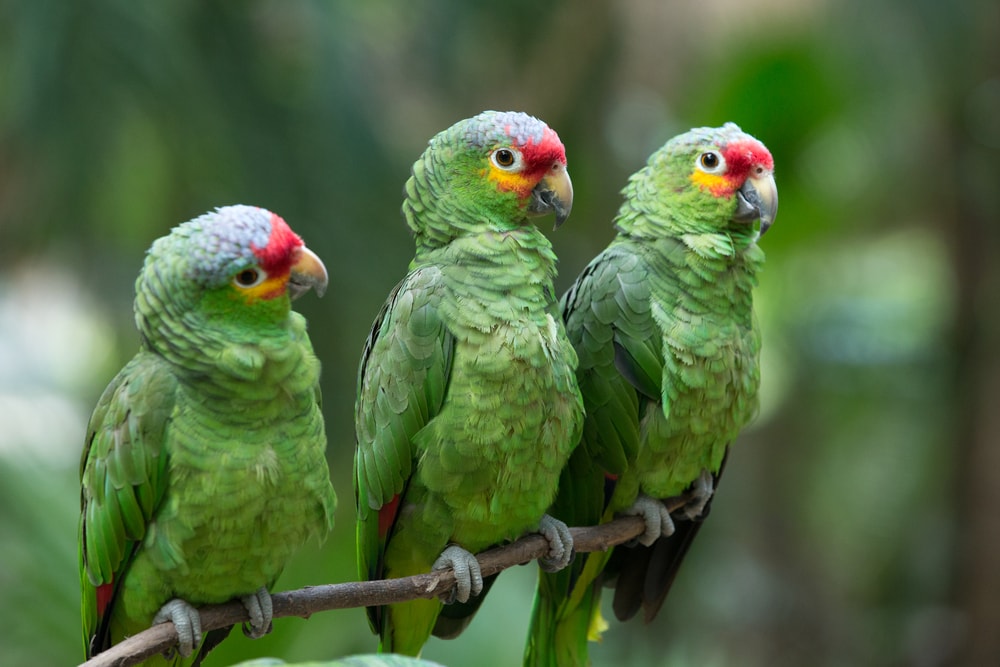
The white-fronted Amazon, also known as the white-browed Amazon or spectacled Amazon, is a beautiful parrot with a distinctive white patched brow just above the beak. While not as big as other species of Amazon parrot, they have an entertaining nature and make exceptional companion birds. These birds are excellent talkers and highly sociable, making them fun and entertaining parrots to own.
Join us in learning more about these fascinating birds so you can decide if owning a white-fronted Amazon parrot is right for you and your family.
Species Overview
| Color: | Green body, white patch on forehead, red borders around the eyes, a patch of blue on top of head |
| Size: | Roughly 9.8 inches |
| Weight: | 6.5–8.7 ounces |
The white-fronted Amazon parrot (Amazona albifrons) is a vocal bird that is renowned for mimicking 30-40 different sounds. They can also sing and are quite chatty and loud. Despite their smaller size compared to other Amazon parrot species, what they lack in size, they make up for in personality. They are active birds and require an adequate amount of daily exercise.
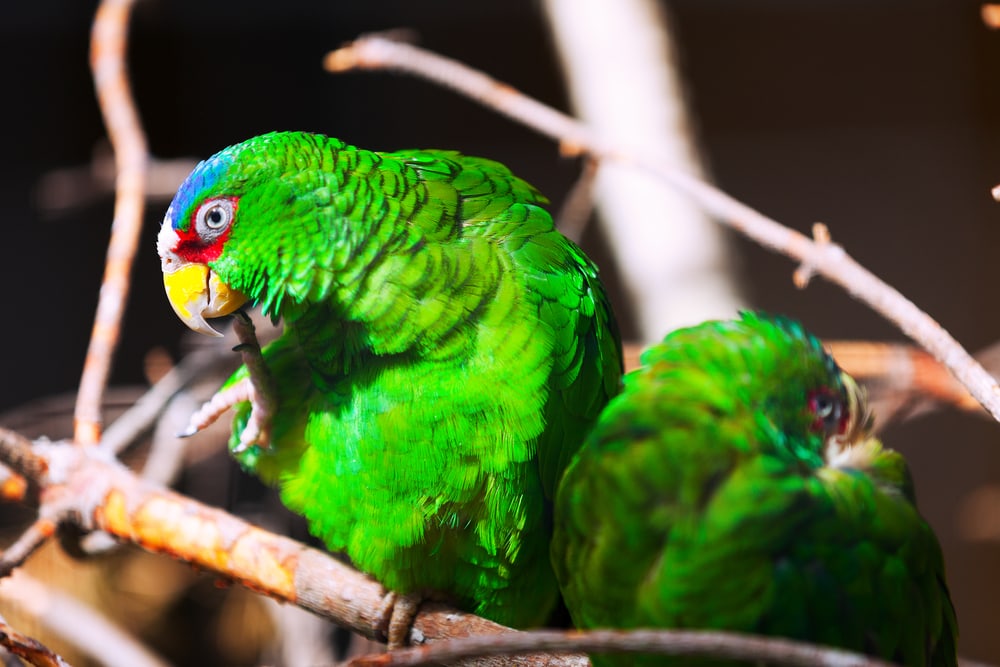
What sets these parrots apart is their white-browed forehead and red borders around the eyes, giving them the "spectacled Amazon" nickname.
White-Fronted Amazon Parrot Characteristics

History & Natural Habitat
The white-fronted Amazon parrots’ natural habitat is in cactus savannas and rainforests. They are a Central American and Mexican parrot species and have a long lifespan. According to the International Species Information System database their maximum lifespan is 35 years, however anecdotal reports suggest they can live 50+ years as pets, with the proper diet and care.
Native to Central America and Mexico, you can find these birds in small flocks of up to 20 birds. They are found in many different habitats, ranging from wet regions (rainforests) to the drier areas of the cactus savannas. In the United States, you can find them in California, Florida, and Texas as introduced species.
They were assessed by the IUCN Red List of Threatened Species in 2018 but are of least concern due to their growing population.

Things to Know When Owning a White-Fronted Amazon Parrot
Temperament
The white-fronted Amazon parrot has a talkative nature and loves humans. They typically bond with one person in the home, but with early socialization, they can bond with different family members. These birds are energetic and fun, making life amusing and entertaining living with one. They are affectionate, lovable, and active birds who need time outside of the cage daily for enrichment.
Much like with any pet bird, the more the white-fronted Amazon is around people, the more sociable they will be. If not socialized at a young age, these birds may become shy as they mature. If these parrots are not appropriately socialized, fright, stress, and aggression can set in, leading to undesirable behaviors.
Sounds, Speech & Vocalizations
The white-fronted Amazon parrot loves to sing. They can memorize sentences and may even sing an entire song. They can, however, belt out loud squeals and barks, complete with loud, harsh tones and trilling, sharp calls. Despite this, they are still not as loud as their larger cousins and are not considered overly loud, disruptive birds to own.
Keep in mind that they are not ideal for apartment living due to their talkative and potentially loud vocalizations, as this may annoy your neighbors.
Appearance
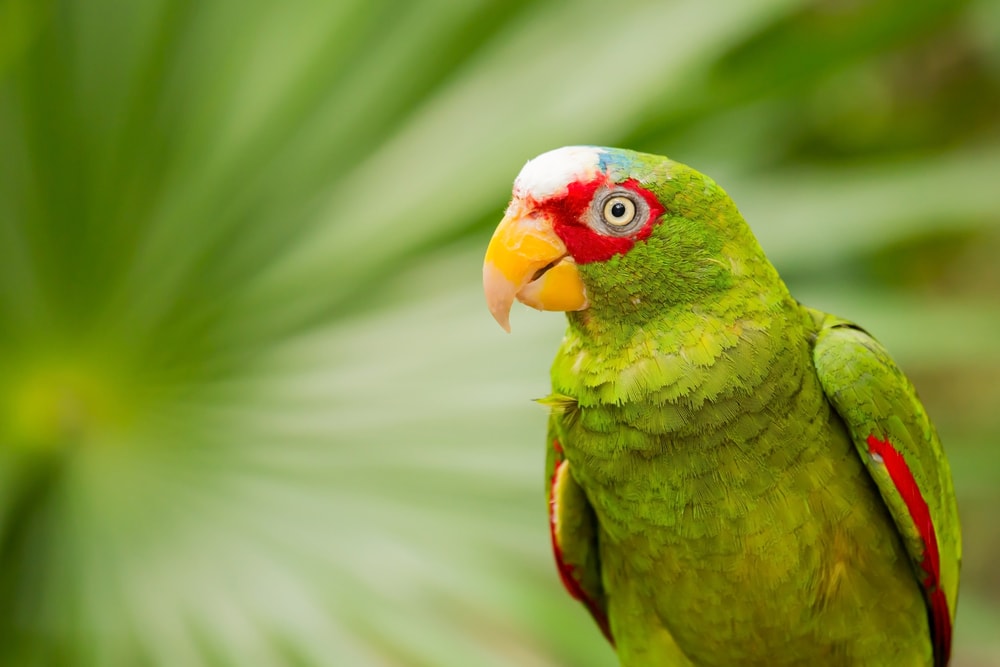
These parrots are distinguishable from other parrot species due to their unique colorings on the head. The white-fronted Amazon is easy to spot with its bright white patch above the yellow beak, hence the name. However, the amount of white varies from parrot to parrot.
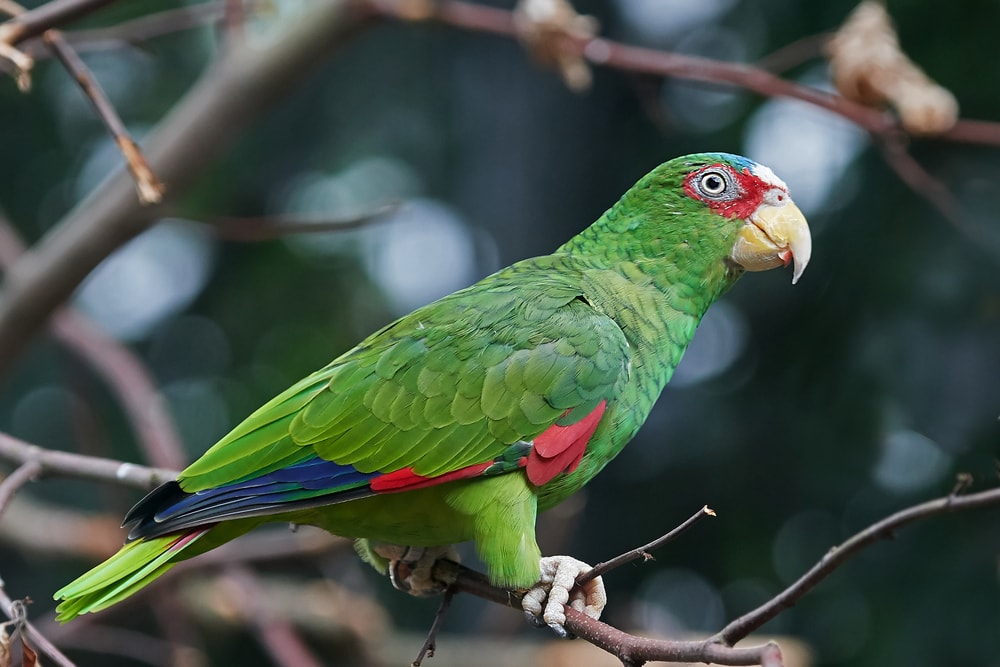
Their plumage is green, with a slightly darker shade than their larger cousins. They have a splash of blue that is visible with fully expanded wings, and males have a line of red along the outer front portion of the wings. They have red borders around the eyes that look similar to glasses, and you can see a small patch of blue behind the white patch on the forehead.
Caring for the White-Fronted Amazon Parrot
Before adding this parrot to your family, you must familiarize yourself with their day-to-day care so you can provide everything they need to be happy and healthy. While considering getting a white-fronted Amazon, people may ask whether they do well with other birds. Yes, they do well with other birds with proper socialization and enjoy companionship with other parrots. However, they shouldn’t be housed with larger parrot species. They can be territorial so introduce new birds slowly and safely.
These birds are heavy chewers, and you’ll need to take precautions with furniture and other household items.
As for grooming, routine showering and bathing are essential in keeping the plumage and skin in good condition. You can also mist them a few times a week with clean water instead. Allow them to dry in a warm room or in the sun’s warmth.
Diet & Nutrition
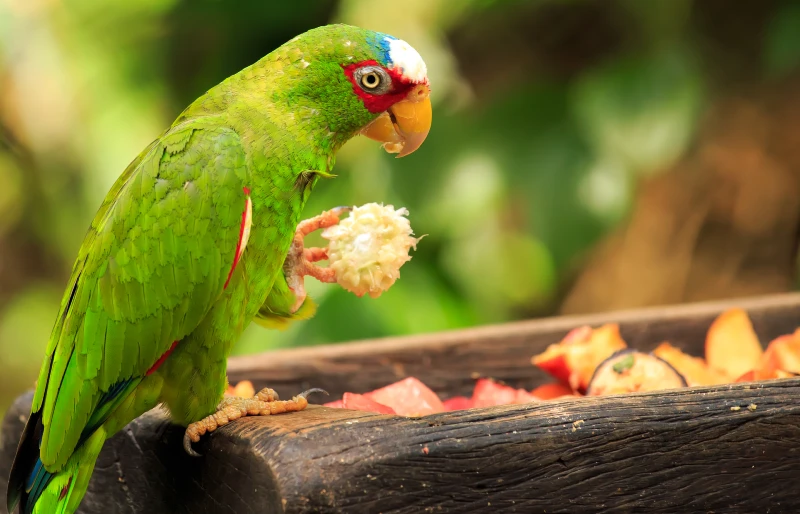
The pet white-fronted Amazon will enjoy a varied diet of high-quality, species-appropriate pelleted food (60–70%) mixed with fresh fruits and veggies (30–40%). Such foods to safely feed your parrot are pears, watermelons, bananas, pomegranates, carrots, green beans, zucchini, fresh corn, romaine lettuce, and broccoli.
You can also provide soaked or sprouted sunflower seeds on occasion as a treat, as well as millet. Small amounts of grains are typically a favorite, as well as cooked beans.
Never feed your parrot chocolate or avocados, as these items are toxic. And don’t forget to provide fresh drinking water daily.
Cage & Housing Requirements
A white-fronted Amazon parrot will need plenty of space in their cage for daily enrichment. Remember that these birds are avid chewers and are extremely active. You’ll need to purchase a cage with plenty of space to hang bird-safe wood toys and branches, such as ash, birch, and beech. Ladders and swings are also a good idea for these active birds.
The cage size should be 3 feet wide and 5 feet high with a playpen on top. Allow your parrot to be outside of the cage as often as possible (under supervision and at least three to four times per day), and provide a hanging perch above the playpen for climbing and added enrichment. Ensure you place the cage away from drafty areas in the home.
Don’t forget to keep the cage clean by washing the food and water bowls daily, discard uneaten food every day, and replace it with fresh. Place newspaper on the floor of the cage and replace this daily. Wash all toys and branches once a week, and wash the floor of the cage every other week.
Exercise
As we’ve learned, these parrots are active and love to engage in play, specifically climbing and chewing on bird-safe wood toys. They need to spread their wings often, which is why we recommend letting your parrot out of the cage at least three to four times per day.
Like humans, parrots need daily exercise to stay in shape. Parrots who do not receive adequate enrichment develop behavioral problems, and you can provide opportunities for exercise through bird-safe toys, games, and teaching your parrot tricks, which keep the body and mind active.
Health & Conditions
The white-fronted Amazon is a hardy and robust bird, but it’s vital to provide proper nutrition, care, social interaction, and exercise to keep your parrot healthy. However, they are not exempt from having health issues. Here are some common issues to watch for.
Fun Fact About The White-Fronted Amazon Parrot
They Are the Smallest of All Amazon Parrots
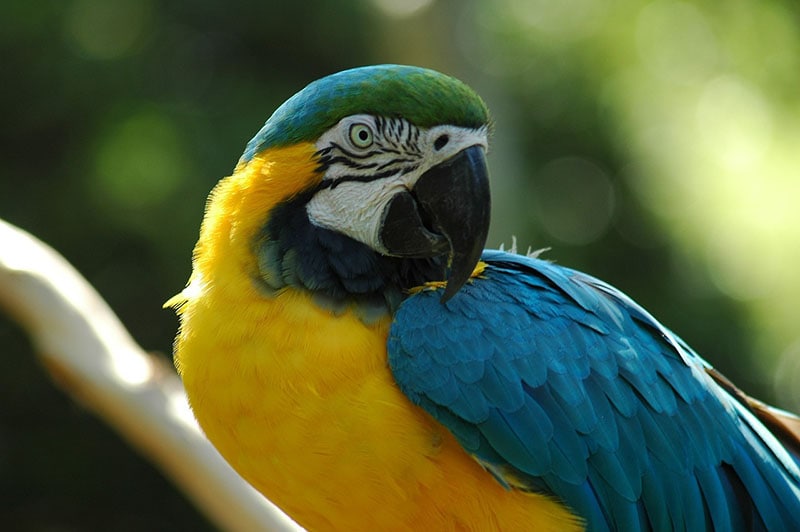
If you’re thinking of adding a parrot to your family but are concerned about the size, the white-fronted Amazon is a perfect choice due to its smaller size. Remember that what these parrots lack in size, they make up for in personality. To put their size in perspective, the blue-fronted Amazon parrot is 15 inches in length, whereas the white-fronted Amazon parrot averages 10 inches in length.
Conclusion
The white-fronted Amazon is the smallest of the Amazon parrot species and makes exceptional pet birds. They are intelligent, fun, and entertaining with distinctive features, and they will form a strong bond with one person but may form bonds with other family members as well. They are not quite as loud as other parrot species and can accurately mimic 30 to 40 sounds. If you're looking for a smaller Amazon parrot, and are prepared for commitment, you can't go wrong with adding a white-fronted Amazon parrot to your family.
Featured Image Credit: Pakhnyushchy, Shutterstock
Get Hepper In Your Inbox


Pet care tips from our vets and experts, straight to your inbox.
You may opt-out at any time. View our Privacy Policy for more information.
Rachel Giordano is a writer and musician out of Pensacola, Florida, living there with her partner and their two dogs, Aero, a Border Collie/Sheltie mix, and Sophie, a Boston Terrier. Rachel has a Bachelor of Arts degree in communication and enjoys writing about all types of animals. When Rachel’s not dedicating her time to writing about animals, she enjoys writing thriller/suspense novels. A writer by day and a musician by night, she's passionate about educating the public about the requirements and needs of all types of animals.
Join the conversation
Ask a question, share your story, or send private feedback.