Hepper is reader-supported. When you buy via links on our site, we may earn an affiliate commission at no cost to you. Learn more.
Amazon Parrot: Info, Pictures, Personality, Food & Care Guide


In this article
Disclaimer
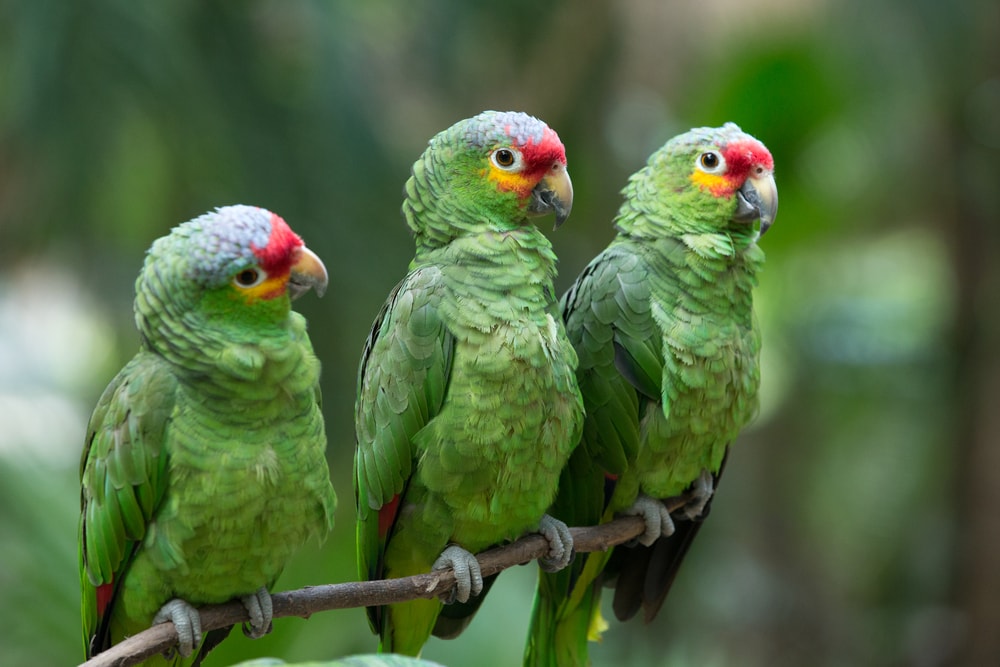
Amazon parrots are bold, energetic, and social birds. There are an estimated 35 species of Amazons, with around 10 of those commonly found as pets. In the wild, these parrots stay within a flock, while domesticated ones bond deeply with their owners. These birds are medium to large in size, have a stocky build with short tails, and are mostly green. However, colorful markings vary between species. As their appearance varies, so can their care requirements, so use this article as a general guide and check the needs of your chosen pet species for more specific guidance.
These parrots do mimic words, but they communicate best through their body language. If you're considering adopting an Amazon parrot, it's important to understand the responsibility and commitment these birds require, as well as the years of affection and giggles you can look forward to!
Species Overview
| Color: | Green |
| Size: | 10–20 inches |
| Weight: | 6–22 ounces |
| Wingspan: | 10-16 inches |
The Amazon parrot is a sturdy bird that can live from 30-60 years when well-cared for and given a varied diet. Due to this long commitment, these birds should go to owners who are prepared to devote their time, love, and energy to them. Amazons are incredibly intelligent, able to learn a large vocabulary, love to explore, and need a lot of stimulation.
Amazon parrots (genus Amazona) are mostly sexually monomorphic (both sexes look the same), but males anecdotally tend to be more aggressive. They're noisy birds that love receiving attention from people and conspecifics. They have the ability to recognize their owners and love to clown around for them.
Not all species of Amazon parrot are able to be kept as pets as some are endangered, threatened or vulnerable, and ownership may be restricted by law. Always make sure the parrots you purchased are not wild-caught animals, as this trade is unethical. In addition, check your local regulations for restrictions on bird ownership for your chosen species.
Amazon Parrot Characteristics

History & Natural Habitat
Amazons were named after the long Amazon River because people first believed they originated from the same area. However, they actually originate from and can still be found in the Caribbean, Mexico, and South America. They're a diverse species that can survive and thrive in various types of habitats such as the forest, woodland, rainforest, and savanna.
It’s possible that early records of "Amazon parrots" were found in a “The Speaking Parrots: A Scientific Manual” by Dr Karl Russ, published in the 19th century. Legend has it that these birds were once referred to as “Kriken,” which was given by seafarers and means "to screech."
Of the many Amazon species, around 10 of them are kept as common pets in US homes today.

Things to Know When Owning an Amazon Parrot
Temperament
Nothing makes an Amazon parrot happier than receiving attention from their owners and anyone who comes to visit. They are highly social and love interaction, and they're also loyal and form deep bonds with their owners. Early socialization, training, and handling are necessary for these birds to reduce behavioral problems. It's also important to watch their body language and behavior closely. If you fail to notice the signs of discomfort or stress, you'll likely end up bitten.
If these parrots don't get the stimulation and attention they crave, they will begin to act up and may become destructive or depressed. To combat this, interact with your bird every day or consider getting them a mate. Amazon parrots live in flocks in the wild and mate for life with one partner, so companionship is highly important to them.
Sounds, Speech & Vocalizations
Amazon parrots are noisy birds, and are renowned for being able to learn words and talk. They can also mimic sounds, phrases, and parts of songs. They enjoy listening to music and the sounds around them. They're quick to repeat what they hear and may even mimic your phone's ringtone, the sound of the doorbell, and the barking and meowing from your other pets.
Amazon parrots vocalize loudly because it is how they communicate in the wild. They will vocalize when they are startled, angry, excited, or just looking for attention.
Appearance
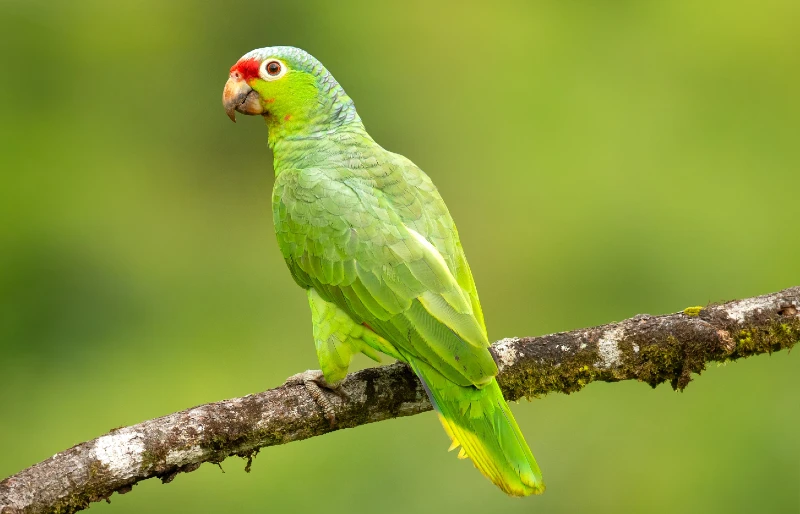
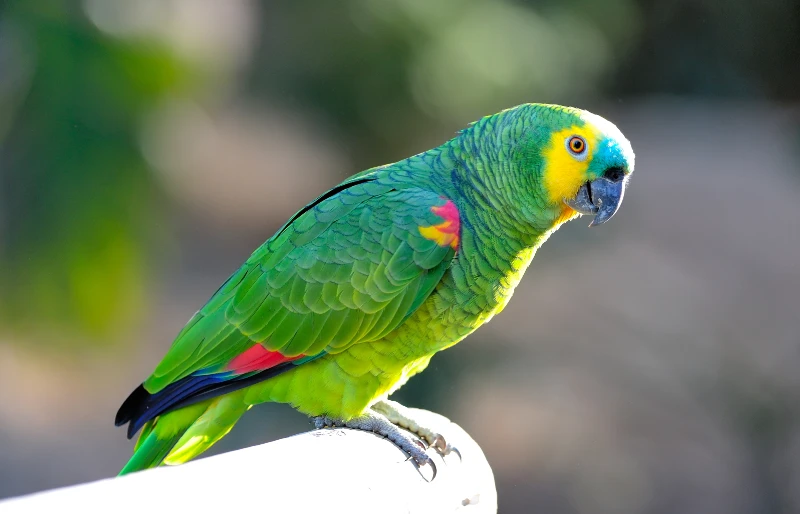
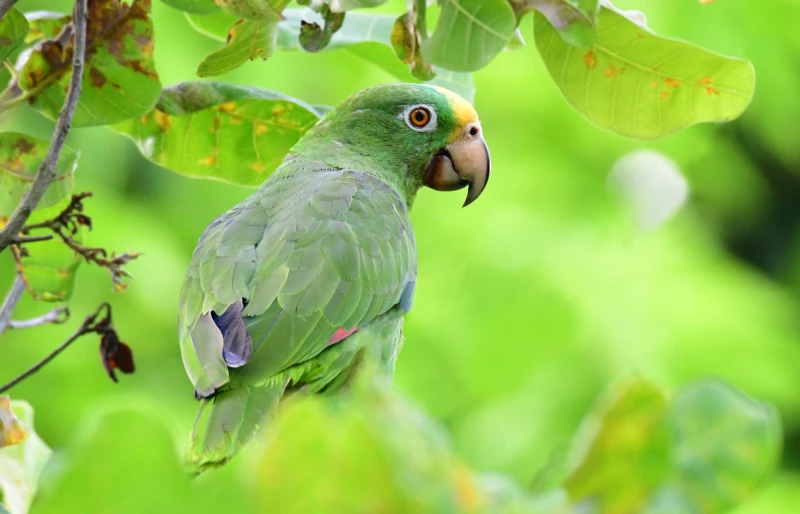
There are over 30 different types of Amazon parrots, and appearances vary between species. However, most Amazons have stocky bodies with short tails that are rounded instead of pointy. They range from 10 to 16 inches in length and are medium to large-sized birds. Their wide wingspan is between 5 to 20 inches, depending on species. Their eye color is usually either red, orange, or brown.
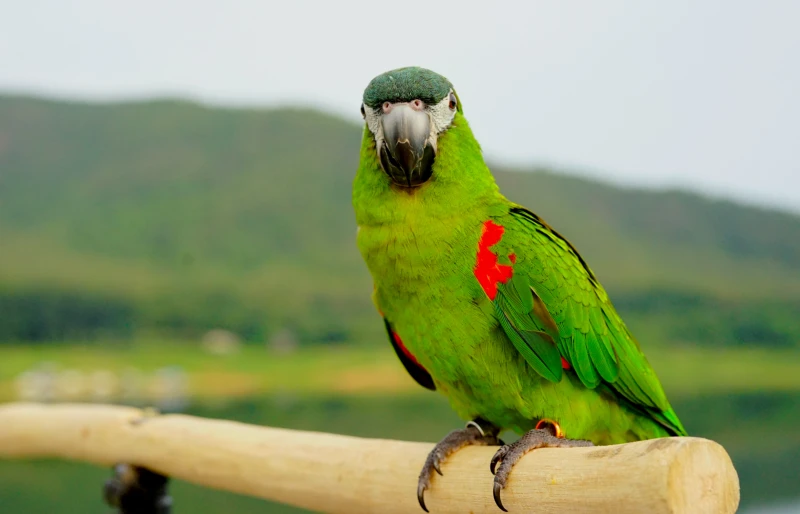
These birds are mostly green and have beautiful markings that set them apart. Amazons are mostly distinguishable by their forehead markings, with each species boasting a different color.
Diet & Nutrition
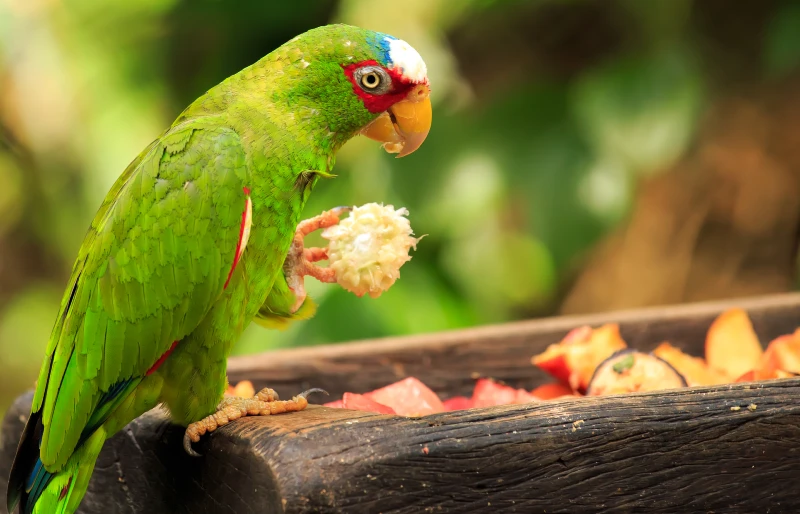
Amazon parrots love to eat and will try their luck at begging whenever they see their owners with food. Because of this, they can become obese, so it's important to watch their daily intake and make sure high calorie and low nutrient seeds are only offered in moderation.
Amazons should be given a diet of species-appropriate parrot pellets, fruit, and vegetables. About 60-70% pellets and 30-40% variety of produce is recommended.
They also need fresh water in their cages or aviaries at all times. You can place a water bowl in their cage or use a water bottle that attaches to the side of the cage.
Cage/Housing Requirements
Amazon parrots are medium to large in size and need a cage large enough to suit them. This isn't an item you want to skimp on because you want it to last many years and serve your parrot well.
The cage should be as big as you are able to provide, but the bare minimum is 40”X30”X65” for one bird. It also needs to have various perches situated in different places around the cage that are of different textures and sizes. These perches should be away from the parrot's food and water to avoid droppings from falling into the bowls.
A parrot's cage also needs toys to prevent boredom and destructive behavior. Your parrot will likely chew on these toys, so you can also add inexpensive items such as cardboard and blocks of untreated wood. They also enjoy toys that they can forage in, such as the Super Bird Creations Coco Cornhusk Forager Bird Toy, which will keep them physically and mentally busy.
Parrot cages also need a place for your parrot to hide or have some privacy. You can buy a "hiding spot" from your local pet store, or you can make one out of a cardboard box. Don't forget to add food and water bowls or a bird cage water bottle, ideally on the sides of the cage to prevent contamination with droppings.
Exercise
Exercise is an excellent way to stimulate your parrot, entertain them, and keep them from boredom and obesity. Amazons are especially prone to obesity because of their love for food and need to be taken out of their cage to exercise often. You can exercise your parrot by allowing them to walk around your room, but make sure that it is a safe environment for them without turning ceiling fans or electrical cables that they can chew on.
You can also exercise your parrot by encouraging them to climb up on objects like stairs or rope ladders. Get your parrot to beat their wings by moving the arm they're perched on up and down. Chasing toys and dancing to their favorite song are other ways to get your parrot moving.
Caring for the Amazon Parrot
Bath Time
Amazon parrots love to splash about, so bath time is generally pretty easygoing. Your parrot might be comfortable enough to join you in the shower, but if not, you can spray warm water on their feathers or place a bowl of water down for them to get into. Parrots are able to preen themselves and don't need much help from you when it comes to getting clean. Make sure your parrot is having a bath several times a week.
Toenail and Beak Maintenance
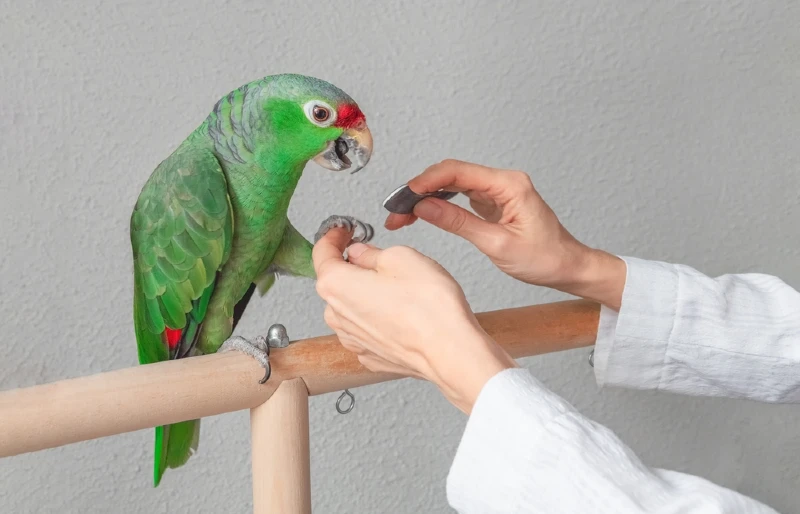
Your adult parrot's toenails may need to be filed down to prevent them from getting stuck in fabrics and toys, which can trap your bird or cause their toenails to rip off. Filing down their toenails will also protect your skin from getting injured. Your parrot should be able to wear down their own beak, but if they're unable to or it starts to look overgrown, or if the nails become long and need to be clipped, they will need to go to the vet.
Health & Conditions
To prevent health issues in your parrot, ensure that their environment is safe and clean, that they get plenty of mental stimulation, and that they are exercised daily to prevent obesity and other health complications.
Taking your parrot to an avian vet regularly for check ups and preventative care will also ensure a long and healthy life.
Some common health issues are:
3 Little-Known Facts About the Amazon Parrot
1. The Smallest Amazon Parrot Is the White-Fronted Parrot
These colorful-faced parrots are the smallest of all the Amazon parrot species, with a length of around 9–11 inches. They have white foreheads, and unlike most other Amazons, males and females are easily distinguishable because they have different colors on their shoulders. They are commonly seen in the south of Mexico.
2. Male Amazons Are Known to Strut
One thing that is unique to male Amazons is their "strut." It is usually put on when they're very excited or annoyed. This strut may also be done out of a territorial display or to woo a mate.
3. They Need At Least 10 Hours of Sleep
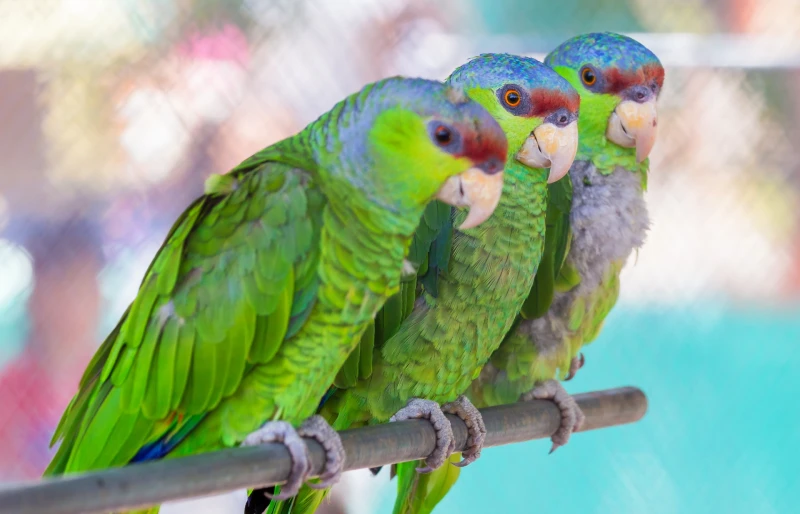
Amazon parrots sleep longer than many adults, as diurnal birds, they may need between 10 and 12 hours of uninterrupted sleep every night. To ensure your parrot gets the quality of sleep they need, you should place them in a quiet and infrequently used room at night.
Final Thoughts
There are 31 species of Amazon parrots. They are stunning birds that are predominantly green and have markings of different colors depending on the species. They're bold, affectionate, and intelligent and are capable of learning a large vocabulary and mimicking the sounds in their environment. Amazons need a diet of pellets, fruit, and vegetables and plenty of exercise to prevent obesity.
These birds are a big commitment as they are moody and have a lifespan of 30–60 years when cared for properly. They love attention from their owners but crave companionship and do well with a mate. With an Amazon parrot in your home, you can expect lots of noise, giggles, and love.
See also: How Long Do Amazon Parrots Live?
Sources
Featured Image Credit: Milan Zygmunt, Shutterstock
Get Hepper In Your Inbox


Pet care tips from our vets and experts, straight to your inbox.
You may opt-out at any time. View our Privacy Policy for more information.
Kerry-Ann lives in Scotland and wishes her garden was bigger so she could have her very own Highland cow. But her dogs probably wouldn’t like that very much. She has a La Chon called Harry who was poorly with a liver shunt when he was a puppy. It wasn't likely he would make it into adulthood, which was difficult, but he beat the odds and is a healthy old man now. She also has a Pug called Maddie who is a big foodie. She’s small, sassy, and every day she finds a new way to mess with her brother.
When she isn’t writing you can find Kerry-Ann going for long walks when the weather isn't bad, reading, or watching cartoons when she should be tidying her house. She would one day like to be a tourist in her own country and travel through the Highlands with her family.
Join the conversation
Ask a question, share your story, or send private feedback.