Hepper is reader-supported. When you buy via links on our site, we may earn an affiliate commission at no cost to you. Learn more.
Why Do Cats Bite? 4 Vet-Reviewed Reasons & How to Stop Them


In this article
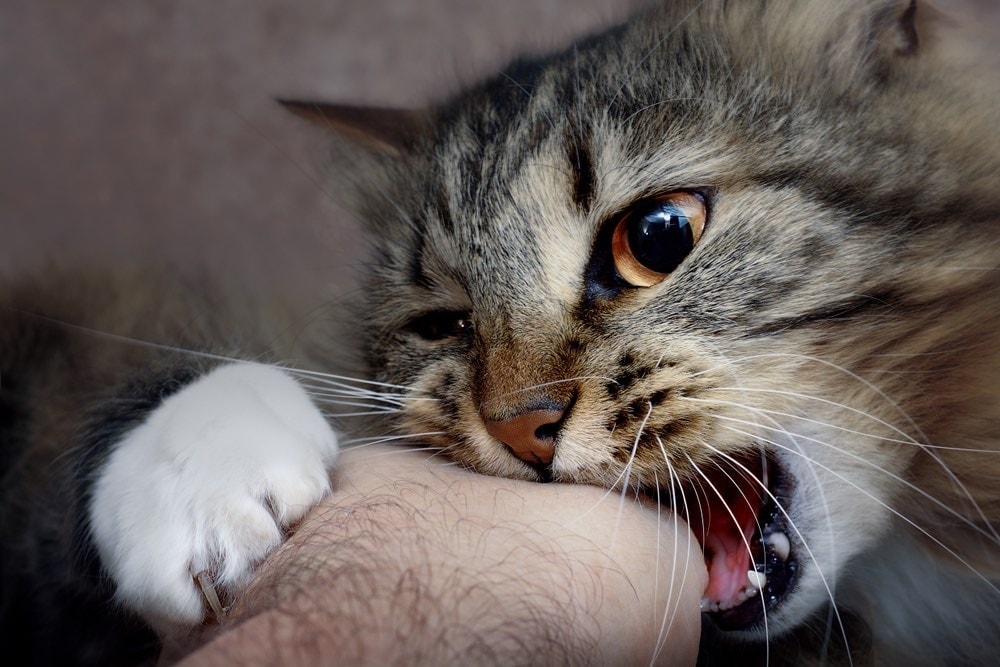
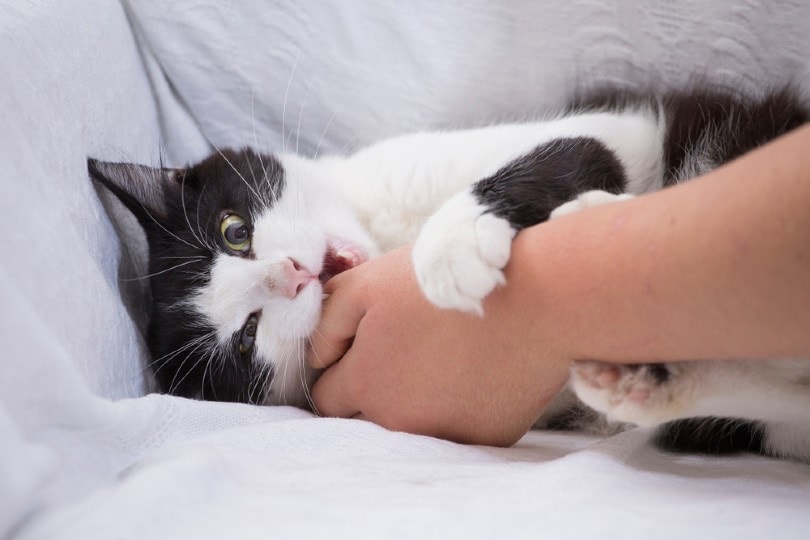
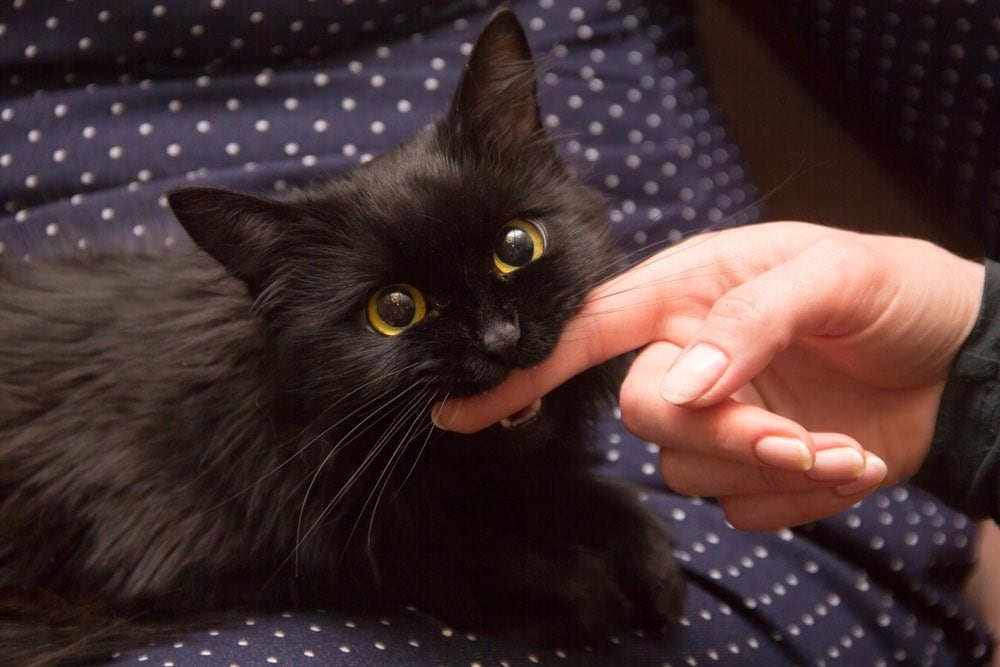
Cats are playful creatures, but they can also bite and scratch, and it can be quite painful at times. Cats can go from purring and rubbing up against you and suddenly turn to start biting you. They may also hide before jumping out and biting your ankles while you walk into the next room.
Most often, your cat is only playing or trying to show affection, but there are times when they’re trying to send a clear signal that they don't want to be bothered or are in pain. Keep reading while we look at a few reasons why cats bite, why your cat might be behaving this way, and what you can do to prevent it.

The 4 Reasons Why Cats May Bite
While no one knows for sure why cats act the way they do, observing them can often help you figure out what’s behind their behavior.
Here are some of the reasons why cats may sometimes bite:
1. Your Cat Is Practicing Hunting and Fighting
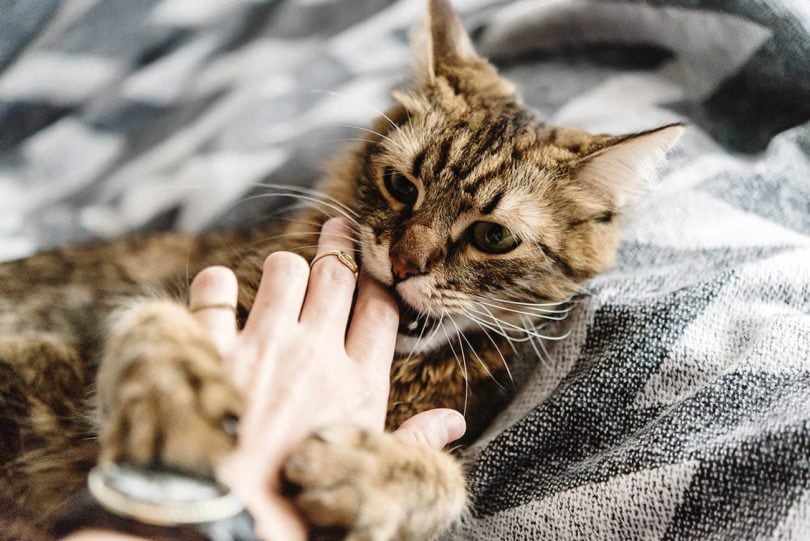
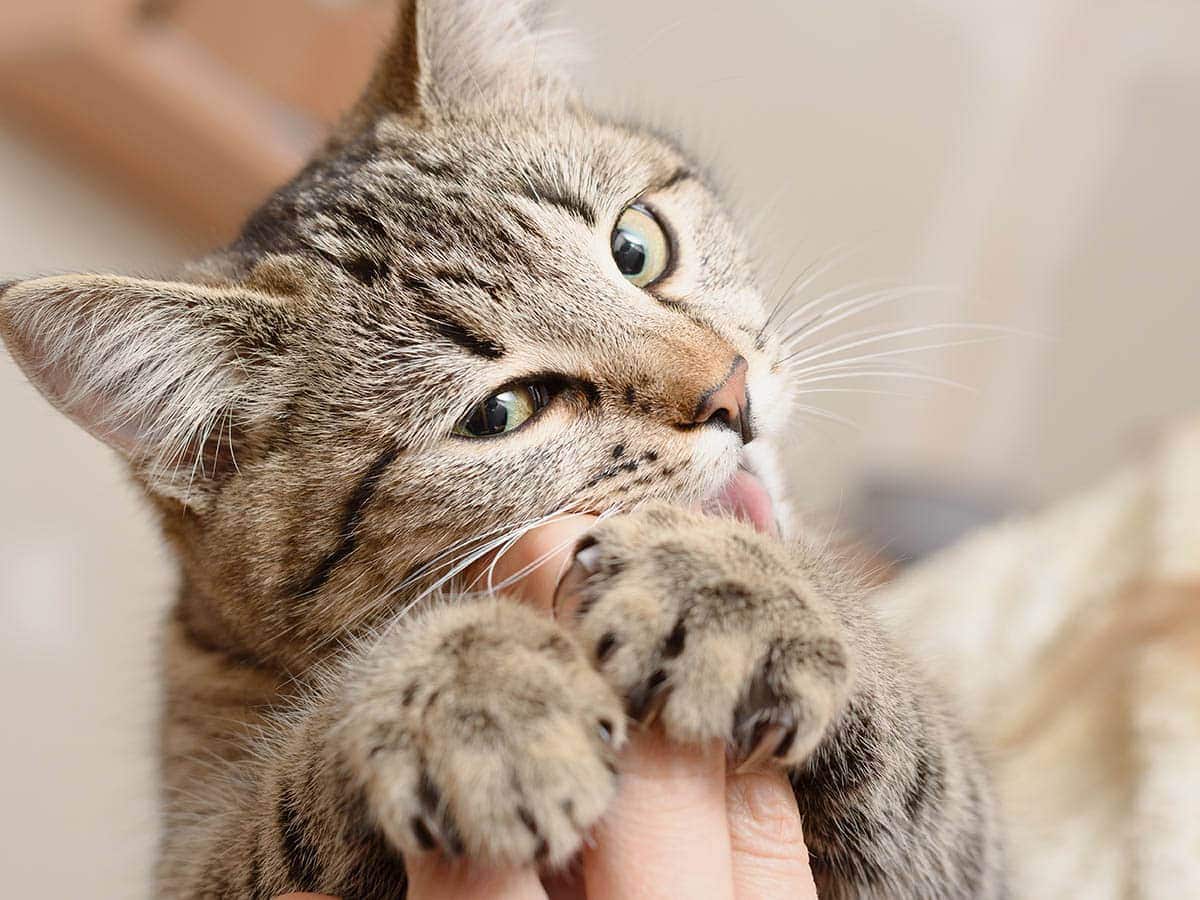
Your cat is a strict carnivore and has developed strong hunting skills through its long line of ancestors. In the wild, cats must eat several small meals a day to get the calories, protein, and other nutrients they require to stay healthy. Since they usually need to stay sharp, it’s not uncommon for a cat to practice honing its skills during downtime. For a housecat, it’s all downtime, so your cat might just be doing something it feels it should be doing. Even though you provide all its food, its breeding requires it to hone its skills.
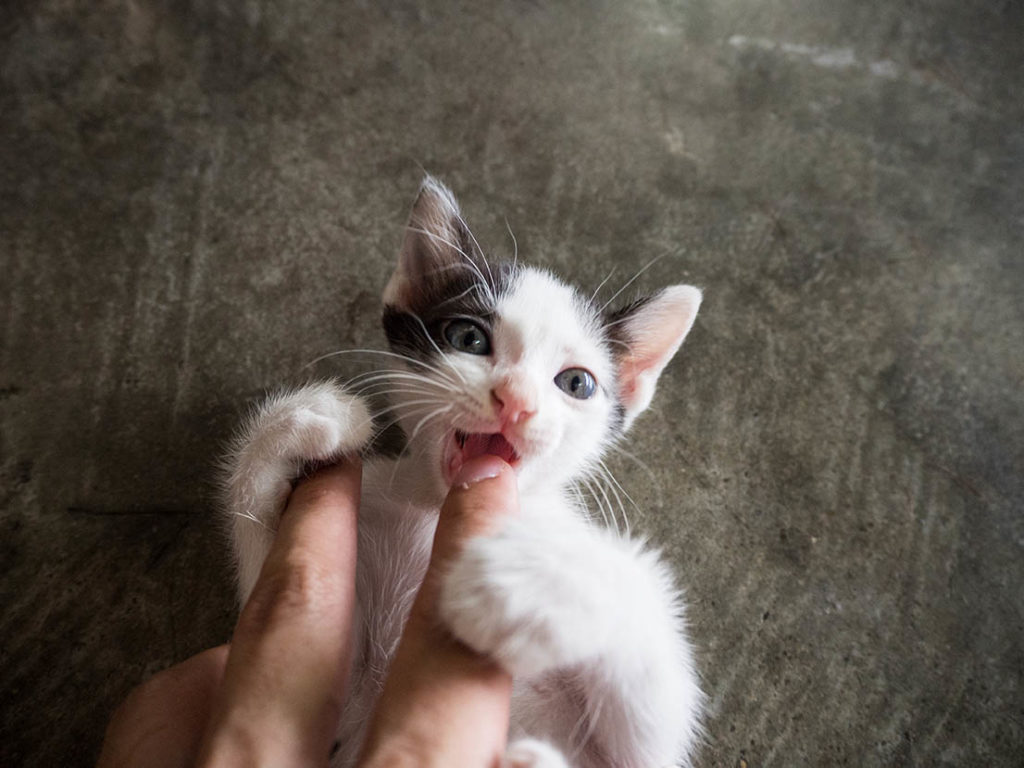
Since they usually need to stay sharp, it’s not uncommon for a cat to practice honing their skills during downtime. For a housecat, it’s all downtime, so your cat might just be doing something they feel they should be doing. Even though you provide all their food, their instinct requires them to hone their skills. This is particularly common in kittens and young cats. Kittens may be biting more during teething, as their gums may feel uncomfortable.
2. They're Expressing Love
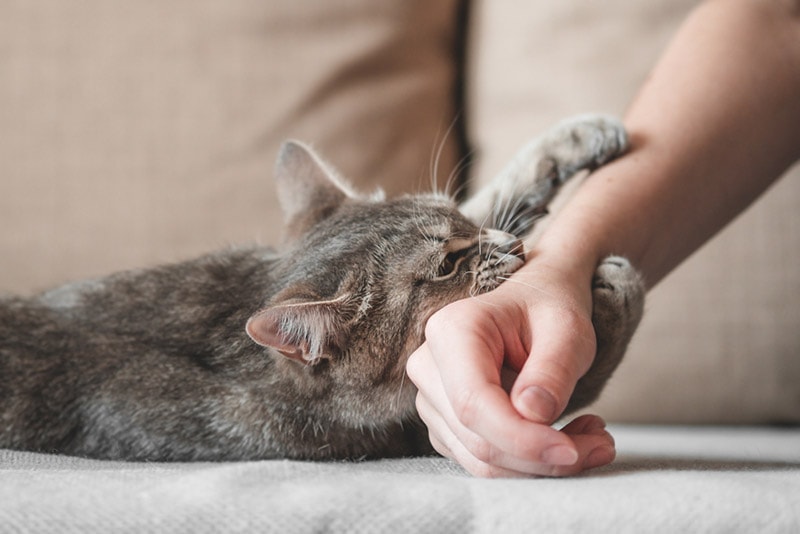
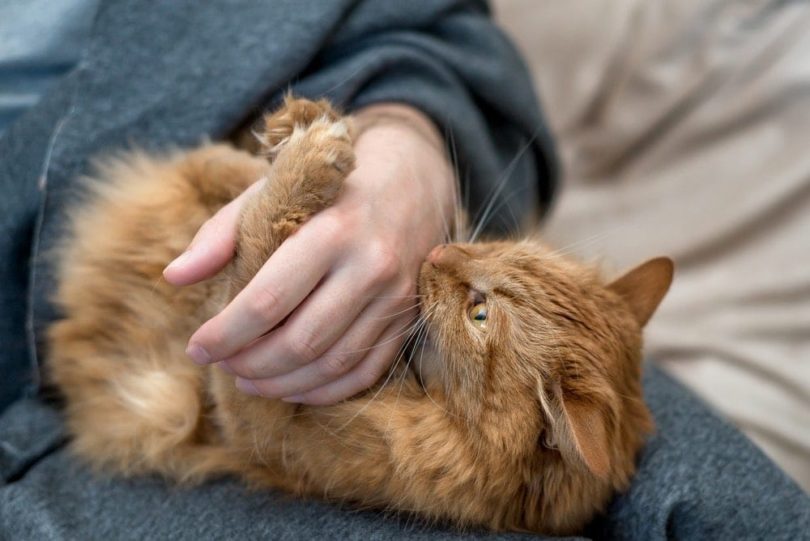
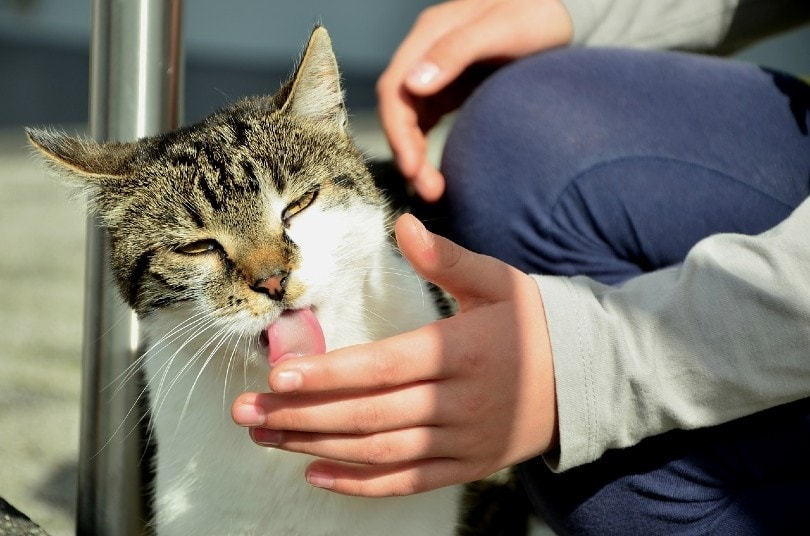
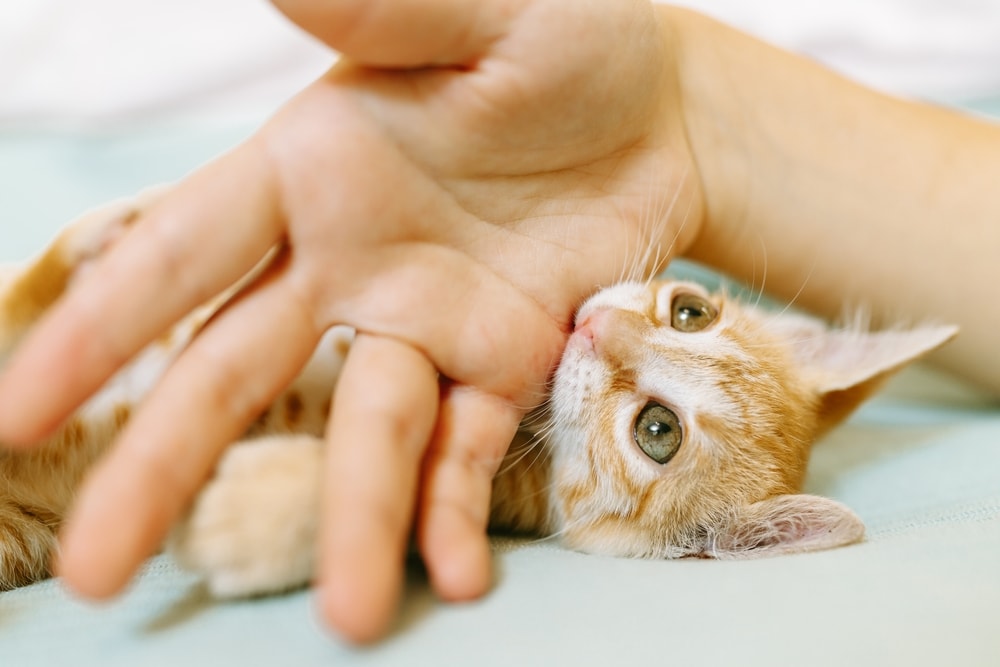
Cats have several ways of communicating and expressing themselves, and a gentle nibble is a sign of affection in many cases. Cat's groom themselves constantly and will often groom each other as well. If they like you, they will often try to groom you. Licking will often accompany this type of cat biting.
The cat will lick a few times and then may gently bite, and they may even hold your hand with their paws while doing so as a sign that they are enjoying this interaction. Sometimes they will bite as a sign to say they have had enough of cuddles and bonding and want to be let go of.
3. Redirected Aggression
Redirected aggression is when the cat is frustrated or stressed for another reason, most often another cat, and is redirecting that build-up emotion out on you. Quite often, if cats in a multi-cat household aren’t getting along, you may see this behavior manifest.
Sometimes the frustration may happen if the cat is not adequately exercised (either physically or mentally), their environment is not sufficiently enriched, or they are looking for other ways to express dissatisfaction. The same may happen if your cat sees a cat or a dog outside through a window that they feel threatened by and can’t get to, and they may redirect their aggression regarding a territory dispute toward you.
4. Your Cat Has a Medical Issue
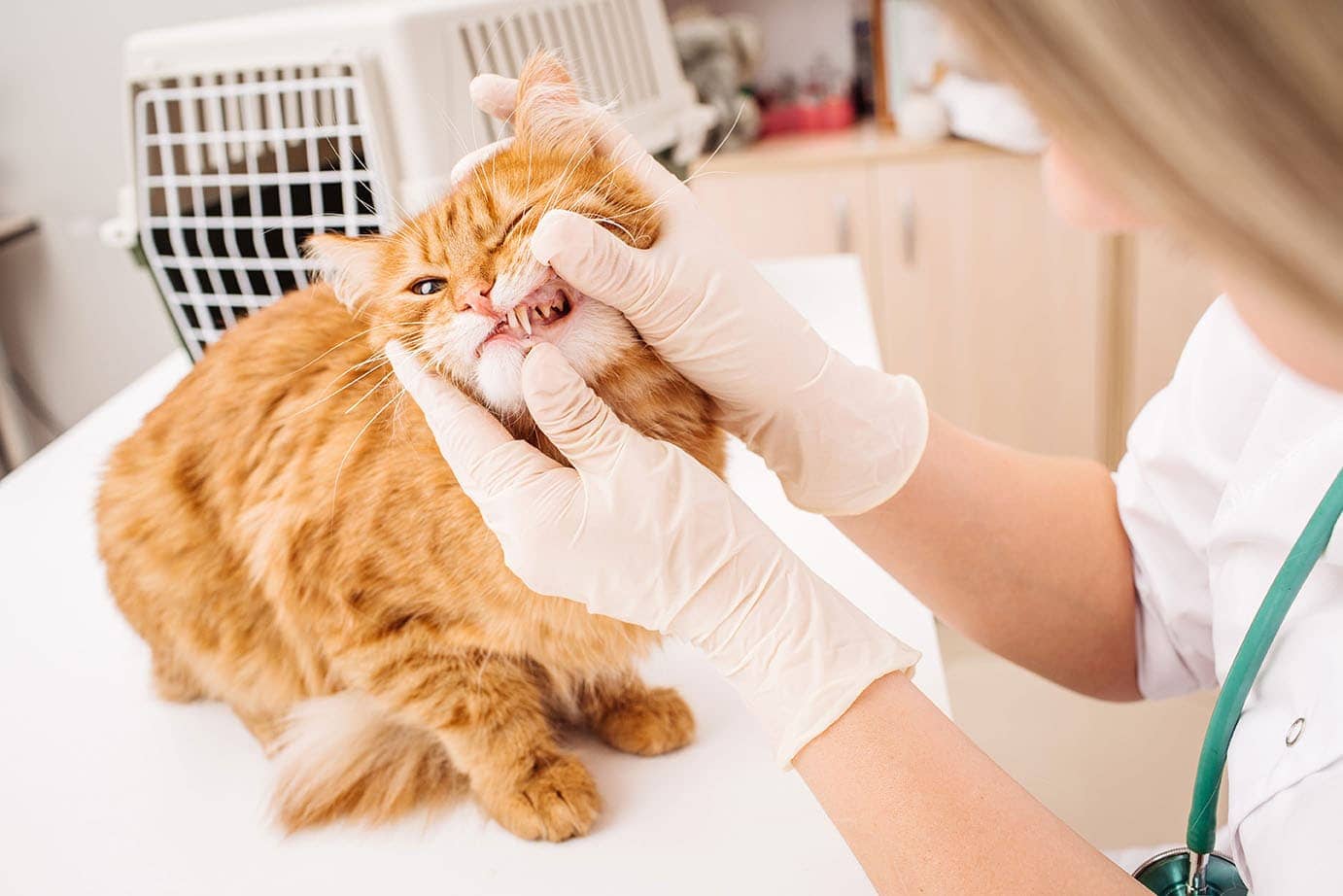
Cats that are stressed or are experiencing a medical issue might be in pain or discomfort, which may cause them to bite. Anything from a toothache to a belly ache can put your cat in a biting mood, especially if you are trying to pet them in an area that hurts or pick them up. If your cat’s behavior is something new, it could signal a medical condition, especially if the cat is getting older, or if they are lethargic, more shy, limping, eating less, or exhibiting any other signs of illness or changes in behavior. Get them checked by your vet as soon as possible so that an accurate diagnosis can be established and treatment may commence.
Perhaps you just touched an area that the cat dislikes being touched, such as their ears, feet or belly. Every cat is different, and some may be very particular about where they like and dislike being touched without having an underlying health reason for it.

How to Stop My Cat From Biting
Go to the Vet
If your cat’s behavior has recently changed, it could be a sign of a medical condition, especially if the cat is getting older. More than 50% of cats over the age of 4 are beginning to show signs of a dental problem, and we all know tooth pain will make anyone mad enough to bite.
The same goes for a sore leg, a wound, or a stomach upset, alongside many other painful and uncomfortable health issues that may not be very obvious without a veterinary exam. If you suspect a medical condition is behind your cat's biting, we recommend taking them to the vet immediately so they can get looked over and receive the treatment they need.
Separate the Cats
If you suspect that one of your cats is bullying another, which in turn is causing frustration and redirected aggression toward you or another family member, you may need to separate the cats to prevent this behavior. Keep the cats in separate rooms and only allow a few minutes of supervised visitation each day to break up any disputes over territory that might be going on. Separation and very gradual and slow introduction is especially important if the second cat is a new addition to the family. It usually takes a while for the cats to learn each other’s scent and accept one another.
Ensuring all cats in the household have their own food and water bowls, scratching posts, toys, beds, litter boxes, and private resting areas, alongside adequate physical exercise and mental enrichment, will make them feel more relaxed and fulfilled and may help in managing these signs.
Speak to your vet or a feline behaviorist for more specific advice on your particular situation in order to understand the reasons behind the cat’s behavior and how to help them in getting along better with other pets or people.
Pheromones
Several commercial brands make synthetic pheromones that mimic those produced by cats. Humans cannot smell these pheromones, but it’s a big part of how cats communicate and mark their territory in order to make certain objects and even other pets or family members smell familiar and safe. Synthetic pheromones can help calm your cat, reassure them, and neutralize an area to prevent territory disputes, hopefully reducing your cat’s desire to bite.
Don’t Use Your Hands for Play
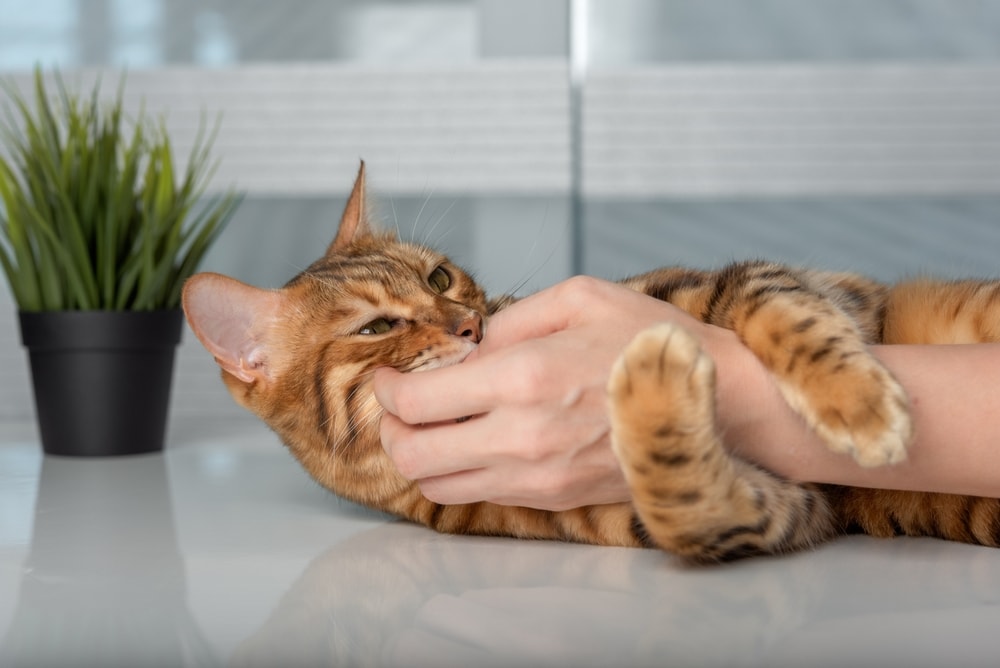
Many people don’t realize that they may be encouraging biting behavior by using their hands to play with the cat. Doing so can often result in painful scratches and bites that may not only get infected and require medical attention but also teach your cat that hands are play toys and it’s ok to bite and scratch them.
We all like to rub our cat’s belly, but you should try to avoid this behavior, especially if your cat is prone to biting. Laser pens, rope, and other cat toys are much more suitable and will get your cat running instead of biting.
Leave the Cat Alone
If your cat is behaving in a way you don’t like, the best thing you can do is ignore the cat and leave the room. If they chase after you and bite at your ankles, close the door behind you and leave them alone for a few minutes. Doing so will usually send a strong signal to the cat that you will not tolerate the behavior, especially If you do it every time.
Cats don’t usually like to be alone, so this method works quite well for some. You should never yell at the cat or act in a hostile manner because the cat won’t understand, and it will often have the opposite effect, causing the cat to see you as an enemy and lose their trust toward you.
Give It Time
Sometimes cats don’t like some people, and the best thing to do in this case is to ignore them and let them come to you or another person. Attempting to pet the cat or force them to like you will most likely be seen as an act of aggression by the cat. Cats are curious creatures, and if you keep some treats in your pocket and ignore them unless they come near you, the cat will begin to see you are not a threat and trust you more.
Once they have established a bond with you and trust, they may be less likely to act aggressively, depending on the underlying cause of the behavior.
Summary
In our experience, we found that cats usually bite when they are playing, especially as kittens, and there is no real cause for alarm. Using a laser toy, rope, or rolled-up paper ball to play will often keep your hands safe and get them more exercise, which they often need if they stay in the house.
Do not use your hands for the kitten or cat to play with, as it will teach them your hands can be bitten and used as a toy. If hissing or meowing accompanies the biting, it could be a sign that something more serious is wrong with your pet. We recommend separating the cat from other pets and even family members until they calm down and making an appointment with your vet.
Related Reads:
Featured Image Credit: dashtik, Shutterstock
Get Hepper In Your Inbox


Pet care tips from our vets and experts, straight to your inbox.
You may opt-out at any time. View our Privacy Policy for more information.
Ed Malaker is a veteran writer who has contributed to a wide range of blogs that cover pets, tools, guitars, fitness, and computer programming. When he’s not writing, Ed is usually performing DIY projects around the house or working in the garden. He’s also a musician and spends a lot of time helping people fix their guitars and composing music for independent films.
Join the conversation
Ask a question, share your story, or send private feedback.