Hepper is reader-supported. When you buy via links on our site, we may earn an affiliate commission at no cost to you. Learn more.
Why Do Cats Bite When You Pet Them? Vet-Verified Feline Behavior


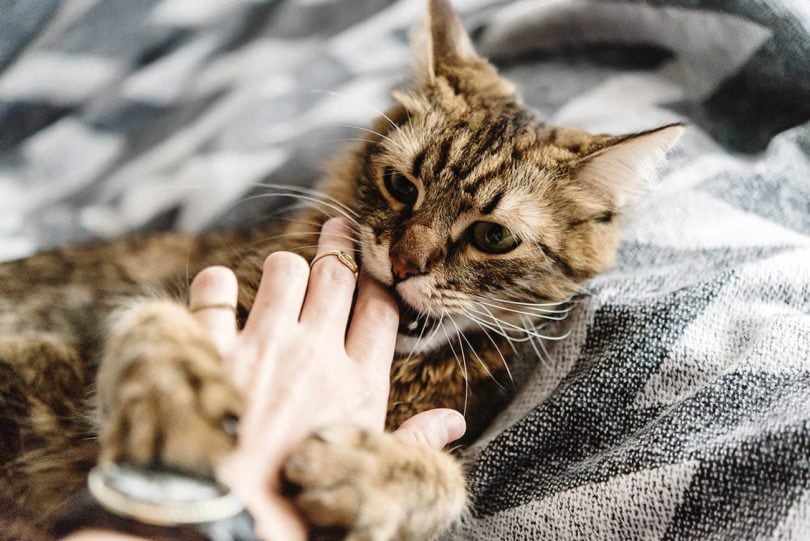
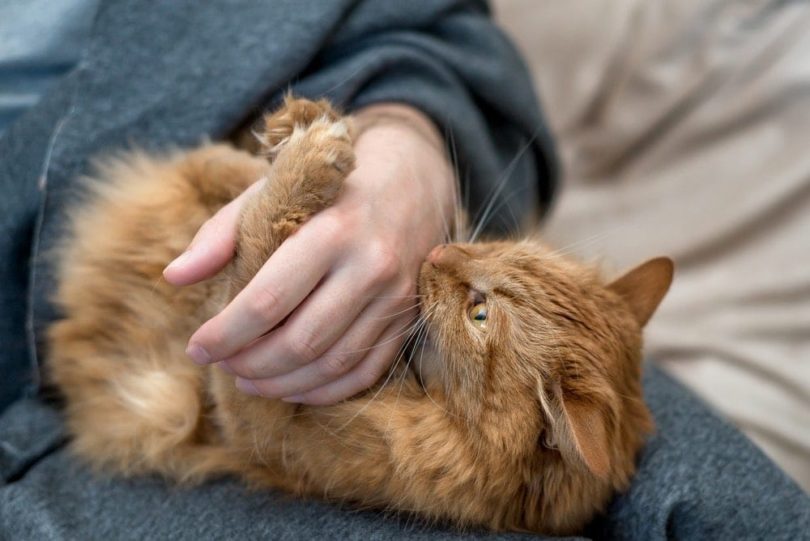
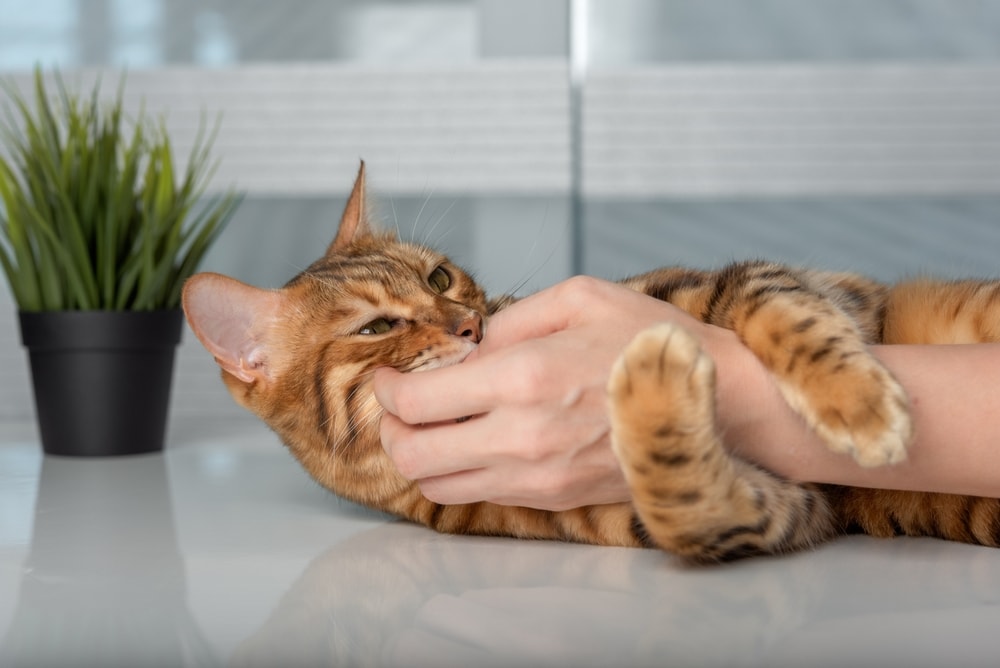
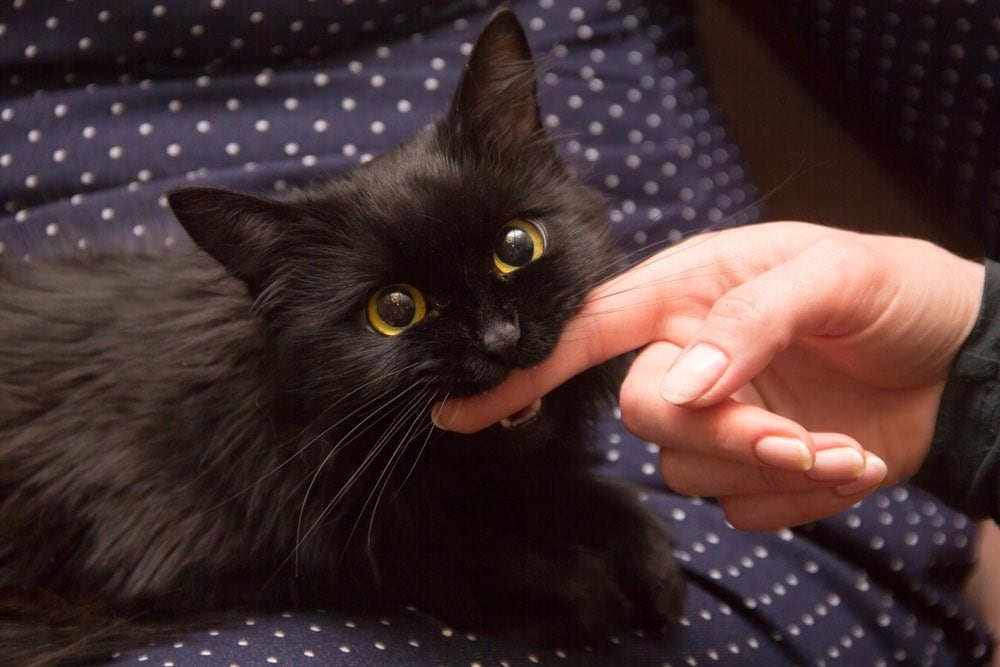
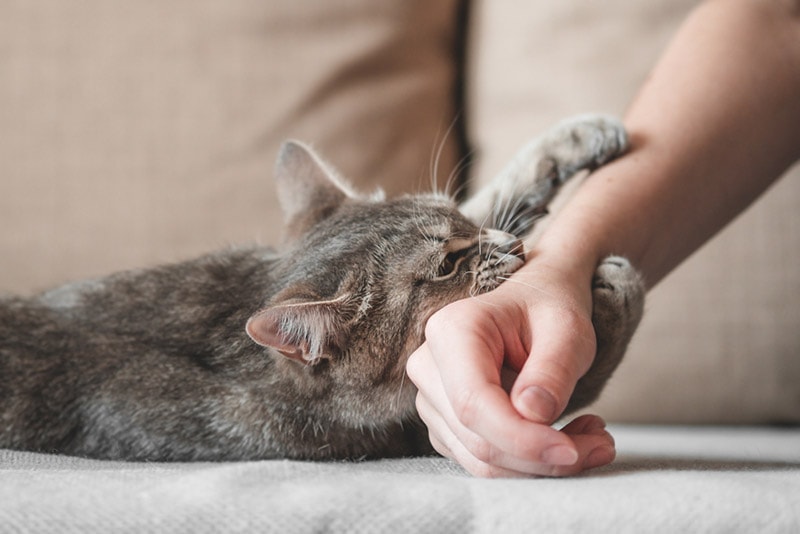
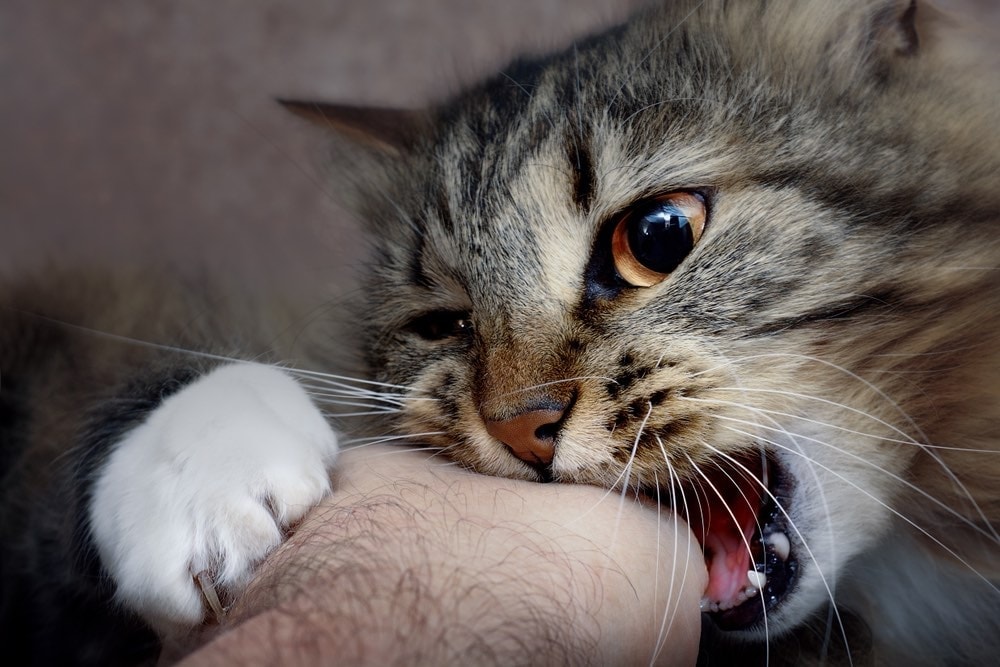
If you spend a lot of time around cats, you’ve undoubtedly experienced “love bites,” or those gentle nips that cats give when you are petting them or playing with them. Most of these bites don’t cause pain or cuts, but they can be sudden and unpredictable.
Biting during petting is a common behavioral problem that leaves owners confused and unsure of how to react. While experts are still not sure exactly why cats give love bites, they do have some theories and advice for how to handle it. Keep reading while we discuss each possible reason for kitty love bites.

Love Bites: Is It Aggression?
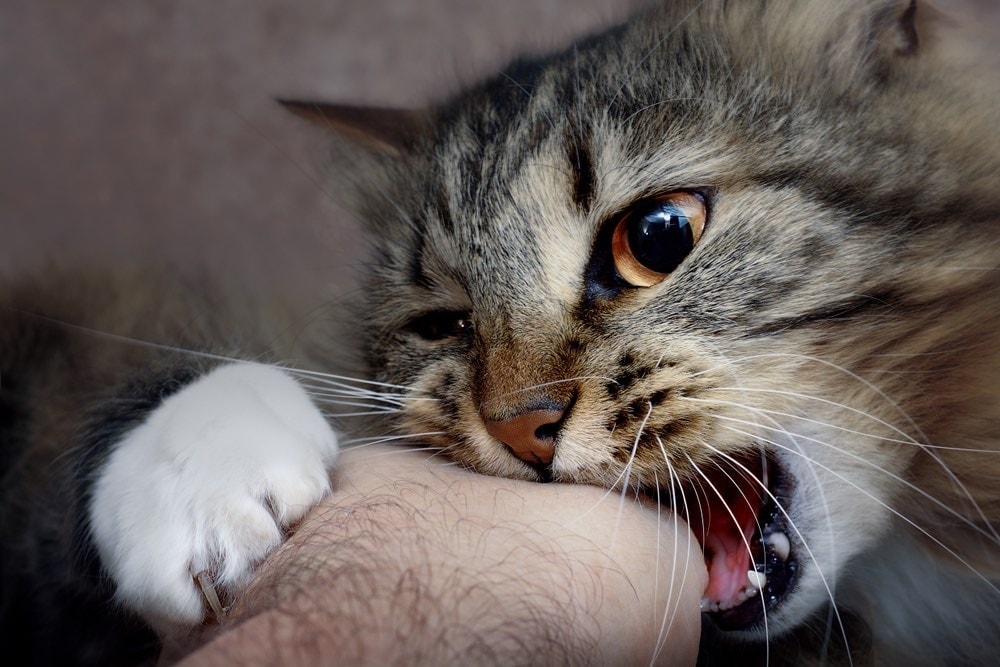
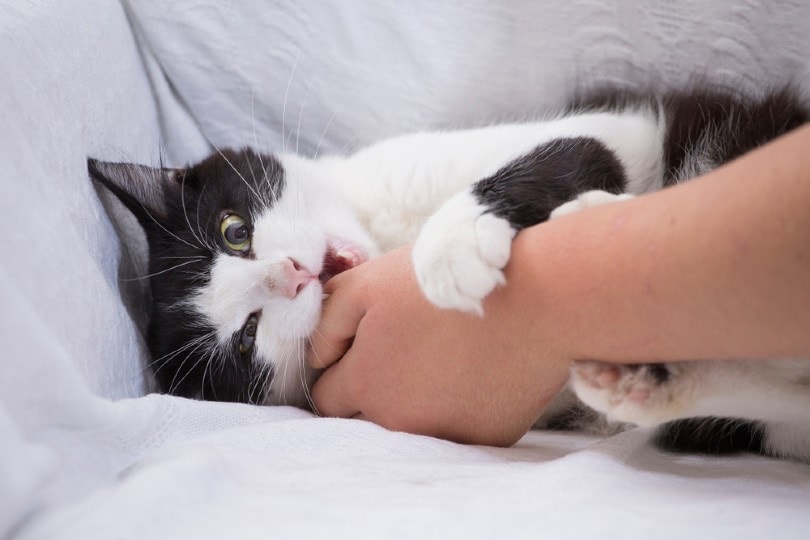
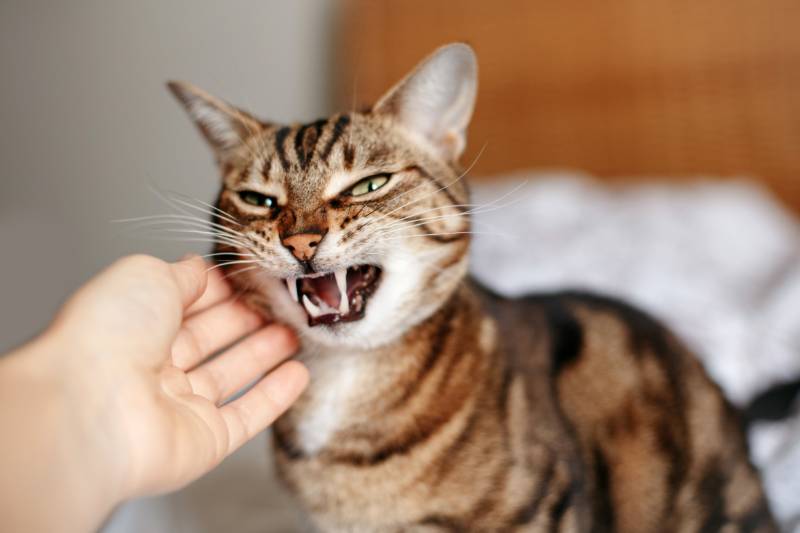
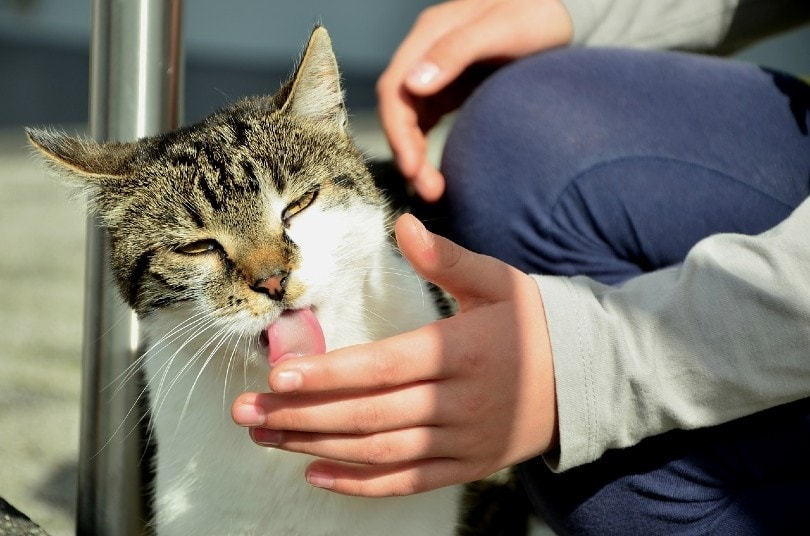
Love bites aren’t the same as aggression that comes from fear, defensiveness, or dominance. Aggression can cause pain and break the skin, while love bites are gentle and usually happen along with licking and grooming.
If your cat bites you gently and stays relaxed, that is likely a love bite. If your cat is growling, hissing, and clawing while biting you, that’s aggressive biting that’s a response to fear or other negative emotions.
Why Does My Cat Give Me Love Bites?
Though commonly referred to as “love bites,” the name isn’t entirely accurate. When cats give you love bites, it’s a signal that they may not want to continue being petted or played with. If you continue to pet your cat, the biting may become harder or more frequent, or your cat may leave the situation entirely.
A cat’s instincts might kick in to prevent them from getting too relaxed and becoming vulnerable, which is also known as the petting and biting threshold. It is a conflict of interest between the cat enjoying the pleasures of petting and their wild survival instincts preventing them from getting into a potentially dangerous situation due to letting their guard down.
Finally, your cat may enjoy your attention and affection but may not want you to pet a particular area. Many cats don’t like being pet on their bellies or near their tails, which are habitual petting spots for dog owners. In addition, your cat may just want to relax on your lap and enjoy your company without being touched.
How to Respond to Love Bites
Cat body language can be challenging for cat owners, but paying attention can give you a lot of insight into your cat’s feelings and moods. If you notice your cat is showing signs of discomfort or annoyance when you pet them, such as their ears moving back, pupils dilating, hair puffing or standing, or twitching their tail, immediately end your petting session.
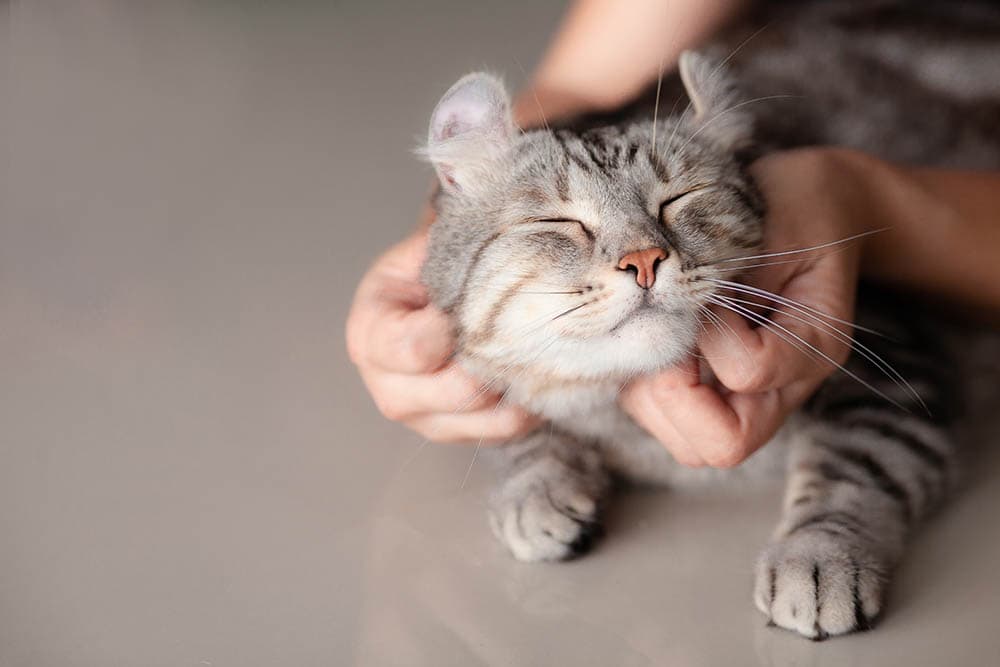
Over time, you may notice that your cat stops biting as often. You can also learn what your cat’s limits are by testing a bit. Keep your petting brief and take breaks so you can get a better read of your cat’s body language. Let your cat seek you out for attention rather than disturbing them when they’re sleeping or relaxing. Also, focus your petting on areas that most cats enjoy, such as the chin and near the ears.
Most importantly, never reprimand your cat for love bites. Your cat may be trying to communicate that they don’t like something and want it to stop. If you respond by yelling, hitting, slapping, or pushing your cat, subtle love bites can turn into more serious aggression and defensiveness.
You may also want to read: Cat Bite Infections: 13 Critical Vet-Approved Signs to Watch For

Final Thoughts
Love bites are common behavior in cats, but they may not be the token of affection we like to believe. If you want to develop a better connection with your cat and respect their boundaries, pay attention to their body language to learn how to make petting sessions enjoyable for both of you.
Related read: Why Does My Cat Bite Me Gently Out of Nowhere?
Featured Image Credit: Bogdan Sonjachnyj, Shutterstock
Get Hepper In Your Inbox


Pet care tips from our vets and experts, straight to your inbox.
You may opt-out at any time. View our Privacy Policy for more information.
Nicole is a lover of animals of all sizes but is especially fascinated with the feline variety. She’s the proud mom of Baby, a Burmese, and works every day so he can relax in the sunshine or by the fire. She’s always had a cat in her home and has spent countless days with others, observing behaviors and softening up even the grouchiest of the lot. Nicole wants to share her kitty expertise with you so you and your cat can live happy, healthy, and care-free.
Join the conversation
Ask a question, share your story, or send private feedback.