Hepper is reader-supported. When you buy via links on our site, we may earn an affiliate commission at no cost to you. Learn more.
African Dwarf Frog: Vet-Approved Info, Pictures, Diet, Lifespan & Tank Setup


In this article
African dwarf frogs (Hymenochirus), also sometimes called dwarf clawed frogs, are commonly spotted in pet and aquarium stores. The most common species kept as a pet is Hymenochirus boettgeri. Don’t confuse the African dwarf frogs with the closely-related African Clawed Frog. They are similar in appearance with subtle differences, but the most noticeable difference is the much larger size of the African Clawed Frog.
African dwarf frogs are popular for their cute appearance and fully aquatic needs, but they are also very misunderstood. Many people take on African dwarf frogs without fully understanding their behaviors or needs. To provide the best home possible for an African dwarf frog, read on for more information on their needs and care.

Quick Facts About African Dwarf Frogs
| Species Name: | Hymenochirus boettgeri |
| Family: | Pipidae |
| Care Level: | Moderate |
| Temperature: | 23 - 27 °C (73.4 - 80.6 °F) |
| Temperament: | Peaceful, energetic, opportunistic feeder |
| Color Form: | Olive to brown with black spots |
| Lifespan: | 5 - 10 years (estimation) |
| Size: | 2.5 inches max |
| Diet: | Strict Carnivore |
| Minimum Tank Size: | 5–10 gallons |
| Tank Set-Up: | Tropical freshwater, planted - no deeper than 15 inches |
| Compatibility: | Other African dwarf frogs, some peaceful large community fish |
African Dwarf Frog Overview
Important
African dwarf frogs entered the mainstream pet trade sometime in the 1970s. They quickly gained popularity because they are fun to watch and are much easier to care for than many amphibians. These petite frogs are true amphibians, but they spend their entire life in water. Instead of leaving water to rest on land, they use plants and tank décor to rest on within the tank. Although they are fully aquatic, they do not have gills, so they still have to breathe surface air into their lungs.
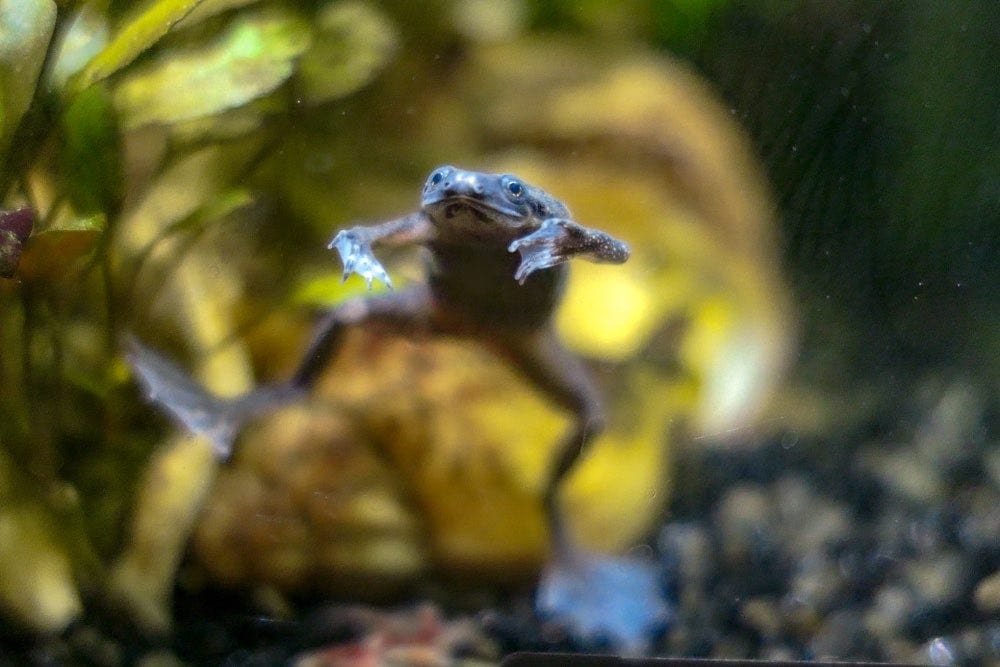
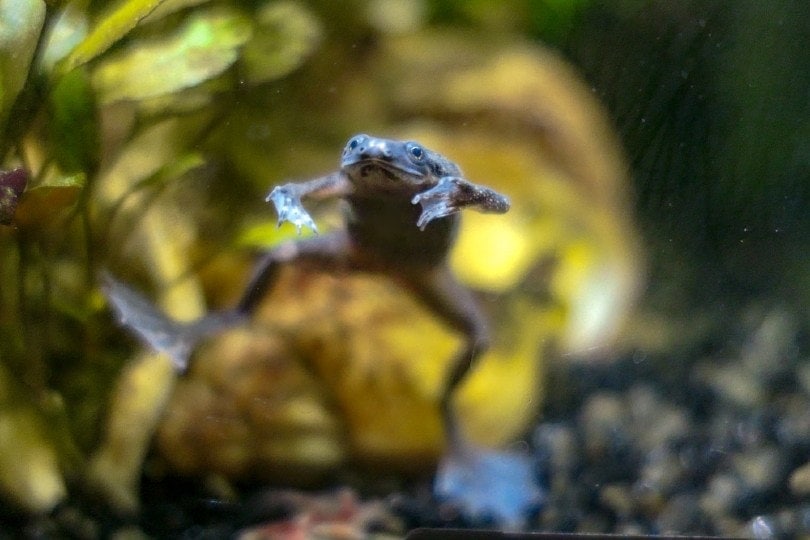
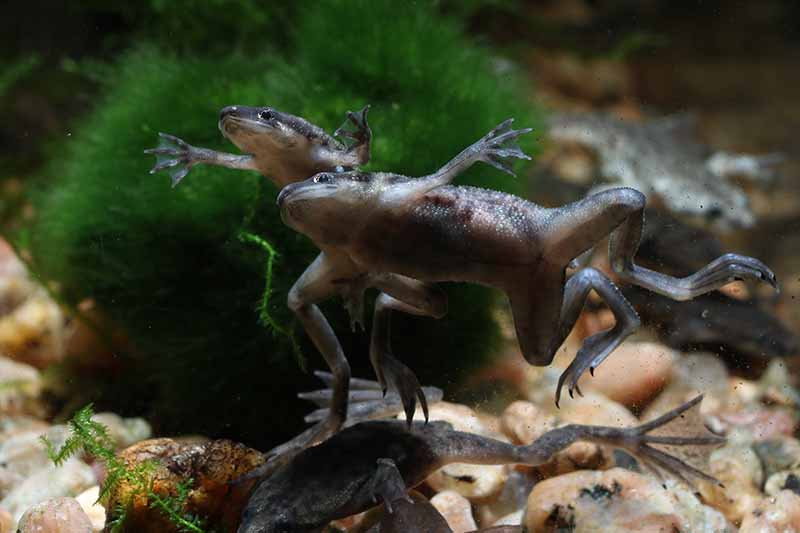
They are social frogs that are best kept in small groups of two or more. When they aren’t actively swimming around the tank or resting on plants, they can be spotted floating with their limbs outstretched. Sometimes they will do this at the surface of the water, but it is more common to see them doing this near the bottom, where they feel safest from predators.
How Much Do African Dwarf Frogs Cost?
Since African dwarf frogs are easy to come across, they are usually relatively inexpensive. You can typically find one for $5–$10, but you may spend up to $20 or more if you purchase from a small business or order online. Plan for the cost of at least two of these frogs. You will need to invest in an aquarium with gentle water flow, adequate filtration, and lots of plants.
Typical Behavior & Temperament
Although these frogs are social, they are prey animals for large fish and reptiles in nature, so they may be somewhat shy. It’s not uncommon to see them staying near the bottom of the tank where they feel safest. If they feel safe and comfortable, you may see them spending more time in other areas as well. They are extremely active, and you’re not likely to spot your African dwarf frogs staying still very often.
Appearance & Varieties
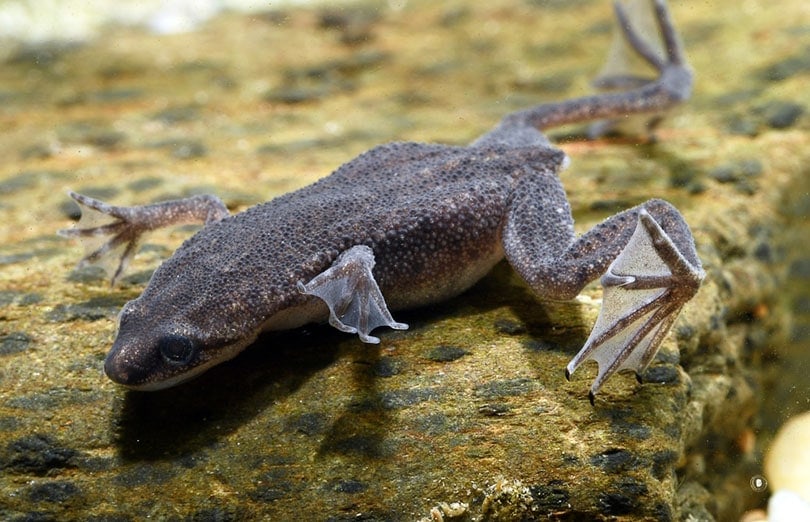
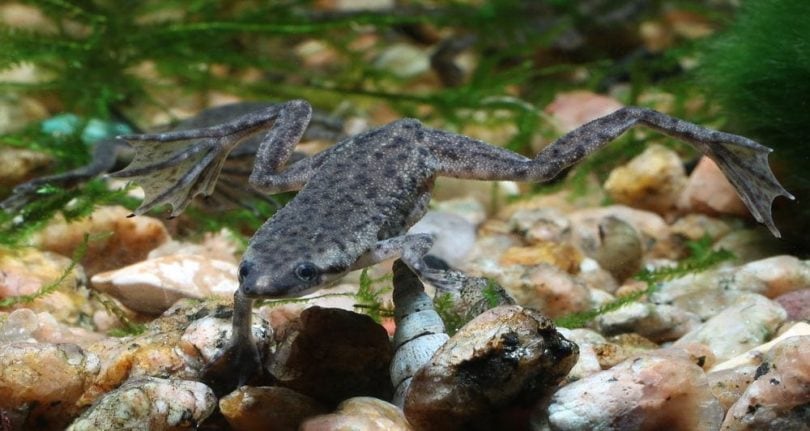
African dwarf frogs have olive to brown skin that tends to be lighter colored on the abdomen. They all have black spots that give them an almost mottled appearance. There are not many color morphs of African dwarf frogs, but they have naturally developed their colors and markings to provide camouflage in the wild.
They tend to stay under 2 inches in length but can reach up to 2.5 inches. Some people have reported their frogs reaching 3 inches, but that is very unusual for this species. They have webbed feet with small claws and tend to have somewhat flat bodies.
How to Take Care of African Dwarf Frogs
Habitat, Tank Conditions & Setup
Aquarium Size
It’s recommended to supply at least 5 gallons of tank space for every African dwarf frog you have. If you are keeping two, you’ll need a tank that is at least 10 gallons. These frogs are poor swimmers and shouldn’t be housed in an aquarium that is more than 15 inches in height, as this may hinder their ability to surface for air.
Water Temperature & pH
These tropical frogs prefer warm water temperatures from 23 - 27 °C (73.4 - 80.6 °F). They can tolerate water temperatures up to ~28 °C (82°F), but this isn’t ideal for them. They prefer mostly neutral pH water and can thrive in pH levels from 6.0–8.0.
Substrate
Small, smooth gravel or sand are both acceptable substrate options for African dwarf frogs. Avoid large or sharp gravel or river rocks since they can injure frogs by trapping limbs or causing skin injuries. Monitor your African dwarf frogs carefully to make sure they aren’t accidentally consuming substrate.
Plants
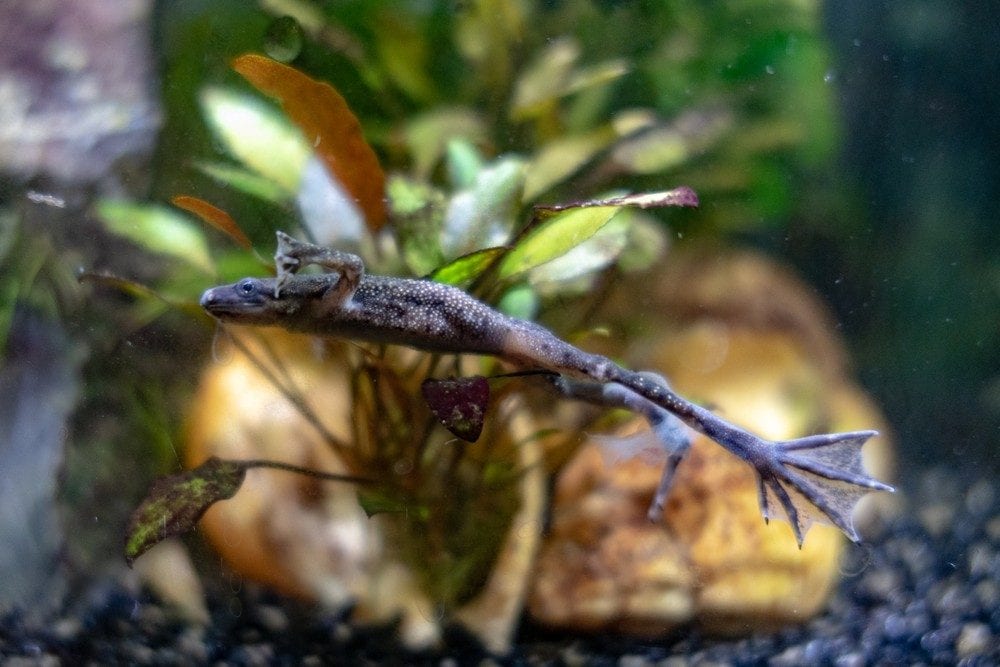
Any plants that can thrive in the water parameters African dwarf frogs need are acceptable. Plan to provide plants with large leaves, like Java fern and Anubias, to allow your African dwarf frogs a place to rest. Some frogs also enjoy floating plants like guppy grass.
Lighting
These frogs require regular day/night light cycles but otherwise do not have specific lighting needs. They can tolerate low to high lighting but should be provided plenty of hiding places and shelter to get out of the light when they choose to. If you have live plants, your lighting should be catered to the needs of your plants.
Filtration
African dwarf frogs are weak swimmers, so any filtration and water flow in their tank should be gentle. Sponge filters are a good option, but other types of filters can work with additions like baffles and intake covers.
Are African Dwarf Frogs Good Tank Mates?
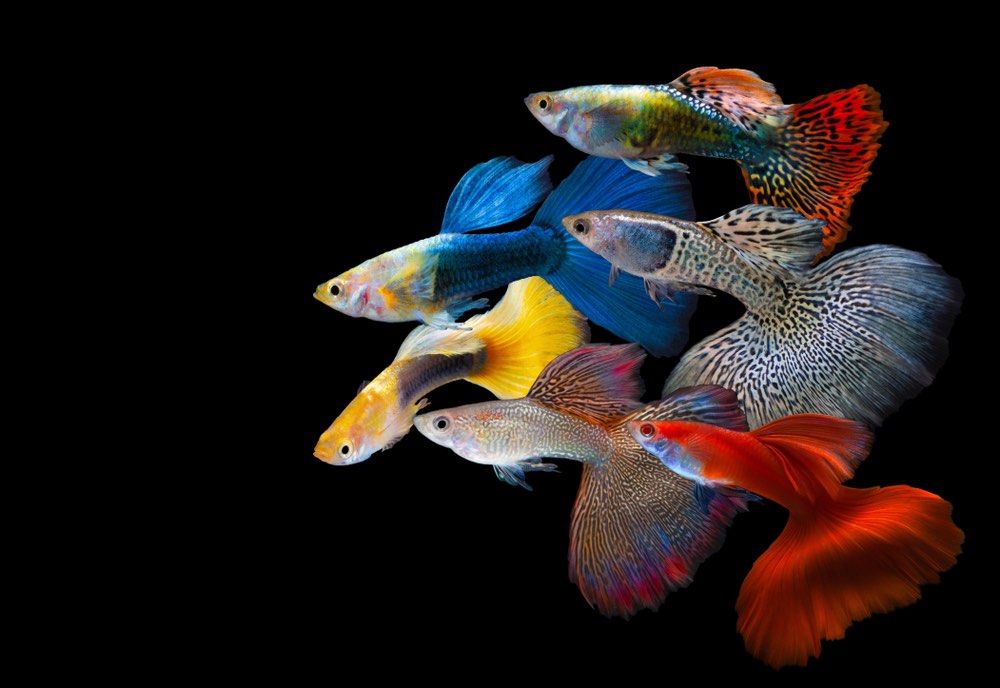
These frogs are a possible addition to tropical community tanks. However, they shouldn’t be kept with smaller livebearers like guppies, mollies, tetras, and danios as they will opportunistically eat any small fish that comes near them.
Avoid keeping African dwarf frogs with aggressive tank mates or tank mates that are prone to nipping and bullying. They can be easily injured by aggressive species. Also, if you intend to breed yourAfrican dwarf frogs, be aware that many fish will eat their eggs, making it difficult to breed them in the tank with fish present.
It is best to not house them with other fish because of their inherent Salmonella spp. risk, which greatly limits the interaction opportunities with your other fish. They also need a shallow tank, which many fish don’t appreciate. Finally, they are weak swimmers, and in a community setup, they can easily miss out on meals as faster fish often beat them to the punch. They should be hand-fed if they’re in a community setup; however, this requires even more stringent attention to hygiene.

What to Feed Your African Dwarf Frog
These frogs are exclusive meat eaters and do not accept flakes or pellets. They should not be offered freeze-dried foods either, as these can easily lead to intestinal blockage and death. Live prey is their preferred food.
Options for live foods include bloodworms, daphnia, tubifex worms, blackworms, and brine shrimp. Though active, they are weak swimmers and easily get outcompeted for food when housed in community aquariums.
Keeping Your African Dwarf Frog Healthy
The most common health problems encountered in African dwarf frogs are a poor diet. These animals do not do well on pellets, flakes, or freeze-dried foods, as this quickly leads to blockages along their digestive tract.
African dwarf frogs are sensitive to some medications commonly used to treat ailments in fish. This means that you should choose any medications you use very carefully and follow all label instructions. It is best to not medicate your fish and African dwarf frogs in the same aquarium.
Breeding
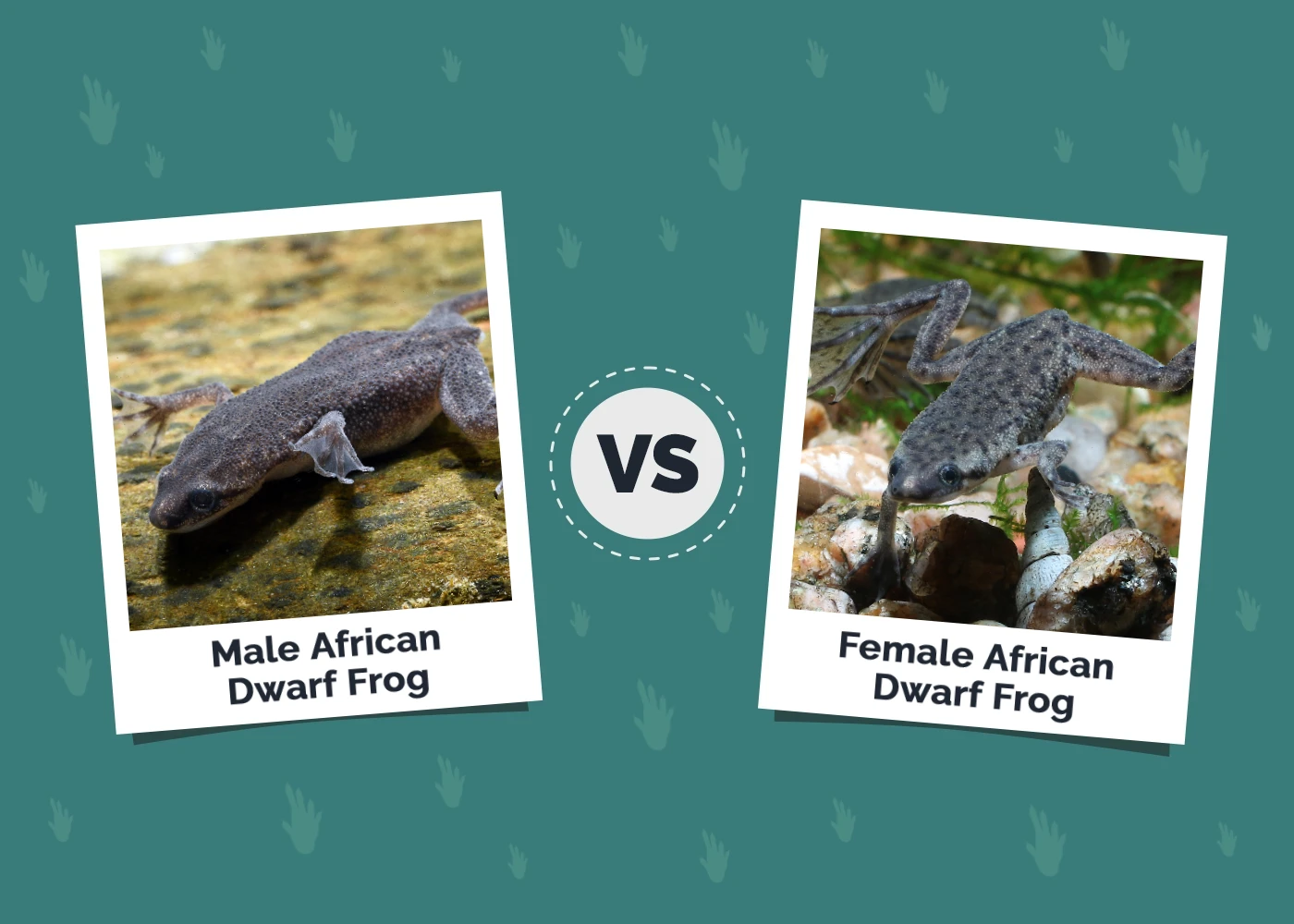
Breeding African dwarf frogs in the home aquarium can often occur with minimal effort, but keeping the eggs and tadpoles safe can be difficult. Female African dwarf frogs are larger than males and develop a large, round abdomen when they are ready to lay eggs. Creating a manufactured drought/flood cycle in the aquarium through the removal and addition of water and changes in water temperature can induce breeding behaviors.
The male and female will perform an egg-laying “dance” for several hours, which involves multiple trips from the tank floor to the surface. Every time they reach the surface, eggs will be released. A female can lay around several hundred eggs during the breeding season.
The eggs float and will stick to plants, which makes floating plants a great addition. The adult African dwarf frogs will eat these eggs, though, so you’ll need to safely transfer them to a breeding container or a separate tank. Within 2 days, you should have tadpoles.

Final Thoughts
African dwarf frogs are interesting yet somewhat controversial additions to tropical community aquariums. They are enjoyable to watch and often stay busy throughout the day. Their care needs are significantly lower than most other amphibians, which makes them a good option for people who have not cared for amphibians before.
It’s important to ensure your water quality stays high and that your tank is fully cycled before bringing African dwarf frogs home. Even though they are easier to keep than most amphibians, they still have specific needs and are sensitive to changes in water parameters. Choose tank mates carefully to ensure the safety of your frogs and their tank mates. They are also considered a potential public health hazard, and therefore, should only be handled when absolutely necessary.
Featured Image Credit: Charlie Tyack, Shutterstock
Get Hepper In Your Inbox


Pet care tips from our vets and experts, straight to your inbox.
You may opt-out at any time. View our Privacy Policy for more information.
Lindsey discovered her passion for fish keeping after a junior high school field trip to the Shedd Aquarium in Chicago. Prior to becoming Editor-in-Chief of It's a Fish Thing, Lindsey studied marine biology at the University of California-Santa Cruz. She loves goldfish, tetras, and mystery snails, and recently began experimenting with a saltwater aquarium.
Join the conversation
Ask a question, share your story, or send private feedback.