Hepper is reader-supported. When you buy via links on our site, we may earn an affiliate commission at no cost to you. Learn more.
Is My African Dwarf Frog Pregnant or Bloated? Vet-Reviewed Reproductive Physiology


In this article
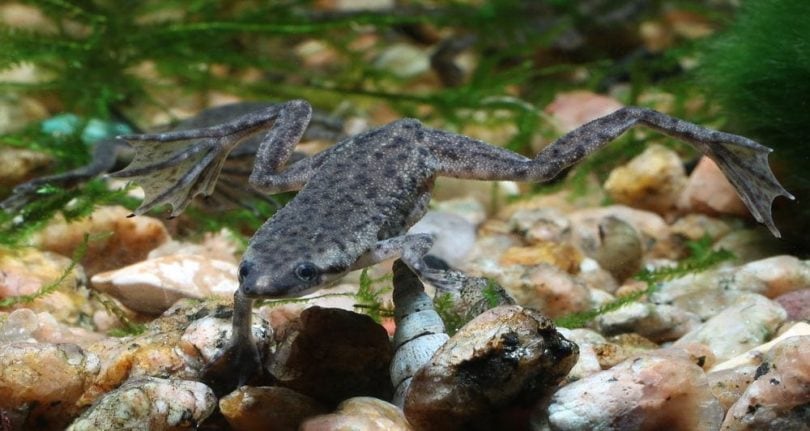
If you have a female African dwarf frog, you might wonder if your frog is pregnant. Well, what you need to know right off the bat is that African dwarf frogs are egg layers, not livebearers, so they are never actually pregnant.
That said, there are ways to tell when female African dwarf frogs are ready to lay eggs. Today we want to talk about breeding African dwarf frogs, being able to tell whether they are pregnant or just bloated, and how to take care of African dwarf frog tadpoles too.

How to Tell if My African Dwarf Frog Is Pregnant?
One of the first things we need to reiterate here is that African dwarf frogs never actually get pregnant. Pregnancy is a trait that’s associated with animals that have a uterus (frogs do not have a uterus). Animals that give birth to live offspring are known as livebearers. African dwarf frogs do not give birth to live offspring. They lay eggs, which therefore means that they are never actually pregnant.
With that being said, there are still some ways to tell whether or not African dwarf frogs are ready to lay eggs.
Males & Females
If you have male and female African dwarf frogs in the tank, there is a chance that the female’s reproductive cycle may be triggered, in other words, if there are males and females in the tank, there is a chance that she may lay eggs. However, the females do require the presence of males for them to start laying eggs. If there are no males present in the tank, a female African dwarf frog is not going to produce or lay eggs.
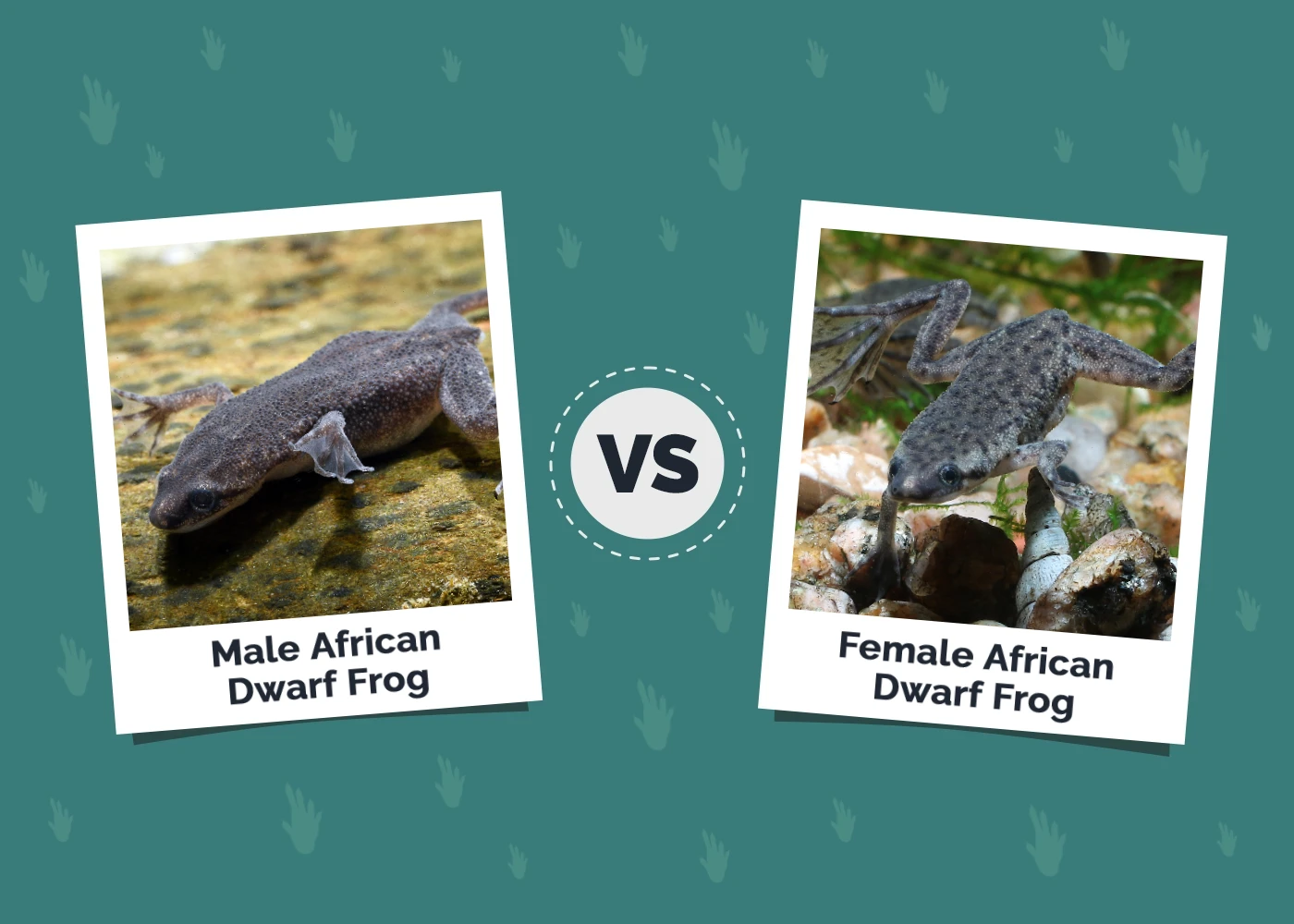
Of course, this means that you need to be able to tell the difference between male and female African dwarf frogs. Moreover, if the male frogs are harassing the female African dwarf frogs and constantly following them around, it is an indication that she is carrying eggs and ready to lay them.
The males can tell this quite easily and will begin to compete with each other for dominance, and therefore the right to fertilize the female’s eggs once she lays them. Female African dwarf frogs have a large tailbud and are generally around 30-40% larger than males, whereas the males have virtually no tailbud and are noticeably smaller than the females.
The males also possess a red or white-colored bump near their armpits. These are thought to be involved with breeding; however, their role in the breeding process isn’t completely understood. In addition, males produce sounds, often at night, in order to attract females. These sounds are often akin to a buzzing noise.
Getting Big
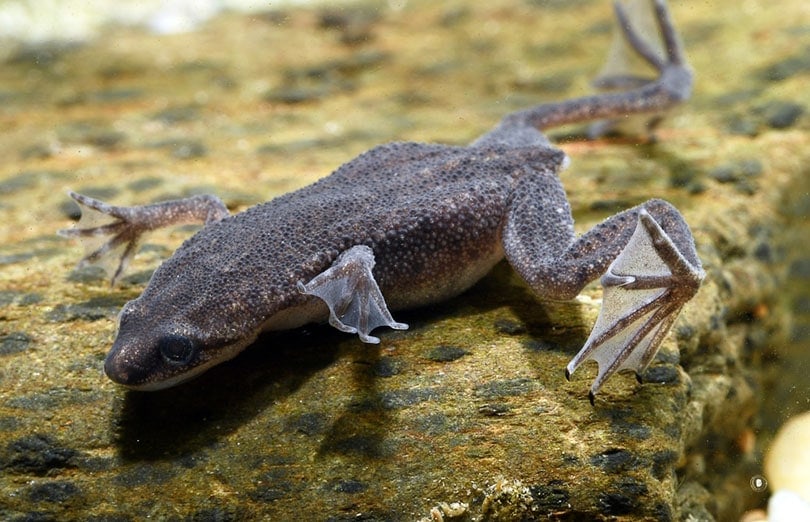
One easy way to tell if your female African dwarf frogs are pregnant is by taking a look at them. If they begin to get what appears to be fat, especially if their abdomens are increasing in size, there is a good chance that the female is carrying eggs.
It is important to note that though female frogs can hold hundreds of eggs, they rarely lay all of them in a single mating session. Typically, they only release around a dozen eggs or so per amplexus (a mating term for frogs) with a male.
Amplexus
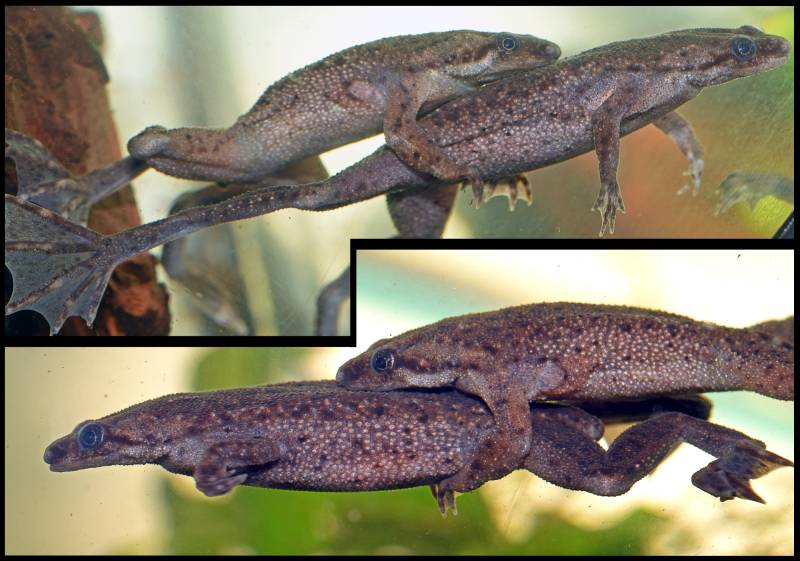
African dwarf frogs mate via a process known as amplexus. This often occurs during the night and is therefore not observed by most owners. During amplexus, the male firmly holds on to the female, effectively encouraging her to release her eggs. The female responds by swimming to the water surface and laying her eggs one at a time.
Between periods of laying eggs, the female retreats back down to the bottom of the aquarium. During this time, the male fertilizes the eggs by releasing his sperm into the water (fertilization is external). This process is known as amplexus.
Amplexus can last for several hours, and when the female is done laying eggs, she appears to go motionless, which triggers the male to eventually release her. Following this, the frogs go their separate ways.
How Long Are African Dwarf Frogs Pregnant?
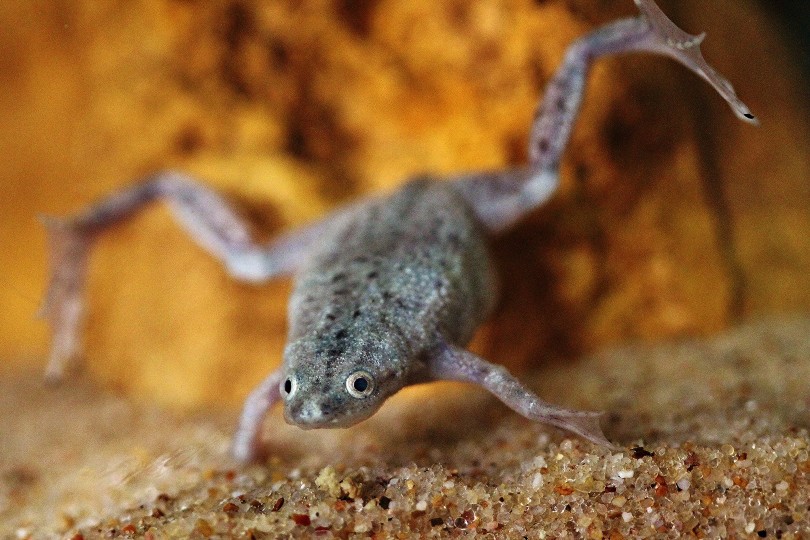
As we have already established, African dwarf frogs are technically never pregnant, because they lay eggs. Once a female starts producing eggs, which she will do when the right conditions are met. A female is capable of producing eggs when she is about 9 months old. As long as water conditions feel optimal for reproduction, she will continually produce eggs whenever she can.
The embryonic period inside of the eggs is about the closest thing to “pregnancy” for these frogs. Once the eggs have been fertilized and laid, it will take roughly 24-48 hours for those eggs to develop into young African dwarf frog tadpoles.
It is important to note that African dwarf frogs are cannibals and, therefore, eggs laid during the night might be eaten by morning. In addition, they will indiscriminately eat their tadpoles as well. If you wish to hatch the eggs, they must be separated from the adults.
What to Do if My African Dwarf Frog Lays Eggs?
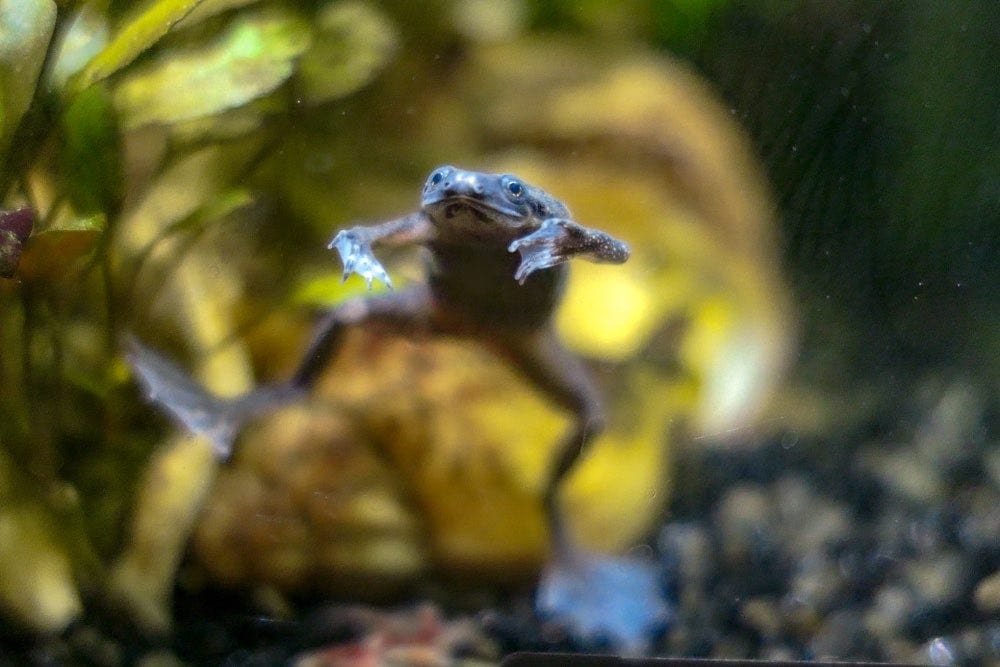
If your African dwarf frog lays eggs, if you don’t care about breeding, simply scoop up and discard the eggs. You should not leave them in the aquarium if you’re not keen to hatch them because rotting or unviable eggs will quickly deteriorate water quality.
However, if you had planned on breeding your African dwarf frogs and keeping the eggs, or in other words, allowing them to hatch and then raising or selling the tadpoles, you need to remove the parents or eggs from the tank.
Alternatively, if you are serious about breeding your African dwarf frogs, you can always set up a breeding tank and have the frogs lay their eggs in there. Once the eggs are laid, you can then return the African dwarf frogs to their original home tank.
What About Bloat?
African dwarf frogs don’t experience “bloat” in the same way we would. In fact, when a frog appears extremely round and bloated and is not full of eggs, the condition is termed as dropsy. If a frog is experiencing dropsy, they are actually holding excess fluid, not air, and therefore aren’t bloated in a technical sense.
There are many underlying reasons for dropsy. Generally speaking, though, dropsy usually occurs toward the end of a disease process, and the prognosis for fish or frogs that display these signs is often quite poor. It is best to consult your veterinarian if you suspect that your frogs have dropsy. Please note that many veterinarians may advise euthanasia if an animal is showing signs of dropsy.

How Do You Take Care of African Dwarf Frog Tadpoles?
Important
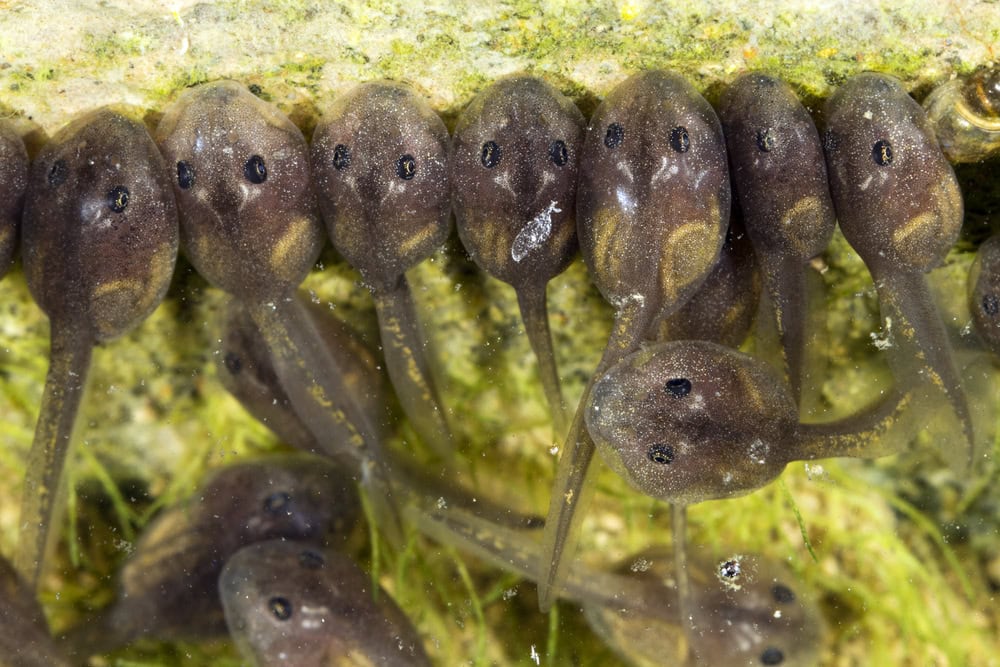
The eggs that your African dwarf frog laid should hatch within 24-48 hours of being laid (in the right conditions).
If you want to keep and raise those African dwarf frog tadpoles, you need to ensure that they have the right conditions, especially when it comes to the right food and proper feeding. Below are the best tips to follow to take care of African dwarf frog eggs.

Temperature
Keep the temperature in the tank with the African dwarf frog tadpoles between 80-85 °F (27 - 29 °C).
Water Cleanliness
Make sure that the tank with the African dwarf frog tadpoles has excellent filtration. Yes, African dwarf frogs are very sensitive and fragile, and this goes double for the tadpoles. The water needs to be kept exceptionally clean. You have to be very careful here, as tadpoles can easily get sucked into the filter. Therefore, you should opt for a sponge filter.
Water Movement
With the above point in mind, you do need to make sure that the water in the African dwarf frog tadpole’s tank has virtually no flow or movement. As opposed to what you might think, these frogs are not strong swimmers and they do not like anything which even slightly resembles a strong current.
Feeding
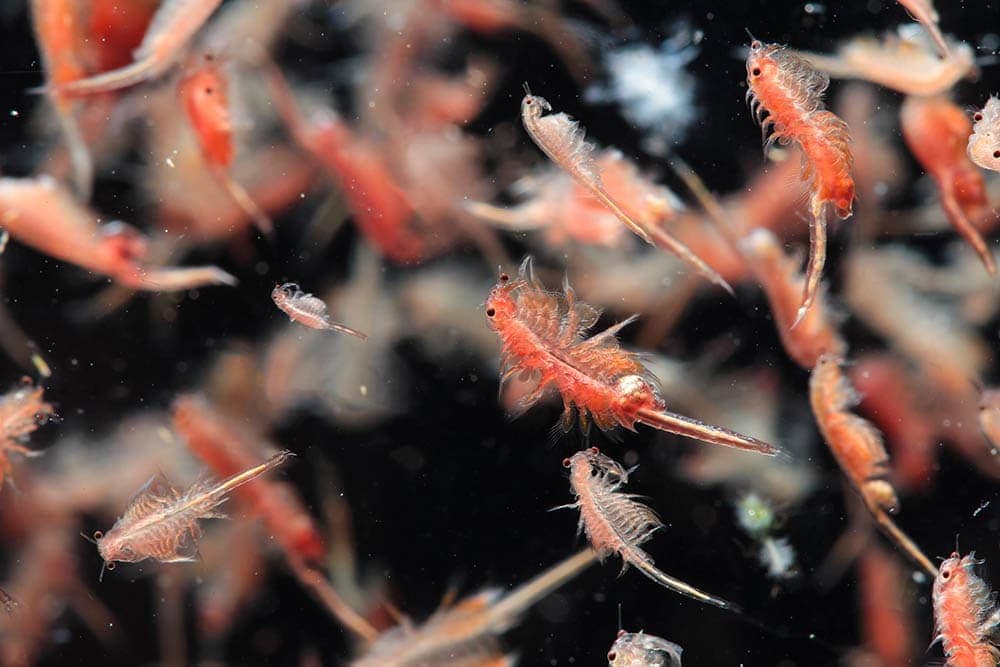
The only other thing left to do is to feed the tadpoles. When they are first born, for the first few days, their mouths will be too small to eat solid foods. Really the only thing to feed the tadpoles is microscopic protozoans. After 4-5 days, the tadpoles will be large enough to eat other foods, such as baby brine shrimp.
Reintroduction to the Parent Tank
The tadpoles will morph into frogs within a month (4 weeks). It is best to wait till they are larger before adding them to the aquarium with adult frogs (usually around 3-4 months).
Conclusion
The bottom line is that African dwarf frogs are never actually pregnant, but they do lay eggs. If you have females and males in the same tank, chances are that breeding will occur.
Likewise, African dwarf frogs don’t experience “bloat” but rather a condition called dropsy, which requires veterinary care and attention promptly.
See Also:
Featured Image Credit: Dan Olsen, Shutterstock
Get Hepper In Your Inbox


Pet care tips from our vets and experts, straight to your inbox.
You may opt-out at any time. View our Privacy Policy for more information.
Lindsey discovered her passion for fish keeping after a junior high school field trip to the Shedd Aquarium in Chicago. Prior to becoming Editor-in-Chief of It's a Fish Thing, Lindsey studied marine biology at the University of California-Santa Cruz. She loves goldfish, tetras, and mystery snails, and recently began experimenting with a saltwater aquarium.
Join the conversation
Ask a question, share your story, or send private feedback.