Hepper is reader-supported. When you buy via links on our site, we may earn an affiliate commission at no cost to you. Learn more.
Are St. Bernards Smart? Interesting Facts & FAQ
In this article
If you are considering adopting a St. Bernard, you may have many questions about its breed profile. Most importantly, you might want to know how easy or tough it is to train the dog.
This begs the question: are St. Bernards smart?
Well, these gentle giants are not all looks and muscles. Although stubborn, they are brainy and witty, quick learners.
Are you still itching to know more about this breed's IQ? Read on for facts about how clever St. Bernards are. We will also discuss a few tips to enhance the success of your training sessions.

How Smart Are St. Bernards?
St. Bernards are intelligent dogs. They learn quickly but are notorious for being stubborn. They typically don’t feel inclined to obey even when they understand a command. They are independent thinkers and will not follow orders for the sake of it.
Fortunately, they share a similar trait with all work dogs; they love to please their owners. Once they trust and respect you, they become more responsive to commands. They are also treat-motivated and will do as you say with the sole intention of getting a treat.
Here are the main facts about this dog breed's IQ.

Obedience and Work Intelligence
St. Bernards score low in obedience and work intelligence. They rank at number 123 out of 138 breeds in their ability to learn and obey.
Generally, it takes repeating a command 40 to 80 times for the breed to finally "get it". Also, they don't always listen to commands and do as expected, even when they understand instructions.
Instinctive Intelligence
Fortunately, St. Bernards score high in their intuitive intelligence. They were bred to do rescue work, a job they take all too seriously. Although they are hardly aggressive, they are good at assessing the situation and deciding whether it is necessary to fight back.
Generally, this proves that St. Bernards are not dumb. Their high intuition has seen them save over 2,000 people in roughly 200 years in the Swiss Alps.
One of the most famous St. Bernards was a dog called Barry. It lived in the monastery between 1800 and 1812 and saved over 40 people from death by finding them and leading them to safety.

Adaptive Intelligence
St. Bernards also rank high in their adaptive intelligence. They are excellent problem solvers thanks to their ability to learn independently and from past experiences. Also, these dogs adapt quickly to different environments without any problem, provided you treat them as equally important family members.
Are St. Bernard Puppies Smart?
As you can expect, St. Bernard puppies are not as calm as adults. They are playful and full of energy.
Like all giant dogs, their pace of mental maturity is slower. Although they can grasp basic concepts, they maintain puppy-like behaviors for longer. It should not surprise you if your 90-pound puppy tracks mud into your house without remorse.
Without training, it will also counter-surf for food and jump on people, oblivious of its size.
Fortunately, St. Bernard puppies are like toddlers and soak up information like a sponge. You should begin training at eight weeks and teach basic commands and etiquette. If your pet seems disinterested in your sessions, use treats and other forms of positive reinforcement to keep its headstrong nature in check.

The 6 Ways to Make Training a St. Bernard Less Frustrating
St. Bernards are headstrong but brilliant. Although their low obedience and work intelligence can make your training sessions frustrating, they are highly trainable because they are good-tempered and eager to please.
Here are six tips that can increase your chances of enjoying successful training sessions.
1. Create a Routine & Stay Consistent
One of the surest tricks of training a stubborn dog is to create a predictable routine. Like all dogs, St. Bernards are creatures of habit that thrive on consistency. Creating a schedule for your training sessions can enhance your dog's confidence and alertness during class time, making it easier to address behavioral problems.
2. Go Slowly
It is crucial to start by teaching your furry friend basic commands like sit, stay, and come. The idea is to boost its confidence and give it as many opportunities as possible to earn a treat. This way, it will build a positive association with training, and look forward to your sessions.
Moreover, take small steps and avoid hopping from basic to complex commands in one day. It is vital to take breaks in between to keep your pet focused. If sessions drastically change from simple to complex, your pet will likely give up and refuse to listen to your commands.

3. Keep Your Training Sessions Short
St. Bernards trains well in brief, 10- to 15-minute sessions. When teaching a puppy, the classes should be even shorter, at about five minutes.
Your pet can only grasp concepts when it is focused. Past the 15-minute mark, it is likely to get too distracted to listen to you. Moreover, training is more productive when you and your pet leave class feeling good instead of tired and frustrated.
4. Maximize the Power of Positive Reinforcement
St. Bernards can intentionally use their charms to get treats. A surefire tip to get the most out of your training sessions is to use your dog's treat motivation to get it to focus on commands and obey.
During training, ensure you never use punitive measures to enforce desired behavior. This cannot have a positive outcome because your pet will soon associate training with punishment. St. Bernards are sensitive creatures, and even a harsh tone can make them disinterested in learning new tricks.

5. Shuffle Things Up
St. Bernards are notorious for ignoring commands. When they do, it can be tempting to repeat yourself until your pet has no choice but to obey. This can worsen things because it will learn to ignore the first or third order. You will be teaching it to respond after an "X" number of commands.
If your dog seems bored or distracted, the best you can do is shuffle things up. St. Bernards respond better to varied training sessions. Doing the same thing repeatedly or giving the same command makes them more stubborn.
6. Be Patient
Although training a St. Bernard can get you worked up, you must remain patient. Remove distractions, reward desired behavior, and chin up for your next session.

Final Thoughts
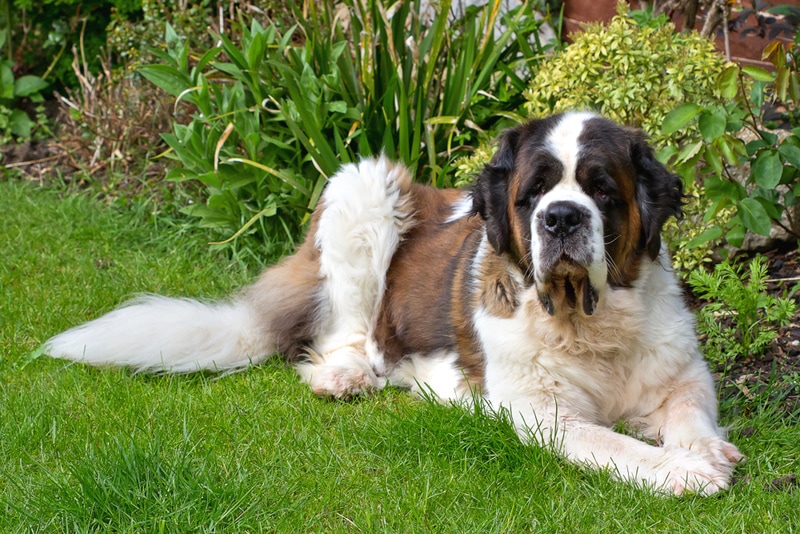
Saint Bernards are big dogs with an incredibly gentle demeanor. They have a low prey drive, are hardly ever aggressive, are not territorial, don't bark a lot, and have a lazy streak. Their drooling does not help the situation, and it's easy to perceive them as dumb. Fortunately, they are not.
Although St. Bernards will not respond to all your commands on a whim, they "get it".
These dogs are independent creatures that need a little push to obey. They don't score high in obedience and work intelligence, but their adaptive and instinctive intelligence is on another level.
They are loyal and protective of their loved ones, and it's no surprise that they also make excellent watchdogs and nanny dogs.
Sources
Featured Image Credit: Kev Gregory, Shutterstock
Get Hepper In Your Inbox


Pet care tips from our vets and experts, straight to your inbox.
You may opt-out at any time. View our Privacy Policy for more information.

Nicole is a lover of animals of all sizes but is especially fascinated with the feline variety. She’s the proud mom of Baby, a Burmese, and works every day so he can relax in the sunshine or by the fire. She’s always had a cat in her home and has spent countless days with others, observing behaviors and softening up even the grouchiest of the lot. Nicole wants to share her kitty expertise with you so you and your cat can live happy, healthy, and care-free.
Join the conversation
Ask a question, share your story, or send private feedback.