Hepper is reader-supported. When you buy via links on our site, we may earn an affiliate commission at no cost to you. Learn more.
How Many Cats and Dogs are Spayed & Neutered in Australia? 10 Statistics to Know in 2026



In this article
Note: This article’s statistics come from third-party sources and do not represent the opinions of this website.
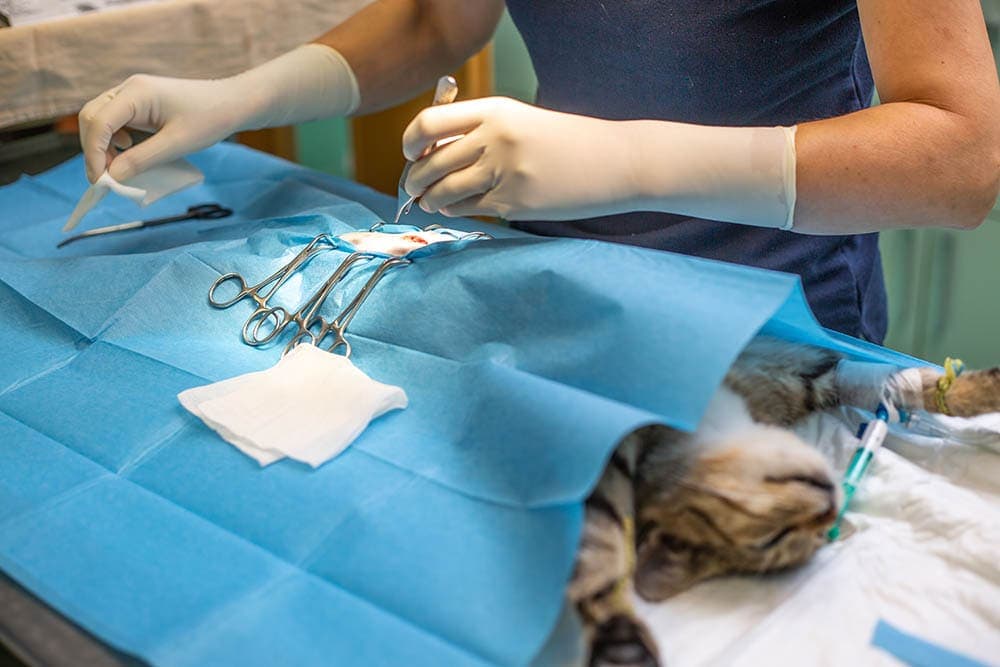
One of the first decisions new pet owners must make is whether to spay or neuter—or desex—their cat or dog after bringing it home. Desexing your pet prevents unwanted pregnancies and helps to keep animal populations under control. Homeless animals that aren’t desexed often end up with unwanted pregnancies, which will then lead to more animals that aren’t spayed or neutered.
As the animals multiply, communities end up with large, uncontrolled populations of cats and dogs that eventually end up in shelters. Often, these animals end up euthanized for a variety of reasons: the sheer volume of animals, the lack of financial means to care for them, or a lack of potential adopters. Desexing can prevent such scenarios from happening by limiting population growth.
Many organizations nationwide helped to desex animals in 2021 and 2022. Read on to learn some statistics about animal desexing in the states and territories of Australia.

The 10 Desexing Statistics in Australia
Roughly 2/3 of Australian households own pets.
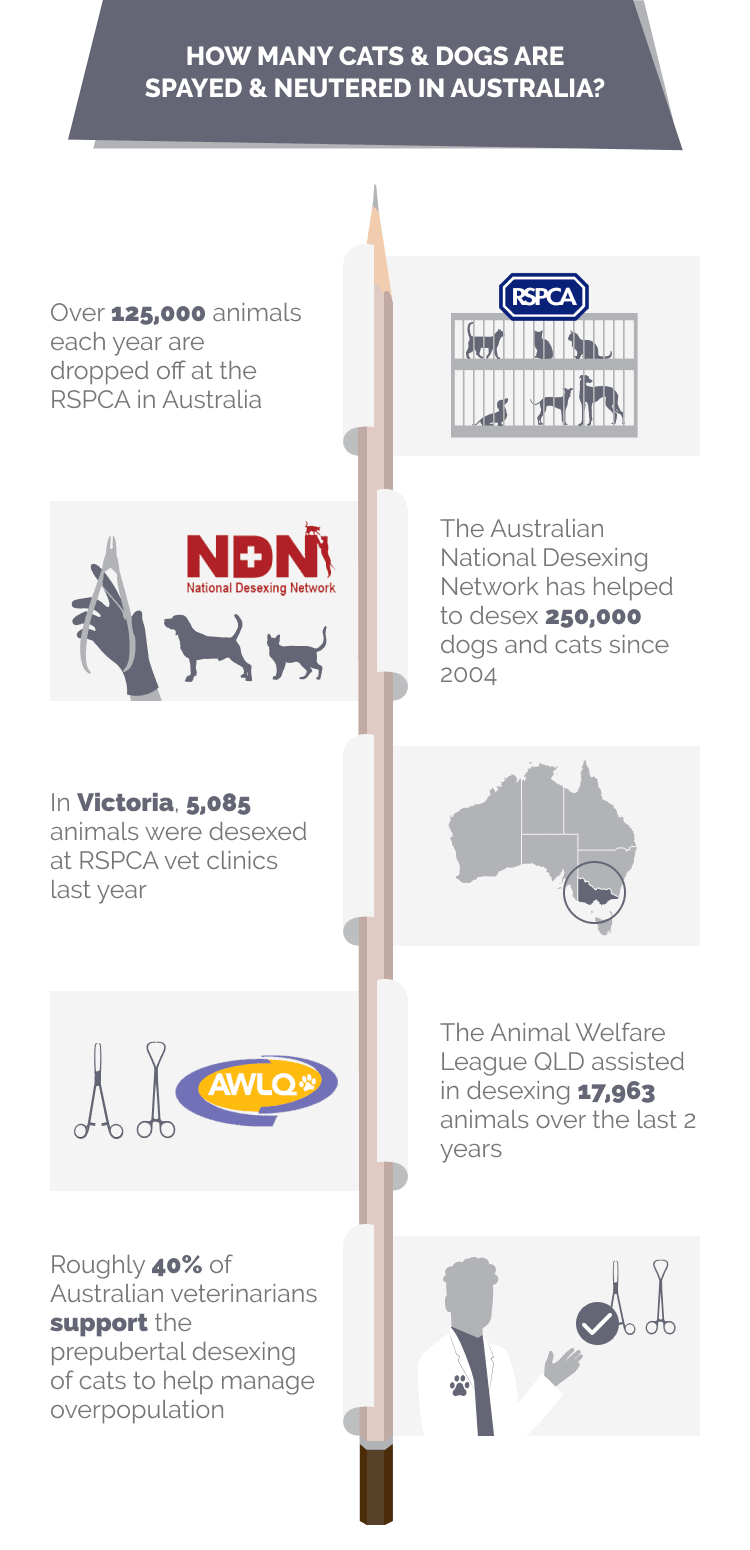
Over 125,000 animals each year are dropped off at the Royal Society for the Prevention of Cruelty to Animals (RSPCA).
The National Desexing Network has helped to desex 250,000 dogs and cats since 2004.
The Animal Welfare League QLD assisted in desexing 17,963 animals in 2021 and 2022.
Roughly 40% of veterinarians support the prepubertal desexing of cats to help manage overpopulation in ACT.
In Victoria, 5,085 animals were desexed at RSPCA vet clinics.
6,073 animals were desexed through the RSCPA New South Wales.
RSPCA’s Operation Wanted in Queensland offered a 20% discount for desexing at participating vets to 10,500 people.
In Tasmania, 141 animals were desexed with the assistance of RSPCA Tasmania.
The veterinary care team at RSPCA ACT desexed 1,165 animals.

General Statistics
1. Roughly 2/3 of Australian households own pets.
(National Desexing Network)
Australians are huge pet lovers with an estimated two-thirds of Aussies owning a cat, dog, or other pet. It’s further estimated that every four out of five Australians have owned a pet during their lifetime.

2. Over 125,000 animals each year are dropped off at the Royal Society for the Prevention of Cruelty to Animals (RSPCA).
(Royal Society for the Prevention of Cruelty to Animals)
The RSPCA takes in over 125,000 animals every year. Many of these animals are the result of unplanned pregnancies, resulting in unwanted kittens or puppies. Desexing your pet helps prevent the unintentional breeding of household pets.
3. The National Desexing Network has helped to desex 250,000 dogs and cats since 2004.
(National Desexing Network)
In 2004, the National Desexing Network was created to make desexing discounts available to pet owners who need financial assistance. Over 160 veterinary clinics participated nationwide to help make desexing available to all pet owners.

4. The Animal Welfare League QLD assisted in desexing 17,963 animals in 2021 and 2022.
(AWLQ Impact Report)
The Animal Welfare League QLD also provided $1.471M in charitable support to pets in need through their vet clinics. They also helped 52,883 furry patients through vet clinics. Their shelter vets performed 33,550 medical treatments for animals in their shelters.
5. Roughly 40% of veterinarians support the prepubertal desexing of cats to help manage overpopulation in ACT.
(Frontiers in Veterinary Science. 2019: 6:272)
The Australian Capital Territory instituted prepubertal desexing for cats and dogs back in 2001. All dogs must be desexed by the age of six months, and all cats should be desexed by the age of three months. A 2019 study showed that 40% of veterinarians believe early desexing of cats will help manage overpopulation in the territory. The same study showed, however, that only 10% of the survey respondents actually recommend desexing cats by three months of age.
RSCPA Desexing Numbers by State/Territory*
6. In Victoria, 5,085 animals were desexed at RSPCA vet clinics.
(RSPCA Victoria Annual Report)
The 2021-2022 RSPCA Victoria Annual Report notes a focus on desexing of animals to help increase responsible animal ownership in the region. A high-volume desexing day was offered for cats and kittens with owners engaged in human welfare organizations receiving free services.
7. 6,073 animals were desexed through the RSPCA New South Wales.
(RSPCA NSW Annual Report)
Desexing is an important part of the RSPCA NSW’s efforts to support its local communities in animal and pet ownership. Of the 6,073 animals desexed, 991 animals were desexed through assistance programs to provide owners with the help they need to prevent unplanned animal pregnancies.

8. RSPCA’s Operation Wanted in Queensland offered a 20% discount for desexing at participating vets to 10,500 people.
(RSCPA Queensland Impact Report)
Operation Wanted kicked off in 2014 with local vets, local councils, and RSPCA Queensland collaborating to encourage desexing to prevent unwanted litters from ending up in shelters and pounds. It’s estimated that over 100,000 animals have been desexed since the program began.
9. In Tasmania, 141 animals were desexed with the assistance of the RSPCA Tasmania.
(RSCPA Tasmania Impact Report)
RSCPA Tasmania offered financial support for animal desexing to people on Commonwealth benefits through their Centrepay Desex programs. A total of 141 animals were desexed: 15 dogs and 126 cats.

10. The veterinary care team at RSPCA ACT desexed 1,165 animals.
(RSPCA ACT Annual Outcome Report)
The RSPCA ACT veterinary care team performed the following desexing procedures:
| Type of Procedure | Shelter Animals | Public Animals |
| Canine Castration | 78 | 58 |
| Canine Spay | 78 | 71 |
| Feline Castration | 385 | 44 |
| Feline Spay | 545 | 69 |
| Rabbit/Ferret Spay | 79 | 34 |
*Not all RSPCA branches nationwide mentioned desexing statistics in their annual reports or income reports.
Frequently Asked Questions About Desexing
What is desexing?
Desexing is surgery performed by a veterinarian that removes an animal’s reproductive organs to inhibit breeding. This is typically called spaying when performed on a female animal, and it’s called castration, or neutering, when performed on a male animal.
What animals are typically desexed in Australia?
Cats, dogs, and ferrets are desexed the most often in Australia. Rabbits can also be desexed.

Why should pets be desexed?
Desexing is a safe and effective way to ensure that animals aren't breeding unnecessarily. Unplanned pregnancies often result in unwanted litters that may end up homeless, eventually making their way to shelters. Shelters that are overtaxed with animals may end up euthanizing the animals due to a lack of financial resources and potential adopters.
What is prepubertal desexing?
Early age (prepubertal) desexing occurs before the animal is fully matured to prevent accidental breeding and unwanted pregnancies. Performing a desexing operation in younger animals is less risky because the reproductive tracts are typically smaller than more sexually mature animals.
Is desexing mandatory in my state/territory?
Many states/territories are passing laws to make desexing your cat or dog mandatory. Some of these laws are also regulating how many pets you can own, as well as registration requirements for each pet.
Here is a list of each state/territory and whether desexing is currently mandatory. (RSPCA)
| State/Territory | Mandatory Desexing? |
| Australia Capital Territory | Yes |
| New South Wales | No |
| Northern Territory | No |
| Queensland | No |
| South Australia | Yes |
| Tasmania | Yes/Cats. No/Dogs. |
| Victoria | No |
| Western Australia | Yes |
What Are the Benefits of Desexing?
There are a variety of reasons that desexing is beneficial to both you and your pet. Here are a few, according to the RSCPA:
Conclusion
Over 2/3 of Aussie homes have a pet in the family, so it’s obvious that Australians love their pets! With so many animals nationwide, desexing is an important subject to talk about in any local community. Desexing animals lowers euthanasia rates by preventing unwanted pregnancies and the overpopulation of cats and dogs. Desexing can also benefit pets as it prevents serious illnesses, such as mammary and uterine cancers. If you’re curious about desexing for your pet, contact your vet to schedule an appointment.
Featured Image Credit: De Visu, Shutterstock
Get Hepper In Your Inbox


Pet care tips from our vets and experts, straight to your inbox.
You may opt-out at any time. View our Privacy Policy for more information.
Nicole is a lover of animals of all sizes but is especially fascinated with the feline variety. She’s the proud mom of Baby, a Burmese, and works every day so he can relax in the sunshine or by the fire. She’s always had a cat in her home and has spent countless days with others, observing behaviors and softening up even the grouchiest of the lot. Nicole wants to share her kitty expertise with you so you and your cat can live happy, healthy, and care-free.
Join the conversation
Ask a question, share your story, or send private feedback.