Hepper is reader-supported. When you buy via links on our site, we may earn an affiliate commission at no cost to you. Learn more.
Australian Retriever (Golden Retriever & Australian Shepherd Mix): Info, Pictures, Facts
In this article
Breed Overview
Height:
Weight:
Lifespan:
Colors:
Suitable for:
Temperament:
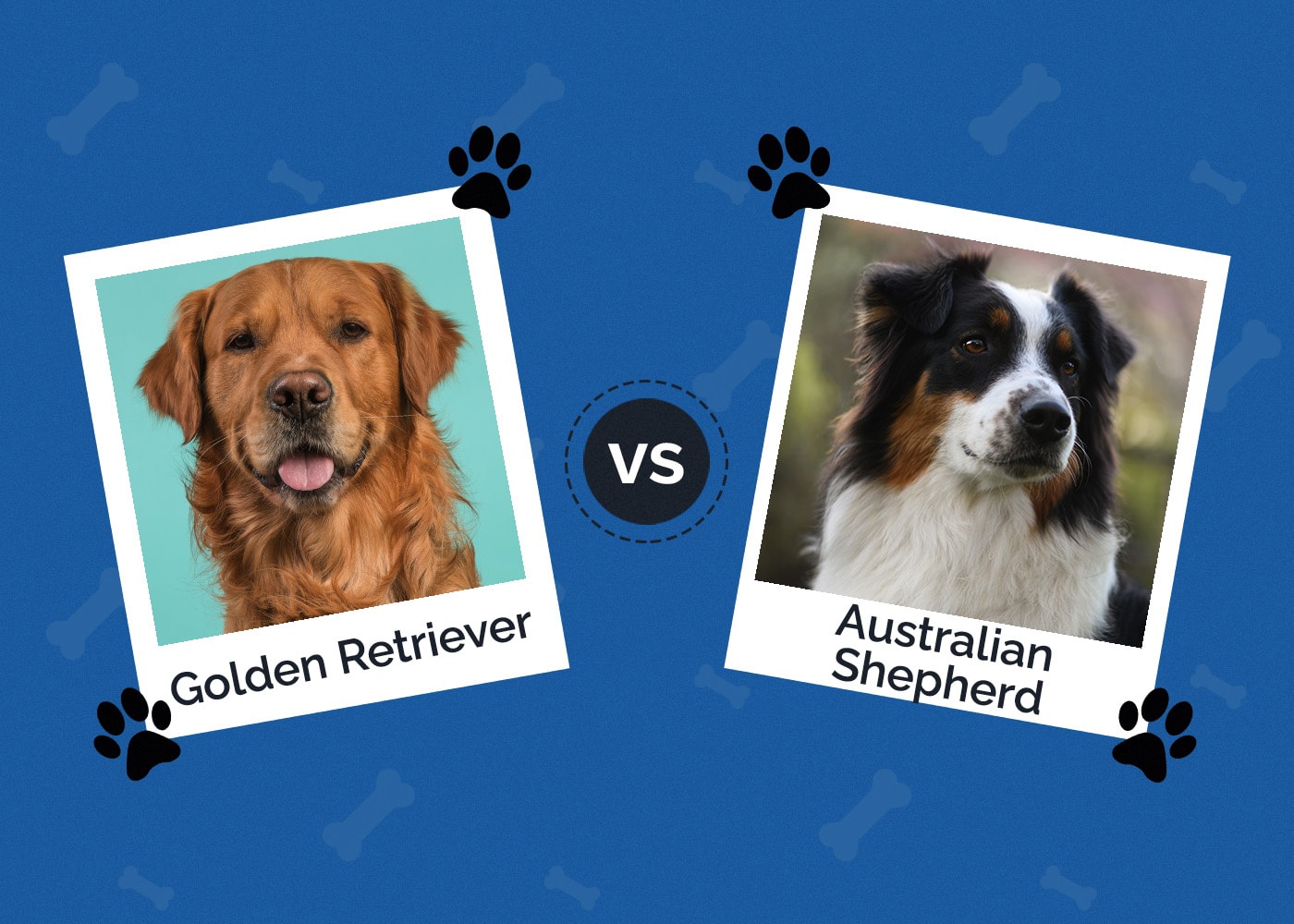
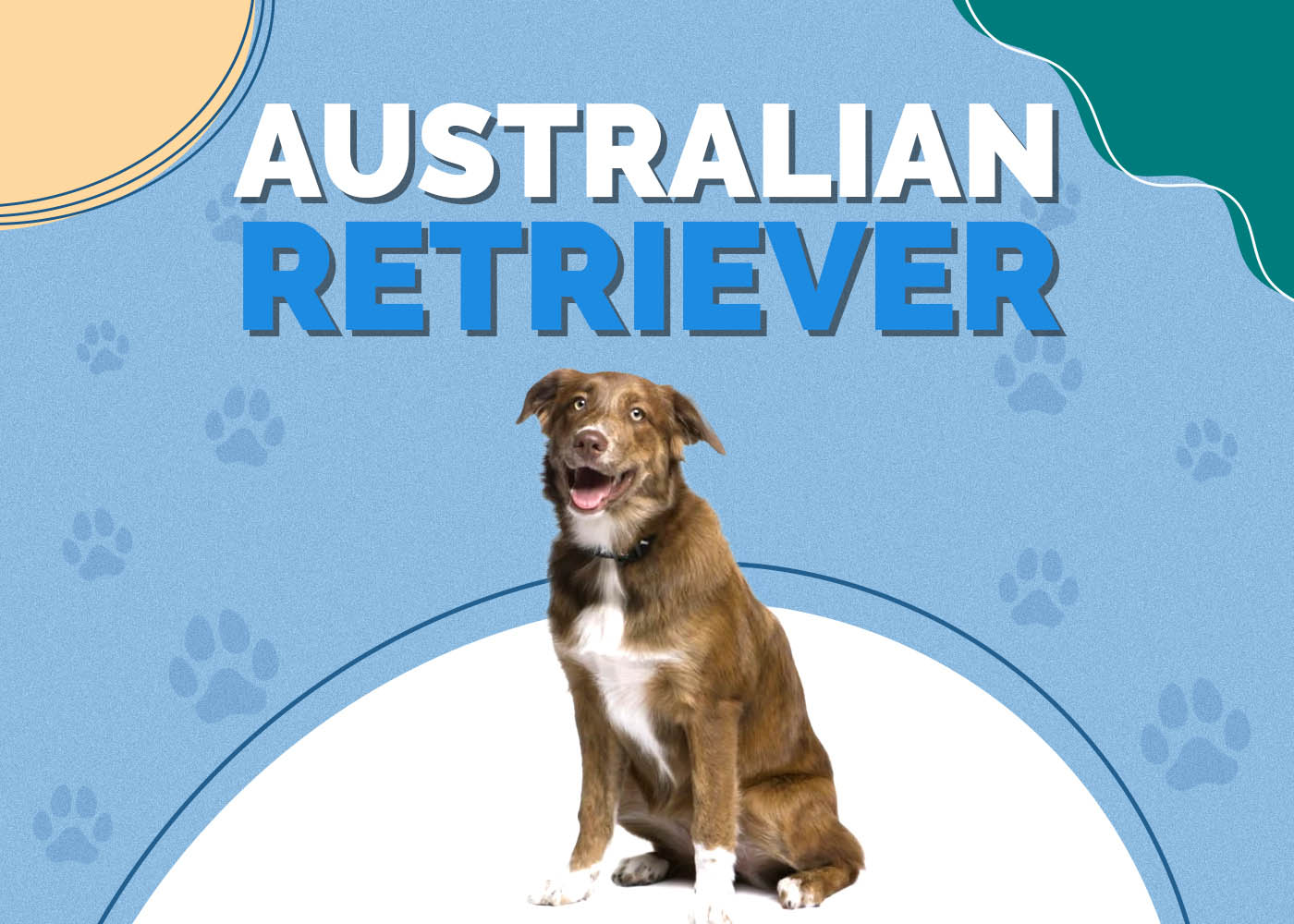
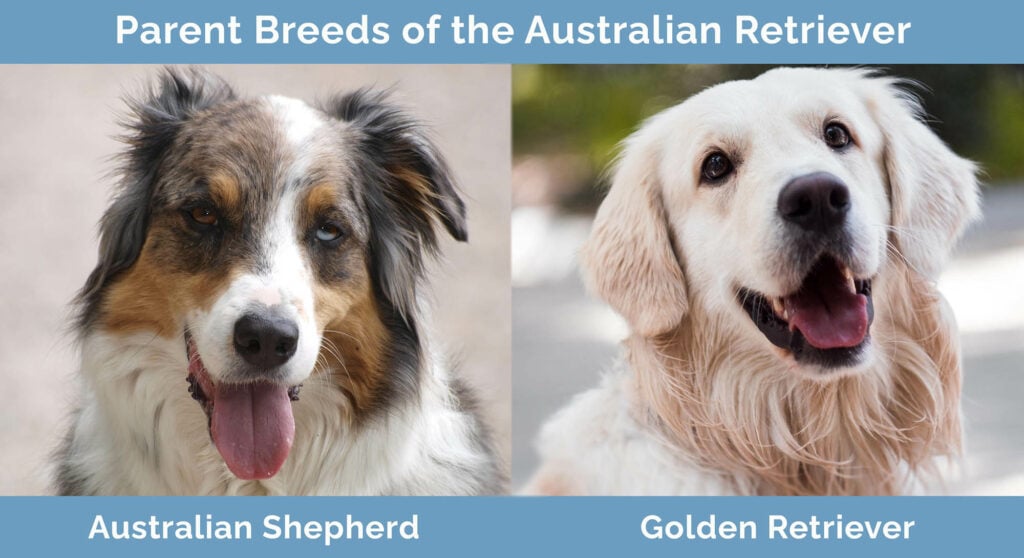
The Australian Retriever is a cross between an Australian Shepherd and a Golden Retriever, which are both highly intelligent and friendly breeds. The mix is fairly recent, originating as early as 2007. Australian Shepherds were first bred in the United States, despite the name. They were bred as hard-working herding dogs and are often used as guide dogs and in search-and-rescue operations due to their high intellect.
Golden Retrievers' ancestry goes back to the early 1800s, as they were bred to retrieve fowl and game while hunting. In modern times, Golden Retrievers are well-loved family dogs and are one of the most popular breeds for families due to their gentle and loyal nature.
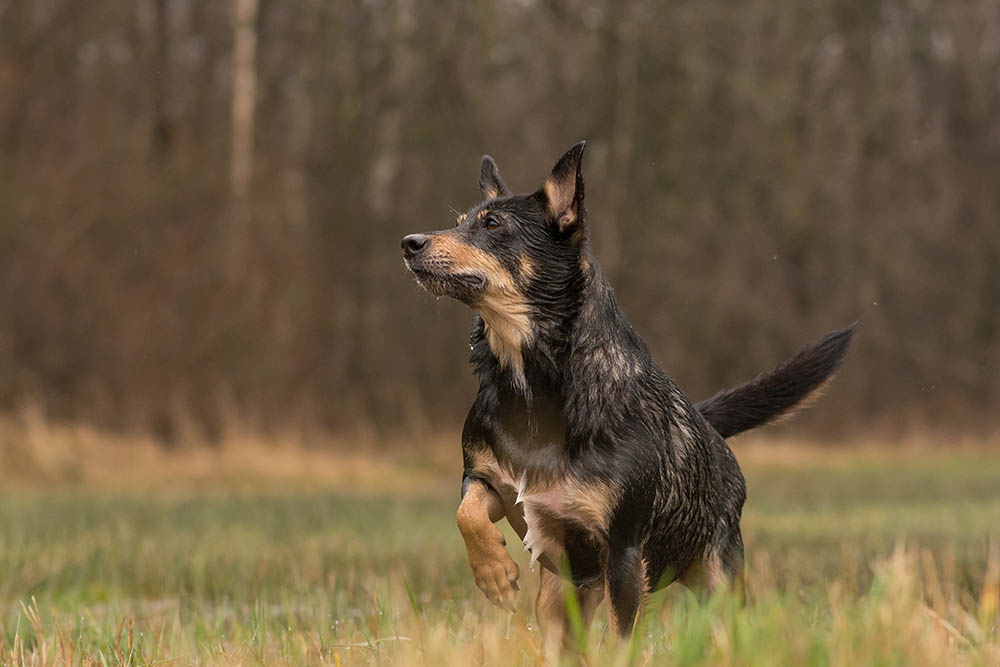
As you would guess, the Golden Retriever Australian Shepherd mix combines all the best characteristics from these two parent breeds and results in a lovable, friendly, and clever dog who makes for an ideal pet and working dog. Their fun and energetic temperament will quickly win over your heart.

Australian Retriever Puppies
Australian Retriever Characteristics
If you are looking for an Australian Retriever puppy, take your time researching reputable breeders. As a relatively new breed, they can be difficult to find and are usually first-generation crosses. It is crucial to avoid puppy mills and backyard breeders since they are notorious for bad genetics that may result in illness.
Quality breeders will put the puppies' health as a priority and will be willing to show you the breeding facilities, let you meet the puppy's parents or siblings, and they will even screen the puppy for health issues.
Due to the popularity of the parent breeds, you might be able to find an Australian Retriever at a dog shelter. You can also ask for other dog mixes that resemble the Australian Retriever. You might fall in love with a pup and change their life.

Temperament & Intelligence of Australian Retrievers 🧠
Are These Dogs Good for Families? 🏡
The Australian Retriever is an ideal family pet but is excitable and boisterous. You’ll need to watch them closely around young children, as they can easily knock them over in their excitement. They are loyal and protective, almost to a fault. They can sometimes get aggressive in their desire to protect their owners and can suffer from separation anxiety when left alone for extended periods.
Does This Breed Get Along With Other Pets? 🐶 😽
The Australian Retriever is friendly and sociable and generally gets along with other family pets. Their innate herding instinct may make them want to stay in control, and they can often be found herding chickens, ducks, and even children!

Things to Know When Owning an Australian Retriever
Food & Diet Requirements
The Australian Retriever needs a nutrient-rich and healthy diet to maintain their exuberant personality. A daily average of around 3 cups of dry dog food is sufficient, but younger Retrievers will benefit significantly from additional protein. Dry food will help keep your dog’s teeth clean and healthy, and provided that the pellets are good quality, they should also supply your dog with all their dietary and nutritional needs.
Dry food can also be supplemented with good-quality canned wet food. High-quality wet food is an excellent way to add moisture to their diet. Like all dogs, they’ll need constant access to fresh, clean water, especially considering their high energy levels. A dog with high energy benefits from two small meals a day instead of one large meal. This will assist in sustaining them throughout the day.
A good source of essential fatty acids will benefit an Australian Shepherd greatly due to their thick and dense coats. They will also need adequate protein, especially in their formative years, to keep up with their high energy output. It will also assist with skin, nail, bone, and muscle health.
Most dogs need around 25-30 calories per pound per day to maintain a healthy weight. An average Australian Shepherd weighs in at an average of 45–50 pounds. They’ll need 1,100–1,500 calories a day to maintain a healthy weight, but because Australian Shepherds are so active, they’ll likely need more.
Exercise 🐕
The high energy and active nature of Australian Retrievers means they’ll need a massive amount of exercise to burn off excess energy. They will need at least 2 hours or more of exercise every day; otherwise, they will become highly strung and stressed. They will benefit from being walked on a leash, as their herding heritage will make them run off after unfamiliar scents.
Australian Shepherds are clever, and they love to play high-energy games. Their innate retrieving instincts make them fond of fetching balls, sticks, and frisbees, and they are also fond of swimming. A fun activity for you and your Retriever to bond is a combination of the two: throwing your dog’s favorite item into water. This is great exercise and mental stimulation for your dog.
Training 🦮
The Australian Retriever’s genetic heritage of the Golden Retriever makes them highly intelligent dogs that take well to training. Still, they are a high-energy and hyperactive canine and require more patience than usual. To successfully train an Australian Retriever, it will help to focus on rewarding good behavior with treats and doing so repeatedly. Retrievers, in general, thrive on consistency and repetition.
As with all dogs, it will help to socialize your dog as early an age as possible. This will help them function well with strange people and situations, which is essential to good training. Treating new places as fun outings as opposed to scary ones will keep them calm in new situations.
Australian Retrievers take well to instructions, and combining reward-based training with a clicker or verbal commands as early as possible is vital. It is also better to do short training sessions regularly than long, intense sessions. Hyperactive breeds like Shepherds and Retrievers lose concentration quickly, and a 15 to 20-minute session is ideal.
Their innate herding instincts make them love to play games with frisbees, sticks, and balls, especially fetching games. Supplementing exercise and training with plenty of interactive games is a good idea.
Grooming ✂️
An Australian Retriever's thick and sometimes lengthy coat will require regular grooming and brushing at least twice a week. Regular brushing, combined with the occasional wash and trim, will prevent their thick coat from matting, which can happen quickly.
Although dry food can keep your dog’s teeth clean, regular brushing will prevent tartar buildup and tooth decay. Occasional nail trimming is also highly recommended to prevent splintering and infections.
Health and Conditions ❤️
While Australian Retrievers don’t have any breed-specific ailments, they can be prone to common diseases from the genetics of the parent breeds. Their thick coat puts them at risk of skin disorders like atopic dermatitis if not brushed and cleaned regularly.
Any signs of itchiness displayed by excessive licking and scratching could indicate this or a food allergy. They should be taken to a vet as soon as possible if any of these signs occur.
Golden Retrievers have a genetic disposition toward hip dysplasia, which can affect Australian Retrievers. Cancer is one of the leading causes of death among Golden Retrievers, and Australian Retrievers are also at high risk of the disease. Other common minor ailments include bloat, joint issues, and eye problems. Regular checkups with your vet can prevent most of these issues.
Unless you intend on breeding, it is recommended to neuter males and spay females. Neutering a male dog has many associated health benefits, including preventing testicular cancer, making them less aggressive, and calming their hyperactive energy.
It will also prevent them from wandering off looking for females. Spaying a female will assist in preventing uterine infections and cancer. Doing so before her first heat is recommended since it will help prevent these complications. If you want to breed a female Australian Shepherd, it is far better for her health to do so only after she has experienced at least one or two heat cycles.

Male vs. Female
When getting an Australian Retriever puppy, a big question is whether to get a male or female. Like many other dogs, the females are slightly smaller than the males. Australian Retriever females also typically have less thick and dense coats than the males and are generally more calm and sensitive. They mature faster than the males and are thus ready for training at an earlier age.
Male Australian Retrievers tend to be more energetic and affectionate and become more attached to their owners. They can get more distracted during training, choosing to play rather than work. As with most male dogs, they can be more territorial and won’t enjoy having another male around. However, neutering will usually solve these issues.
With all this in mind, it’s important to remember that all dogs, males or females, have unique personalities that can differ significantly from one to the other. The previous traits are generalizations, and a dog’s upbringing and environment are more reliable indicators of character than their sex.

3 Little-Known Facts About the Australian Retriever
1. Australian Retrievers Are High-Energy
Australian Retrievers have their genetic origins in high-energy working dogs, and it is no surprise that they are just as energetic. They are not indoor dogs and require regular, high-intensity exercise to stay happy and healthy
2. They Are not Australian
Despite their name, the Australian Retriever’s parent breed, the Australian Shepard, was initially bred in the United States in the 1840s to herd livestock.
3. They Come in a Wide Variety of Colors
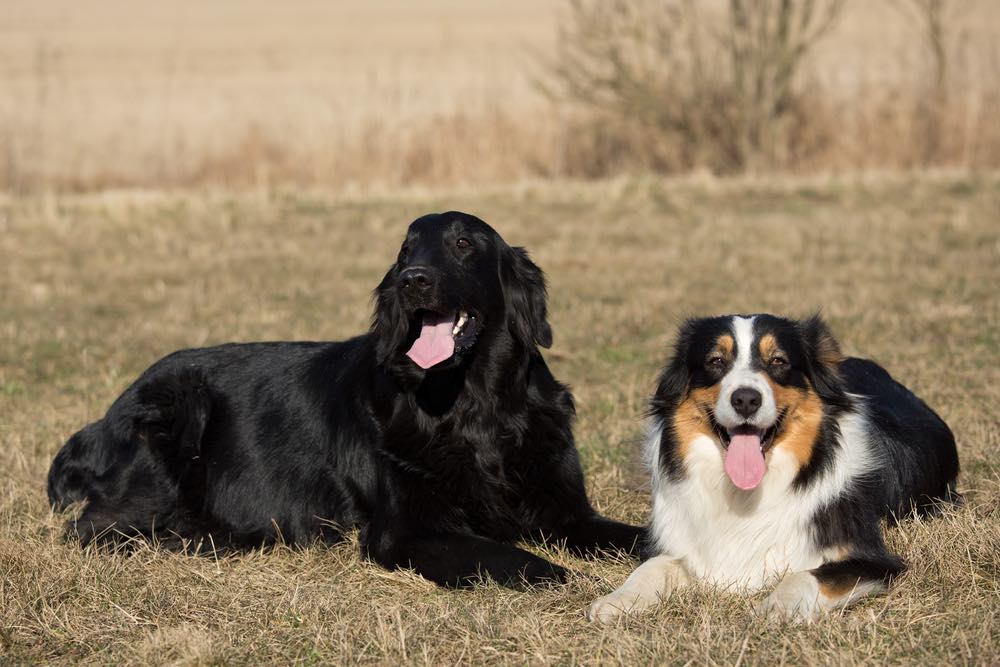
The unique combination of breeds makes for a unique combination of colors, and Australian retrievers are arguably one of the most beautiful breeds around. Their coats are wavy and soft and come in infinite arrangements of brown, black, blonde, and golden.
Final Thoughts on the Australian Retriever
The Australian Retriever is an exceptional family dog. They are fun-loving and loyal, with an energy that will keep you entertained and busy for years. They make ideal working dogs and are perfect for active owners who love to walk or run.
Australian Retrievers are not recommended for owners who are away frequently or have small backyards. They are great with kids, but their boisterous nature can hurt small children, albeit innocently. They are protective of their owners, almost to a fault.
Australian Retrievers love to play, and games involving balls, sticks, and frisbees will keep them entertained for hours. If you have the time and are an active person with a large yard, the Australian Retriever is loyal and protective and makes a remarkable pet.
See Also: 11 Australian Dog Breeds (With Pictures)
Featured Image Credit: Eric Isselee, Shutterstock
Get Hepper In Your Inbox


Pet care tips from our vets and experts, straight to your inbox.
You may opt-out at any time. View our Privacy Policy for more information.

Nicole is a lover of animals of all sizes but is especially fascinated with the feline variety. She’s the proud mom of Baby, a Burmese, and works every day so he can relax in the sunshine or by the fire. She’s always had a cat in her home and has spent countless days with others, observing behaviors and softening up even the grouchiest of the lot. Nicole wants to share her kitty expertise with you so you and your cat can live happy, healthy, and care-free.
Join the conversation
Ask a question, share your story, or send private feedback.