Hepper is reader-supported. When you buy via links on our site, we may earn an affiliate commission at no cost to you. Learn more.
How Long Do Beagles Live? Average Lifespa, Data & Care Guide

In this article
Beagles are easily one of the most popular dog breeds in the world. These adorable dogs were originally bred for hunting small game, but their big personalities and sweet dispositions quickly won them a place in the hearts of the owners. When bringing a Beagle into your home, it is important to know as much about them as possible. This includes their lifespan and things you can do to keep them happy and healthy for as long as possible. Let’s learn more about the Beagle’s average lifespan so you can be better prepared to care for the little hound in your life.

What’s the Average Lifespan of a Beagle?
On average, Beagles live between 12 to 15 years. This makes them one of the hardier dog breeds out there. Add in the fact that they are a smaller breed of dog, which normally tend to outlive large dog breeds, and it’s easy to see why they can be at your side for so many years. While 12 to 15 may be the average lifespan of a Beagle, the longest living dog of this breed lived to the age of 27, nearly 28. It is possible to extend your dog’s lifespan by taking the proper steps to ensure they remain healthy. Let’s learn what you can do to keep your best friend at your side far into their golden years.

Why Do Some Beagles Live Longer Than Others?
1. Nutrition
Quality food is a must if you plan on keeping your Beagle healthy into their senior years. Putting your Beagle on a high-quality diet during their puppy years, and sticking to this quality as they age, will be beneficial to your Beagle’s health. It is also important that you avoid overfeeding your Beagle and causing them to gain too much weight. Beagles are often food motivated and this can cause obesity issues if pet parents aren’t careful
2. Environment and Conditions
A happy, safe home is needed to keep your Beagle happy and healthy. They need room to run and play, without being in danger. You also want to show your Beagle lots of love and attention. Beagles are naturally fun and active. Keeping up with their activity level and engaging them in play is a great way to keep them healthy and their minds sharp no matter their age.

3. Breeding History
Using reputable breeders is important when bringing a Beagle into your family. A reputable breeder cares about their animals and tries to ensure only the healthiest bloodlines. Get to know your breeder. Stop by and see how they are caring for their animals. Ask questions and learn about the bloodline. The more you know, the better prepared you’ll be to care for the pup you decide to bring home.
4. Healthcare
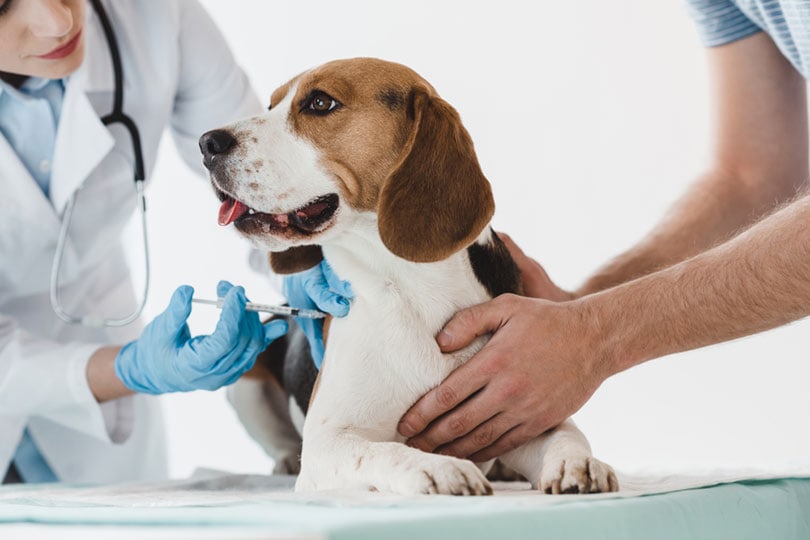
Healthcare is one of the most important aspects of keeping your Beagle healthy far into their senior years. Every dog should visit the veterinarian routinely to ensure they are up on all their necessary vaccinations and not showing signs of serious illness. Healthcare is also in your hands as an owner. It is your responsibility to ensure your Beagle is eating the right diet, getting plenty of exercise, and being cared for emotionally while they are in your care. All these healthcare factors will work together to keep your Beagle with you for as long as possible.

The 4 Life Stages of a Beagle
1. Newborn
Like any dog, Beagles are born to their mother in a litter. When they enter this world they come without the use of their senses and rely on their mothers or their humans for all of their care. During their first few weeks, newborn Beagles will do nothing but eat and sleep. With their senses not developed and their eyes not open, it is hard for them to do much. It is around this time, roughly 3 weeks of age, that a newborn Beagle’s eyes will start to open and they’ll begin to experience more of the world around them.
2. Puppy
After 4 weeks of age, a Beagle puppy will have the use of its senses. During this time they will interact with the other puppies in the litter and begin exploring. You’ll even begin hearing their vocalizations. As the adult in their life, you’ll get to witness the clumsy walking, playing, and curiosity of these cute pups as they quickly begin to grow. Within no time, you’ll see that a puppy has doubled in size since they were born.
As the months go on, you’ll see Beagle pups grow in size while their senses sharpen. Around the time they turn 3 to 4 months of age, their training should begin. This is when they are most responsive to commands and show their eagerness to please their humans. You’ll also begin to notice their personalities beginning to emerge. Most Beagle puppies are naturally curious, mischievous, and active. If not exercised and trained properly, you could have a misbehaving pup on your hands so be prepared to be very hands-on during these growing months.

3. Mature Adult
Beagles are considered adults at around 12 months of age. They are considered fully grown adult dogs at a year and a half. This is where you’ll notice the growing has stopped and they are maintaining a steady weight and size. You’ll also see that your Beagle has outgrown some of the cute quirks of being a pup. This doesn’t change their need to explore and be active, however. Even as an adult dog, you should keep your Beagle well exercised and nourished. This will help keep them active and healthy later in their life.
4. Senior
Not all dogs are considered a senior at the same time. It is their behavior, health, and activity level that most people use to determine this. On average, Beagles are considered senior dogs at around 9 years of age. This is when you may start to notice changes in their hearing, sight, and mobility. They may even have issues eating their dog food due to changes in their oral health. Make sure you take your Beagle to the veterinarian for a geriatric exam so they can better explain the changes you may witness and ensure your Beagle is still in good health.

How To Tell Your Beagle’s Age
There are a couple of ways you can tell the age of a Beagle. One of the most common is looking at the dog’s teeth. Puppy teeth come in around 8 weeks old. Permanent teeth start to appear at around 3 months of age. By the time a dog reaches 7 months old, all its permanent teeth have come in. Over the years, tartar build-up and basic wear and tear will appear on a Beagle’s teeth. This helps people determine just how long the dog has been around.
You can also tell the age of some Beagles by their outward appearance. As a dog ages, its eyes may get a cloudy film. This does not usually happen to younger dogs and is a good sign you’re dealing with a mature adult dog or perhaps a senior. You may also notice that your Beagle’s fur is turning gray in areas. This begins to happen when your Beagle reaches 7 to 10 years of age.

Conclusion
As you can see, Beagles are hardy dogs with a great sense of adventure. While their average lifespan is 12 to 15 years, with a lot of love, great care, and good health your Beagle can be by your side much longer. If you are the pet parent of a Beagle, keep the things discussed here in mind. They may help you spend more years with your beloved best friend while the two of you enjoy the world around you.
Featured Image Credit By: JOSÉ SOMOVILLA, Pixabay
Get Hepper In Your Inbox


Pet care tips from our vets and experts, straight to your inbox.
You may opt-out at any time. View our Privacy Policy for more information.

Melissa was born and raised in the mountains of East Tennessee where she spent her time writing in an old notebook and playing outside with her pets. As an avid animal lover, she has brought many into her home over the years. Currently, she is the mom of 5 fur babies. Her 2 cats, Princess and Pepper are total opposites who demand attention. Her dogs Jazzy, Whitey, and Demon are full of spunk and keep the entire family on their toes.
Beyond life as an animal mom, Melissa is a dedicated wife and mother to 2 children. Writing in her old notebook led her down the path of becoming not only a freelance writer but a published Indie author under the pen name, Rena Marin.
Join the conversation
Ask a question, share your story, or send private feedback.