Hepper is reader-supported. When you buy via links on our site, we may earn an affiliate commission at no cost to you. Learn more.
7 Benefits of Fish Oil for Dogs (Based on Science)


In this article
One supplement that some people swear by is fish oil. Fish oil supposedly contains a ton of beneficial ingredients that help to boost dog health. But is that true? Is fish oil beneficial, or is it an elaborate health scam? It turns out, when you look at the science, there is something to be said for the omega-3 fatty acids found in fish oil. These organic compounds can have many benefits for dogs, and we will explore a few of them here.
Here are nine benefits of giving your dog fish oil based on what science says.

Top 9 Benefits of Fish Oil: Omega-3 Fatty Acids
Your dog ingests multiple types of fatty acids regularly. Common ones are omega-6 fatty acids, which are prominent in vegetable oil and chicken fat. Balancing out the ratio of omega-6 fatty acids with omega-3 fatty acids can help reduce inflammation in your dog’s body.
The primary benefit of fish oil is its abundance of omega-3 fatty acids. Supplementing your dog’s meals with fish oil can ensure that they are getting enough of these important nutrients and have a more balanced ratio of omega-6s to omega-3s.
These are the most common benefits of getting more omega-3 fatty acids and fish oil into your dog’s diet.
1. Helps Puppy Brain Development
Docosahexaenoic acid, or DHA, is an omega-3 fatty acid found in fish oil. It is instrumental in the brain development of young puppies. Studies have shown that puppies that get a steady diet of DHA are more trainable and have sharper cognitive performance than puppies that do not have this type of fortified diet. The American Veterinary Medicine Association presented a study showing that Beagle puppies that had DHA in their diets showed “statistically significantly better results in various learning, visual contrast discrimination, and psycho-motor performance tasks” over the other dogs in the study.

2. Helps Puppy Eye Development
The same kind of fatty acid that helps puppy brain development also helps their eye development. DHA is instrumental in the development of a dog’s retinal structures and plays an essential role in photoreceptor cells, helping puppies acquire visual function. That means that supplementing a puppy’s diet with rich omega-3 fatty acids from fish oil will boost both their brain function and their eyesight. This is a win-win for young dogs looking to become the best adults they can be.
3. Slows Canine Cognitive Dysfunction
Fish oil not only has benefits for young dogs and puppies. The same types of benefits can also be seen in aging dogs. Giving your dog a boost of DHA omega-3 fatty acids from fish oil can help slow the cognitive decline often seen in aging dogs. Affected dogs cannot be cured of this progressive degenerative issue, but they can still benefit from taking a fish oil supplement as part of their management plan to slow the decline of their brain’s functionality.

4. Slows Development of Chronic Kidney Disease
Similar to canine cognitive dysfunction, omega-3 fatty acids from fish oil can help slow the development of chronic kidney disease. Eicosapentaenoic acid (EPA) is an omega-3 fatty acid that is valuable for its anti-inflammatory properties. One of the clinical benefits observed in dogs with chronic kidney disease after fish oil supplementation was reduced protein in their urine. Studies conclude that omega-3 fatty acids protect the kidneys. Again, a simple fish oil supplement cannot reverse or stop chronic kidney disease completely, but it can slow it down.
5. Helps With Canine Arthritis
Fish oil is one of the primary ingredients in joint health supplements due to EPA's anti-inflammatory properties. Adding fish oil to an arthritic dog’s diet will help reduce the need for anti-inflammatory drugs, as it can protect the joints from inflammation and subsequent pain and damage caused by the condition.

6. Eliminates Free Radicals in the Body
Free radicals are unstable atoms that cause damage to cellular structures and their DNA, often resulting in disease. Antioxidants help eliminate free radicals from the body, protecting it against damage and disease development. Fish oil has antioxidant properties and can help protect your dog’s body from free radical damage, which will have many long-term benefits for your dog’s overall health. Paul Axelsen, MD, a professor in the departments of Pharmacology, Medicine, and Biochemistry & Biophysics at the University of Pennsylvania, says, “Omega-3s may be a sponge for free radicals, preventing them from attacking omega-6s, which are essential for life.”
7. Promotes A Shiny Glossy Coat
If you notice that your dog’s coat is getting faded, coarse, or dull, adding some fish oil to their diet might be able to help. Studies have shown that fish oils can help boost the health of your dog’s coat, turning it from dull and dry to shiny in a matter of days. This is once again thanks to the fatty acids found in the fish oil. It nourishes your dog’s skin and fur from the inside out.

8. Boosts Skin Health
Fur is not the only thing on your dog that will benefit from fish oil. Fish oil has also been shown to help with dry, itchy, and flaky skin. A fish oil supplement can help the skin remain moist and healthy. If you notice that your dog has itchy or dry skin, then some fish oil might be able to reduce some of these issues and return the dog’s skin to a more healthy and natural state.
9. Keeps the Heart Pumping
Fish oil has been shown to help with certain heart conditions. Omega-3 fatty acids might have positive effects on the heart’s muscle energy metabolism, the function of blood vessels and their regulation of the blood’s pressure, and the heart’s rate and immune function. Giving fish oil to your dog, especially as they age, can help keep their heart healthy and pumping.

Different Types of Fish Oil
Don’t Forget to Store Your Fish Oil Properly
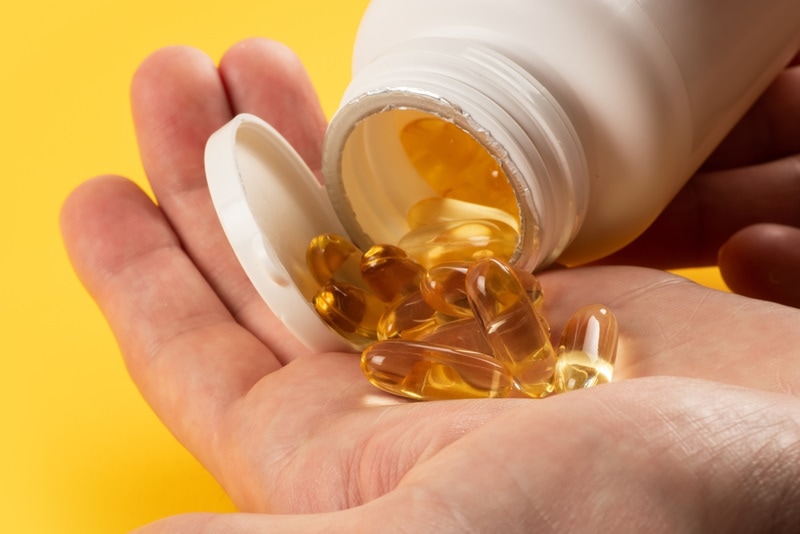
Some people don’t like using supplements like fish oil because they say that it just doesn’t work. However, fish oil needs to be stored properly. It is very sensitive to heat and light. If you keep your fish oil on a shelf that gets a lot of light or if you store it in a place like a garage with large temperature swings, you can damage the efficacy of the fish oil. Fish oil needs to be stored in a dark-colored bottle or container, preferably in the refrigerator. If you do not store your fish oil properly, it might oxidize and become rancid, losing all its healing properties.

Conclusion
Fish oil can have many benefits for dogs. These are primarily derived from the high levels of DHA and EPA omega-3 fatty acids found in fish oil. Dogs do not produce omega-3 fatty acids on their own and must ingest them from their diet. Fish oil provides plenty of omega-3 fatty acids that help fuel your dog’s health from the skin to the heart and the joints. Be sure to do some research on individual fish oil supplements before settling on one for your particular dog.
Sources
Featured Image Credit: sasirin pamai, Shutterstock
Get Hepper In Your Inbox


Pet care tips from our vets and experts, straight to your inbox.
You may opt-out at any time. View our Privacy Policy for more information.
Paola Cuevas is a veterinarian and animal behaviorist, with over 18 years of experience working with a variety of species. Her passion is animal welfare and focuses on the importance of preventive medicine. Paola has skills in the fields of nutrition, microscopy, clinical pathology, diagnostic imaging, and endoscopy as well as extensive experience in animal training through positive reinforcement. As our in-house veterinarian, Paola is very happy to share her knowledge and experience with our readers and hopes to be helpful with any issue presented by your non-human family members.
Dr. Paola is our Senior In-House Veterinarian at Hepper, and she loves sharing her knowledge and experience with our readers. Paola hopes to provide helpful information for any issue presented by your fur babies.
Her passion is animal welfare and she focuses on the importance of preventive medicine.
Education
Paola graduated from the University of Guadalajara, Mexico.
Experience
Dr. Cuevas has over 18 years of veterinary and animal behaviorist experience and has worked with a variety of species, from companion animals to exotics. She has skills in the fields of nutrition, microscopy, clinical pathology, diagnostic imaging, and endoscopy as well as extensive experience in positive reinforcement animal training.
Things You Didn't Know About Dr. Paola:
As a student, Paola received an outstanding student scholarship. She had the opportunity to travel to Canada and learn about aquaculture diagnostics and pathology.
Paola and another colleague trained gentoo penguins to recognize shapes and colors and their project achieved an international first-place award in research.
Paola has trained several species of animals to voluntarily accept medical procedures such as ultrasound examinations, X-rays, and the collection of biological samples with the goal of improving their healthcare without additional stressors or the need for physical restrain.
Join the conversation
Ask a question, share your story, or send private feedback.