Hepper is reader-supported. When you buy via links on our site, we may earn an affiliate commission at no cost to you. Learn more.
Blue Mystery Snail: Care Guide + Where to Buy (Pomacea Diffusa) (with Pictures)
In this article
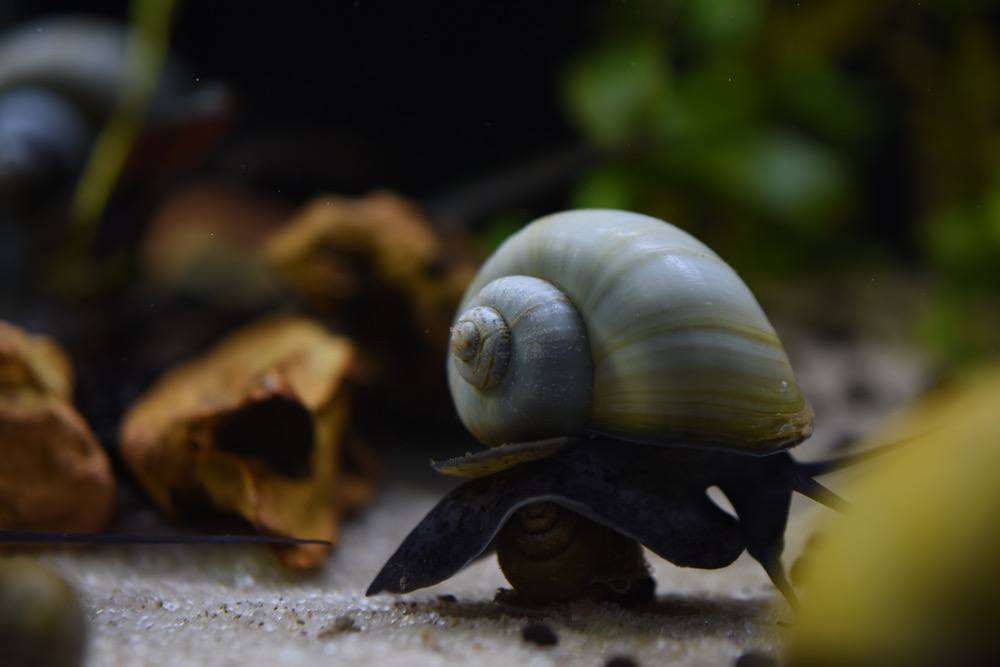
Blue mystery snails (sometimes referred to as apple snails, scientifically called Pomacea diffusa) have a dark body with orange freckles and a blue shell and are one of the more exotic color variations of mysteries.
Fact: The shell of the blue mystery snail is actually white, not blue.
They get their blue color from their dark body showing through. Very thick shells will sometimes appear almost entirely white.
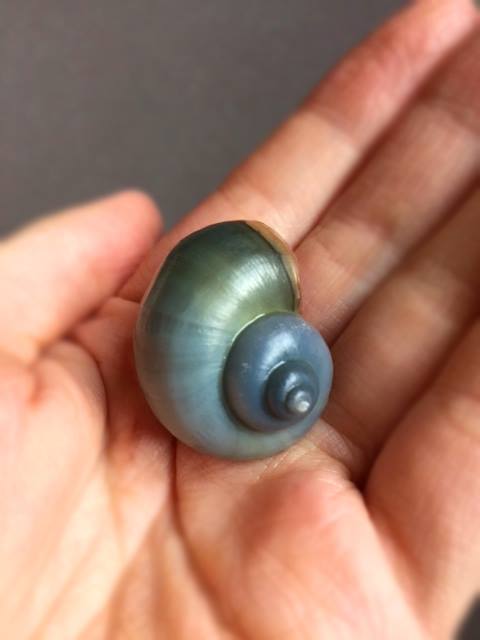
High-quality blues will have smooth, well-developed shells, opalescence, and vivid blue color. The blue tends to look more vivid when you hold them in your hand instead of under the water.
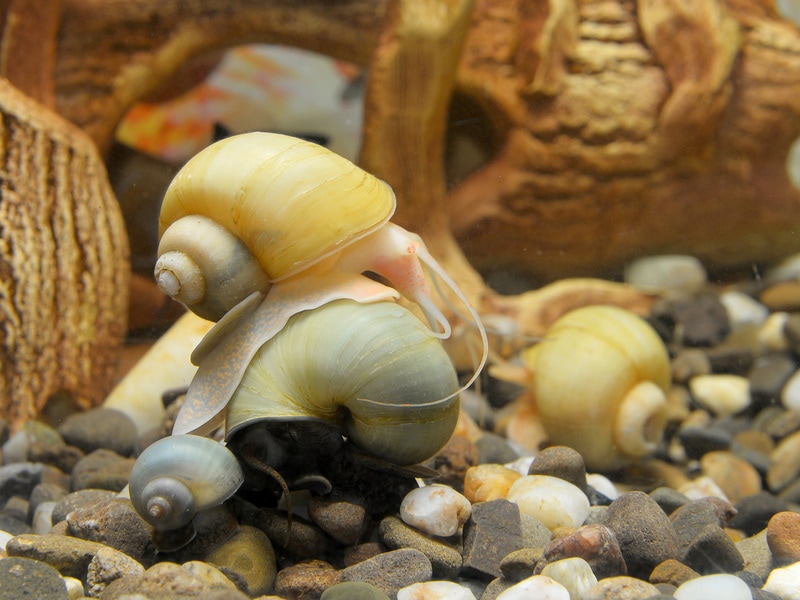
Mysteries are one of the largest aquarium snails and can grow to be up to the size of a golf ball in the right conditions!
So, where do you buy these blue beauties?
You can get them here from Aquatic Arts. They are very easy to care for, probably one of the easiest aquatic pets you can keep!

Tips on Caring for Blue Mystery Snails
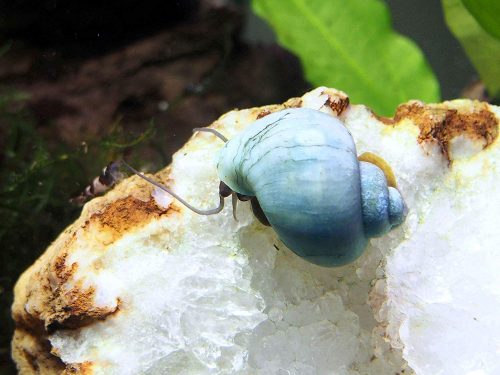
Mystery snails are surprisingly hardy and do not need an advanced hobbyist to keep them alive and well.
However, there are a few things that are important for them to thrive:
Water Conditions
Mystery snails require good water conditions to thrive. They are technically tropical pets and will be most active in a range of 70–80 degrees F. They will grow faster in these temperatures and breed readily.
Soft water can cause problems for their shells, so it is important to make sure their pH stays between 7–8. If you don't have harder water, a commercial buffer or homemade ones such as crushed coral or limestone is a good idea
Dirty water or any nitrogen cycle problems such as high ammonia or nitrites can harm snails.
Copper can harm or kill mystery snails, so it is very important to make sure there is none in your water. You can use a heavy metal remover like this one I use to ensure your water is safe for them.
Many fish medications contain copper, so be sure not to expose them to those.
Diet: The Two Main Requirements
1. Calcium
Calcium is an essential part of the diet of blue mystery snails, which are invertebrates. Their skeletons are on their backs.
Without enough calcium, the snails are not able to build the layers of their shells as strong as they need to.
Most shell problems arise from a lack of calcium. This can include anything from fissures, pits, or rough patches and can do much damage if not addressed quickly.
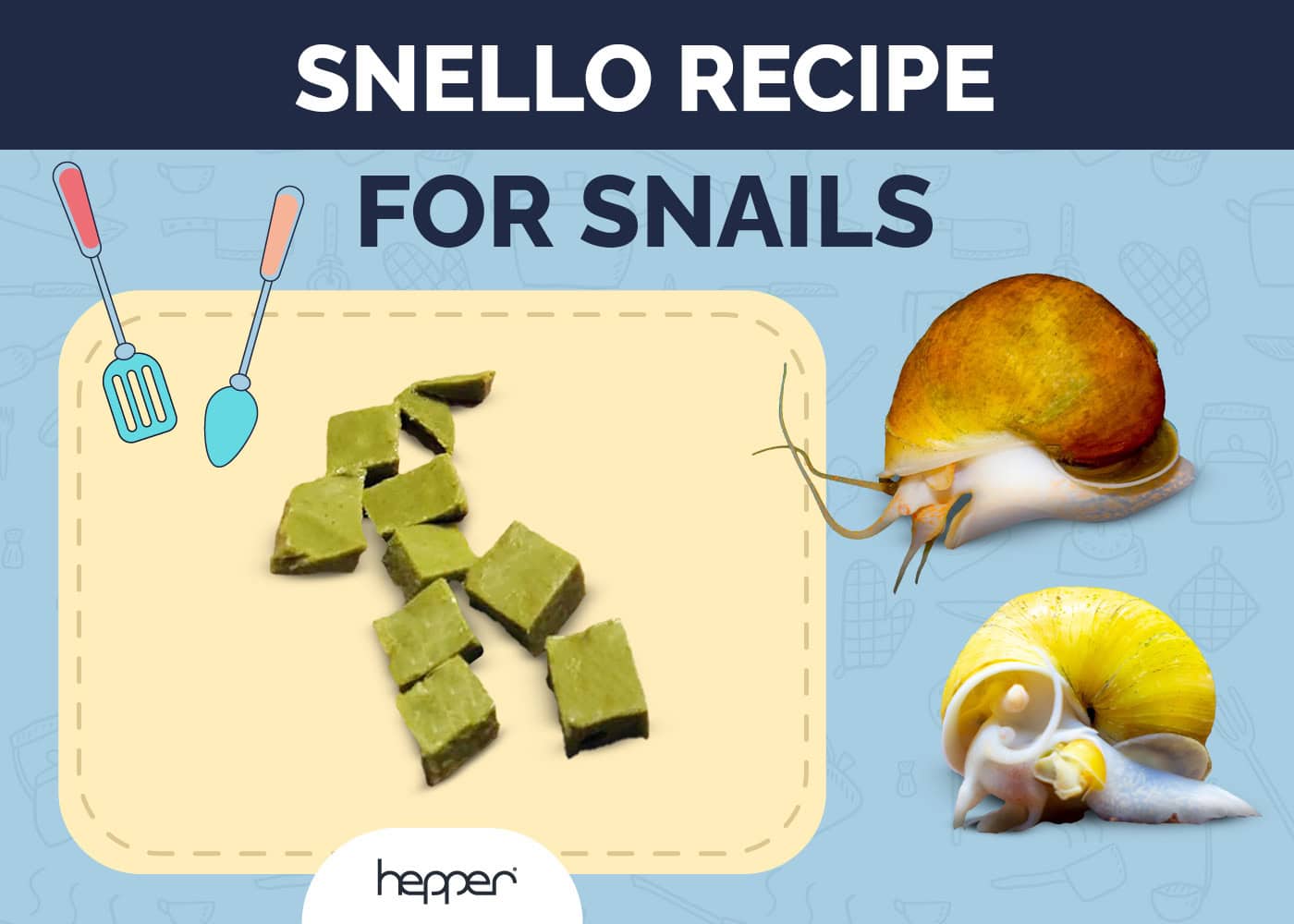
A good quality calcium supplement or calcium-rich shrimp or snail food is essential. You can blend calcium carbonate powder into gel fish food or snello (6,000 mg per cup, but this can be messy), or purchase calcium sticks for a premade solution (I have used this kind to achieve very beautiful shells, below is pictured one of my snails.)
Unless you provide enough supplemental calcium, the shells of your snails will become very fragile.
This means problems with pits and depressions or even cracks.
But I'm going to spill a little secret for you: Achieving beautiful coloration like that pictured above is NOT genetics. It's 99.9% husbandry.
The key is to grow your snail quickly at warmer temperatures (this snail was grown in water from 75–80 F) with strong calcium-based food, so it has a smooth shell.
So you can start with a young snail that maybe has some shell issues, but once it keeps growing, the new growth will come in beautifully if you do this right.
Adding calcium to the water does not cut it. They need to be consuming it through their food.
Also, you will want to make sure your water is not soft, as soft water will greatly damage your shell development.
They prefer a pH of 7 + and GH and KH of 100 and up.
2. Fresh Veggies
It's also very important to offer a variety of fresh veggies, preferably blanched, but they can eat them raw.
They must get fed by you; it's not enough to let them scavenge what they can find in the aquarium.
Calcium-rich veggies such as spinach and parsley are great choices, and they also love:
Green beans
Squash
Zucchini
Cucumber
Kale
Carrots
Broccoli
... and pretty much any veggie in your fridge.
By ensuring your snails have enough to eat, they will grow properly, and their shells will remain strong.

Advantages of Apple Snails
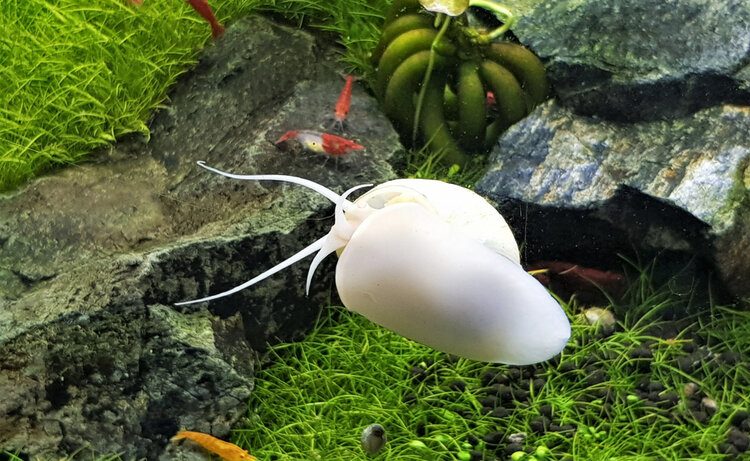
Mystery/apple snails will do an excellent job of cleaning the aquarium glass for you, as they love all kinds of algae.
You will be able to see where they've been working by the "munching tracks" they leave in their wake.
Along with keeping the algae clean, they are also great at discovering and devouring uneaten food in an aquarium, playing a very useful role in keeping the waste broken down.
Mystery snails are peaceful snails and play well with others of just about every kind of freshwater fish or invertebrate. When kept with nippier fish, they often learn to keep their tentacles in as they swim.
They are fun to watch and seem to have quite a bit of "personality." They are most active in the late evening or nighttime.
Reproduction
It takes a male and a female mystery snail to reproduce (they are not a-sexual).
Females can store sperm for several months after mating and lay the eggs later.
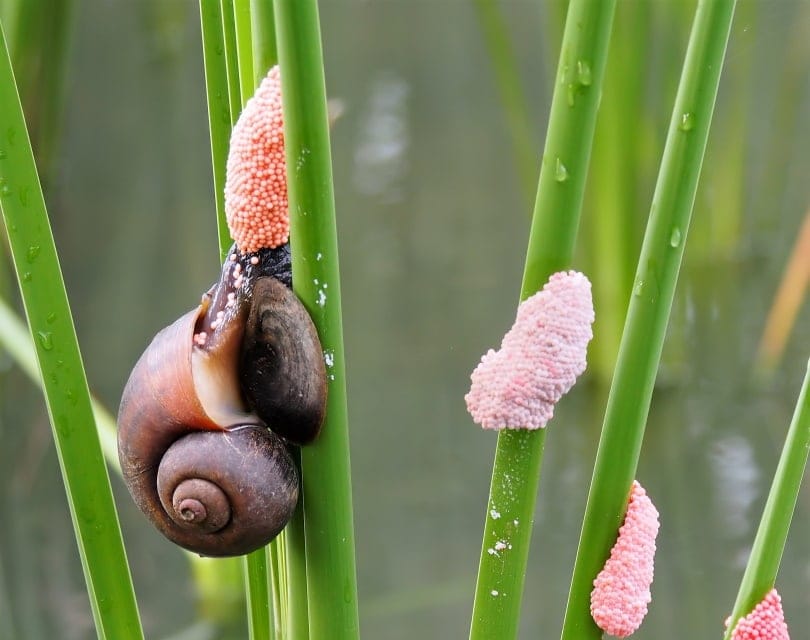
They lay pinkish-orange sacks of eggs above the water line, which can be easily removed and disposed of if the thought of raising baby snails doesn't appeal to you.
Otherwise, you can incubate the eggs and hatch up to a hundred mystery snails out of just one clutch!
If you want to breed them, you'll want to get at least 4–6 to ensure you have both males and females.
Mystery snails are a lot of fun to have around, and the blue ones are my favorite.

Final Thoughts
Have you ever owned a blue mystery snail?
I can say that they are (in my opinion) one of the most beautiful aquatic species you can keep in your tank.
Plus...they eat algae!
You'll also notice they have fun personalities.
Let me know your experiences in the comments below!
Related Reads:
Featured Image Credit: MHawkinson, Shutterstock
Get Hepper In Your Inbox


Pet care tips from our vets and experts, straight to your inbox.
You may opt-out at any time. View our Privacy Policy for more information.

Lindsey discovered her passion for fish keeping after a junior high school field trip to the Shedd Aquarium in Chicago. Prior to becoming Editor-in-Chief of It's a Fish Thing, Lindsey studied marine biology at the University of California-Santa Cruz. She loves goldfish, tetras, and mystery snails, and recently began experimenting with a saltwater aquarium.
Join the conversation
Ask a question, share your story, or send private feedback.