Hepper is reader-supported. When you buy via links on our site, we may earn an affiliate commission at no cost to you. Learn more.
Can Dogs Eat Spam? Is Spam Safe for Dogs to Eat? Vet-Verified Facts
In this article
Most dog owners know that dogs need to eat a diet that’s high in protein and moderate in fat. This is why dog foods generally list a meat product as the first ingredient. Based on this knowledge, you might assume that it’s safe to feed your dog Spam since it’s mostly made up of meat.
While no one could fault you for making such a seemingly logical assumption, the truth is you should never feed your dog Spam!
If this seems a bit confusing to you, then you’re not alone. It makes sense that Spam would be safe for dogs, so why isn’t it? Let’s take a closer look at this canned food and determine what detrimental effects it has on our furry companions.

What Is Spam?
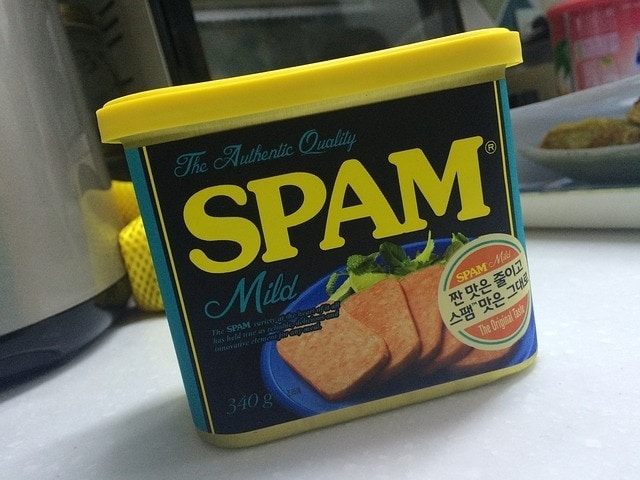
Spam is a canned meat product that was widely used during WWII when it gained worldwide popularity. It’s got a long shelf life since it’s canned, which is what made it a great food during wartime. Today, Spam comes in 15 different flavors ranging from original to teriyaki. It’s sold all over the world and is especially loved in Hawaii.
You might be wondering just what this mystery meat is made of. It’s mostly pork, salt, and potato starch. In total, there are only six ingredients in Spam. Even for a dog on a limited-ingredient diet, that sounds like it should fit.
So, what gives?
Is Spam Safe for Dogs?
Despite being made up of just six ingredients, Spam is not safe for your dog. You should never feed your dog Spam because the risks are just too great.
However, Spam doesn’t contain any ingredients that are toxic to dogs. While this may seem like a contradiction, it’s not.
If you feed your dog Spam, it can cause dehydration, vomiting, diarrhea, and salt poisoning and even put them at risk of developing pancreatitis. But if there’s nothing toxic to dogs in Spam, then how can it be so detrimental to their health?
Why Shouldn’t You Feed Your Dog Spam?
While none of the ingredients in Spam are technically toxic for your canine, they’re certainly not healthy. But where the real issue comes in is when we start talking about the amounts of each item that are present in Spam. Some things are safe in low doses but can become a danger when the doses increase, such as several of the following items you’ll find in Spam.
Excessive Sodium Content
It’s not surprising that Spam is very high in sodium. After all, it is a canned meat that can safely be stored for up to 5 years in proper conditions. But just how much sodium is in Spam?
A single serving of Spam is 2 ounces. That 2-ounce serving contains 790 milligrams of sodium. But there are six servings in a can of Spam, which means there are 4,740 milligrams of sodium in a can of Spam.
On the one hand, sodium is a vital nutrient that your dog needs to consume to remain healthy. On the other hand, it will also dehydrate your dog if consumed in large quantities and can even lead to sodium poisoning. Two to 3 grams of sodium per kilogram of body weight in your dog are enough to create a toxicosis. If you have a toy-sized dog and they eat a can of Spam, they are at risk.

High Levels of Fat
With 16 grams of fat in every 2-ounce serving, a single can of Spam contains 96 total grams of fat, including 36 grams of saturated fat.
While dogs need to consume fats and they’re not inherently bad for them to eat, excessive amounts of fat in the diet can cause some adverse effects. For instance, weight gain can occur much quicker on a high-fat diet, which can eventually lead to obesity. Worse, high-fat diets and similar dietary indiscretions have been linked to pancreatitis in dogs.
Nitrates and Preservatives
As a general rule of thumb, you should always avoid feeding your dog foods that contain nitrates and preservatives. Consuming too many of these can make you and your dog sick, as these compounds have carcinogenic properties.

Flavorings
Regular Spam was already bad enough for our dogs, but today, Spam comes in 15 flavors. Flavors often mean chemicals, and some of these flavorings can be toxic for our pooches. For instance, consider the garlic-flavored Spam. Garlic is toxic for dogs, and the flavoring in this Spam can be just as toxic, likely causing serious adverse reactions in the dogs who eat it.

Dangers of Feeding Spam to Your Dog
There are plenty of components in Spam that can cause some undesirable health effects in our dogs. But what exactly can happen to our dogs if they eat these unhealthy additives?
Pancreatitis
Pancreatitis is a disease that affects the pancreas. The pancreas swells up as the digestive enzymes destroy the pancreatic tissue. This happens as a result of pancreatic damage or a blockage of the ducts that results in the enzymes being stuck with no way to evacuate.
So, how does Spam cause pancreatitis? One of the prime causes of pancreatitis is dietary indiscretions and fatty foods. Spam is incredibly high in fat, so feeding it to your dog, especially regularly, can definitely raise the risk of pancreatitis. Another risk factor for pancreatitis is obesity. Naturally, the high fat content and high overall calories of Spam make it a prime contributor to obesity. This makes Spam a pancreatitis double whammy since it can increase your dog’s risk of pancreatitis from two different factors.

Obesity
The high calories and fat levels in Spam make it a concern for contributing to obesity. This is especially true with small dogs or dogs that aren’t naturally very active.
Dehydration
Excessive sodium intake can quickly and easily cause dehydration in your dog. The high levels of sodium present in Spam make it a prime candidate for causing dehydration. This can result in reduced energy levels, thick and sticky saliva, vomiting, diarrhea, and more.

Salt Poisoning
Spam is very high in sodium and can put a small dog at risk of salt poisoning. It can cause weakness, diarrhea, muscle tremors, and seizures.
Alternatives to Spam
If you still want to share some meaty goodness with your dog, there are plenty of alternatives to spam.
You could purchase some dog-specific healthy meat treats, such as the True Chews Premium Jerky Cuts. They’re made with real meat but lack the unsafe additives that are found in Spam.
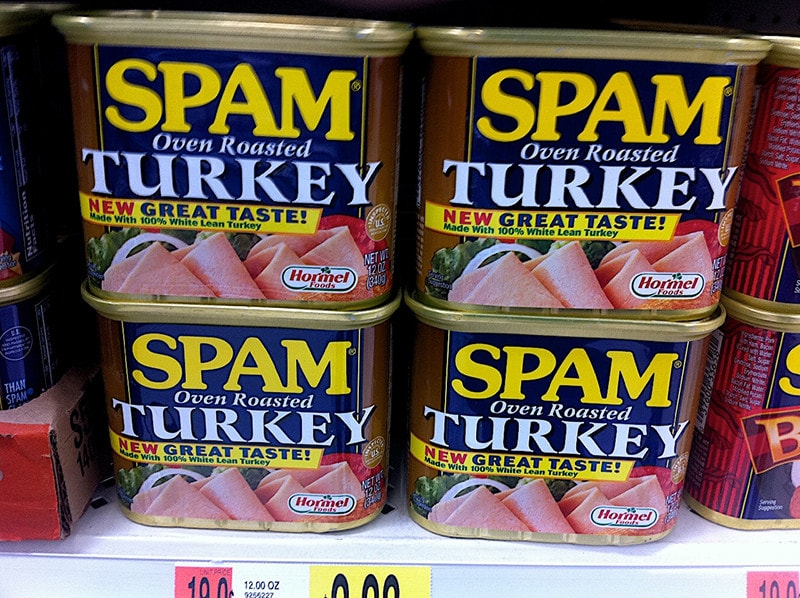
Alternatively, you can cook up some boneless chicken or turkey and cut it into chunks for your dog. They’ll love it, and you’ll be offering them some high-quality nutrition packed with healthy protein and free of detrimental additives. Just make sure not to feed your dog pre-packaged lunch meats, as these are still packed with fat, preservatives, and sodium like Spam.
Final Thoughts: Can Dogs Eat Spam?
We love our canine companions and it is only human nature to want to share our food with them. Spam is an inexpensive meat treat that many people love. On the surface, it seems like a great choice for dogs since it’s mostly made of meat.
But the hidden sodium and high levels of fat are detrimental to our dogs’ health. For these reasons, it’s best to avoid feeding your dog Spam altogether and opt for a healthier treat like dog jerky or some home-cooked chicken breast instead.
See also:
Featured Image Credits - Left: KA_Richer5171321, Shutterstock Right: photosync, Shutterstock
Get Hepper In Your Inbox


Pet care tips from our vets and experts, straight to your inbox.
You may opt-out at any time. View our Privacy Policy for more information.

Nicole is a lover of animals of all sizes but is especially fascinated with the feline variety. She’s the proud mom of Baby, a Burmese, and works every day so he can relax in the sunshine or by the fire. She’s always had a cat in her home and has spent countless days with others, observing behaviors and softening up even the grouchiest of the lot. Nicole wants to share her kitty expertise with you so you and your cat can live happy, healthy, and care-free.
Join the conversation
Ask a question, share your story, or send private feedback.