Hepper is reader-supported. When you buy via links on our site, we may earn an affiliate commission at no cost to you. Learn more.
Can Hamsters Eat Mealworms? Vet Approved Facts & Feeding Tips


In this article
You might think little about what hamsters can eat. After all, you can grab a commercial bag of hamster food, and no work is required. But your hamster can benefit from various fresh foods as well, including some insects.
Mealworms are a great source of protein for your hamster, provided they are given in moderation. Like anything else, you can have too much of a good thing. However, an occasional mealworm offers your fuzzy cage dwellers tons of benefits. Let's explore this further.

Hamsters Can Have Mealworms
Mealworms are the larval stage of the Tenebrio Molitor Beetle and they are safe for hamsters to eat. In fact, your hamster wouldn’t hesitate to snatch up one in the wild. Mealworms provide valuable vitamins, minerals, and protein for your little hammy. If you are just now hearing about people offering this snack to their hamsters, you'll be pleased to know that it's actually quite popular!
While they're not necessarily marketed directly for hamsters, many hamster owners use mealworms to enhance their diet's protein content.
Hamsters are omnivorous creatures. They very much enjoy fresh veggies, fruits, seeds, grains, and insects. A hamster's pellet-based diet should contain between 15-20% protein. If you still need to add some protein from insect and animal sources, mealworms more than provide this dietary element for hamsters.
Health Benefits of Mealworms for Hamsters
Health benefits are abundant to hamsters just from adding a few mealworms into their diet.
Here is a quick breakdown of the vitamins and minerals you can expect in mealworms.
Types of Mealworms for Hamsters
Your hamster can eat mealworms in three different ways:
Live
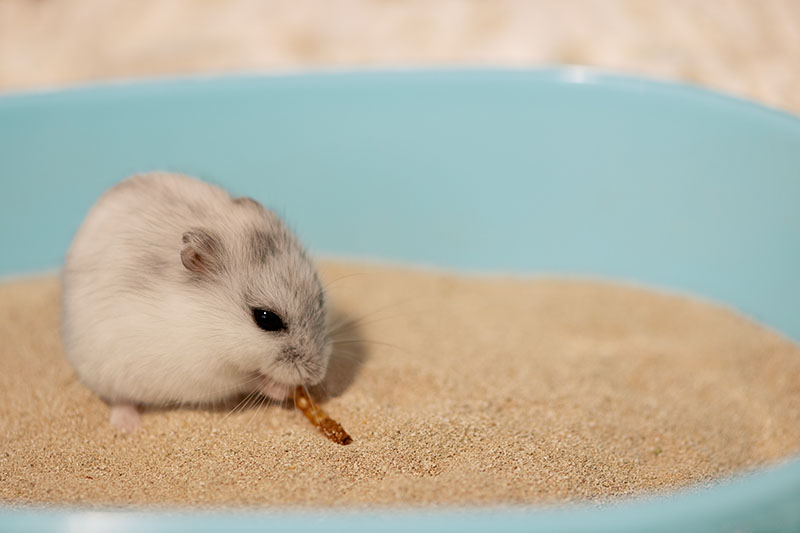
That's right! Your hamster can eat mealworms that are still wiggling around. Your hamster will probably not hesitate to jump in and score one of these tasty insects. Live mealworms offer your hamster two main benefits; the nutrients they contain and habitat enrichment.
If you choose to feed your hamster live mealworms, you should always crush the head first, period. Even though that might sound a little morbid, it keeps your hamster safe by ensuring they don't get bitten.
Mealworms don't bite often but have very powerful pincers in the front. If your hamster stores the mealworm away in its cheek, it can cause the mealworm to bite out of panic. You wouldn't want them to get any sort of pouch infection.
So it's always best to be safe rather than sorry and do the deed before your hamster gets a hold of them.
Dried
Dried mealworms have been completely dehydrated and are crunchy and crispy. It goes without saying that these mealworms have long since died before serving. So if you'd like to offer them a crispy, crunchy treat, you can give them in this form, plus they stay good a lot longer!
Rehydrated
Rehydrated mealworms are those that have been dried, processed, and then reintroduced to water. This allows the mealworm to puff back up and soften for a more savory feeding experience. Rehydrating a mealworm restores their ability to provide your hamster with hydration and it is also thought to alter the fat content of the dried mealworm.
If you find that your hamster isn't really attracted to the dehydrated variety, adding a little water can make it more appetizing for them.
How Many Mealworms Should You Feed Your Hamster?
A lot of different factors come into the total amount you will want to feed your hamster. For example, a small dwarf hamster will eat less than a large teddy bear hamster. On average, hamsters eat approximately 12 grams of food daily and usually consume the majority of this at night.
However, some say not to exceed a certain amount daily, while others free-feed their hamsters as necessary. As long as your hamster is getting its balanced pellet-based diet and a small quantity of varied vegetables, fruits, and the occasional mealworm, you won’t go too far wrong. If you're feeding your hamster too much, you might notice that they are putting on weight fairly rapidly. If you are unsure if your hamster is too thin or too fat, go for a check-up at the vet.
If your hamster is gaining weight, reduce the number of mealworms you're feeding them to see if their weight gain improves.

Where to Buy Mealworms for Hamsters
You can get lucky and find mealworms almost everywhere you go!
Pet Shops
Pet shops have a variety of mealworm choices. This is the spot you'll want to visit if you prefer live mealworms. Keep in mind they will also have other valuable insects for your hamster. Take your pick.
Online
Online sites will have a plethora of options. You can go to a site that specializes in breeding and selling different types of mealworms along with other insects. Or, you can choose the dried variety from several online retailers.
Department Stores
Many department and feed stores will offer dried mealworms. You can typically find these products in the bird food or outdoor section.
Breeding Mealworms
Buying mealworms can get expensive, especially if you are getting the live variety. To combat the recurring cost; you could always try your hand at breeding mealworms. This is a relatively simple process.
All you really need is a container and the right environment to multiply these critters quickly. You can look up plenty of online tutorials about keeping them properly.
While it saves you a couple of dollars, keeping them may not be worth the hassle for hamster owners, because hamsters should only be eating a few mealworms a week. You’ll only need a small packet of mealworms a month for one hamster. Of course, if you also keep chickens and feed the garden birds, you’ll need a lot more!
Other Insects for Hamsters
Mealworms aren't the only option you have when choosing a snack for your hamster. Other Insects are just as healthy for these rodents. Here are a few options:
Crickets
Crickets are another great source of protein for your hamster. They're nutritious and gut-loaded (fed with nutritious food before feeding to your pet), and they're very easy to find. You can get them in bulk or breed them yourself.
Earthworms
That's right. Hamsters will eat regular old earthworms. These slimy creatures are both appetizing and nutritionally friendly for hamsters. Always ensure these are bred commercially rather than taken from your yard to avoid introducing contaminants e.g. pesticides or bacteria to your hamster’s enclosure.
Grasshoppers
Grasshoppers are a hardy snack for your hamster. They are tougher in texture, playing a beneficial role in dental health. They also offer a bounty of nutrients. Bear in mind the size of your hamster and the size of a grasshopper. They are unlikely to be a good option for a dwarf hamster for example.
Waxworms
Waxworms are very similar to mealworms. This is a great worm to add to your hamster's diet as they contain a high quantity of calcium. However, these can quickly cause weight gain, so always offer them in moderation.
Bug Blends
Bug blends are made of crushed bugs you can buy for your hamster specifically. They take the nutrients from several different types of insects and combine them into one delicious snack. These blends are dehydrated, and you can rehydrate at will.
Final Thoughts
So now you know that mealworms are very nutritious, not just for reptiles and birds, but for hamsters too! You can offer live, dehydrated, or rehydrated varieties, whichever is easier and more convenient. You can also breed your mealworms at home to have a constant supply for your furry friend. Always remember that moderation is key, so insects should be given sparingly to your hamster to help keep them interested and to give them a protein boost.
See Also:
Can Hamsters Eat Dog Food? Vet Reviewed Facts & Health Concerns
Can Hamsters Eat Pancakes? Vet-Reviewed Facts & Safety Guide
Sources
Featured Image Credit: ivabalk, Pixabay
Get Hepper In Your Inbox


Pet care tips from our vets and experts, straight to your inbox.
You may opt-out at any time. View our Privacy Policy for more information.
Ashley Bates, a freelance writer with a passion for pets, is currently studying animal therapy. She is a mother to four children and 23 pets, both furry and feathery. Ashley actively volunteers at local shelters, advocates for animal welfare, and rescues animals in distress. Her mission is to promote awareness, education, and entertainment about pets to help prevent animal homelessness. She specializes in the care and well-being of dogs and cats.
Join the conversation
Ask a question, share your story, or send private feedback.