Hepper is reader-supported. When you buy via links on our site, we may earn an affiliate commission at no cost to you. Learn more.
Chinchilla British Shorthair Cat: Facts, Origin & History (With Pictures)
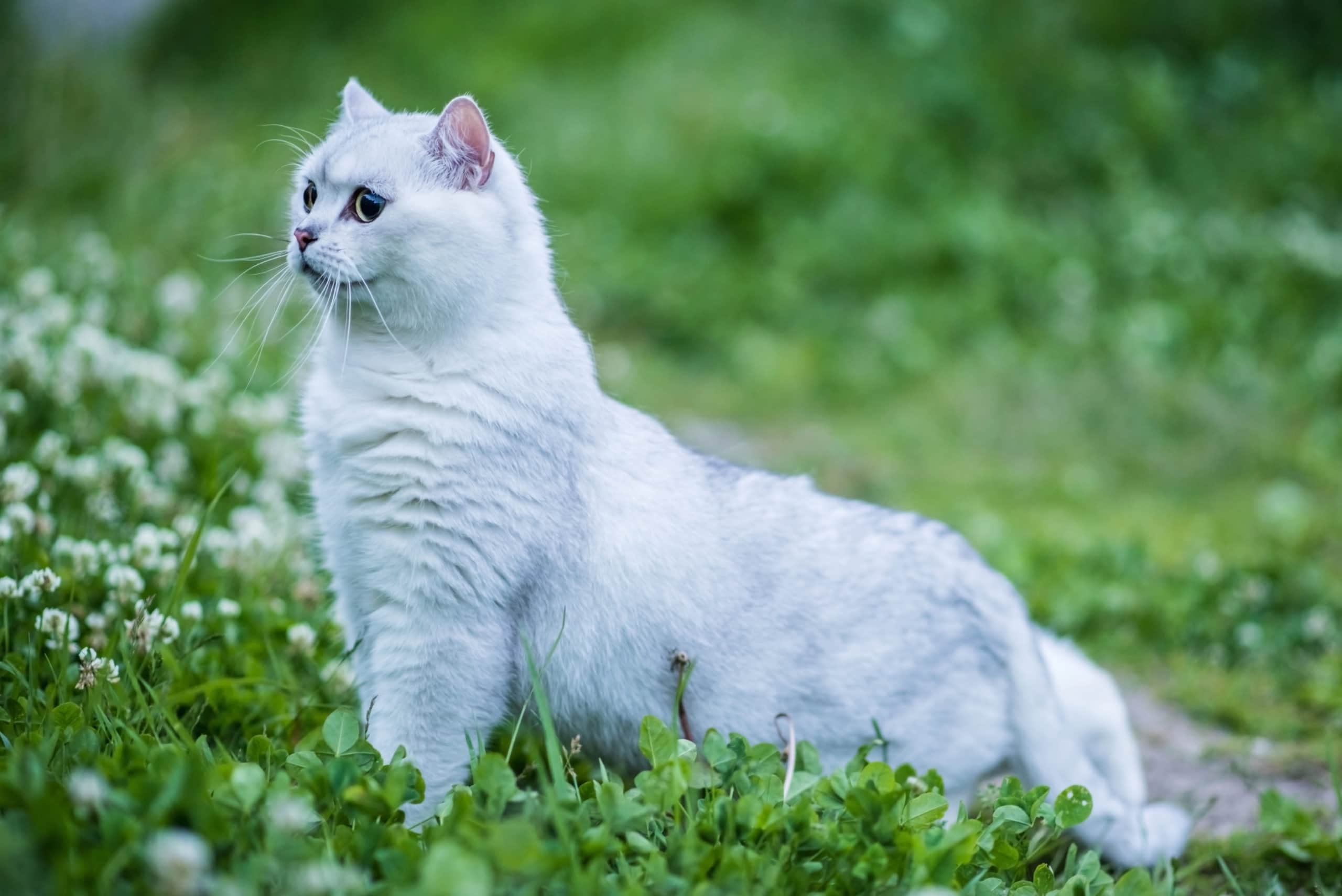
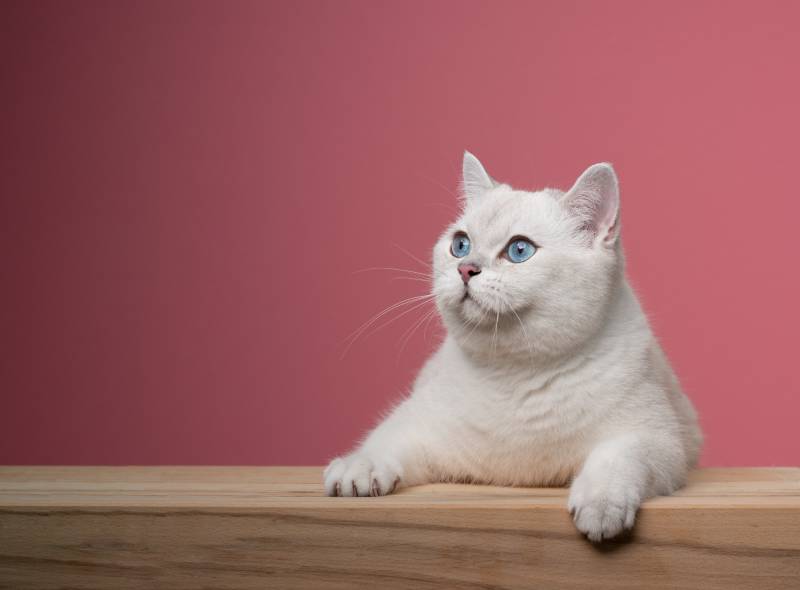
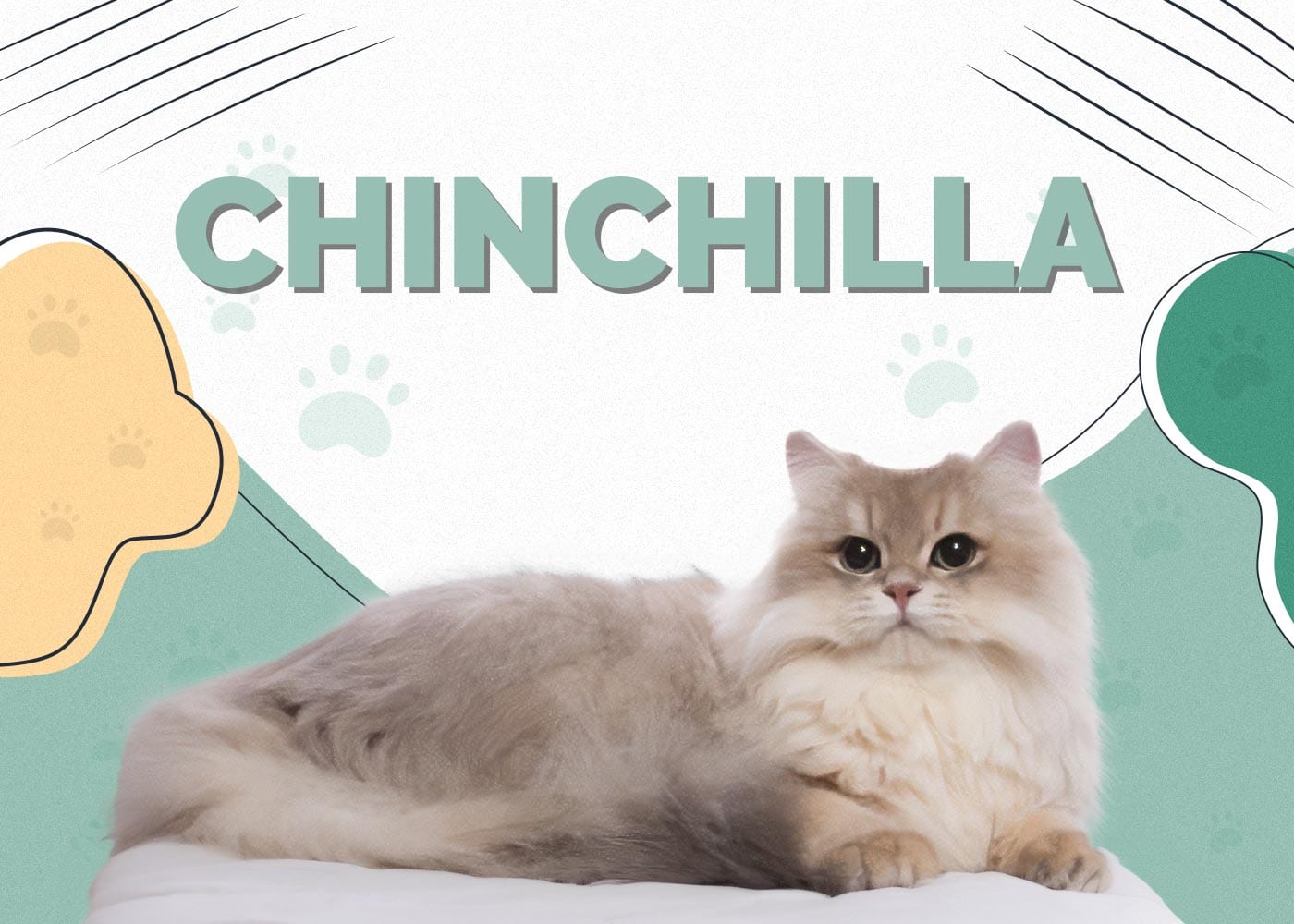
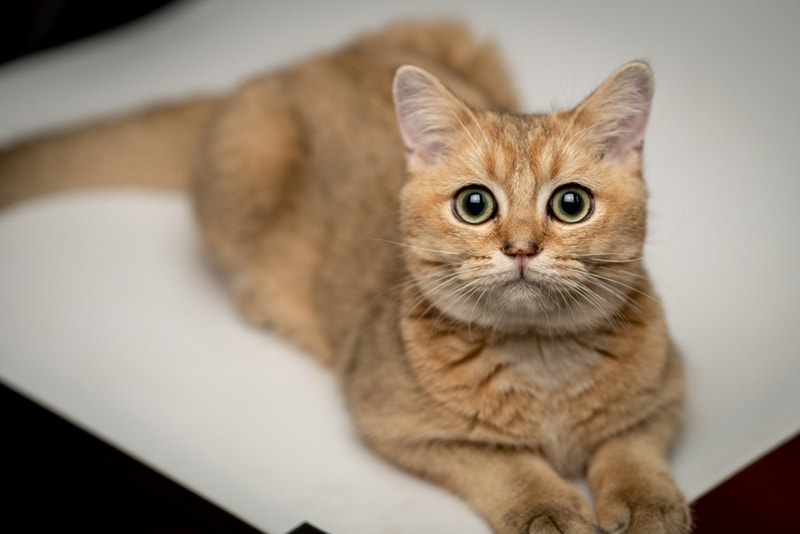
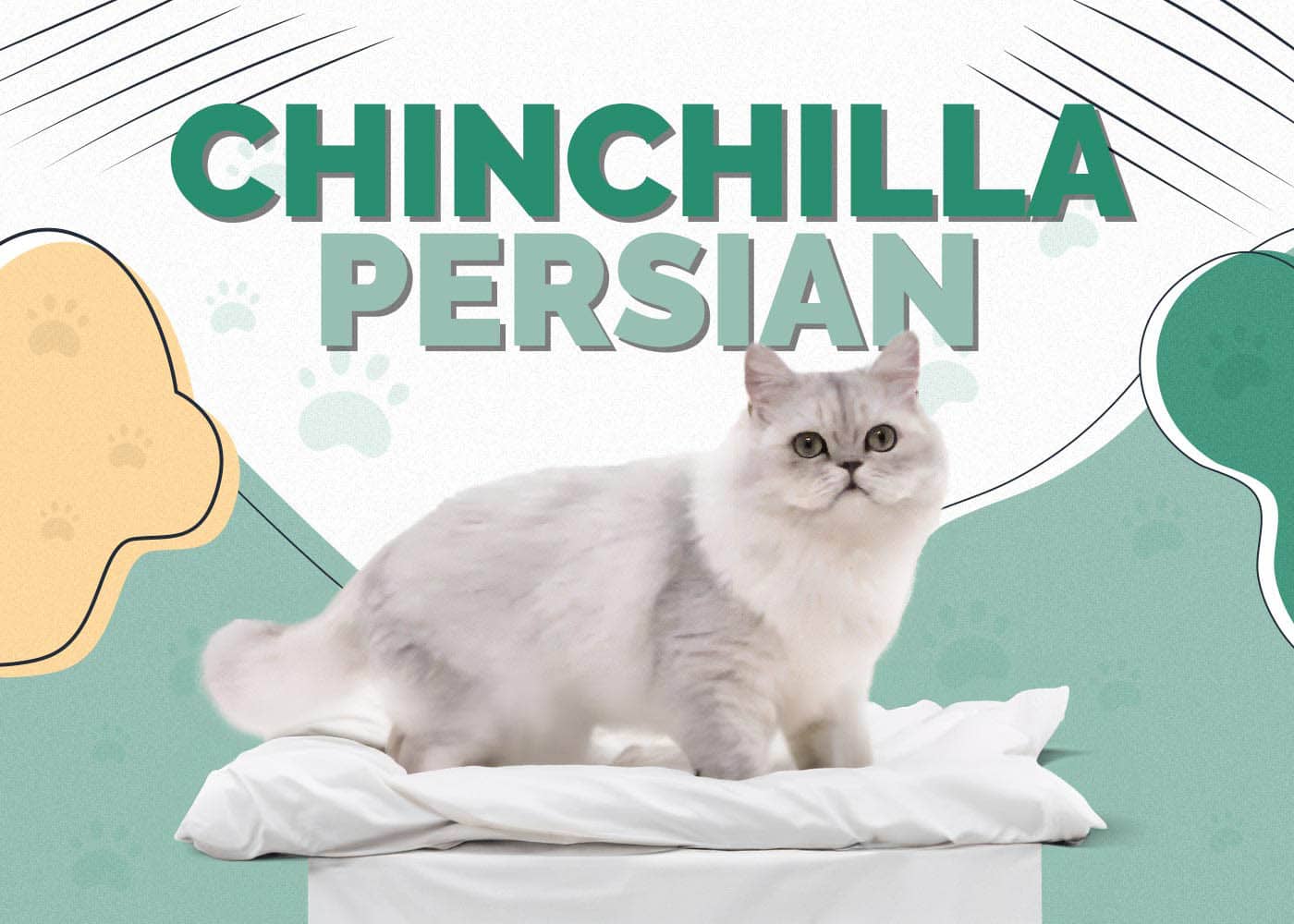
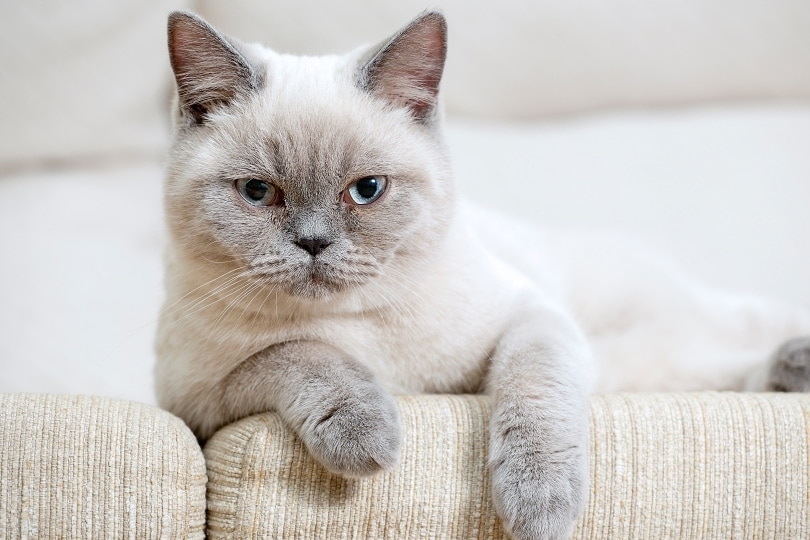
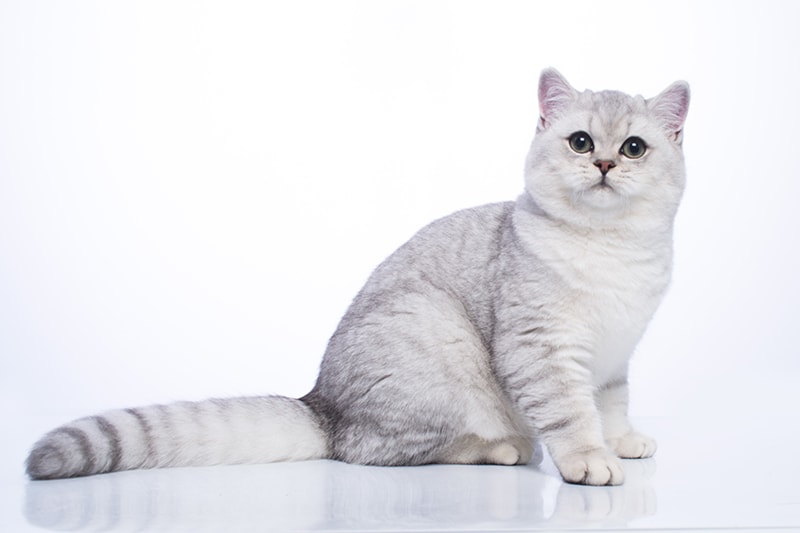
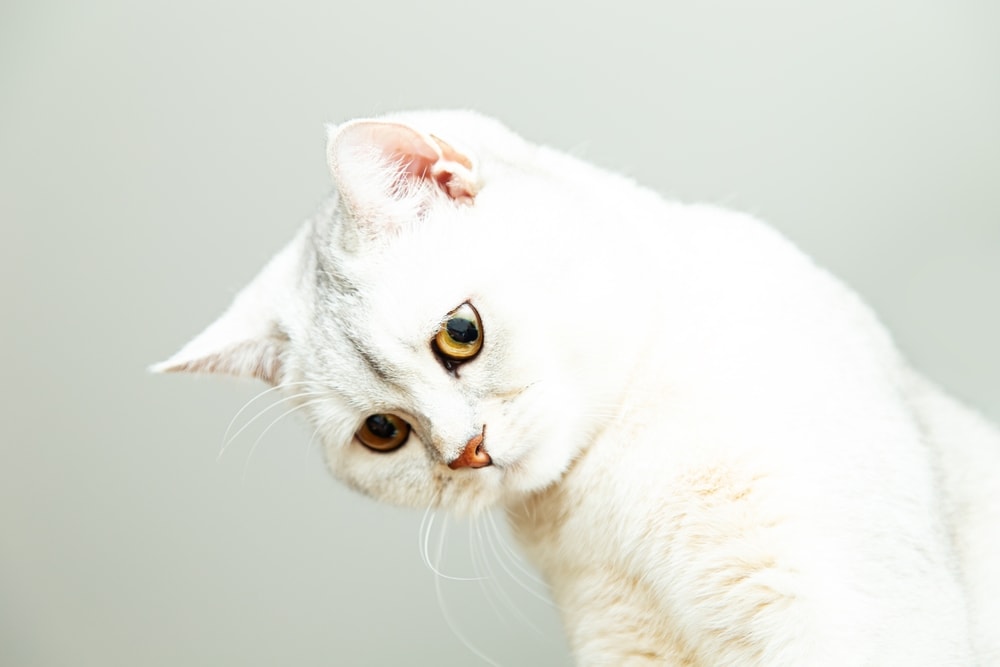
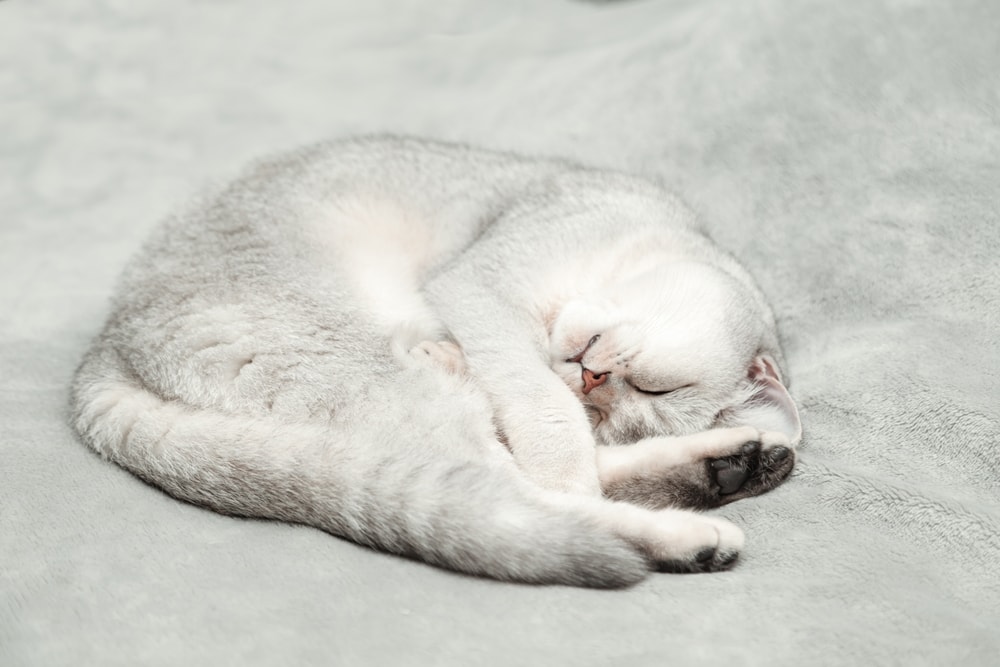
Chinchilla British Shorthairs differ from other British Shorthairs in appearance only. The Chinchilla or silver-shaded British Shorthair is a unique feline with a rare coloration. They have a bright, white coat with just the very tips colored. When the cats walk, they seem to shimmer. Of course, this is just the white undercoat becoming visible as the cat moves.
Often, these cats have vivid green eyes, though the exact color can vary. They can have some tabby markings, but they must be very faint. Otherwise, the feline is a tabby and doesn’t fall into the Chinchilla coloration.
These cats have genes that make their actual silver color very faint and only on the tips of their fur. They may give birth to silver kittens without any Chinchilla coloration, depending on the felines used in the breeding. Because many genes must line up for a Chinchilla British Shorthair to appear, they are rare.

The Earliest Records of the Chinchilla British Shorthair in History
The Chinchilla British Shorthair shares a history with the rest of the shorthair breed. It is unknown when this particular coloration came to be, though it is thought to have appeared after British Shorthairs were interbred with Persian cats.
The original British Shorthair is an ancient breed. This feline is the pedigreed version of the shorthaired cats that developed naturally in Britain. It is thought that British shorthairs started when the Romans first brought cats to Britain. The British Isles had no domestic cats before this point. However, the Romans left many felines behind, who eventually interbred with the local feral cats.
The British Isles are very isolated. The cats left behind couldn’t swim over the channel, so they were forced to stay. This isolation led to the British cats being different from the mainland cats. They developed a short, thick coat that protected them from the wet weather conditions of their native land. They also grew to be distinctly larger than most domestic cats of the time.
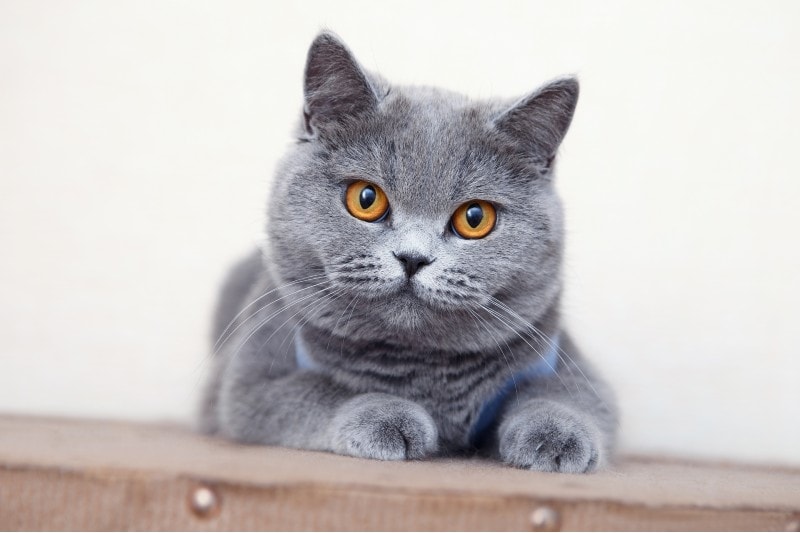
However, selective breeding didn’t start until the 19th century. Various shorthaired cats were gathered from different parts of Britain and then bred to enhance their appearance and temperament. Emphasis was put on developing the cats’ unique blue-grey coat that the British Shorthair is known for today. We don’t know if the Chinchilla variant existed at this point or not.
How the Chinchilla British Shorthair Gained Popularity
Once the breed was standardized, it was shown at the Crystal Palace. At the time, this location was a common venue for cat shows, including the first-ever cat show in which the British Shorthair took part. The feline’s popularity surged as a “true British cat.”
Imported Persians and similar cats were added to the breeding program to enhance the breed. These long-haired breeds were prevalent at the time, so British Shorthair breeders likely used these long-haired cats to make the British Shorthair more popular. The Chinchilla variant was probably introduced at this point through these breeding programs.
However, WWI broke out shortly after this, decimating most breeding lines. Other breeds of cats were introduced heavily into the British Shorthair line at this time, as there weren’t enough cats to keep up the breed.
When you breed a long-haired and short-haired cat, you can get kittens with both hair types. The British Shorthair breeders only wanted their cats to have short hair. This led to a problem with what to do with the longhaired kittens. At the time, long-haired felines were counted as Persian cats, while shorthair cats were called British Shorthairs.
Therefore, in a single litter, some kittens may have been called British Shorthairs, and others may have been called Persians. Eventually, these pairings would also lead to the British Longhair breed.
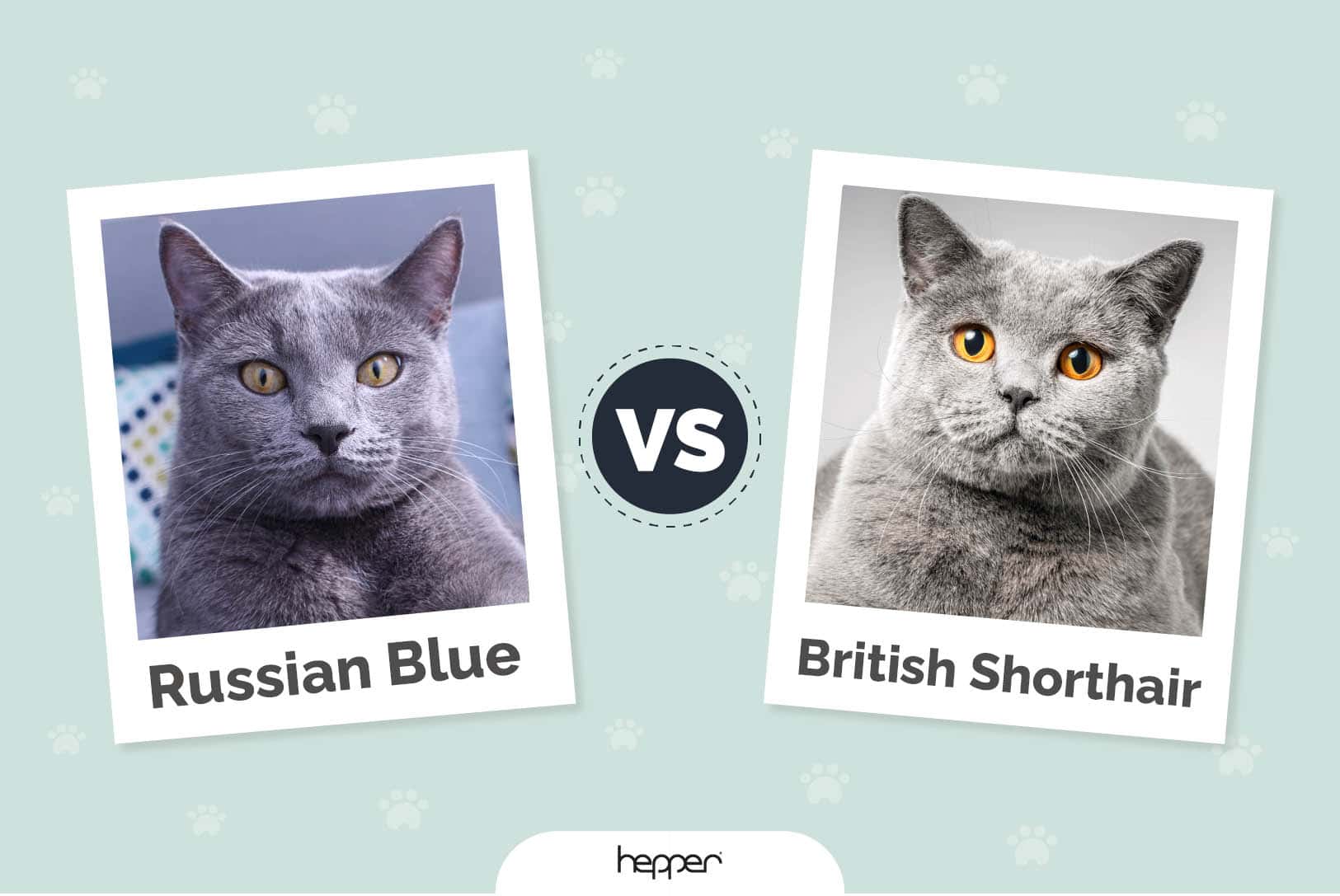
To be counted as British Shorthairs, some breeders thought the cat had to be blue-grey. Therefore, Russian Blues were commonly added to breeding programs, too.
Formal Recognition of the British Shorthair
Technically, this feline was always recognized. After all, it was at Britain’s very first cat show. However, all the pairings of British Shorthairs with other cats led to some difficulties with recognition. What counted as a British Shorthair was a massive debate at the time.
The GCCF decided only to accept third-generation British Shorthair/Persian crosses. In other words, kittens accepted as British Shorthairs could, at most, have a Persian great-grandparent. This decision led to the further restriction of the breeding stock. When WWII broke out, the stock was so low that breeders reintroduced Russian Blues and Persians into the mix despite it breaking breed standards. The French Chartreux was also used in breeding programs at this time, as it is similar to the British Shorthair.
After the war, many breeders worked to reestablish the breed as it was originally before the addition of all the other breeds. It took until the 1970s for the British Shorthair to achieve formal recognition from CFA and TICA. It wasn’t until 2013 that the British Shorthair again became the most people breed in Britain.
Top 5 Unique Facts About the Chinchilla British Shorthairs
1. The Chinchilla Coloration Is Quite Rare
This color has some complicated genetics behind it. To find one of these cats, you often have to seek them out specifically. Breeders spend a lot of time and energy trying to get kittens to display the Chinchilla color. You often have to pay a bit more due to their rarity.
2. Original British Shorthairs Probably Didn’t Come in Silver
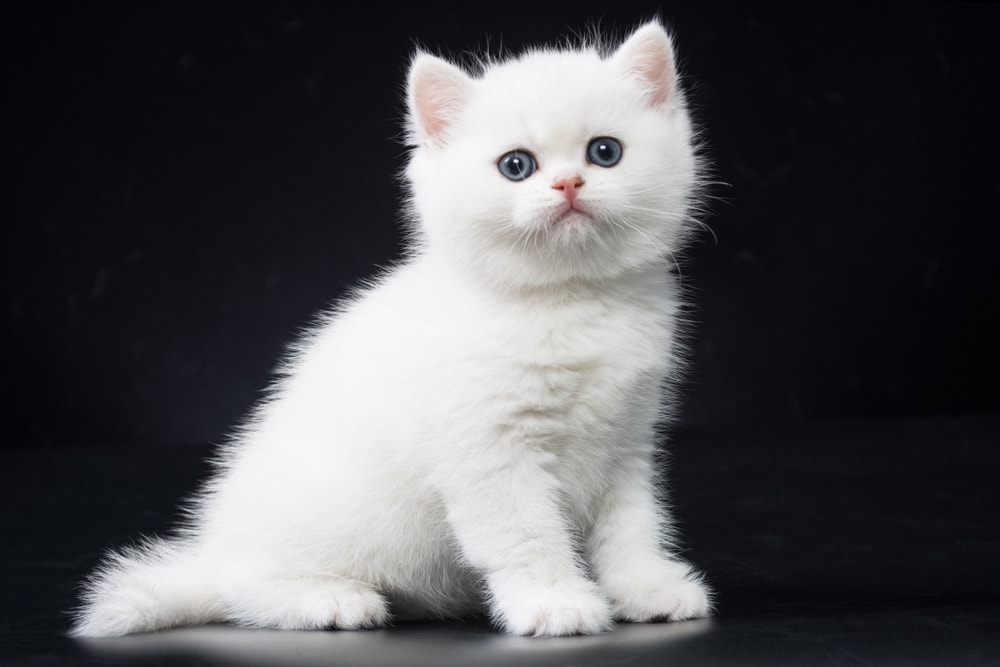
We don’t have accurate breeding records for this breed, as the British Shorthair is extremely old. However, the blue-gray color was considered the default British Shorthair coloration even when the species was first started. Therefore, silver likely wasn’t very popular or common. It may not have even existed at all.
3. These Cats Are Pretty Big
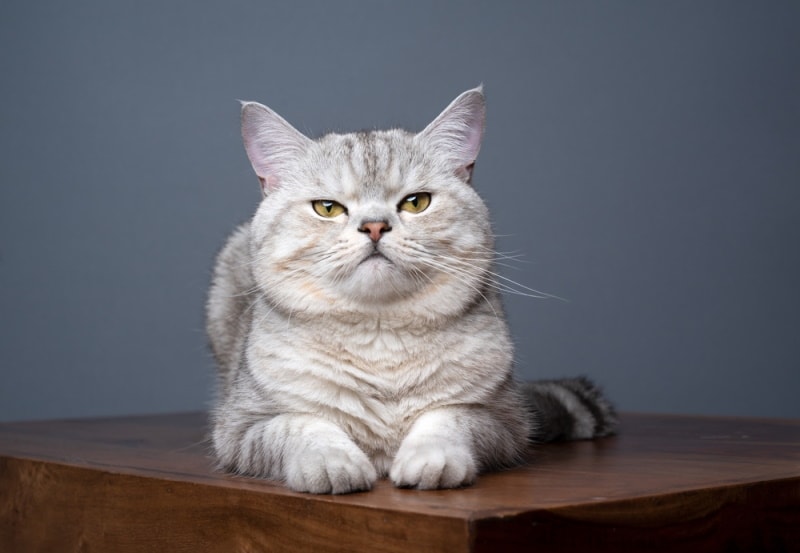
British Shorthairs are pretty large, with lots of muscle and broad chests. Males can weigh up to 20 pounds. The Chinchilla coloration does not affect the cat’s size, and they will be about the same as other British Shorthairs.
4. These Felines Are Extremely Popular
British Shorthairs are one of the most popular breeds in Britain. They also have decent popularity in other countries around the world. The blue-grey color is the most common coat color, but the Chinchilla color is popular, despite its rarity. Demand is often higher than supply for this reason.
5. British Shorthairs Have Long Lifespans
British Shorthairs have longer-than-average lifespans. They can live up to 20 years with the proper care. They like to eat and are prone to obesity, however. Therefore, it’s vital to keep them at the appropriate weight. Luckily, these cats aren’t prone to any health issues beyond this, making them generally healthy. This factor is likely why they live so long.

Do Chinchilla British Shorthairs Make a Good Pet?
These cats are considered to be one of the calmest breeds. They’re easygoing and not needy, making them good cats for the average pet owner. They’re sweet and affectionate, though they aren’t prone to separation anxiety. They are fine with being alone for much of the day, but they love a good cuddle when their humans return home.
With that said, they do not like to be picked up or carried. They are a bit tolerant but don’t like being manhandled. They have low grooming requirements, despite their relatively thick fur. They are prone to obesity, so keeping them on a healthy diet and being cautious of weight gain is vital. These cats love food, and it shows.
Conclusion
British Shorthairs are a common breed, especially in Britain. However, the Chinchilla coloration is rarer. To get one of these kittens, you often have to find a specific breeder that focuses on breeding them. You often have to pay more, as well. For the most part, Chinchillas act the same as other British Shorthairs. The only difference is their appearance.
Sources
Featured Image Credit By: Katerina_Aro, Shutterstock
Get Hepper In Your Inbox


Pet care tips from our vets and experts, straight to your inbox.
You may opt-out at any time. View our Privacy Policy for more information.

Kristin is passionate about helping pet parents create a fulfilling life with their pets by informing them on the latest scientific research and helping them choose the best products for their pets. She currently resides in Tennessee with four dogs, three cats, two fish, and a lizard, though she has dreams of owning chickens one-day!
Join the conversation
Ask a question, share your story, or send private feedback.