Hepper is reader-supported. When you buy via links on our site, we may earn an affiliate commission at no cost to you. Learn more.
Do Cats Have Periods? Our Vet's Guide to Heat Cycles & Estrus

In this article
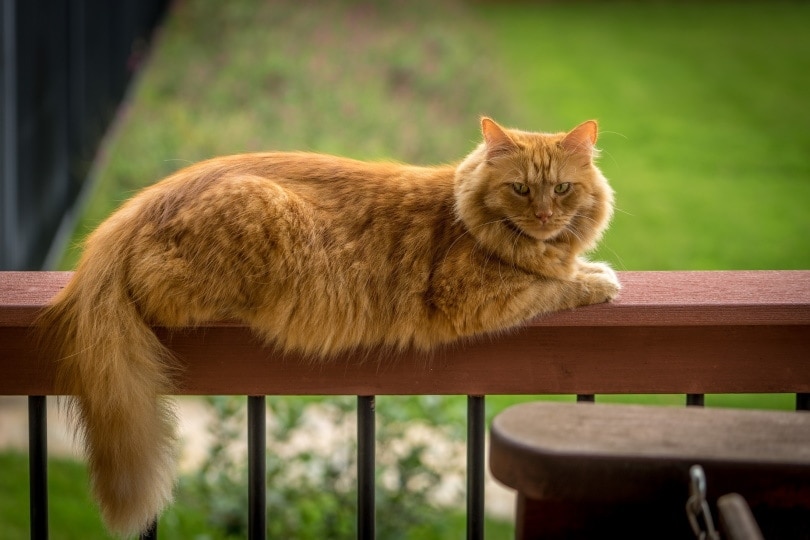
If you are curious whether female cats have menstrual periods, we’re here to answer this question! The short answer is no, cats don’t have menstrual periods like humans or some other primates do.
A sexually mature non-spayed female cat’s hormonal mating cycle is referred to as an estrous cycle.

When Are Female Cats Sexually Mature?
The feline equivalent of menstrual cycles is known as estrous cycles. However, unlike humans, cats do NOT bleed from their vulva during this process. Therefore, if you observe blood dripping out of your cat’s vulva, it is never considered normal, and you should promptly take them to a veterinarian.
A female cat usually becomes sexually mature at around 4–6 months. This means that from this point on, they could have kittens if other conditions that kickstart their estrous cycle are met. To prevent unplanned litters, speak to your vet about getting your female kitten spayed at an appropriate age.
Generally speaking, female cats need several criteria to be met before their estrous cycles begin:
- They need to attain at least 80% of their maximum body weight (signals physical maturity)
- They need to be exposed to enough daylight hours per day (12 or more) - this signal is required by the brains to cycle.
- They need to be free of other health issues that would prevent a normal female cat from cycling.
Estrous versus Estrus
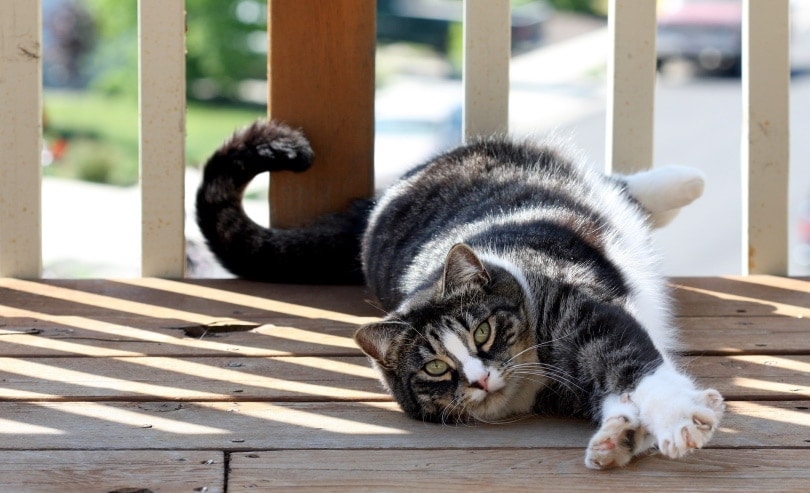
When discussing a cat’s reproductive physiology, it may seem confusing to come across the words estrous and estrus. Though they sound similar, they do not mean the same thing.
Estrous vs Estrus
Cats are Seasonally Polyestrous
Female cats are classified as seasonally polyestrous, meaning that as long as the season is appropriate, they will continuously cycle until they either end up mating or the season passes.
Most cats will come into heat toward the end of winter or the start of spring as the days get longer. Increased daylight hours are usually needed to kick a cat’s estrus cycle into action, which corresponds with the start of “kitten season” in wild or feral cats. However, in tropical countries, cats will continuously cycle all year (as there is no “winter”).
Cats are Induced Ovulators
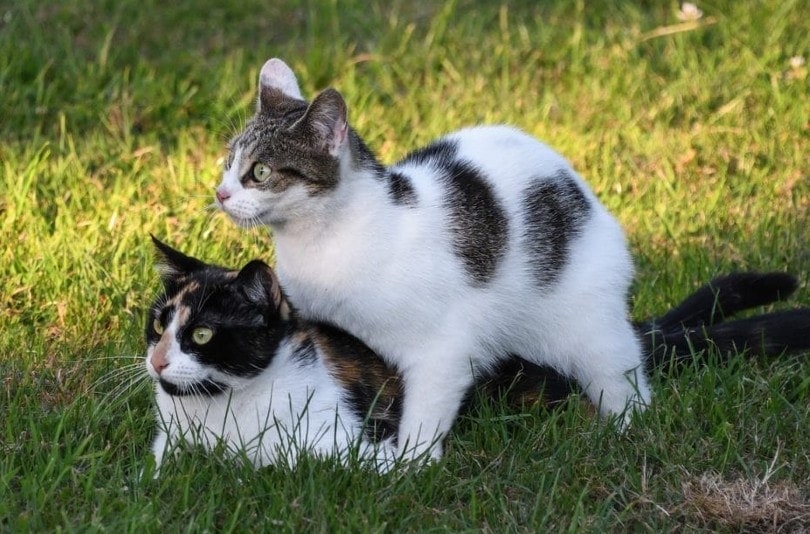
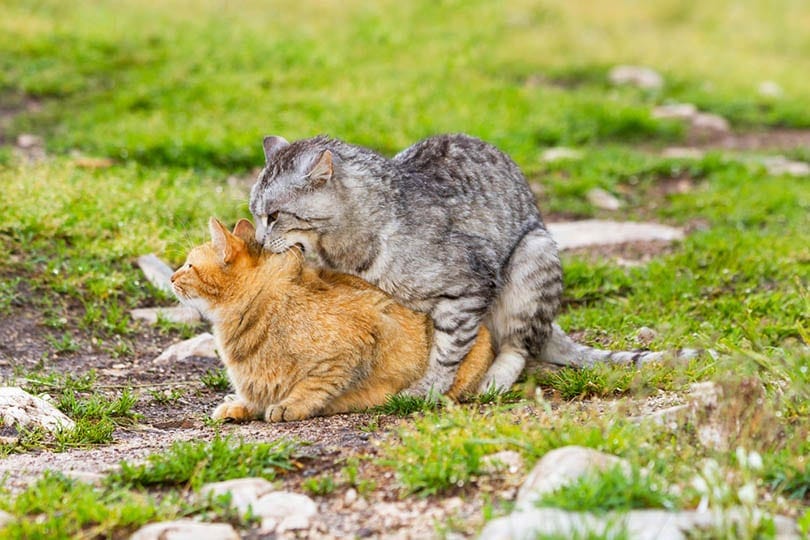
Another interesting physiological fact about feline reproduction is that cats are induced ovulators. In other words, though a cat may be in “heat” and ready to mate, ovulation is only induced by coitus.
Furthermore, while some induced ovulators can ovulate after just a single copulation, cats usually require at least three acts of copulation before ovulation occurs. This means a cat in heat may (and most likely will) mate with multiple males.
Lactation Does Not Suppress Estrus in Cats
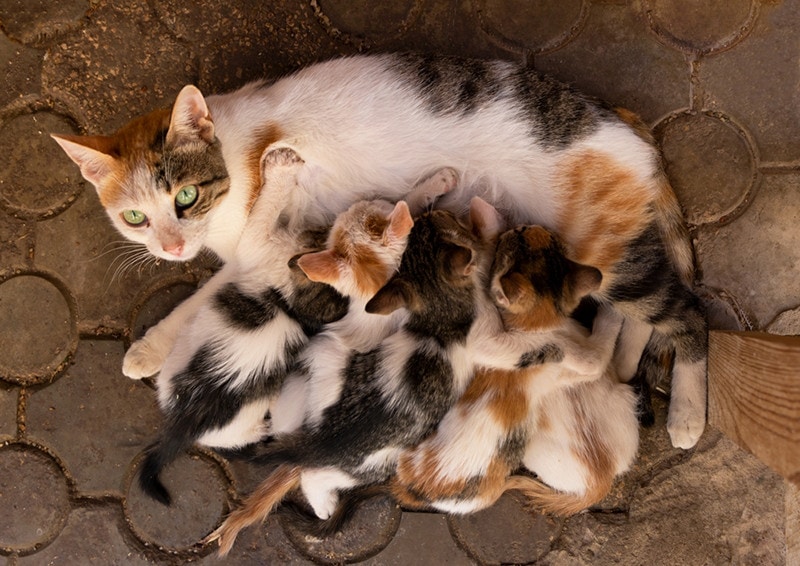
In many species, lactation suppresses estrus, and females who are nursing young do not go into heat again until their young are weaned. However, this doesn’t apply to cats, and cats can go into estrus while nursing young kittens. Breeding a female cat (also known as a queen) when she is lactating is strongly discouraged.
Signs Your Female Cat is in Heat
A cat’s estrous cycle is usually around 3 weeks, with each heat lasting roughly 6 days.
Signs that your cat is in heat include:
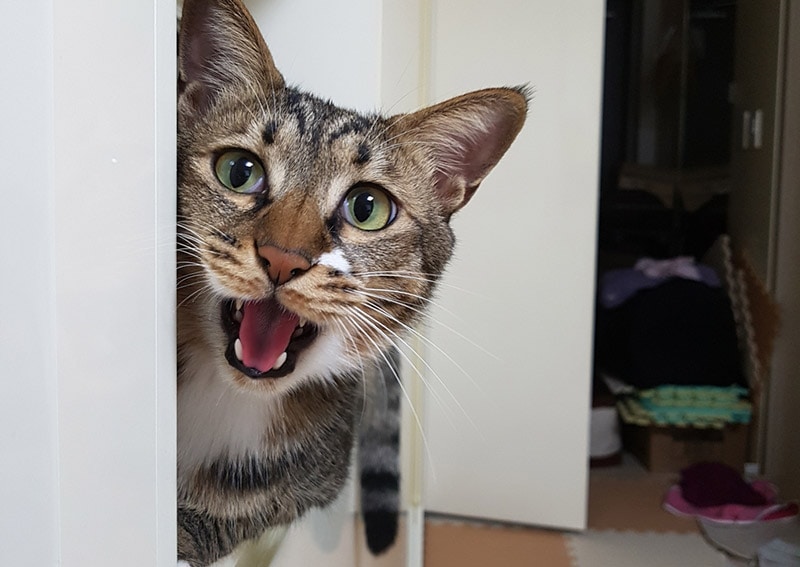
- Increased vocalization
- Yowling
- Marking territory
- Increased affection
- Attempting to escape
- More demanding behavior
- Urinating in inappropriate places
- Sitting with her forequarters low, hindquarters raised, and tail curled to a side
How to Prevent Cat Periods
The antics and vocalizations of female cats can be quite cumbersome to deal with. It’s not uncommon to have them caterwaul all through the night in attempts to lure a male. Dealing with a cat in heat can be stressful.
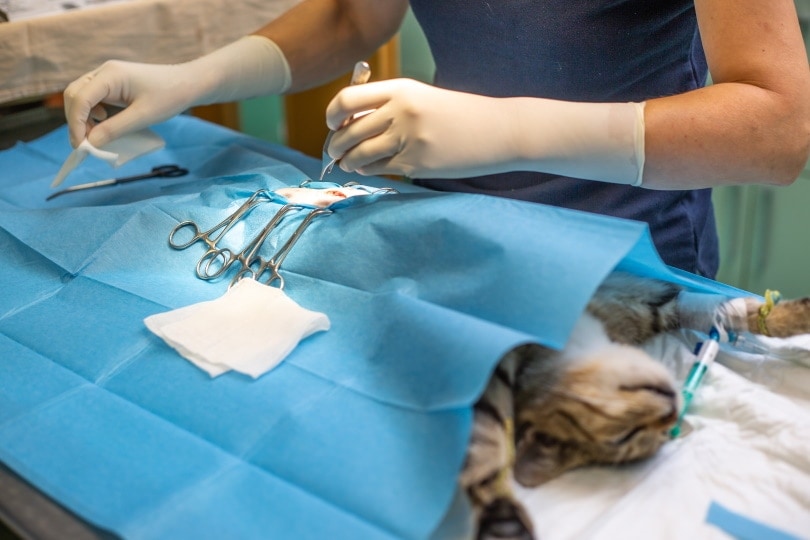
The best way to prevent your cat from having a period or coming into heat is to have them spayed at an appropriate age. In addition to preventing unwanted litters, spaying a cat offers health benefits by reducing the chances of some ailments (such as uterine cancer). Earlier spays have also been linked with lower incidences of mammary gland tumors in female cats.

Conclusion
Unlike humans, cats don't get a period. However, they have an estrous cycle with some interesting physiological features that make them very prolific breeders under ideal conditions. The antics of a cat in heat can be very cumbersome to deal with. This, coupled with the overpopulation of cats in many parts of the world, makes spaying your female cat a very reliable option to prevent unwanted litters.
More questions about your cat's health and behavior? Take a look at our posts on:
Get Hepper In Your Inbox


Pet care tips from our vets and experts, straight to your inbox.
You may opt-out at any time. View our Privacy Policy for more information.
Dr. Luqman grew up with an extreme fondness for animals and turned a childhood dream into reality by becoming a veterinarian. His goals are now focused on helping pet owners understand their pets better in order to ensure the best quality of life for all pets globally. He is passionate about wildlife, exotic pets, pet owner education, and animal welfare. Luqman has 3 years of professional experience working with a variety of animal species. He has skills in demonstrating proper animal husbandry and training some exotic species, such as parrots. Additionally, he has decades of personal experience with keeping many exotic pets: freshwater fish, parrots, songbirds, chickens, ducks, turtles, and hamsters.
Dr. Luqman grew up with an extreme fondness for animals and turned a childhood dream into reality by becoming a veterinarian. His goals are now focused on helping pet owners understand their pets better in order to ensure the best quality of life for pets all around the world. His passions are wildlife, exotic pets, pet owner education, and animal welfare.
Education
Luqman received his degree from Universiti Putra Malaysia.
Experience
Luqman has 3 years of professional experience working with a variety of animal species. He has skills in demonstrating proper animal husbandry and training some exotic species, such as parrots. Additionally, he has decades of personal experience with keeping many exotic pets: freshwater fish, parrots, songbirds, chickens, ducks, turtles, and hamsters.
Join the conversation
Ask a question, share your story, or send private feedback.