Hepper is reader-supported. When you buy via links on our site, we may earn an affiliate commission at no cost to you. Learn more.
Do Cats Sweat? Science-Based Facts & FAQ
In this article
When the sun is beating down in the hot summer months, most humans run to the store to purchase ice-cold drinks, BBQ food, and apply an extra layer of antiperspirant/deodorant. There are so many choices out there to fight body perspiration, many of which are made differently depending on your age, sport or activity level, diet, etc. But what about cats? What do they do to beat the heat?
Cats of all varieties, both big and small, do sweat or perspire. Perspiration is defined as the secretion, usually via the skin, of bodily fluids from sweat glands in most mammals. The composition of this fluid is made up of almost pure water with hints of minerals, urea, and lactic acid. In humans, the body self-regulates its temperature via sweating which is essential for surviving hot temperatures. So, is it the same for cats? Let’s find out.

How do cats perspire?
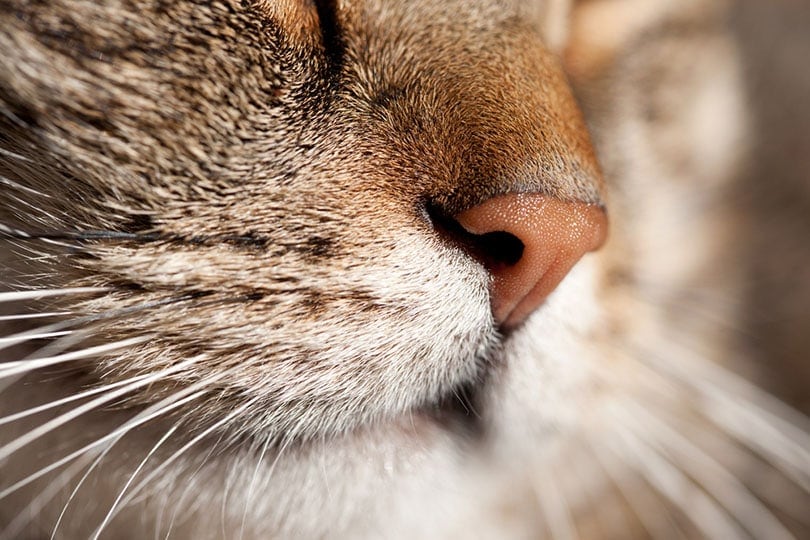
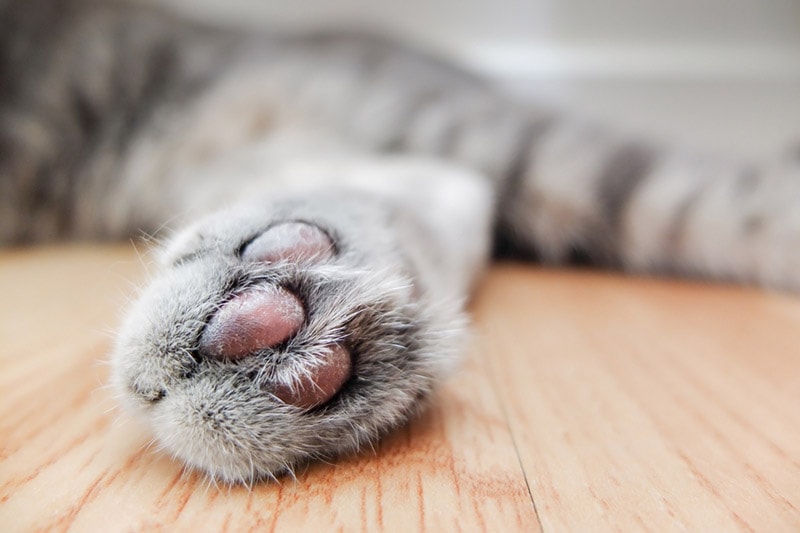
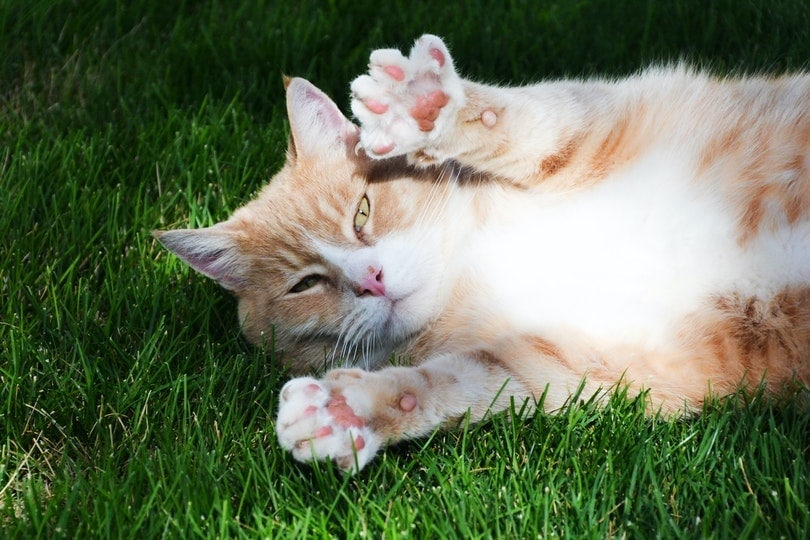
The way your kitty perspires is not exactly what you might expect. Humans have glands on almost every part of our skin to release perspiration, but cats only have the most important of these glands in a few locations. They are on their paw pads, mouth and nose area, chin, and the hairless skin near their genitals. The most obvious of these is the paws. On a warm, humid day your feline may just leave a sweaty paw print trail in their house after an expedition. The science behind this is simple, when a cat becomes overheated, its body sends a signal to the brain and the brain tells the glands to start secretion.
Do cats have sweat glands on their skin?
Cats have a lot of different types of glands. The apocrine glands are in the skin under their coat and the function of these isn't related to perspiration. These glands produce an oil that acts as a pheromone, which is in essence a scent to signal to other cats.

Is sweating in cats the same as in humans?
The function of perspiring in your fluffy felines is identical to that in humans; to regulate the body temperature. On hot summer days, your feline is just like you and will need to sweat to cool down. However, because the surface area of a cats’ paws is not so big, sweating is only part of the process in which a cat lowers the heat. Grooming is another way kitties reduce their body temperature. They do this by licking themselves excessively all over and when the saliva evaporates, it has the same effect as sweating, which is to cool the skin.
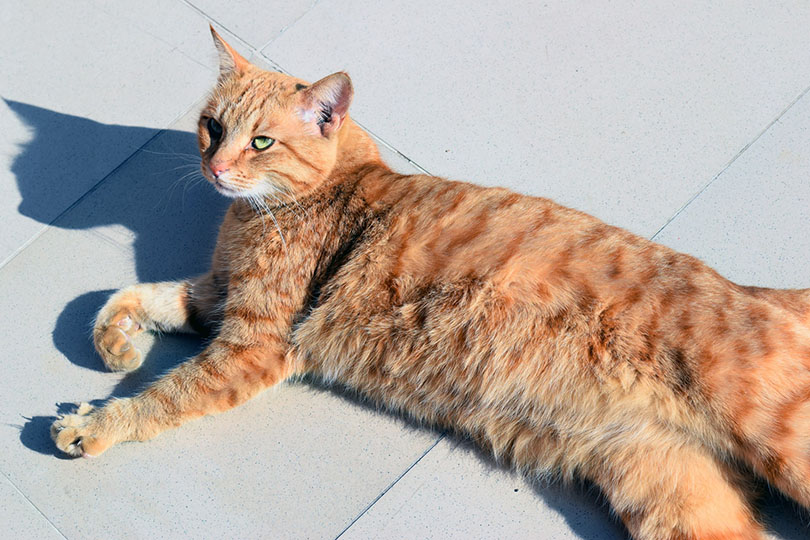
All of you kitty lovers out there will know that they simply adore a lazy afternoon nap. This is especially important in warm weather and your clever cat will know instinctively to go and find a shady, cool spot to rest. This is an essential part of the cat's cooling system so try to leave them undisturbed during this time, especially if it’s a scorcher. It may also be noticed that your kitty will sprawl all over your cool kitchen floor or similar during the summer. Again, this aids their body in cooling off and provides valuable relaxing time so they can continue their hunting excursions. Remember your cat is naturally a predator during sunrise and sunset, so they like to conserve energy during the daytime. Longer periods of sleep during the summer months may be observed and this also ensures temperature control.
Stress and anxiety can also be a reason that initiates the sweat response in a cat. Nervous cats, in particular, may not like being taken in the car or to the vet and might begin to perspire through their paws. In this case, you must listen to your cats' needs and try to soothe them. Indeed, cat anxiety is a whole other topic and if you feel your cat is over-worried, ensure you investigate this thoroughly as there is normally a very simple explanation for why cats become frightened.
Is panting normal in cats?
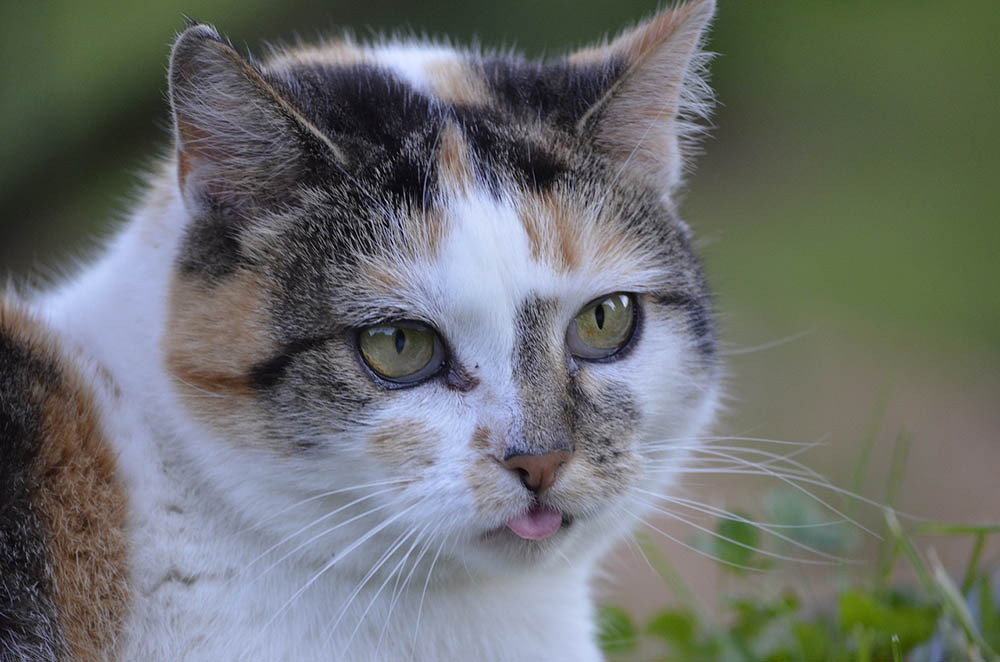
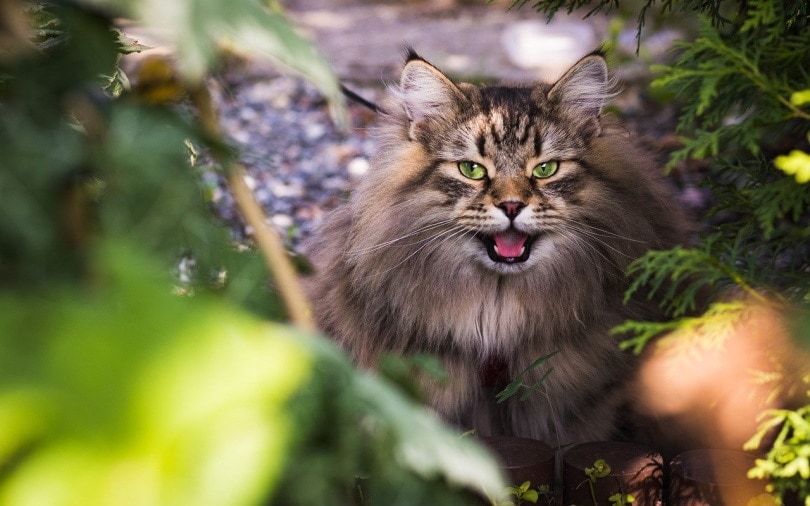
A canine friend will pant all day long on a hot day and this is completely normal. A feline panting on the other hand is not typical. Sometimes, your cat can pant to cool off if the temperature is particularly high, but usually, this means they are overheated or suffering from a heatstroke. A panting kitty may also mean that they're highly stressed or having difficulty breathing. The implication is that panting is most certainly not the ordinary way for a cat to regulate its temperature. Panting could be a symptom of metabolic or respiratory problems and may also be a sign of pain. Obviously, if you observe your kitty is panting, firstly, help to cool them off (see below), then swiftly contact your vet to ensure it is not an emergency.
What is the healthy temperature range for a cat?
Unfortunately, it's rather tricky to check your feline's temperature. A rectal thermometer is the best way to check as it is more precise but make sure you come prepared with a healthy dose of patience and gentleness! The ideal body temperature is close to 100 degrees Fahrenheit and if the temperature exceeds 102.5 degrees, you probably need to call your vet. Cats can get fevers also, and even though this may or may not be related to heatstroke, having an accurate reading of their body temperature is a good way to find out what's going on internally.
How do I cool down my cat?
First of all, overheating can be fatal, so do not rely on any of these suggestions alone if your cat is too hot and acting out of sorts. It is better to be safe than sorry, so call your vet.
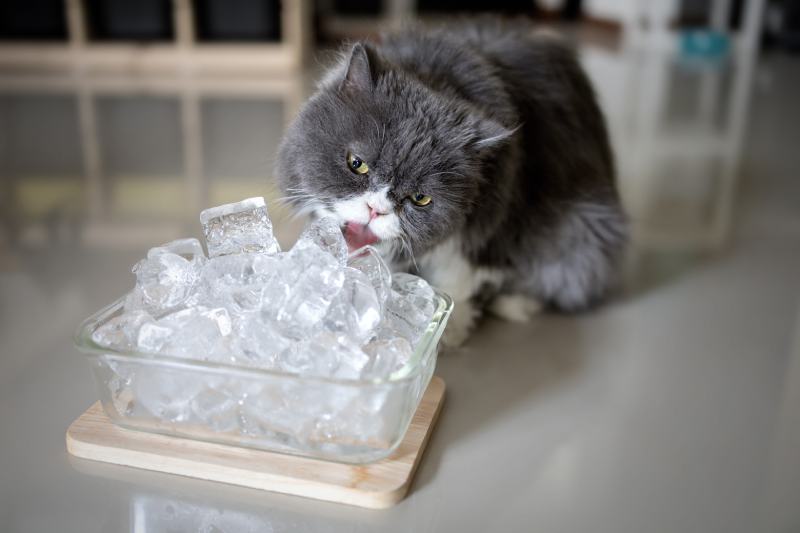
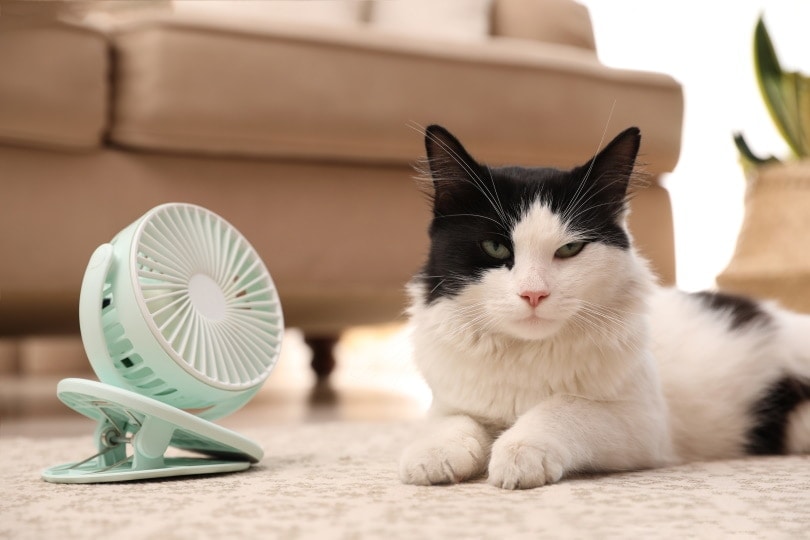
Here is a list of helpful advice to help cool your cat down:
Even though your cat is a cousin of lions and tigers that live in hot countries, do not assume cats like heat and ensure you follow all the steps to keep your cats cool.
See also:
Why Do Cats Love to Sunbathe? Our Vet Explains the Reasons, Dangers, & FAQ
At What Age Do Male Cats Start Spraying? And What to Do About It
Featured Image Credit: Viktor Sergeevich, Shutterstock
Get Hepper In Your Inbox


Pet care tips from our vets and experts, straight to your inbox.
You may opt-out at any time. View our Privacy Policy for more information.

Nicole is a lover of animals of all sizes but is especially fascinated with the feline variety. She’s the proud mom of Baby, a Burmese, and works every day so he can relax in the sunshine or by the fire. She’s always had a cat in her home and has spent countless days with others, observing behaviors and softening up even the grouchiest of the lot. Nicole wants to share her kitty expertise with you so you and your cat can live happy, healthy, and care-free.
Join the conversation
Ask a question, share your story, or send private feedback.