Hepper is reader-supported. When you buy via links on our site, we may earn an affiliate commission at no cost to you. Learn more.
Do Cats Normally Breathe Faster When They Purr? Our Vet Explains

In this article
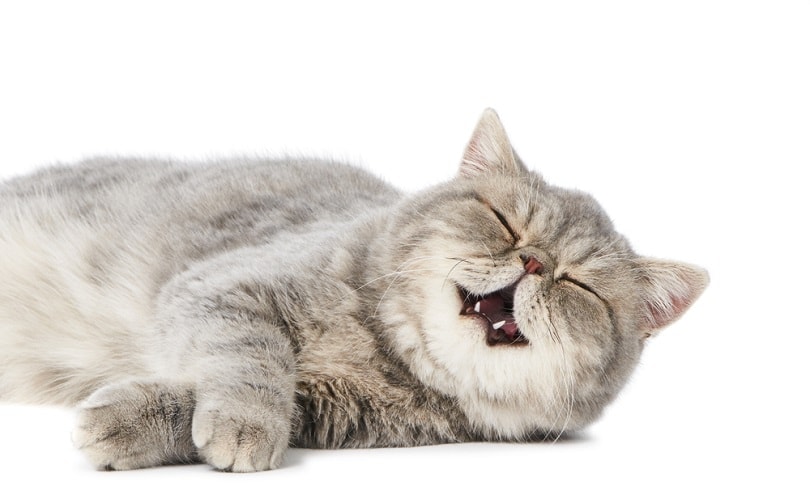
Cats can purr for many reasons, and purring has positive effects on them and their owners from a physical and mental point of view. When they purr, cats usually show us that they are calm—this action helps them to relax and soothe themselves. However, you may get scared if you see your cat breathing faster than normal when purring. This does not always mean there is a health problem, but if your cat is breathing faster than usual, despite purring, this warrants a veterinary check.
Continue reading if you want to find out what the mechanism behind purring is and why cats may breathe fast when purring.

Is It Normal for Cats to Breathe Faster When They Purr?
It can sometimes be normal for cats to breathe a little bit faster when they purr, but this will also depend on the actual respiratory rate and the way they breathe whether there is an underlying health issue or not. Their breathing is generally faster than that of humans (12 to 16 breaths per minute),1 with the average breathing frequency in cats being 15–30 breaths per minute.2 This respiratory frequency can be influenced by certain factors, such as illness, stress, pain, sleeping, purring, excitement, and others.
For example, when cats purr, their respiratory rate may slightly increase, and when they sleep, it decreases. As a result, it can be perfectly normal for cats to breathe a little faster when they purr. So don't panic if you see your cat breathing slightly faster when purring.
However, although in most situations cats purr when they are relaxed and calm, there are cases where purring helps them calm down if they are stressed, in pain, or suffering from a certain disease. In this case, if you notice your cat purrs at "odd" times, breathing fast, and showing other clinical signs (fever, pain, lethargy, reduced appetite, respiratory noises, hiding often, etc.), take them to a vet as there may be an underlying issue.
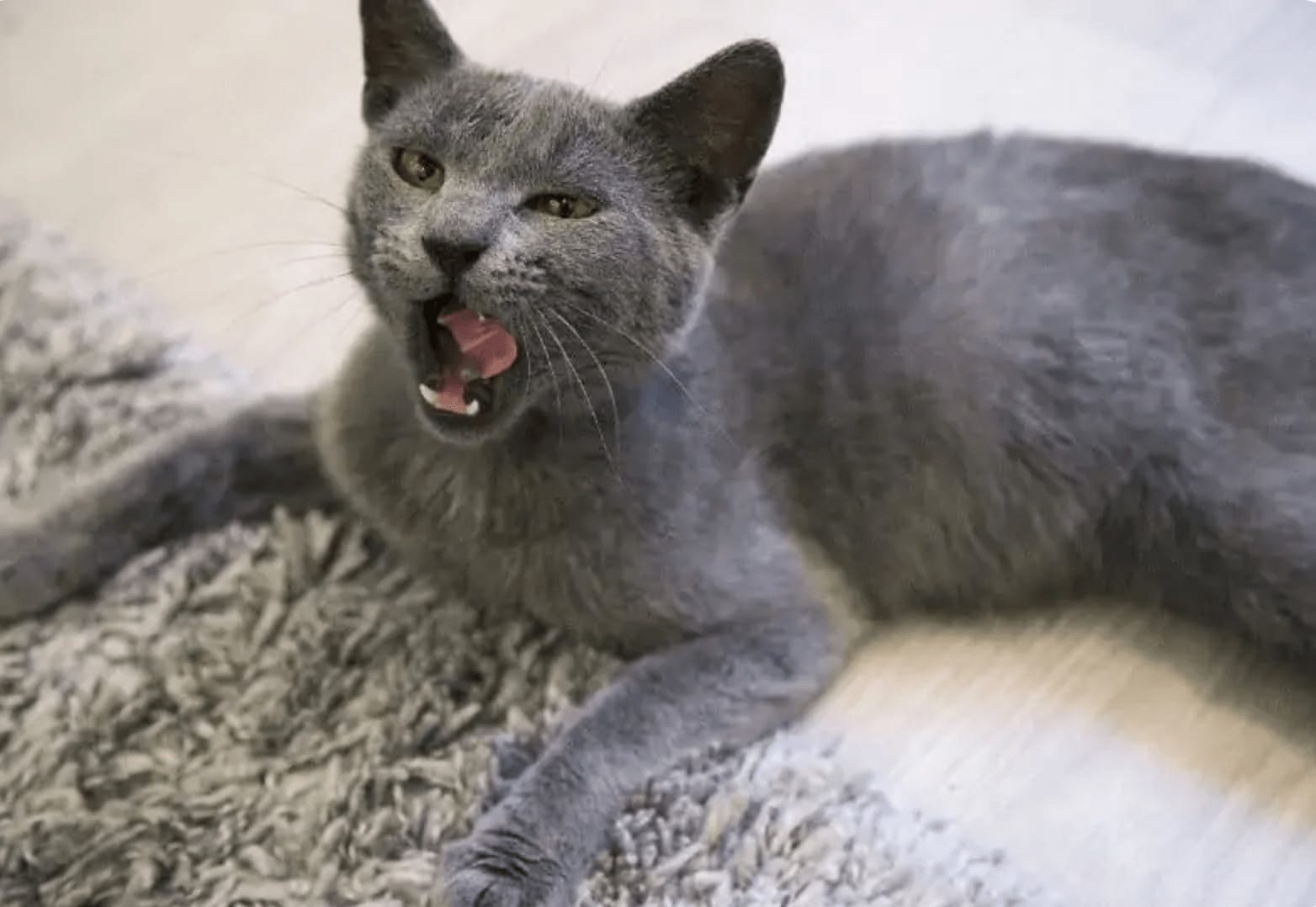
If there is any respiratory difficulty, your cat is open-mouth breathing similar to a dog panting, their abdomen is moving obviously when they breathe, or there are loud respiratory noises, nasal discharge, coughing, or other signs, they should be checked out by the vet urgently. Cats that breathe with an open mouth or struggle to breathe in any way signals a life-threatening emergency, and this can be fatal if not attended to in time.
What Is Happening When Cats Purr?
When cats are still kittens, in the first days after birth, they cannot see or hear. Therefore, purring can be another way of communication between the mother and kittens, through which she reassures them and shows them that she is present.
Cats can purr for other reasons besides those of joy and relaxation, such as stress, pain, or illness. They can purr to self-soothe and induce a state of relaxation. It has been scientifically proven that cats' purring has the potential to increase the healing capacity of tissues, including bones. Cats' purring has a frequency that is used therapeutically for edema, wounds, and pain.3
The mechanism by which cats purr has not yet been fully understood, but studies carried out over the years have concluded that felines purr when they inhale and exhale using their diaphragm, intercostal muscles, and the larynx to create the vibrations made by their vocal cords.4 Some studies suggest that the hyoid bone in the larynx that supports the tongue could have a role in these vibrations.5
However, not all felines can purr. For example, lions, tigers, jaguars, or leopards cannot purr, but their vocal cords can produce roars or characteristic growls. The difference between big cats and domestic cats is that big felines have an incompletely ossified hyoid bone, while house cats have a completely ossified hyoid bone.
Fast Breathing Explained
In medical terms, rapid breathing is called tachypnea. However, some cats can show rapid breathing after playing, running, when they purr, or when anxious and scared, and this is normal.
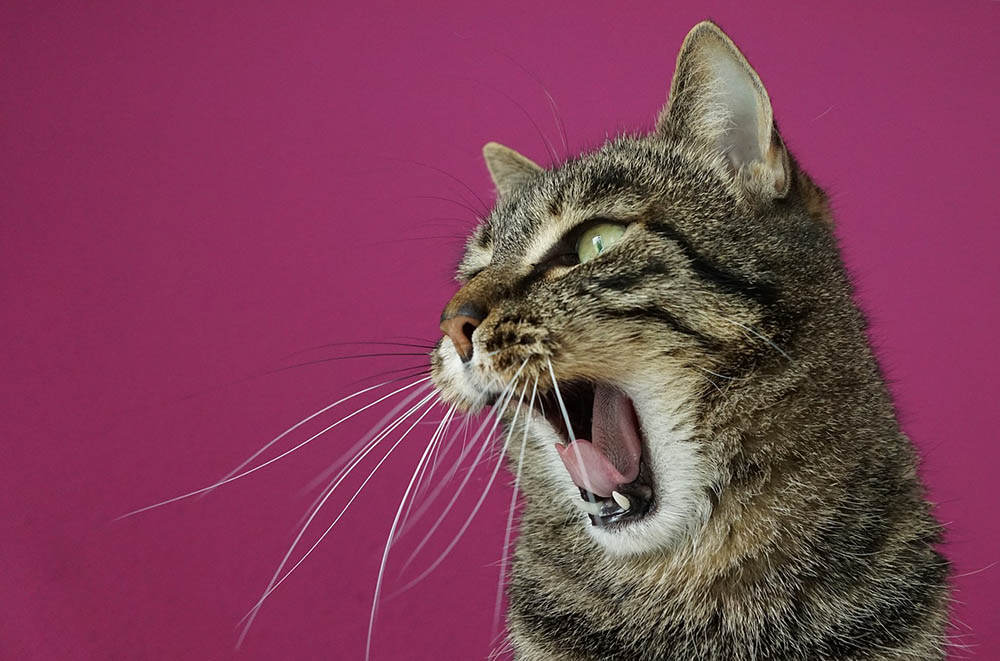
When they play or have the “zoomies,” you may have noticed that some cats stick out their tongues like dogs and breathe fast. Like dogs, cats have sweat glands in only a few places on the body (in the hairless areas—paws, lips, chin, and around the anus). Therefore, to cool down, some cats may breathe fast with their tongues out for just a few seconds. The saliva on the tongue evaporates, allowing cats to cool down. More precisely, the blood that reaches the tongue’s blood vessels removes part of the surplus heat and returns to the body with a lower temperature, helping cats to cool down.
Also, fast breathing helps cats cool down through the ventilation that takes place at the level of the lungs. In the lungs, the air that enters has a lower temperature than the cat's body temperature, and when it exits, it removes part of the excess temperature.
Fast breathing caused by an underlying health issue or overheating can endanger your cat's life. Therefore, it is important to take your cat to the vet immediately if they are breathing rapidly, apparently for no reason, or if they may have overheated.
What Are the Signs of Fast Breathing?
When your cat is healthy, marginally faster breathing during purring, very short episodes of faster breathing after intense episodes of running or playing, or faster breathing due to stress/fear should not be accompanied by other clinical signs and should resolve very quickly. You will very briefly see your cat breathing slightly faster than normal, but without any other signs of illness, and your cat will continue breathing normally within a few seconds or minutes.
Rapid breathing due to an underlying health issue can be accompanied by the following clinical signs:
- Restlessness
- Lethargy and weakness
- Respiratory noises, such as wheezing
- Breathing with their mouth open or panting
- Yowling in pain
- Rapid breathing when sleeping, resting, or relaxed and calm
- Nostrils flaring
- Your cat’s abdomen and chest move with each breath
- Excessive sneezing
- Gagging
- Coughing
- Blue gums
- Nasal discharge
- Elbows sticking out
- Head and neck carried very low
What Are the Causes of Fast Breathing?
As mentioned before, abnormally fast breathing in cats can be the consequence of some medical conditions and should be evaluated as soon as possible by the vet. Potential causes of rapid breathing in cats include:
- Pain
- Stress and fear
- Anaphylactic shock
- Anemia
- Heart disease and heart failure
- Heat stroke
- Heartworms
- Tumors in the throat, mouth, or lungs
- Respiratory infections
- Pulmonary edema (fluid in the lungs)
- Asthma
- Foreign objects stuck at the back of the throat or in the trachea or the airways
- Trauma and lung contusions
- Toxins
- Pleural effusion (fluid in the chest cavity)
- Ascites (fluid in the abdominal cavity)
Rapid breathing can occur when cats are stressed, anxious, scared, painful, ill, or due to excessive heat. If your cat is breathing fast or they are showing any signs of illness, overheating, or pain, they should be checked out by your vet as soon as possible.
How Do I Care for a Cat With Fast Breathing?
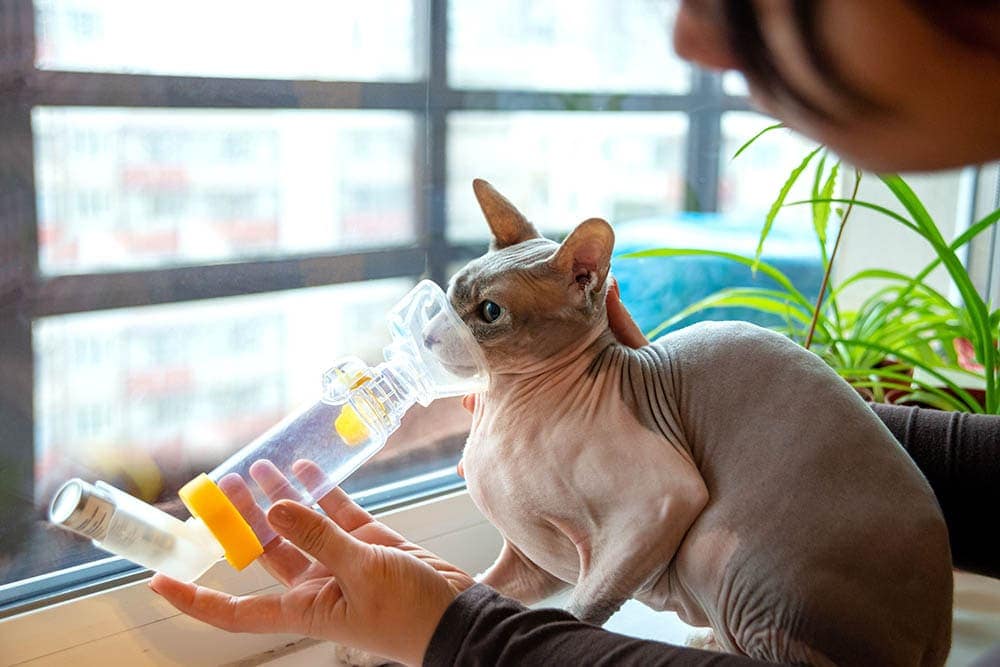
If you have noticed your cat is breathing faster than usual, try and detect what has led to this and eliminate it. For example, if your cat is scared, try to eliminate the causative factor and calm your cat with encouraging words and petting (if they accept). If your cat is anxious or stressed and breathing fast, move them to a quiet room without other triggers. In some cases, the veterinarian may recommend pheromone diffusers and calming medication for them.
On hot days, it is important to give your cat extra fresh water and always provide adequate shade and ventilation in order to protect them from the heat. Never leave them in a car unsupervised or without the air conditioning, or in unsuitable spaces exposed to direct sun, such as greenhouses or sheds, with inadequate ventilation and no way of leaving. Ensure the room temperature is always comfortable.
If your cat breathes fast while sleeping or resting (takes more than 30 breaths per minute) or they are showing any of the previously mentioned signs of illness, they need to be seen by your vet urgently.
How to Check if Your Cat’s Breathing Is Normal
The best time to check your cat's breathing rate is when they are relaxed or sleeping. Count how many times their chest moves in one minute. You can also count for 15 seconds and multiply by 4 or 30 seconds and multiply by 2, but it won't be as accurate.
Your cat's breathing must be even and regular, not forced and heavy. Cats usually use their intercostal muscles when breathing. If they have chest problems, they will also use their abdominal muscles (abdominal breathing) and breathe with difficulty.
The breathing rate is a very good index of your cat's health. It can show if your pet is having heart, lung, or other health problems. If your cat sleeps more than usual and breathes quickly or with difficulty, an emergency consultation is necessary.
Frequently Asked Questions
Is It Normal for Cats to Breathe Faster While Purring?
It is normal for cats to breathe a little faster after prolonged or intense exertion, sometimes slightly when they purr, or when they are stressed, scared, or anxious. Kittens also have a normal respiratory rate greater than 30 breaths per minute, depending on their age. On the other hand, it is not normal for cats to breathe fast when sleeping or not exerting any physical effort. This indicates they have a health problem, and it is important to take them to a vet promptly.
Does Purring Help Cats Breathe?
Purring is a self-soothing mechanism that cats can exhibit when they are sick or stressed. As a result, cats' purring can help them breathe better when they have breathing problems, as it calms them down. The low-frequency vibrations that cats produce when they purr can also have some healing effects on the affected tissues, in case of trauma or when they are sick, but the true extent of this requires further research.
Conclusion
When purring, cats may breathe just a little faster, which can be normal, but this should be subtle and interpreted alongside your cat’s general demeanor. Cats' purring can occur when they are calm, stressed, or sick. If your cat also shows other clinical signs besides faster breathing while purring, such as labored breathing, open-mouth breathing, breathing noises, blue gums, fever, panting, lethargy, or abdominal breathing, it is crucial to take them to a vet urgently because respiratory difficulties can be fatal if not treated in time.
Also, if your cat breathes faster when they are relaxed or sleeping, it is possible they are suffering from heart, lung or other underlying disease and should be taken to a vet.
If your cat does not show any other clinical signs and breathes a little fast when they purr, don't panic, as it is most likely normal. Keep an eye on them and consult with your vet if you have any doubts.
Featured Image Credit: AleksDaria, Shutterstock
Get Hepper In Your Inbox


Pet care tips from our vets and experts, straight to your inbox.
You may opt-out at any time. View our Privacy Policy for more information.
Iulia Mihai is a veterinarian with more than 13 years of experience in pet pathology, laboratory, and cancer. She studied at the University of Agronomical Sciences and Veterinary Medicine of Bucharest, Romania Iulia earned a master’s degree in equine and pet pathology and studied epithelial cancer for her Ph.D. Dr. Mihai's passions for internal medicine and parasitology inspired her to volunteer at the faculty’s clinic in her third year of college. She has worked in a couple of veterinary clinics over the years as an internal medicine specialist, and loves to write and educate pet parents about pet nutrition, behavior, and diseases.
Iulia is a passionate veterinarian with a strong affinity for veterinary parasitology, internal medicine, and laboratory. She is excited to share her experience and knowledge with pet owners around the world through her writing and hopes to educate people on pet nutrition, diseases, and behavior.
Education
Iulia graduated from the University of Agronomical Sciences and Veterinary Medicine, Bucharest, Romania, in 2012 and has a Master’s degree in Small Animals and Equines Pathology and is certified in HAACP food safety system implementation. Iulia started her Ph.D. in epithelial cancer in dogs and cats in 2013. Her research is published in national and international veterinary journals.
Experience
Dr. Iulia has been a veterinarian for more than 14 years. She is experienced in animal pathology and laboratory and has experience with exotic animals, such as pet rats and ferrets. She also has skills in the field of clinical pathology, laboratory, microscopy, cancer, and imaging.
Join the conversation
Ask a question, share your story, or send private feedback.