Hepper is reader-supported. When you buy via links on our site, we may earn an affiliate commission at no cost to you. Learn more.
Why Do Cats Love to Sunbathe? Our Vet Explains the Reasons, Dangers, & FAQ

In this article
It would be great if we could ask cats the question, “Hey, why do you like sunbathing?” and get a solid answer!
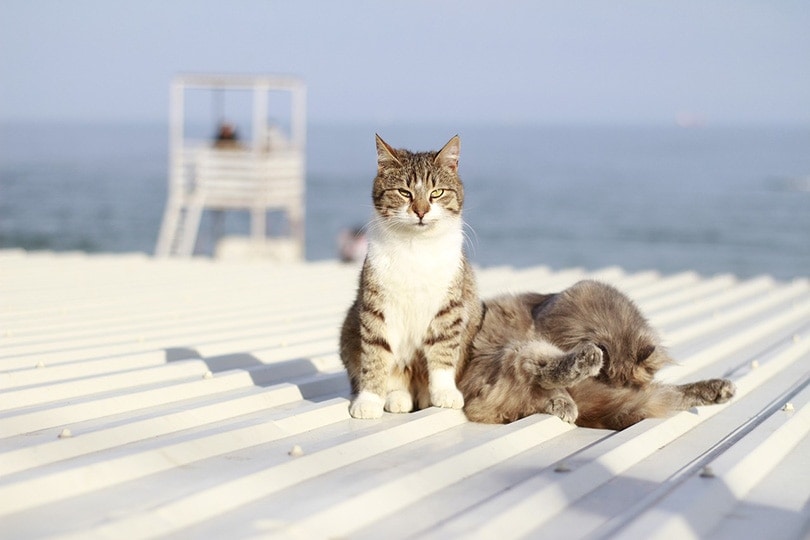
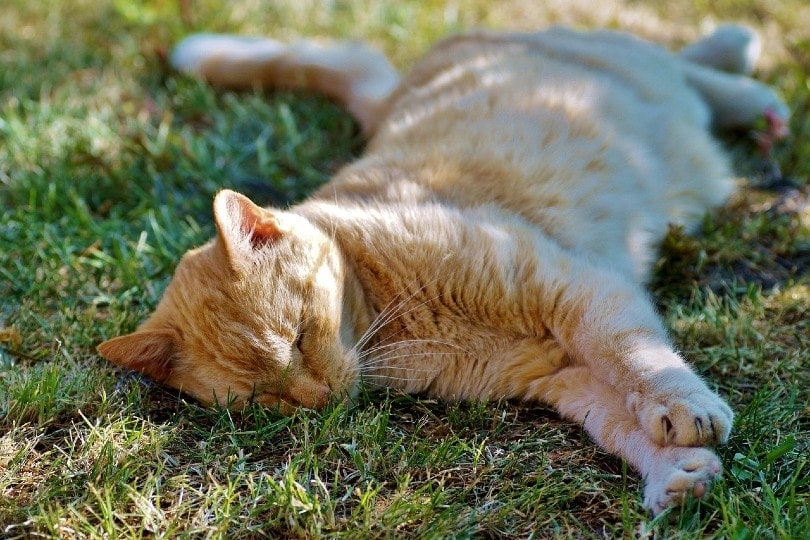
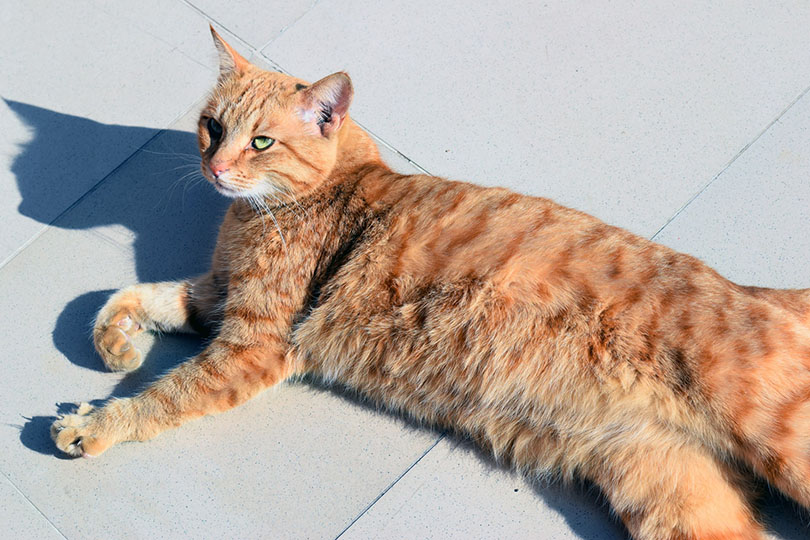
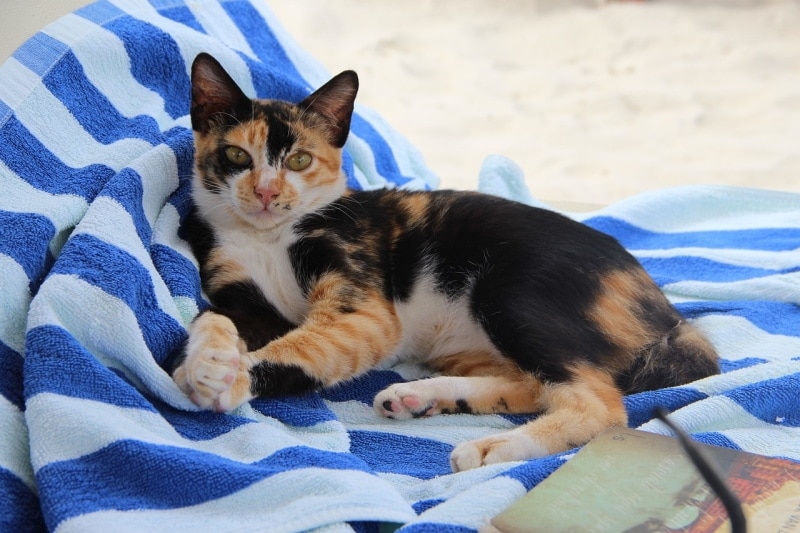
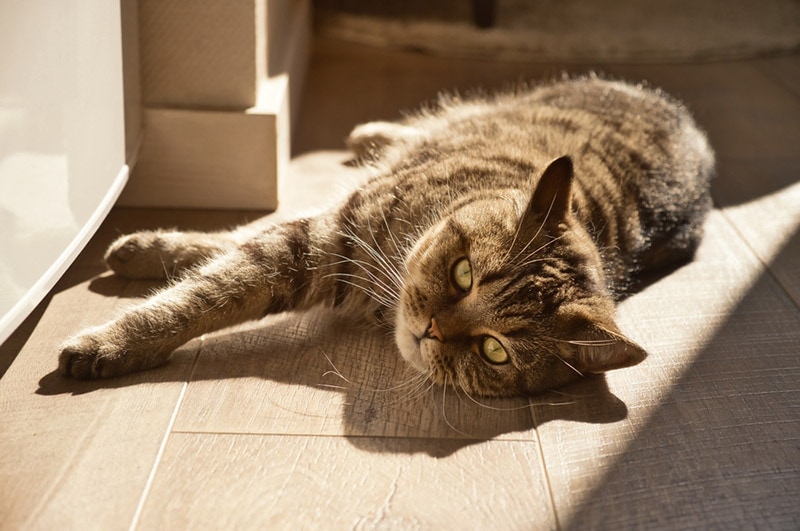
But honestly, even if we could, it's unlikely they would even know the answer. However, we can make some educated guesses as to why cats love to bask in the sun. Cats normally sunbathe because they find it enjoyable and it provides them with behavioral enrichment.
Read on below to find out more.

Do Cats Need to Sunbathe?
No, cats do not need to sunbathe to be physically healthy. Humans need sunlight to get vitamin D into their bodies. Cats get vitamin D by eating it in their diets. Their skin and bodies cannot absorb vitamin D produced through sunlight. So they do not need sunlight for nutritional health.
They are also warm-blooded, so they do not need the sun to regulate their body temperature. Cold-blooded animals, like reptiles and amphibians, need to sunbathe to keep their body temperature warm enough to function. Cats do not.
So, Why Do Cats Sunbathe?
Presumably, cats sunbathe because they like to! Cats are complex animals with rich lives filled with behaviors beyond physical necessities. As a living being, having options to do things they enjoy is important for a high-quality life.
Cats do not physically need to sunbathe, but it does provide them with behavioral enrichment, which is essential for well-being and welfare. Cats need to be able to express natural behaviors, and sunbathing can be an important part of this.
Behavioral Enrichment
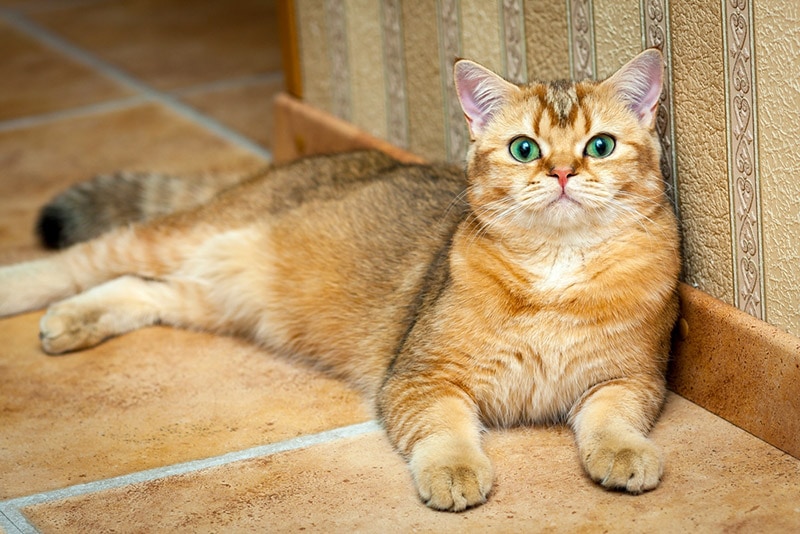
Veterinary scientists would refer to a cat sunbathing as behavioral enrichment; it is enriching their lives through choosing natural behaviors. Behavioral enrichment is an animal husbandry philosophy where changes or options in the environment of a captive animal provide stimulating behaviors. (See the list at the end of this article for examples of behavioral enrichment for cats.)
Having a healthy cat means not only guarding their physical health but also allowing them to engage in behaviors that come naturally. Allowing cats to enjoy some time in the sun provides them with the freedom to choose and a healthier mental attitude.
Should I Let My Cat Outside to Sunbathe?
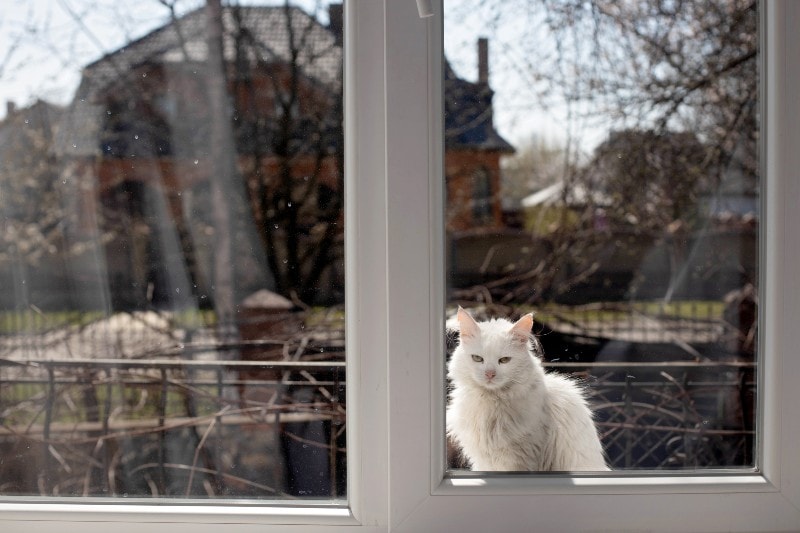
While many cat owners love to put their cats in a sunny spot for naptime, sunbathing has risks. One of the biggest risks of sunbathing is associated with being outside. Cats do not need to be outdoors to enjoy sunbathing. They can do it indoors, through the windows, just as easily. It is just as enriching and about 100% safer (just as a non-scientific estimate!).
Do not let your indoor cat outside—especially unsupervised—just so it can sunbathe. There is no need to do so. While some cats can live happy lives outdoors, they almost always live a more dangerous life than indoor cats. Not to mention the ecological and environmental devastation outdoor cats can cause. If you have an indoor cat, keep it indoors.
Regardless of being indoors or outdoors, safety comes first. Move the cat if they are in a dangerous spot—even your outdoor cats. Look around cars, other animals, or moving equipment. Sunbathing on the driveway is pleasant for the cat, but they risk getting hit by your car.
If they are inside, make sure they will not get hurt while they zone out in the sun. Watch they don’t get stepped on or fall from a precarious perch.
Limit Sun Exposure
Making sure they are safe while they sunbathe includes that they do not get stuck baking in the sun. It doesn’t take long for the sun to become unbearable, so always make sure they can get away from it. Always provide shady sanctuaries, especially if the sun is particularly sunny.
If your cat spends too long in the hot sun and they overheat, bring them to the emergency vet right away. They will need to be cooled off and most likely will need fluid therapy.
Signs of overheating cats are as follows:
Sun Damage for Cats
Just like humans, cats can get sunburns. They tend to get sunburnt along the parts of their skin with less fur, such as the ears and nose. If their sunburn gets bad enough, they may need veterinary attention to get painkillers. The burn may need to be cleaned or an infection cleared up.
Cats can also get solar-induced skin cancer, just like humans. Cutaneous squamous cell carcinoma can be deadly and painful. It usually appears as ulcers and abnormal wounds that do not heal on the ears and nose. If your cat develops a persistently weeping blister on their face, bring them to the vet.
Sunburns and skin cancer occur after long periods of prolonged sun exposure. It takes a long time and intense sunlight to cause this type of skin damage. So, monitor your cat’s sunbathing time, don’t let them spend too long baking in the intense sun.
Frequently Asked Questions (FAQ)
How long should my cat sunbathe?
It is hard to say how long is too long. There is no scientific data that tells us this magic number. Probably because each cat will be different, and each location in the world will be different.
The intensity of the sun's rays will influence how much it causes skin damage. More intense rays of sunlight will cause more damage. Try to keep your cat from sunbathing at peak solar intensity times. Close the curtains or bring your outdoor cat indoors during the sunniest parts of the day.
Is my white cat at more risk?
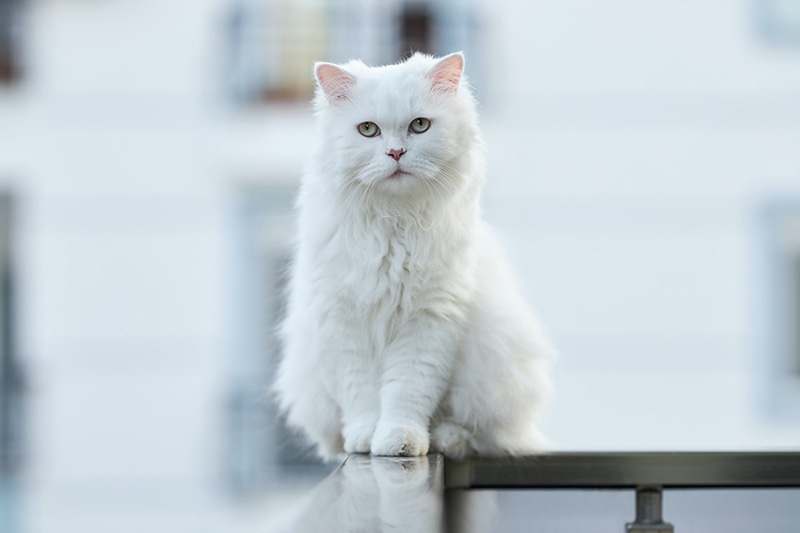
White cats and cats with less protective fur are more prone to getting sunburn and solar-induced skin cancer. These types of cats will need more protection from the sun, and you may need to interrupt their sunbathing more regularly. There are sunscreens made for cats which may help.
Will my cat get depressed if they can’t sunbathe?
Nope, your cat does not need sunlight to be healthy and happy. Now, they may get depressed if they’re bored, have no other way of expressing natural behaviors, or their day-to-day living is not enriched with behavioral stimuli.
And yes, that behavioral enrichment may be sunbathing, but that is not the only stimulation you can provide. If your cat cannot sunbathe or you are worried they are getting too much sun, provide other things for them to do.
How do I balance the dangers against the benefits of sunbathing?
If your cat cannot or should not sunbathe, as long as they have other ways of expressing other natural behaviors, they will be fine. Even if they used to love sunbathing, I bet you can convince them that other activities can be just as fun.
Other behavioral enrichment ideas include:
How do I moderate their sunbathing?
Getting creative and providing behavioral enrichment for your cat means they will have a happier and healthier life. Balancing the physical dangers of natural behavior, such as sunbathing, and the physiological benefits means both encouraging and intervening when necessary.
Here are some other ways to protect them from the sun while also allowing them to enjoy it.
Closing Thoughts: Moderate Sunbathing Is the Answer
The physical risks of sunbathing are very real and deadly. But allowing some sunbathing in weak sunlight can be very happy-making. Allowing a cat to sunbathe in gentle sunlight is good for their psychological well-being, but too much sunlight can cause significant and deadly damage. Find the right balance.
Related Read: Do Cats Need Vitamin D? What Science Says
Featured Image Credit: oleg_aryutkin, Shutterstock
Get Hepper In Your Inbox


Pet care tips from our vets and experts, straight to your inbox.
You may opt-out at any time. View our Privacy Policy for more information.
Dr. Chantal is passionate about the human-animal bond and improving animals' lives through their connections with their human companions. She has worked with many different species, big and small, including dogs, cats, birds, rabbits, guinea pigs, reptiles, amphibians, and even horses and mice. Chantal is excited to share her knowledge using her writing to help people connect with their animal friends.
Dr. Chantal believes that the best way for animals to be healthy is for their humans to understand their needs and well-being. She loves spreading her knowledge to as many people as she can through her writing.
Education
Dr. Chantal graduated from the Royal Veterinary College in London, England, where she received her vet degree. She then received her Masters in Conservation Medicine from Tufts University.
Experience
Dr. Chantal has worked with animals her entire life in many fields, even outside of veterinary medicine. She managed horse barns, worked as a dog trainer, and as a wildlife biologist before attending vet school. Chantal has been a veterinarian for over three years and continues to work with dogs, cats, and exotic animals. And, she still knows a thing or two about horses.
Join the conversation
Ask a question, share your story, or send private feedback.