Hepper is reader-supported. When you buy via links on our site, we may earn an affiliate commission at no cost to you. Learn more.
Do Goldfish Need Gravel? (The Answer May Surprise You!)
In this article
Most people put about an inch or two of pea gravel at the bottom of the tank, fill 'er up, and call it quits until their weekly vacuuming, but I'm going to show you a better way because gravel can be extremely useful when done right.
When done WRONG? It can be a huge pain to maintain. And even a goldfish safety hazard (in more ways than one)!
Good news: Today I'm going to show you how you can:
Reduce or even eliminate tedious and time-consuming gravel vacuuming forever
Prevent toxic waste pockets from forming and poisoning your fish
Save your goldfish from the danger of getting a piece of gravel stuck in their mouth
Make a healthier environment for your fish!
This is all done by the way you set up your goldfish gravel (and the kind of gravel you use).

Do Goldfish Need Gravel?
Aesthetics aside, I strongly believe that the majority of goldfish tanks should have some kind of a substrate.
Psst: substrate = what you put at the bottom.
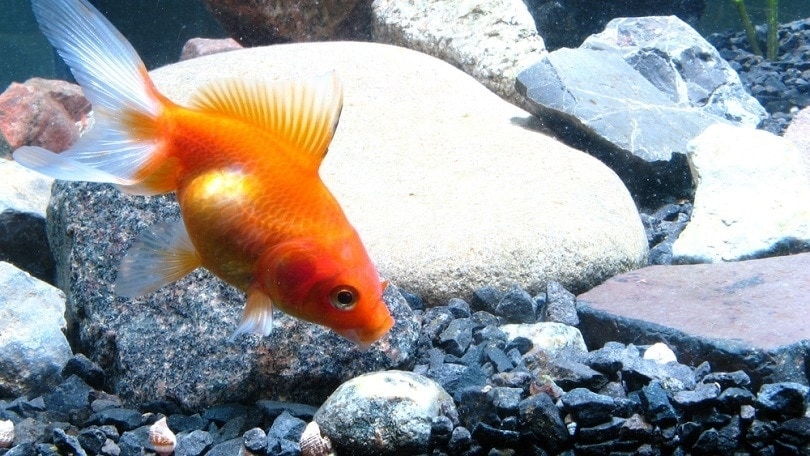
Goldfish are foraging creatures and the right substrate mimics their natural environment. The more natural the environment, the happier (and healthier) the fish will be. I get it: Bare-bottom tanks may be easy to vacuum, but they prevent goldfish from expressing natural foraging behavior. They also reflect more of a glare from the lights above, which can contribute to stress unless mitigated by using lots of plants.
I used to have only bare-bottom goldfish tanks, but now I will never use them for anything but a hospital/breeding/fry tank. You'll be amazed at the difference when you see your fish happily pecking along the bottom!
Goldfish kept in captivity can - and do - get bored unless they have interesting things to keep them occupied throughout the day. Foraging in the substrate is huge for them. It's what they are made to do! So while gravel might not necessarily be considered a "basic need" (goldfish can live without it), substrate is definitely an important part of behavior stimulation for them they shouldn't be deprived of in most cases.
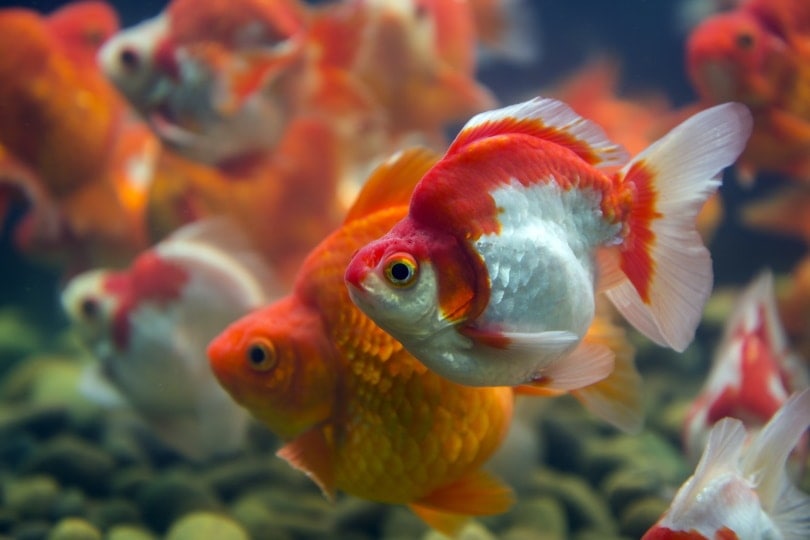
It doesn't have to be gravel, per se.
If you're a new or experienced goldfish owner who’s experiencing issues understanding the best substrate for your pets, you should check out our best-selling book, The Truth About Goldfish, which covers everything about creating the most ideal tank setup and more!
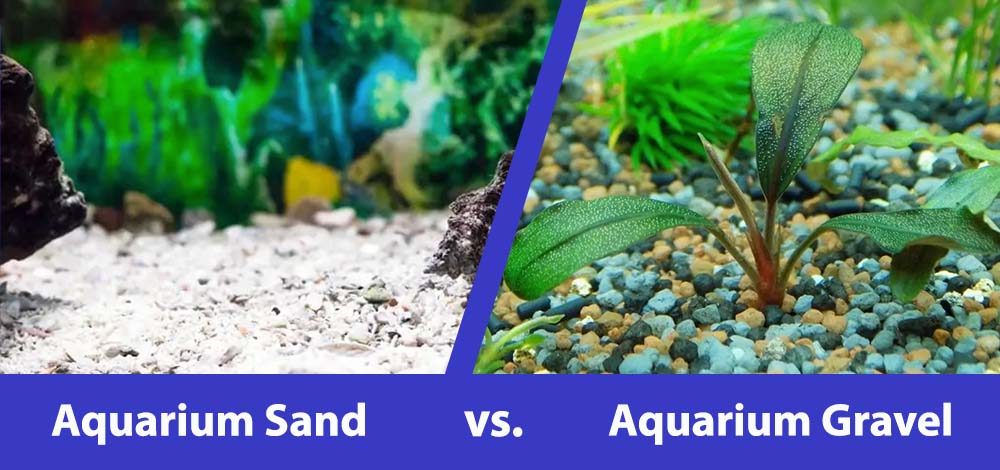
Sand also works exceptionally well as a foraging substance. But the methods I recommend for installing gravel in your aquarium have so many awesome advantages (including allowing for foraging behavior) that you may find you prefer it to anything else.
How to Properly Set Up a Gravel Substrate in Your Goldfish Aquarium
There are 2 really good approaches I recommend for goldfish. Each have their own set of advantages in addition to those listed above. You just pick what works best for your tank.
For either method, you should not use regular pea-size aquarium gravel. Why? It's a major choking hazard. If you own goldfish, you know how they are constantly picking things up from the bottom of the tank, and the grain size of pea gravel is just right to get stuck in their mouths. This can cause stress, damage or even death to the fish. Yikes!
Too small = choking hazard.
Too large = nasty debris buildup.
So, I recommend only using larger gravel that is 1/2" to 3/4" large in size - these ones are perfect.

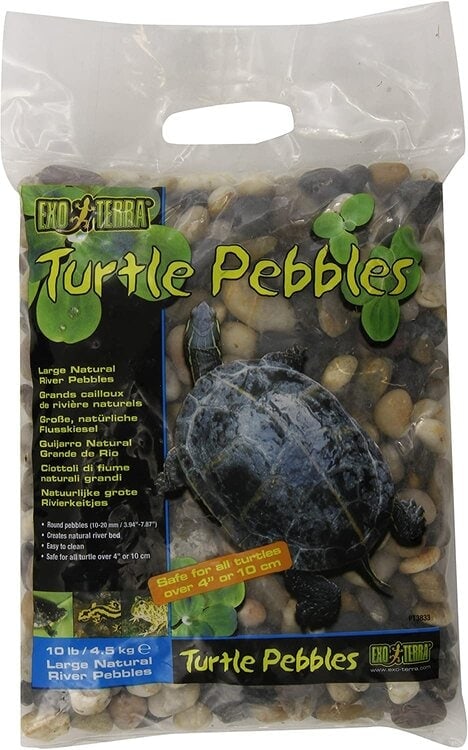
They are marketed to turtle keepers due to the bigger size, but goldfish keepers find they work great in their aquariums as well!
Tip: Wash your gravel first to avoid problems with cloudy water after setup.
So let's get to it!
Method 1: Walstad-Style Gravel Bed
Benefits:
The additional benefits of this method primarily have to do with adding a soil layer below the gravel.
What's so great about dirt?
According to Diana Walstad, author of Ecology of the Planted Aquarium:
You can grow bigger, happier plants without expensive fertilizers and cO2/liquid carbon
Dirt contains bacteria that breaks down ammonia and nitrites - and even nitrates.
The bacteria in the soil break down the waste that falls through the gravel, preventing toxic hydrogen sulfide pockets from forming which can hurt your fish and greatly reducing maintenance.
Dirt contains probiotic bacteria to prevent disease in your goldfish
It helps to prevent pH crash by stabilizing the KH
And it continually releases important minerals into the water, which means you do not have to change the water to replenish minerals.
It is only recommended to use organic potting mix for your soil layer as you do not want to introduce chemical fertilizers into your aquarium which could harm your fish when submerged.
She recommends using 1 inch of dirt underneath your gravel. The 1-inch gravel cap above the dirt prevents the fish from making a huge mess of it in your tank.
(Note: you will need an empty, dry tank to do this.)
Put down 1" Organic Potting Mix. You can remove the most obtrusive sticks or bark by hand.
Add .5" gravel on top of the dirt
Plant your live Plants
Add remaining .5" gravel
Fill the tank by slowly pouring water onto a dish or plastic bag
Soon after the soil has been added, it may impart some excess nutrients into the water in the form of ammonia or nitrite. This does not always happen and will quickly go away, but if it does extra water changes may be needed initially as the soil acclimates to a submerged state.
Remember: It might take some extra work up front, but in the long-term the maintenance-reducing and cost-saving benefits far outweigh it.
Method 2: Reverse Flow Undergravel Filter
Maybe you don't want dirt in your tank or don't want live plants, but want the benefits of gravel's massive surface area for biological filtration? An undergravel filter might be the solution for you.
But there is some issues with a standard UG filter setup because it pulls gunk down between the rocks and can be hard to clean and get rather nasty. So, I recommend reversing the flow to force the waste up through the gravel bed, where the particles can be trapped by intake sponges or another prefilter.
You can read more on how to set this up in my other post.
How Much Gravel Do I Need for My Tank?
The amount of gravel you need depends on how deep you want your substrate. You can use this calculator to determine how many pounds you'll need based on the dimensions of your aquarium. Oh, and don't forget: i've found it's better to err on the side of buying a little more because if you don't have enough during the setup process, it really is a pain to wait to get more.

Conclusion
I hope you found this post useful, and maybe even learned something new!
What do you think? Do you like using gravel in your goldfish tanks? Have a tip you want to share?
Let me know in the comments below!
See also: How to Set Up an Undergravel Filter
Featured Image Credit: JuanCarlosPalauDiaz, Shutterstock
Get Hepper In Your Inbox


Pet care tips from our vets and experts, straight to your inbox.
You may opt-out at any time. View our Privacy Policy for more information.

Lindsey discovered her passion for fish keeping after a junior high school field trip to the Shedd Aquarium in Chicago. Prior to becoming Editor-in-Chief of It's a Fish Thing, Lindsey studied marine biology at the University of California-Santa Cruz. She loves goldfish, tetras, and mystery snails, and recently began experimenting with a saltwater aquarium.
Join the conversation
Ask a question, share your story, or send private feedback.