Hepper is reader-supported. When you buy via links on our site, we may earn an affiliate commission at no cost to you. Learn more.
What Size Tank Should I Use for 2 Goldfish? Our Vet Answers

When it comes to keeping fish at home, one of the most common fish people have is goldfish. This is especially true for children and beginners who want or need something easy to take care of. Indeed, with the correct setup, goldfish are relatively easy to care for.
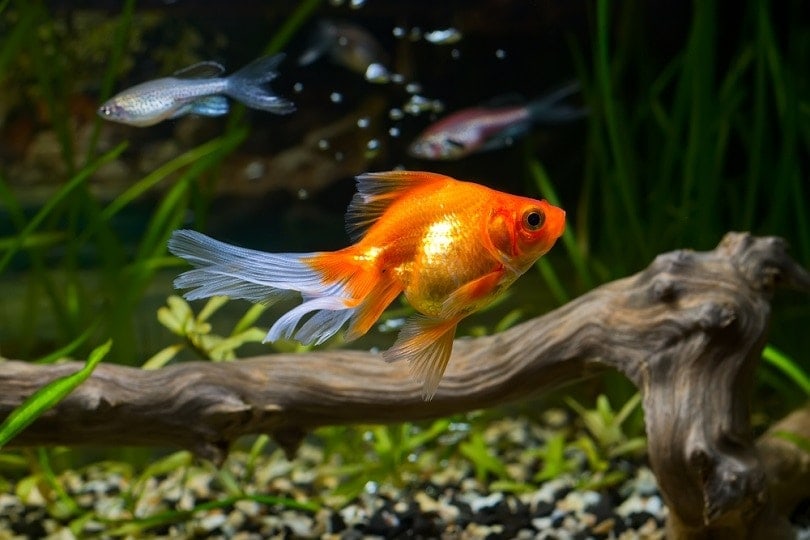
Of course, you need to meet certain requirements for your fish to be happy and healthy. One of these requirements is the tank, or more specifically, the tank's volume. So, what size tank is necessary for two goldfish? And what about just a single goldfish? Realistically, two common goldfish should have 65 to 75 gallons of water volume available. For two fancy goldfish, consider a tank with a 35 to 45-gallon capacity.

What Size Tank Is Needed For 2 Goldfish?
Please Note:
One important thing to know is that two main types of goldfish are commonly housed in home aquariums. There are the common goldfish and the fancy goldfish, both of which require slightly different tank sizes.
Keep in mind that both of these types of goldfish need a good amount of space. What you also need to remember is that we will be talking about the minimum tank size for these fish
If you're new to the world of goldfish or are an experienced goldfish keeper that loves to learn more, we recommend you check out our best-selling book, The Truth About Goldfish, on Amazon.
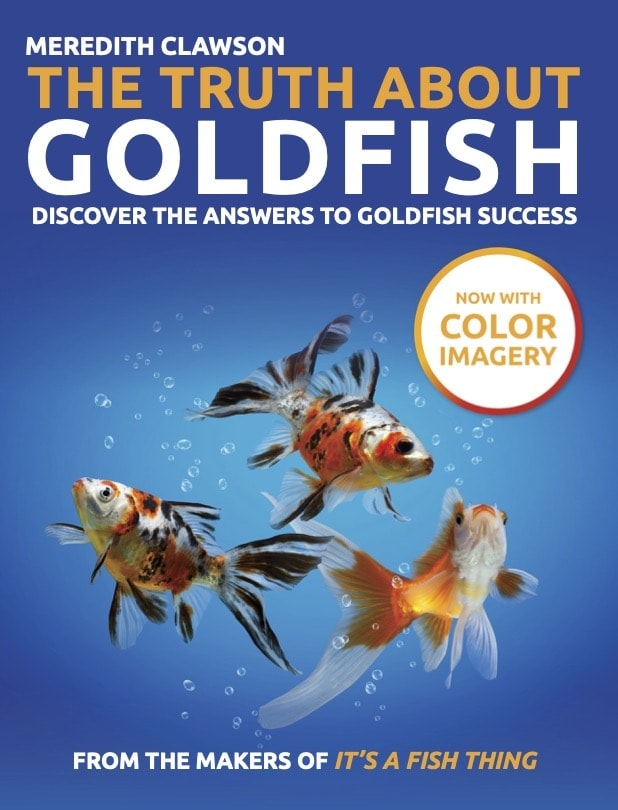
From diagnosing illnesses and providing correct treatments to ensuring your goldies are happy with their setup and your maintenance, this book brings our blog to life in color and will help you to be the best goldfishkeeper you can be.
The Common Goldfish
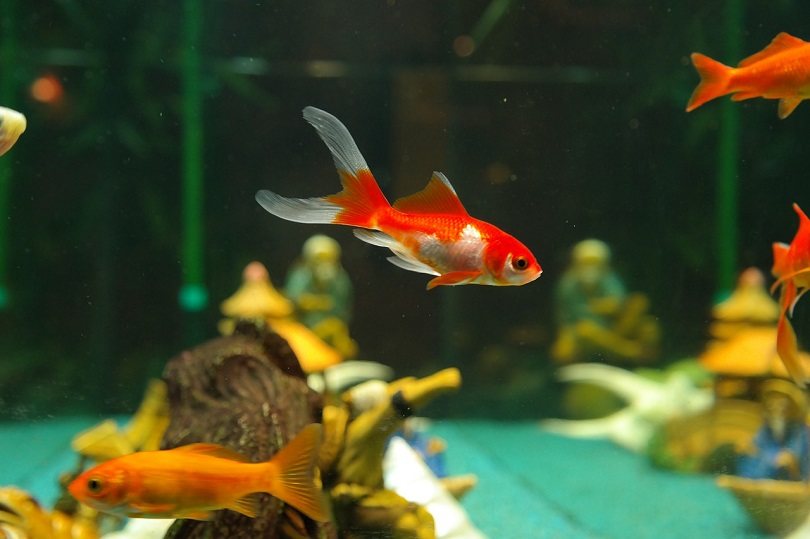
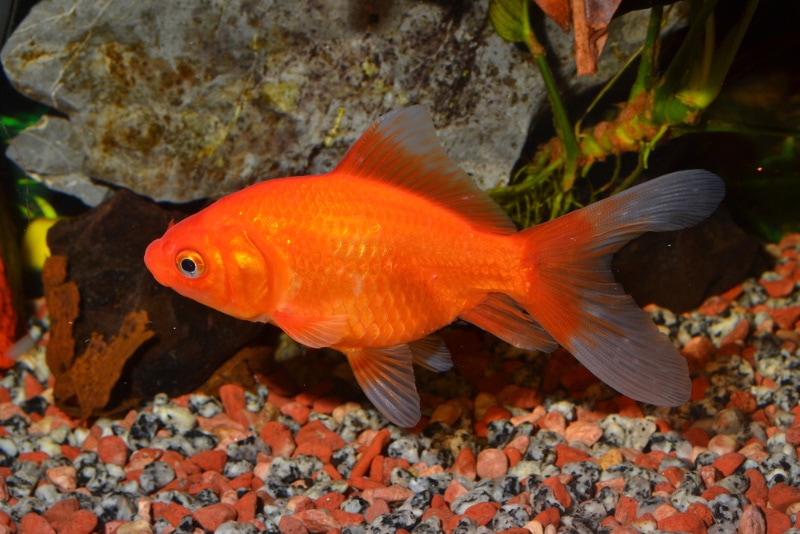
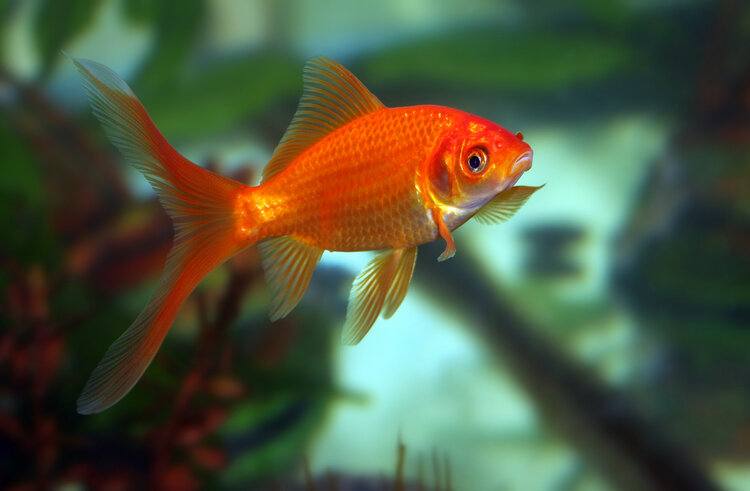
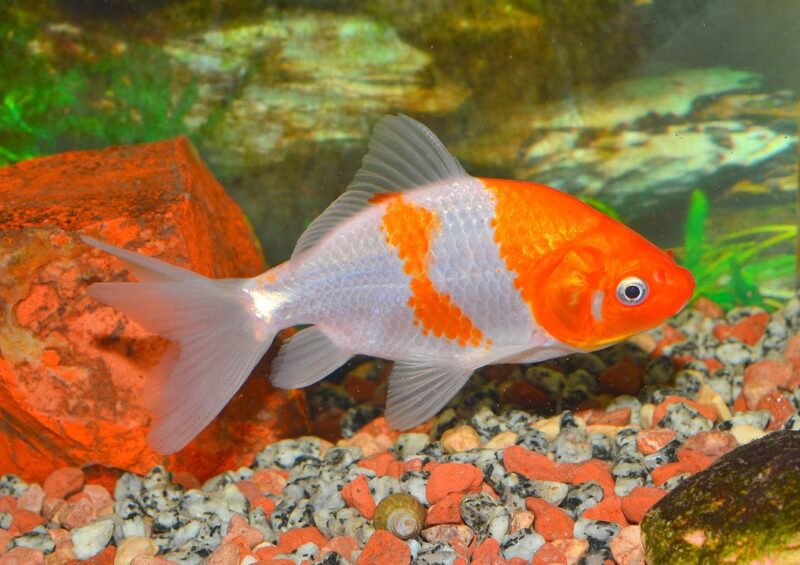
First off is the common goldfish. This kind of goldfish requires a tank at least 4 feet long and 40 gallons (~ 150 liters) in volume as a juvenile. Now, this is the absolute minimum.
If you want your common goldfish to be very happy in its home, a 50 or even a 55-gallon (~190 - 210 liters) tank between 4.5 and 5 feet long is best. Regarding two common goldfish, you will want a tank that is at least 65–75 gallons (~245 - 285 liters) large.
The Fancy Goldfish
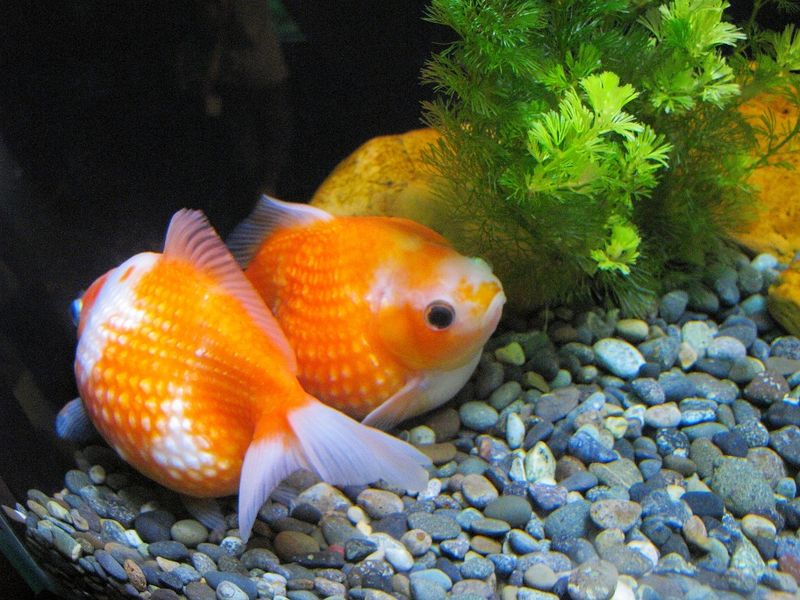
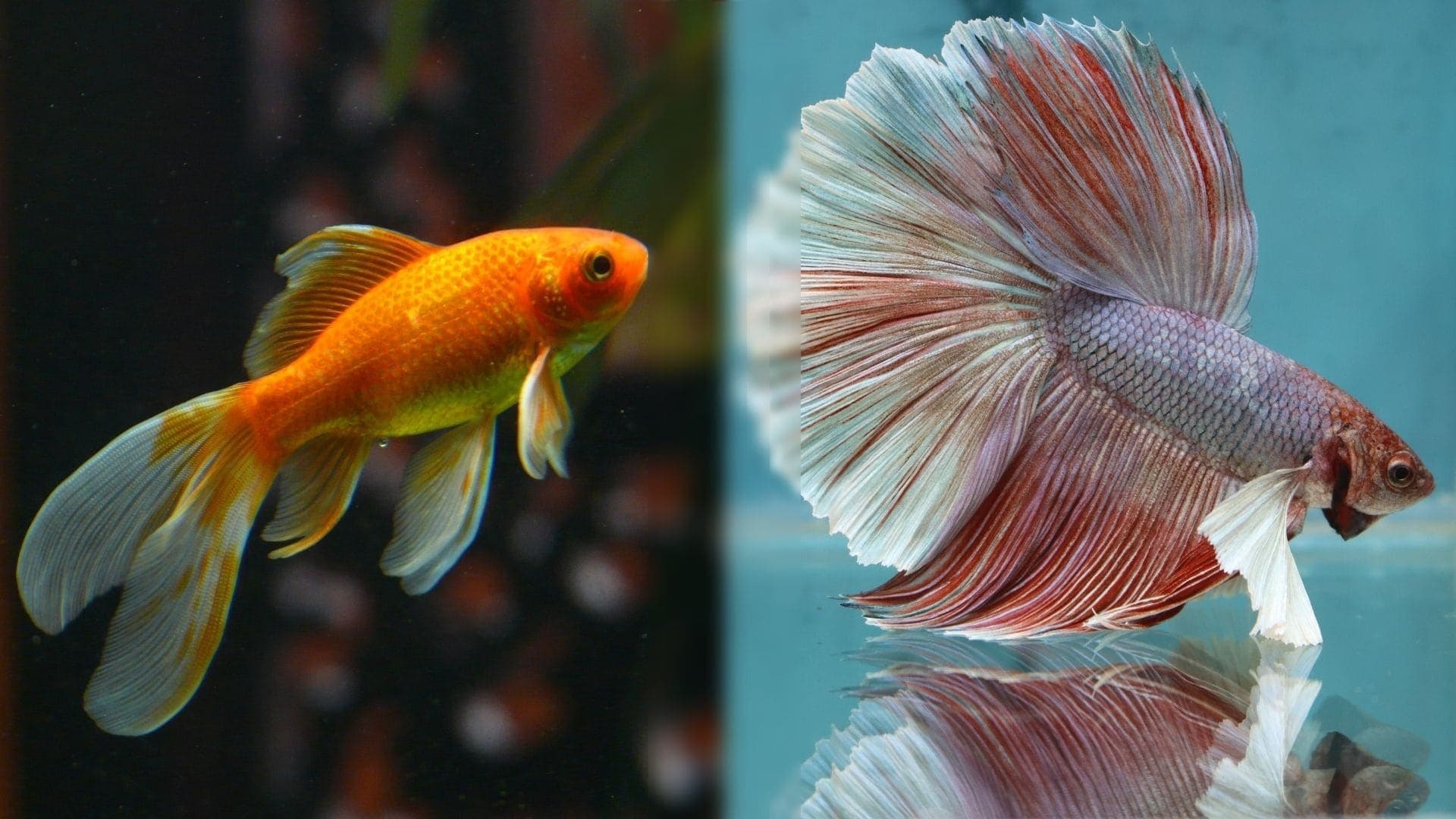
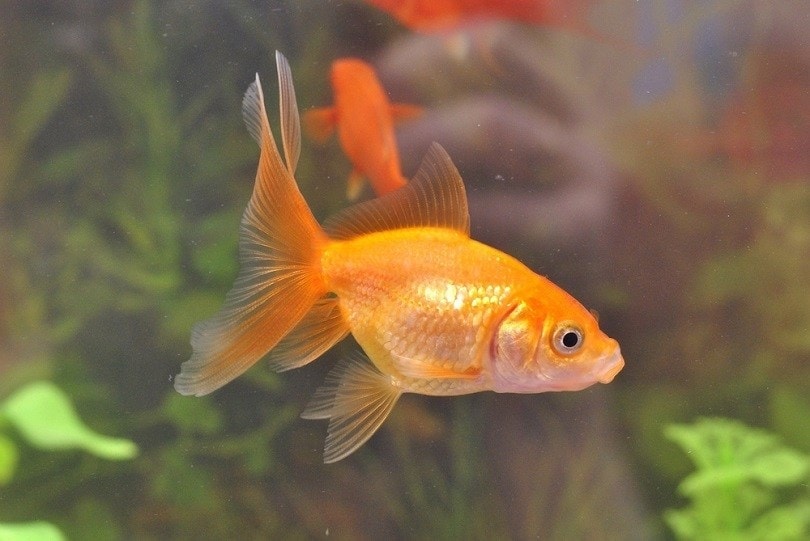
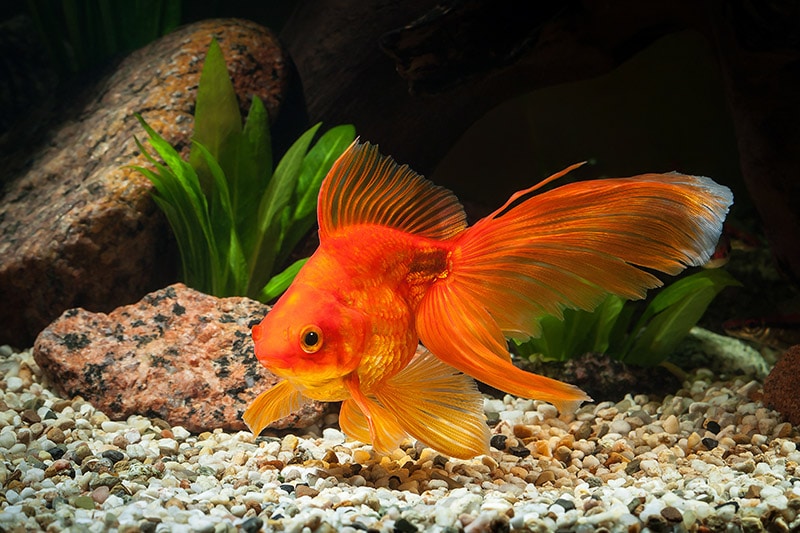
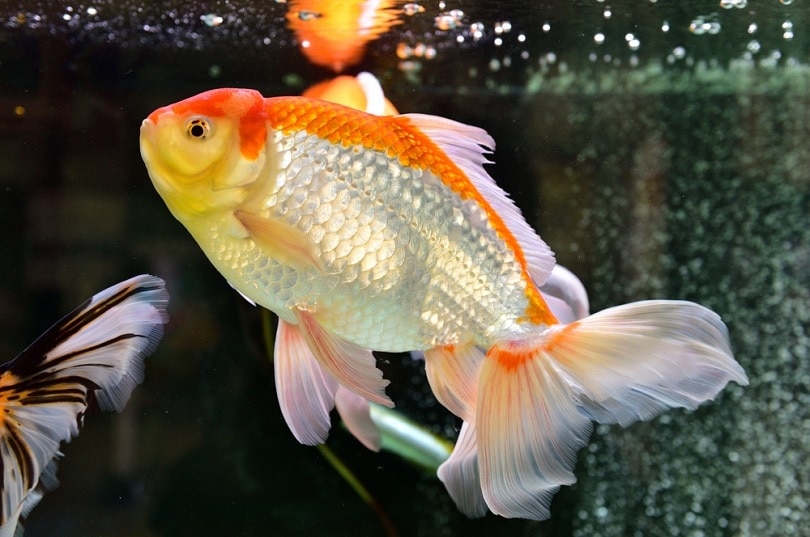
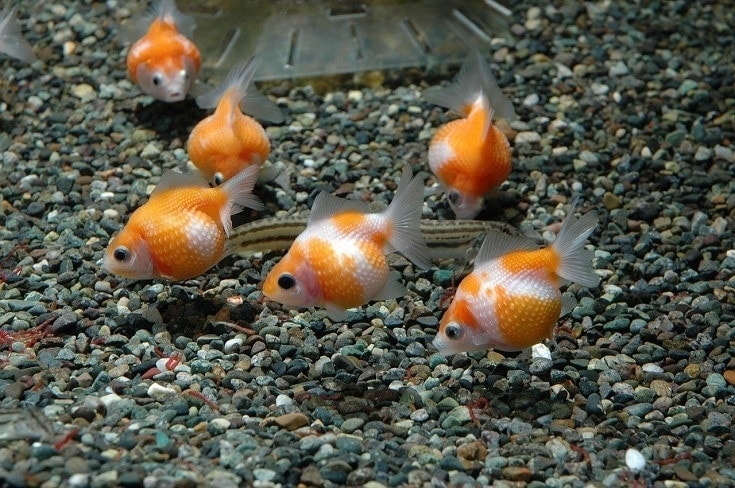
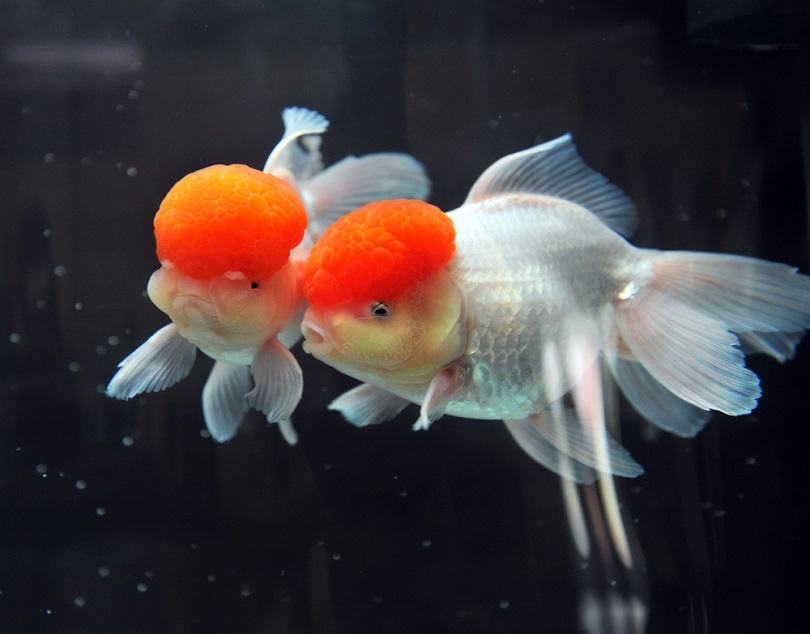
The other type of goldfish that many people have at home, a slightly more expensive kind, is the fancy goldfish. As opposed to what you might think due to this animal's name, it is a bit smaller and requires slightly less space than the common version.
For a fancy goldfish, a minimum tank size of 3 feet in length and a volume of 20 gallons (~75 liters) is required. Once again, this is the minimum. If you want your fish to be comfortable and happy, you should go with a 3.5-long tank that can hold at least 25 gallons (~95 liters) of water.
Also, for each additional fancy goldfish after the first one, you need to increase the tank size by a minimum of 10 gallons (~40 liters). Considering that 10 gallons is the minimum, we recommend an extra 15 gallons (~60 liters) of space after each fish is past the first one.
Therefore, to make your fancy goldfish really happy, two of these animals should have around 35 to 40 gallons of tank space, with a tank between 3.5 and 4 feet long.

Other Aquarium Considerations For Goldfish
A decently sized tank is a good starting point for goldfish. However, there are other things you should consider as well. In this section, we’ll highlight some of the most important aspects of setting up a goldfish tank.
Filtration Requirements
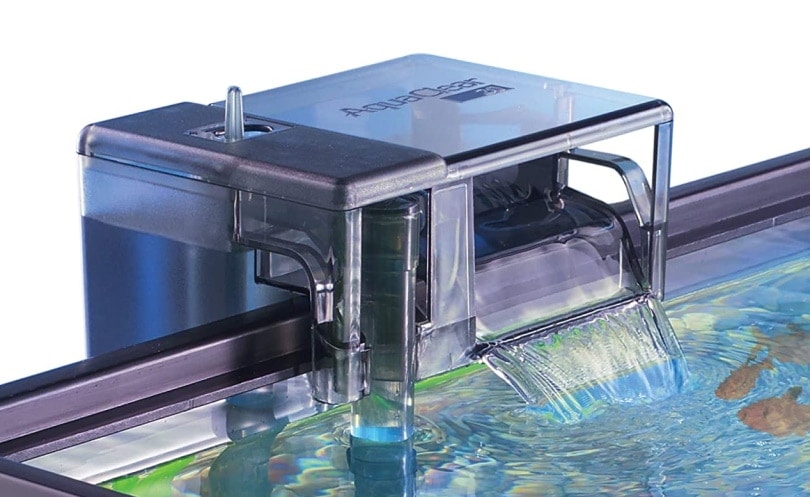
Goldfish are exceptionally messy fish and produce high amounts of waste. Therefore, it’s best to spring for a very powerful filter when keeping them as pets. It is recommended to buy a filter rated at more than the number of gallons in your tank and, if possible, rated for about 200-300% more.
This means the filter should be able to go through at least two to three times the tank’s volume in an hour. For example, if you have a 55-gallon tank, consider a filter rated at over 110 gallons per hour. A trick many goldfish keepers like to use is to install multiple filters in their aquariums.
Not only does this help them achieve excellent levels of filtration, but it makes the task of filter maintenance much easier, too, as you can alternate between filter cleanings (that way, a maintenance session will not disrupt the filtration process by too much if something goes awry).
Temperature Requirements
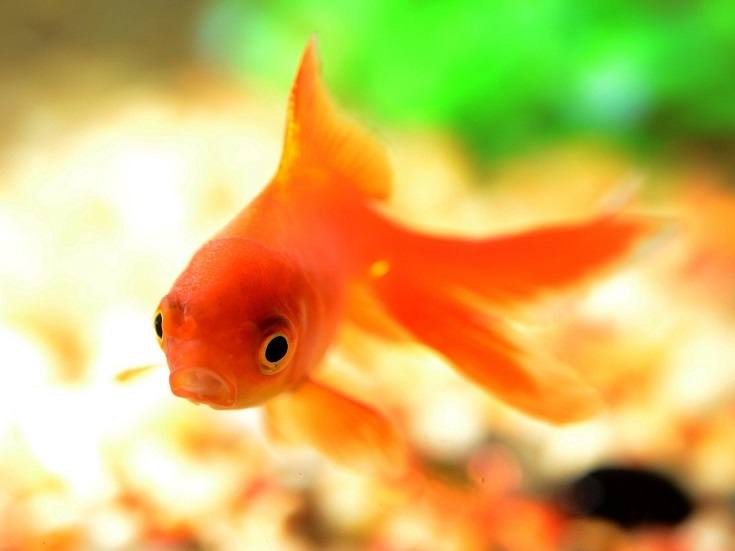
Goldfish are coldwater fish and don’t do well in tropical waters. The ideal temperature for common goldfish, whether indoors or outdoors, is 16–22°C (60.8 – 71.6°F). Fancy goldfish have lower tolerances to changes in temperature and should be kept at 20–23°C (68–74°F). Having options to control water temperatures is an advantage for any fishkeeper.
If you live in a tropical area, it might be wise to install a water chiller. When using a chiller, you should place your aquarium in a room that’s slightly warmer than the setting on the chiller. This ensures that the chiller constantly maintains the temperature at the desired temperature.
When living in colder temperatures, a water heater might be warranted if you don’t plan on having your fish hibernate through the colder months. This is usually a requirement for fancy goldfish, as they don’t have the same levels of cold tolerance as their common counterparts.
Common goldfish in ponds can tolerate water as cold as 32–40˚F (0–4.4˚C). When housed in ponds, they slowly go into a hibernation-like state when this happens and will spend their time at the bottom of the pond until spring arrives.
The key to maintaining your goldfish during such cold temperatures is preventing the water from freezing completely. This can be accomplished by ensuring your pond is deep enough not to freeze entirely during the winter. Goldfish won’t survive if they’re frozen solid.
Live Plants
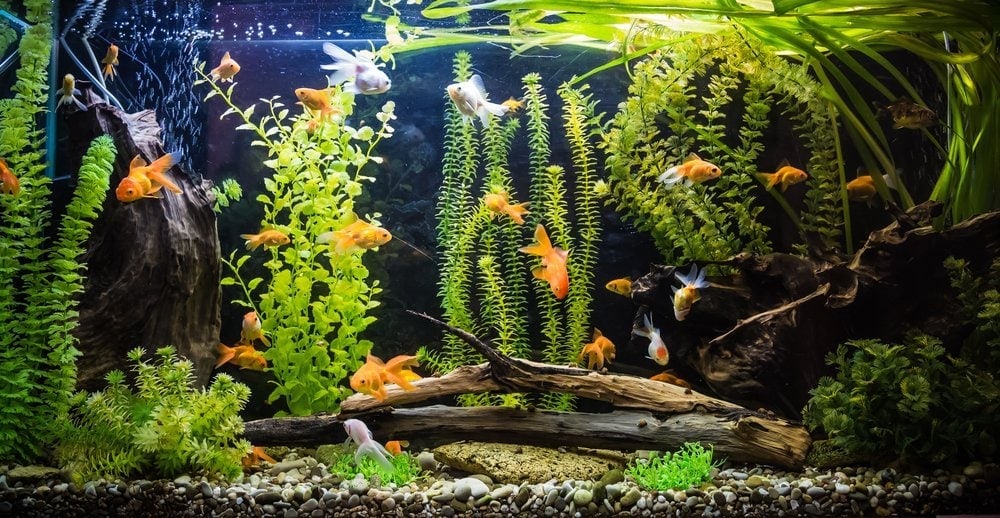
Research has shown that goldfish benefit from enrichment in their aquarium. Live plants are among the most popular forms of enrichment for goldfish. Live plants are a welcome addition to most freshwater aquariums.
Plants provide fish with cover, helping absorb excess ammonia, nitrite, and nitrates from the water. In addition, aquarium plants reduce the amount of carbon dioxide in the water and help oxygenate the water via photosynthesis.
Though goldfish are sure to appreciate many plants, they are unfortunately prone to uprooting and eating plants, too. If you have a constant supply of easy-to-replace, rapidly propagating plants, this isn’t much of a problem. Examples of such plants include the following:
- Elodea Densa (waterweed)
- Lemnoideae (duckweed, also sometimes referred to as water lentils)
- Limnophila sessiliflora (dwarf ambulia)
- Hornwort
Because these plants grow very quickly, they have the added advantage of helping keep algae levels in your aquarium in check (because they can easily compete with algae for nutrients in the water).
At times, picking up uprooted plants and their debris can be cumbersome, especially if they get caught in your filter intake (this is where most uprooted plants end up). Investing in hardy plants with large leaves that goldfish are less likely to disturb might be beneficial. Examples of such plants include:
- Leptochilus pteropus (Java fern)
- Anubias Nana (sometimes referred to as just Anubias or Nana)
Uprooting can also be curbed by tying your plants onto a piece of driftwood using aquarium-safe glue or fishing string. Ensure you quarantine all new plants before adding them to your aquarium.
Artificial Plants & Other Décor
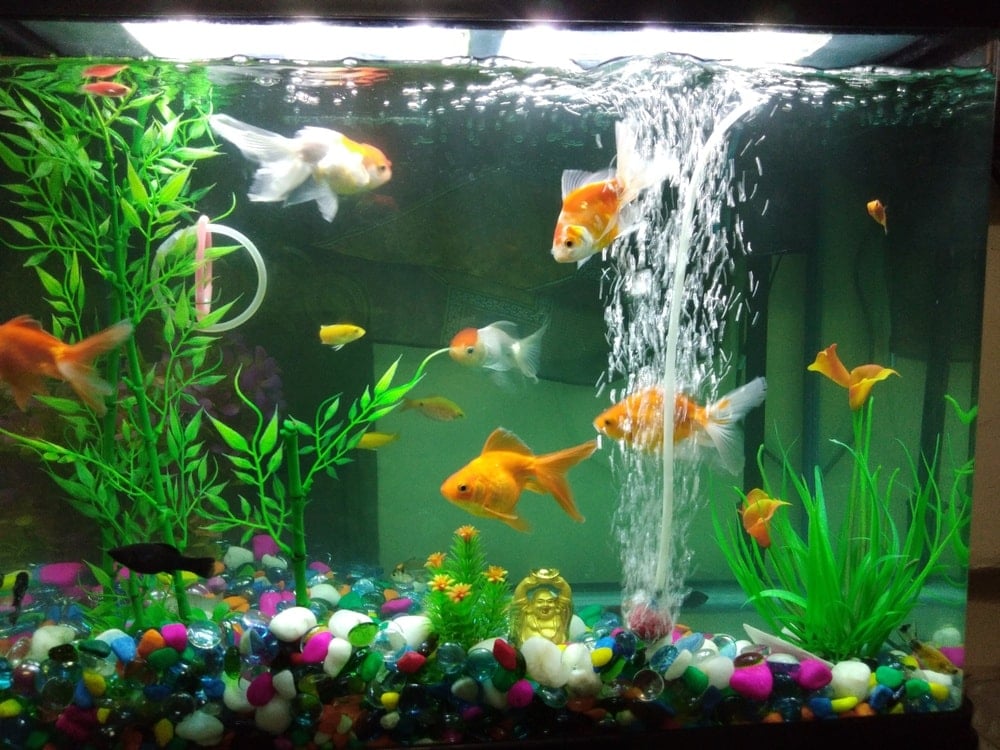
An alternative to live plants is their artificial counterparts. Artificial plants, unfortunately, get shunned because they can’t offer the biological advantages that live plants provide. While true, they do have some key advantages over their live counterparts:
They don't rot or die and can't be uprooted. They can instantly provide an aesthetic change to your aquarium, whereas live plants require time to grow. They are lower maintenance than live plants as they don’t need fertilizer, specific lighting, carbon dioxide infusion in the aquarium, or regular trimmings. Also, they don’t have to be quarantined before being added to your aquarium.
Care should be taken when adding artificial plants or ornaments to your aquarium. Ensure they aren’t too sharp and are thoroughly washed before being placed in your aquarium. It is very important to be careful about sharp ornaments or plants when housing some fancy goldfish, as a sharp object can tear their delicate fins.
The Bubble Eye goldfish and Telescope goldfish deserve a special mention, as their eyes are often very vulnerable to any sharp object in their aquarium. You should ideally not use artificial plants or pointed ornaments in their aquarium. Smooth ornaments (such as round stones) are preferred for these fish.
Finally, because goldfish are prone to rubbing on objects when dealing with external parasites, ornaments can sometimes be used to detect issues in your aquarium; observing your fish rubbing against them is a sign that something might be off.
In Conclusion
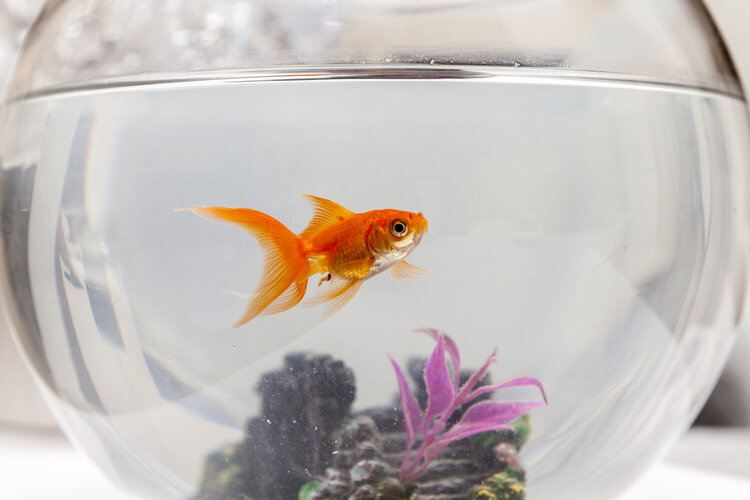
Many people seem to think that goldfish can be kept in bowls, especially really small bowls. This is a common misconception, and we honestly are not all that sure where it comes from. However, the bottom line is that goldfish need quite a bit of space, as you can see. Now, they are not all that hard to take care of, but they need plenty of room and other basics to feel at home.
You Might Also Be Interested In:
Featured Image Credit: hxdbzxy, Shutterstock
Get Hepper In Your Inbox


Pet care tips from our vets and experts, straight to your inbox.
You may opt-out at any time. View our Privacy Policy for more information.
Dr. Luqman grew up with an extreme fondness for animals and turned a childhood dream into reality by becoming a veterinarian. His goals are now focused on helping pet owners understand their pets better in order to ensure the best quality of life for all pets globally. He is passionate about wildlife, exotic pets, pet owner education, and animal welfare. Luqman has 3 years of professional experience working with a variety of animal species. He has skills in demonstrating proper animal husbandry and training some exotic species, such as parrots. Additionally, he has decades of personal experience with keeping many exotic pets: freshwater fish, parrots, songbirds, chickens, ducks, turtles, and hamsters.
Dr. Luqman grew up with an extreme fondness for animals and turned a childhood dream into reality by becoming a veterinarian. His goals are now focused on helping pet owners understand their pets better in order to ensure the best quality of life for pets all around the world. His passions are wildlife, exotic pets, pet owner education, and animal welfare.
Education
Luqman received his degree from Universiti Putra Malaysia.
Experience
Luqman has 3 years of professional experience working with a variety of animal species. He has skills in demonstrating proper animal husbandry and training some exotic species, such as parrots. Additionally, he has decades of personal experience with keeping many exotic pets: freshwater fish, parrots, songbirds, chickens, ducks, turtles, and hamsters.
Join the conversation
Ask a question, share your story, or send private feedback.