Hepper is reader-supported. When you buy via links on our site, we may earn an affiliate commission at no cost to you. Learn more.
Dog Feeding Guide: Daily Food Chart
In this article
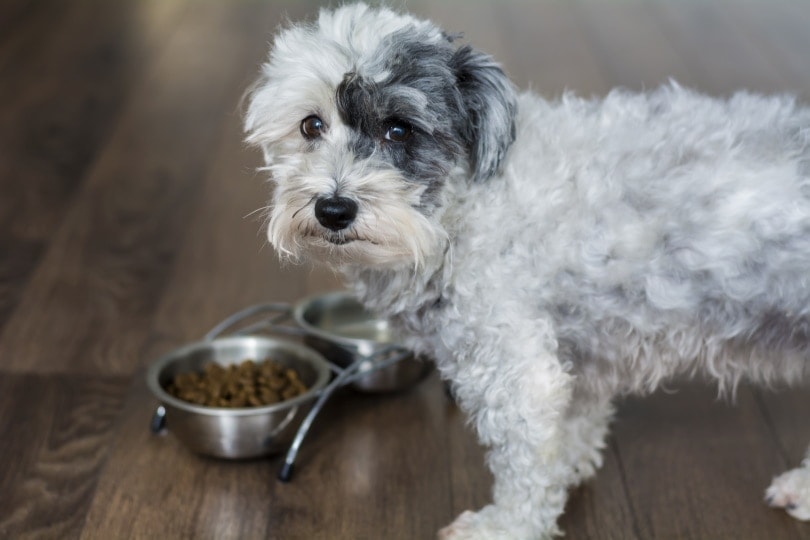
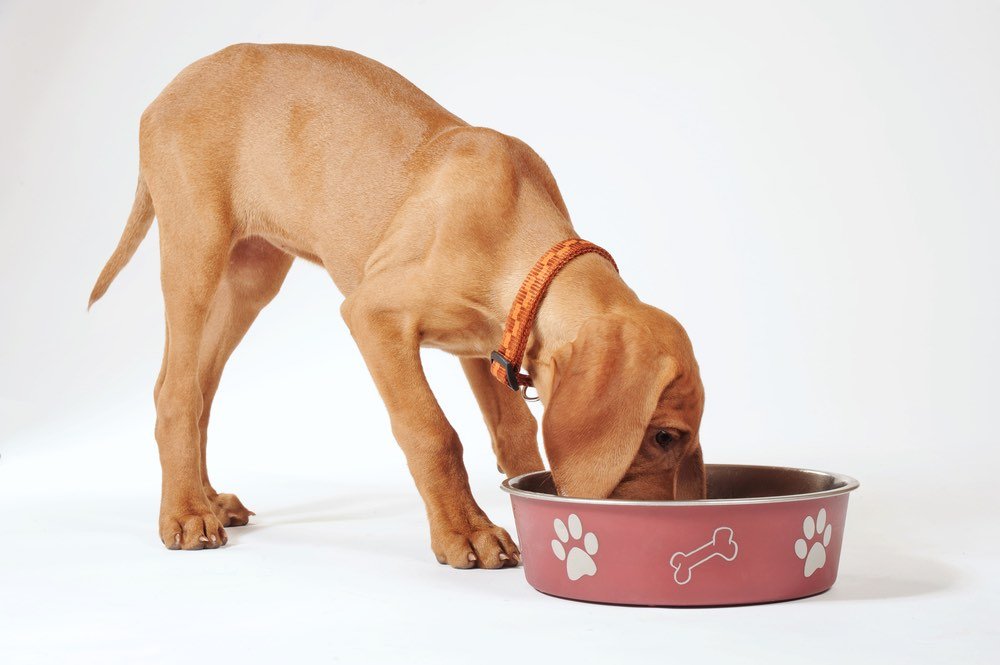
How often and how much you feed your dog varies widely depending on your schedule and their breed and preferences. For example, some dogs prefer to eat in the morning, while others will scarf a portion of kibble down faster than lightning in the evenings.
Combining all these factors will help you figure out how much and how often you should feed your dog. This article gives you further guidance and reasonable rules of thumb to use to ensure that you are keeping them on a healthy diet.

How Much to Feed Your Dog
The amount that you feed your dog is primarily based on their weight and age. Puppies need a special type of puppy food to help them develop into strong and healthy dogs. As they age, the amount that they are fed changes until they reach 1 year old.
Once a dog is 1 year old, their feeding needs should stabilize and stay the same until they begin to become senior dogs. As they become seniors, they will likely eat less, and the kind of food that they eat will likely need to change again.
If their consumption needs to change during adulthood, it will likely be due to a change in their activity level or health condition. Active dogs, for example, will need to eat more than a dog of the same breed that doesn’t get out as often.
Daily Dog Feeding Chart:
| Breed Size & Weight | Up to 3 Months | 3 to 5 Months | 5 to 7 Months | 7 Months to 1+ Year |
| Toy 3 to 12 lbs. | ⅓ to 1 cup | ½ to 1 cup | 1 to 1¼ cups | 1 to ¼ cups |
| Small 13 to 20 lbs. | 1¼ to 3⅔ cups | 1 to 1⅔ cups | 1⅔ to 2 cups | 1⅔ to 2 cups |
| Medium 21 to 50 lbs. | 1¼ to 3⅔ cups | 2¼ to 4⅓ cups | 3 to 4½ cups | 3 to 4½ cups |
| Large 51 to 100 lbs. | 1¾ to 4¼ cups | 3¼ to 5⅓ cups | 4½ to 6⅓ cups | 4½ to 6⅓ cups |
| X-large 100+ lbs. | 4¼ to 7¼ cups | 5⅓ to 7 cups | 6⅓ to 8¾ cups | 6⅓ to 10⅔ cups |
You can complement this information with our dog food calculator here:
Dog Calorie Calculator
Recommended Daily Calories
The exact amount of calories an individual animal needs to maintain a healthy weight is variable and influenced by many factors including genetics, age, breed, and activity level. This tool is meant to be used only as a guideline for healthy individuals and does not substitute veterinary advice
How Often to Feed Your Dog
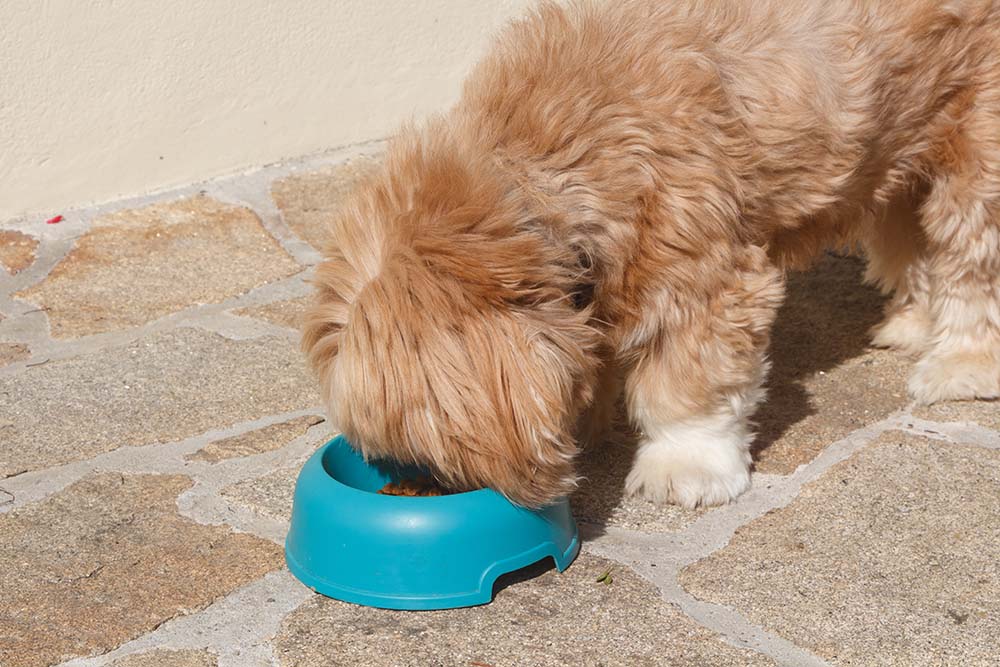
How often you feed your dog changes based on your schedule and their feeding habits. It is typically best for you to feed a dog twice a day, splitting the daily recommended amount between these two portions.
Some people might decide to free-feed their dogs. This means that each day, instead of feeding them at roughly the same time, you leave their food out all day. It gives them the option of grazing whenever they are hungry and takes away the responsibility of feeding them at certain times, especially if your schedule is hectic.
The downside to free-feeding is that you often don’t know how much your dog has eaten and when. It doesn’t put them on any kind of schedule, and their need for the bathroom will typically be more irregular. Food that sits out all day can also attract unwanted insects and creatures into your home.
Free-feeding also only works well for dogs that can control their eating. In other words, they only want to eat when they are hungry. Dog breeds like Labradors usually can’t be free-fed because they will continue to eat until they get sick.
How to Introduce a New Food
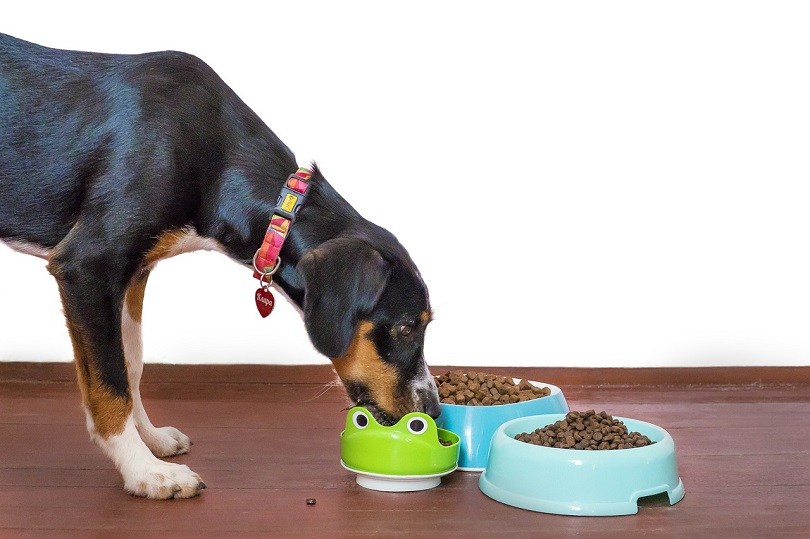
If you decide to switch foods, whether it be to a new brand or flavor or from puppy to adult to senior food, it can be difficult to inspire your dog to make the change along with you.
The best way to introduce a new food is to do it gradually. It will also be easier on your dog’s digestive system. The quicker that you switch food on them, the more likely it could cause tummy trouble.
Transition your dog by steadily mixing in the new food into their current food a couple of days at a time over a week-long period. Slowly increase the amount of new dog food, and decrease the amount of their current food. Always keep the ratio balanced, so they still receive a healthy amount of food each serving.
What to Feed Your Dog
There are thousands of different kinds of foods, diets, and combinations that you can feed your dog. Some will depend on your budget and schedule, while for others, the most restrictive aspect is how picky your dog is.

Gluten-Free vs. Gluten-Full
The debate about a gluten-free food’s health compared to one that contains ingredients like wheat and other grains has raged for years. Some people stand staunchly by the opinion that it doesn’t make a difference. Others are firmly on the side that gluten is unnatural in a dog’s diet and can disrupt their digestive systems.
That said, some dogs are simply gluten intolerant. The more of it they eat, the more irregular their digestive system becomes. Others seem to not only tolerate but also prefer food with gluten in it.
Wet vs. Dry Food
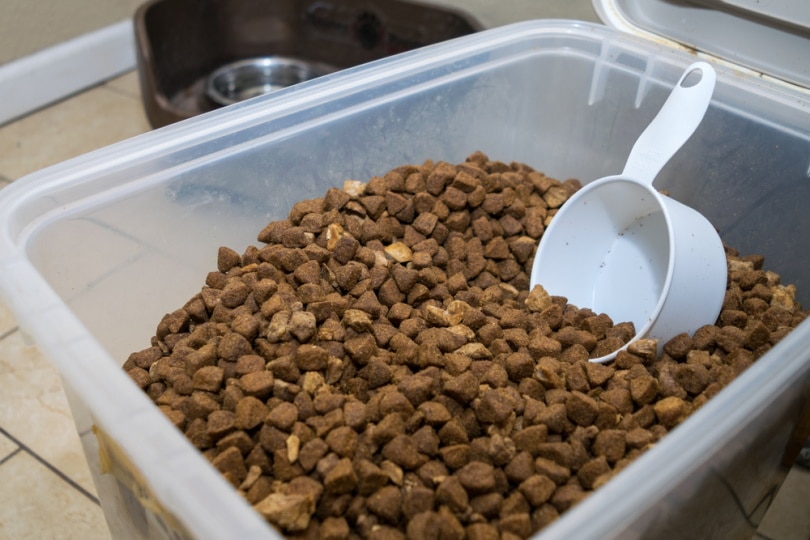
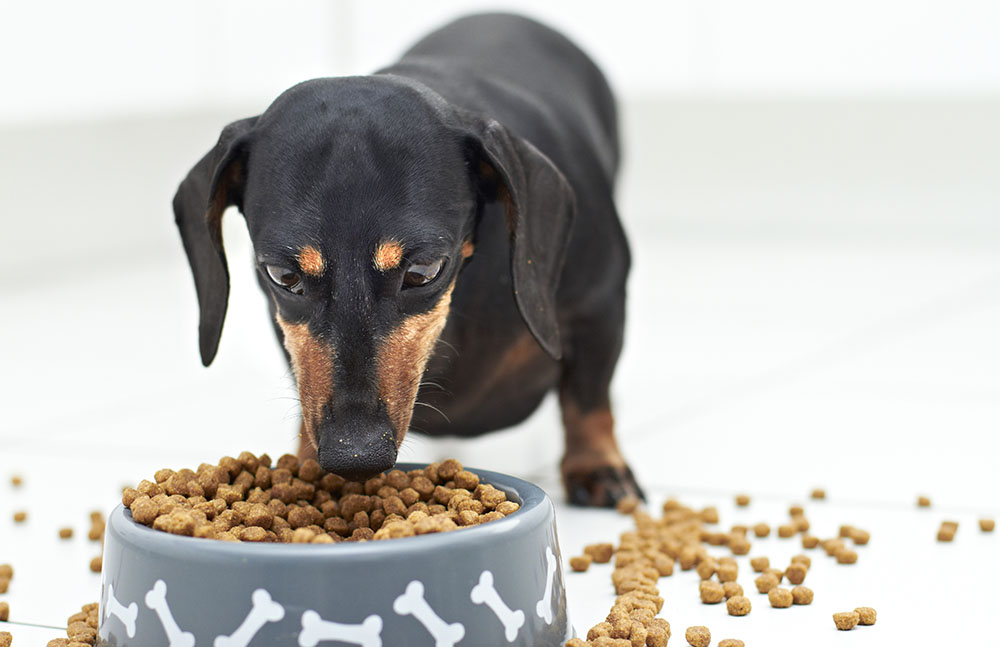
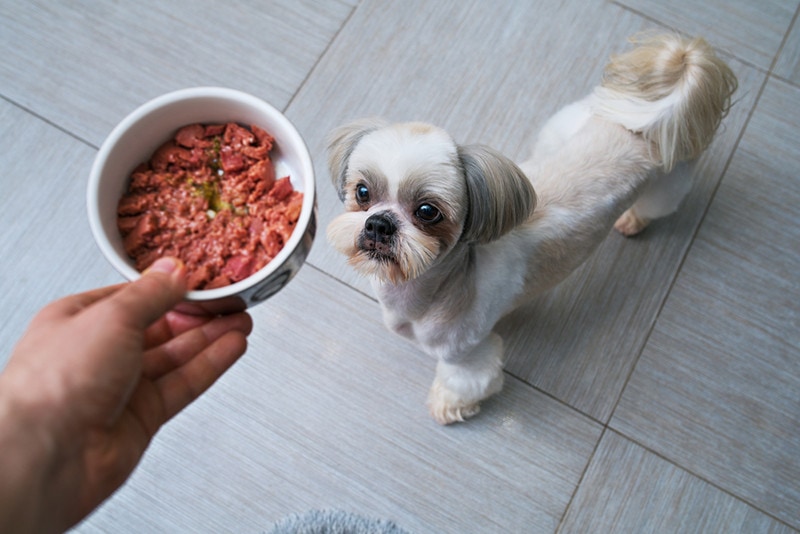
Wet and dry food is less of a hot topic when it comes to your dog’s diet. It depends on what you want to give them. You can even combine the two. Some dog parents face the struggle of getting their pups to slow down at the dinner bowl, while others can’t get their dogs to eat dry food. If your dog seems uninterested in their kibble, try mixing wet food into it.

What Not to Feed Your Dog
Many things are better to avoid feeding your pup. Some human foods are toxic and can seriously harm your dog and even cause fatal reactions to occur. Foods you need to avoid giving your dog, even for a bit of taste, include:
While some of these foods don’t present as much harm as others, they can make your dog feel quite sick. If they have eaten something that they shouldn’t, call your vet’s emergency number, which you should have on hand at all times.

Signs That Your Dog’s Weight Is Healthy
Dogs are naturally fit, strong creatures. Many breeds were originally meant to do some kind of work. No dog breed handles being overweight well. The more weight they put on, the more it will impact their way of life.
Check your dog every once in a while to ensure that they are still a healthy weight. You should be able to feel the contour of their ribs under your palms. You should not have to push through deposits of fat to get to them. But if the ribs sharply stick out under your palms, especially if their skin is sunken between them, your dog could be too thin.
Some breeds, though, such as Italian Greyhounds, are much skinnier naturally than Bloodhounds, for example. If you have any concerns about your dog’s weight, talk to your vet about it.
What to Do If Your Dog Isn’t Eating
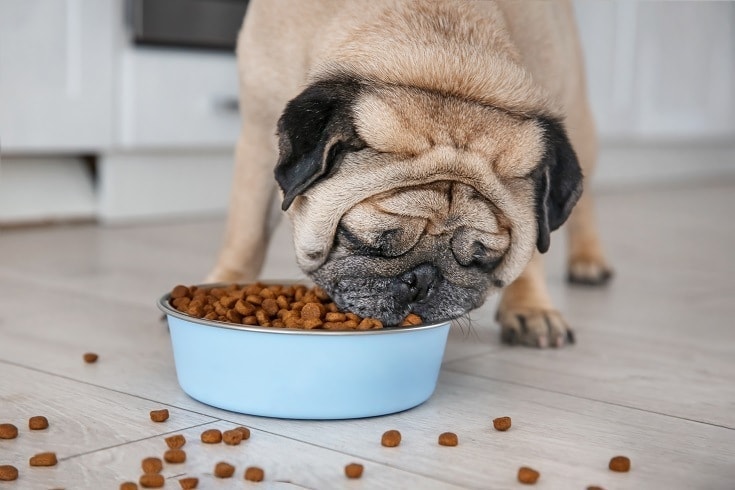
There are many reasons that your dog might not want to eat. Take into account the context of their life and preferences. Is this the first time that they have done this and they normally scarf down their food in seconds? Then, it is abnormal behavior and could be a health issue.
However, many dogs simply decide that they do not want to eat a particular food every once in a while. Check to make sure that the food does not smell like it has expired. Try adding yummy extras, like wet food, or mixing it with bone broth.
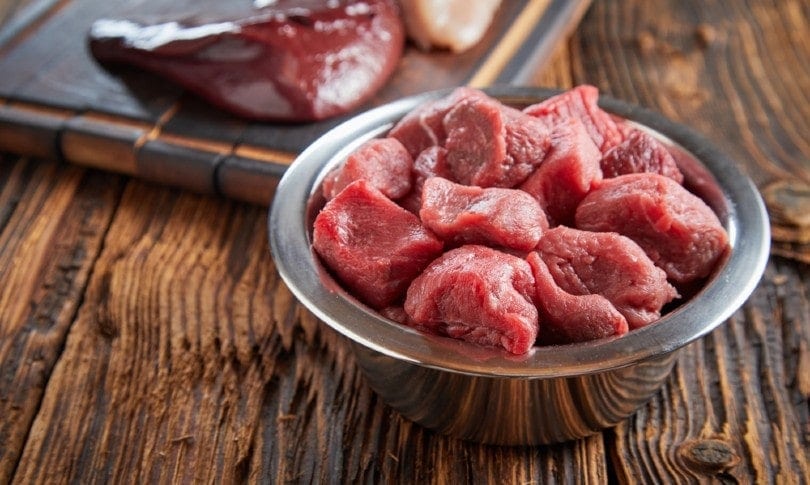
If they are still uninterested, mix in home-cooked options. Share meat with them or something similar that is good for a dog. Praise them whenever they do eat as they should, teaching them that it makes you happy and is the best thing to do.
You can also try feeding them at times when your family is sitting at the table eating. Some dogs have strong pack instincts and will only want to eat when the rest of their “pack” is eating, to feel like they are part of the family.

Conclusion
When you first bring your dog into your home, no matter their age or breed, know that it will take you time to learn their preferences. Work with them to find the right kind of food and flavors that they prefer.
If they get plenty of exercise and consistently seem hungry, you might need to fluctuate the amount that they receive. After a month or two, it should stabilize, with both you and your dog getting into a routine.
You Might Also Be Interested In:
Featured Image Credit: AndrasKiss, Shutterstock
Get Hepper In Your Inbox


Pet care tips from our vets and experts, straight to your inbox.
You may opt-out at any time. View our Privacy Policy for more information.

Nicole is a lover of animals of all sizes but is especially fascinated with the feline variety. She’s the proud mom of Baby, a Burmese, and works every day so he can relax in the sunshine or by the fire. She’s always had a cat in her home and has spent countless days with others, observing behaviors and softening up even the grouchiest of the lot. Nicole wants to share her kitty expertise with you so you and your cat can live happy, healthy, and care-free.
Join the conversation
Ask a question, share your story, or send private feedback.