Hepper is reader-supported. When you buy via links on our site, we may earn an affiliate commission at no cost to you. Learn more.
Puppy Feeding Guide: Nourishment Chart & FAQs
In this article
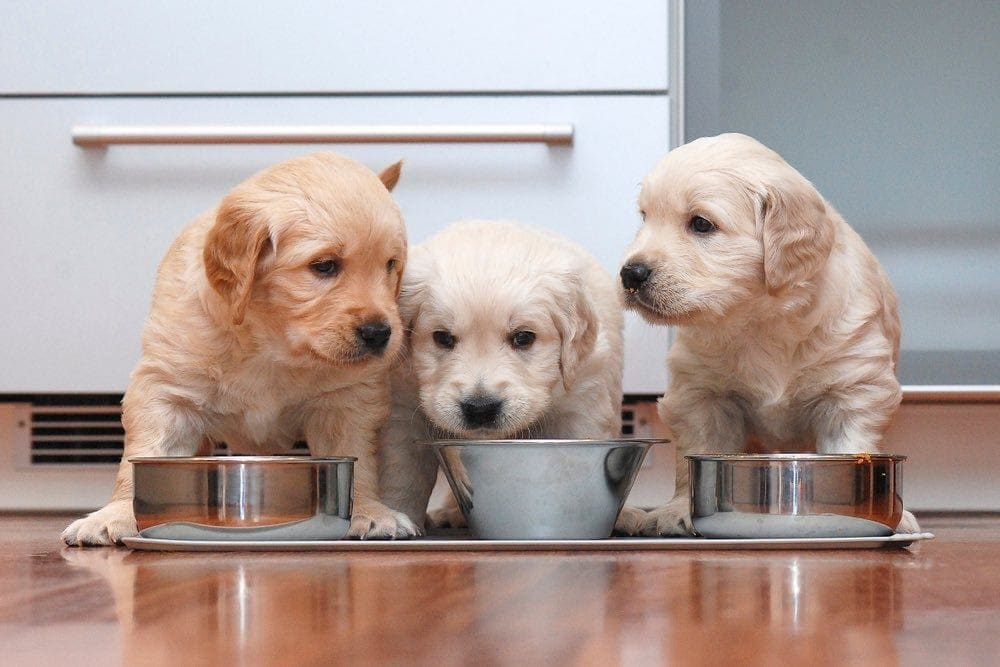
Bringing home your puppy is an incredibly joyous experience, but you always want to make sure you're giving them a good start. Diet is essential for puppies since it's a crucial time in their life when they are growing and developing. You are putting building blocks in place for their lifelong health.
Even though your veterinarian will be able to go over puppy nutrition, it is good to have a guideline. Let us discuss exactly how much your puppy needs to eat, how long they need to eat puppy food, and what you can do to make sure they thrive.

Puppy Feeding
Your puppy is growing and developing at a rapid rate. Making sure that they have the appropriate levels of protein, carbs, fats, vitamins, and minerals is essential to the well-being of your dog. Puppies that don't get adequate nutrition when they're young can develop problems later in life.
Being aware of your individual little one's needs is the first step to providing the proper diet for them at each stage of their development.

Puppies need these nutrients:
Puppies also need a plentiful number of essential vitamins, minerals, and antioxidants to help their systems function and muscles grow.
Steer clear of these foods when your puppy is growing:

Puppy Feeding Chart (By Weight & Age)
| Age | Weight of Puppy (lb) | Cups per Day |
| Up to 3 Months | 2 to 6.5 | ⅔ to 1⅔ |
| 6.5 to 11 | 1⅔ to 2⅔ | |
| 11 to 22 | 2⅓ to 4 | |
| 3 to 6 Months | 4.5 to 11 | 1 to 1¾ |
| 11 to 15 | 1¾ to 2⅓ | |
| 15 to 26 | 2⅓ to 3 ⅔ | |
| 26 to 33 | 3 ⅔ to 4⅓ | |
| 6 to 12 Months | 9 to 22 | 1 to 2 |
| 22 to 33 | 2 to 2⅔ | |
| 33 to 44 | 2 ⅔ to 3⅓ | |
| 44 to 55 | 3⅓ to 3¾ | |
| 55 to 65 | 3¾ to 4½ |
Source: Rosy and Rocky Pet Supply Co.
How Much and Often to Feed a Puppy
Because of a puppy's fast metabolism, they need to be fed more frequently than adult dogs. Their age says a lot about the amount of food they will need—as does their weight.
Because puppies burn through calories so quickly, it is essential to have something in their bellies. It would help if you broke up feedings throughout the day, providing small portions often. Their metabolism is incredibly high, so you need to keep up.
For the first 6 months of your pup's life, you should feed them three times a day. After that, you can switch to twice-a-day feedings.
Dog Calorie Calculator
Recommended Daily Calories
The exact amount of calories an individual animal needs to maintain a healthy weight is variable and influenced by many factors including genetics, age, breed, and activity level. This tool is meant to be used only as a guideline for healthy individuals and does not substitute veterinary advice
Does A Puppy Need an Expensive Food?
Puppies don't need expensive food, but they need quality food that fits all dietary requirements. Some puppy foods have unnecessary fillers, artificial dyes, and unhealthy additives. These can actually have poor effects on your puppy's growth, which could lead to health issues.
Many traditional commercial dog foods don't work in the long run. You might pay a little higher price, but it's worth it for the livelihood of your pooch. If you buy cheap food, you run into issues where it can trigger allergies and other problems.

Best Puppy Food: Dry Food or Wet Food?
It's the age-old debate—wet or dry food? The short answer is that it's ultimately up to you and your veterinarian. Let's weigh some pros and cons of both.
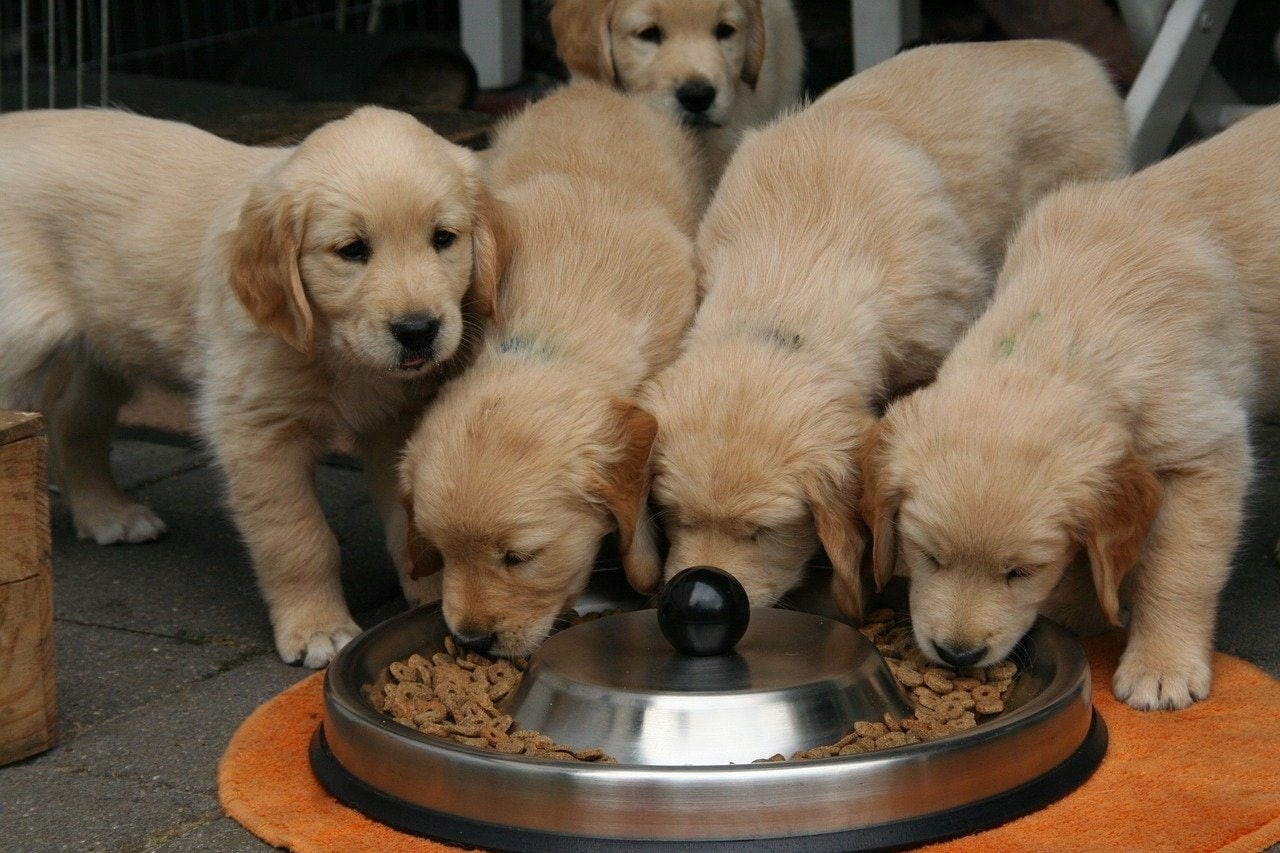
Dry kibble provides your puppy with properties that keep their teeth clean, their muscles strong, and their body is growing. It fits the nutritional profiles necessary for all canines to grow as they should.
Wet food is incredibly delicious for your little pooch. They will delight in the savory taste which boosts appetite. Wet food also has a higher amount of protein and moisture which are both very essential to your growing puppy.
Dry Dog Food
Pros
- Keeps your puppy's teeth clean and tartar free
- Provides a carefully crafted, well-balanced diet
- Dry kibble keeps longer than wet food
Cons
- There is less moisture in dry kibble
- Many dry kibble foods contain fillers, artificial flavors, and preservatives
Wet Dog Food
Pros
- It is typically higher in protein
- It has a high moisture content
- It tends to be more savory
Cons
- Does not clean teeth
- It can get more expensive
There is also semi-moist dry dog food to give your puppy the best of both worlds. Add some moisture with delicious flavor—reap the benefits.

When to Switch from Puppy Food to Adult Food
It's probably no surprise that the range is a little bit wide for transitioning your dog to adult dog food. It might be a little bit tricky, especially if you have a mixed breed. Larger and giant size breeds typically need extra nutrition longer than miniature and toy breeds.
- Toy breeds — Toy, teacup, and tiny breeds are generally dogs that are under 12 pounds when fully grown. You should naturally transition them from puppy food to adult dog food between 6 and 7 months of age.
- Small breeds — Small breeds are considered dogs that range between 12 and 25 pounds fully grown. You can usually begin their transition between 9 and 11 months of age.
- Medium breeds — Medium breeds typically weigh under 50 pounds as adults. It is safe to transition them between 12 and 14 months of age.
- Large breeds — Large breeds fall between the range of 50 and 75 pounds fully grown. You can transition them from puppy food at 15 to 18 months of age.
- Giant breeds — Giant breeds need puppy food longer than most because their bodies take longer to develop. As adults, they are generally over 75 pounds. You can begin transitioning them between 18 and 24 months of age.
Activity levels also say a lot about when to transition your dog. For instance, a spunky, energetic dog might need to be on puppy food longer than a more relaxed, lackadaisical dog. These estimates are just guidelines to give you a general idea.
If you're uncertain about your dog's genetic makeup, regular veterinary appointments should be able to give you a good clue about exactly how your dog should be growing. After an examination, your veterinarian can tell you an approximate weight you can expect for your pooch.

Conclusion
Giving your puppy a healthy start is the first step to a long, rewarding relationship. You want your dog to live their entire life with as few problems as possible. It would help if you gave them the appropriate building blocks to form a necessary foundation.
Remember, veterinary visits are essential to help you know you're the best pet parent you can be.
You Might Also Be Interested In:
Featured Image Credit: demanescale, Shutterstock
Get Hepper In Your Inbox


Pet care tips from our vets and experts, straight to your inbox.
You may opt-out at any time. View our Privacy Policy for more information.

Nicole is a lover of animals of all sizes but is especially fascinated with the feline variety. She’s the proud mom of Baby, a Burmese, and works every day so he can relax in the sunshine or by the fire. She’s always had a cat in her home and has spent countless days with others, observing behaviors and softening up even the grouchiest of the lot. Nicole wants to share her kitty expertise with you so you and your cat can live happy, healthy, and care-free.
Join the conversation
Ask a question, share your story, or send private feedback.