Hepper is reader-supported. When you buy via links on our site, we may earn an affiliate commission at no cost to you. Learn more.
F5 Savannah Cat: Rarity, Temperament, Info & More
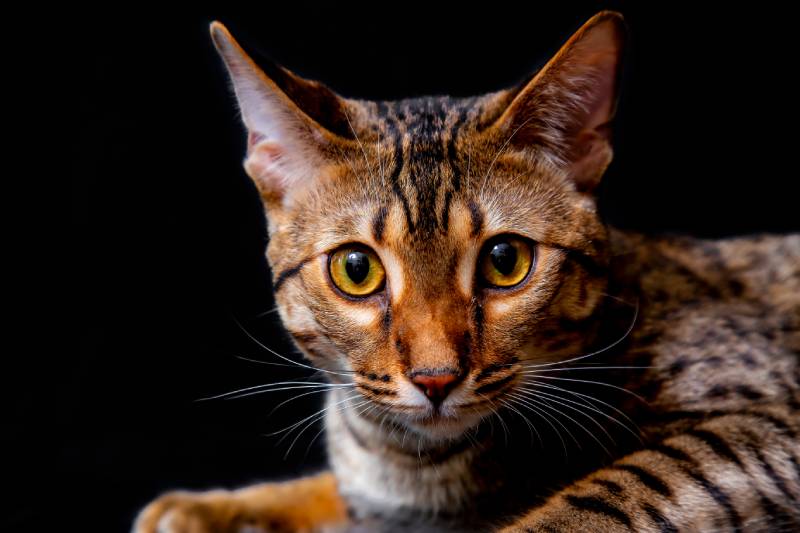
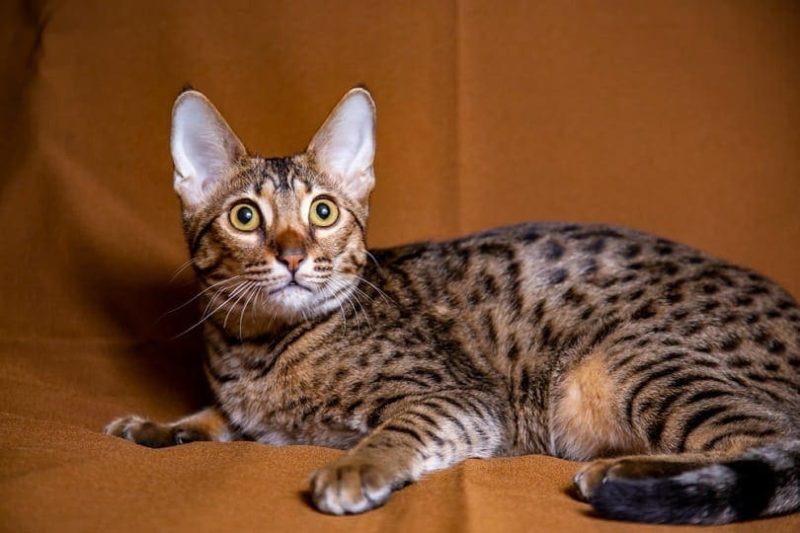
The Savannah cat has grown increasingly popular in recent years because of how stunning and unique they are. The breed is the result of crossbreeding the Serval with the domesticated cat and they are categorized by filial generation, or how many generations they are removed from the Serval.
An F5 Savannah cat is five generations removed from their wild African ancestors. They are sought out by those looking for the incredible traits of a Savannah cat but smaller in size, more reasonably priced, and easier to adapt to more average lifestyles.

The Earliest Records of F5 Savannah Cats in History
The first Savannah cat was born on April 7, 1986, when breeder Judee Frank crossbred a male African Serval with a purebred Siamese cat. This kitten was technically an F1 Savannah since she was 50% Serval.
There is no date of record for the first ever F5 produced, but after the first successful Savannah kitten was born, the breeding of these cats continued and evolved over time. Since F5s are five generations removed from the Serval, they are typically up to 12% Serval.
How the F5 Cat Gained Popularity
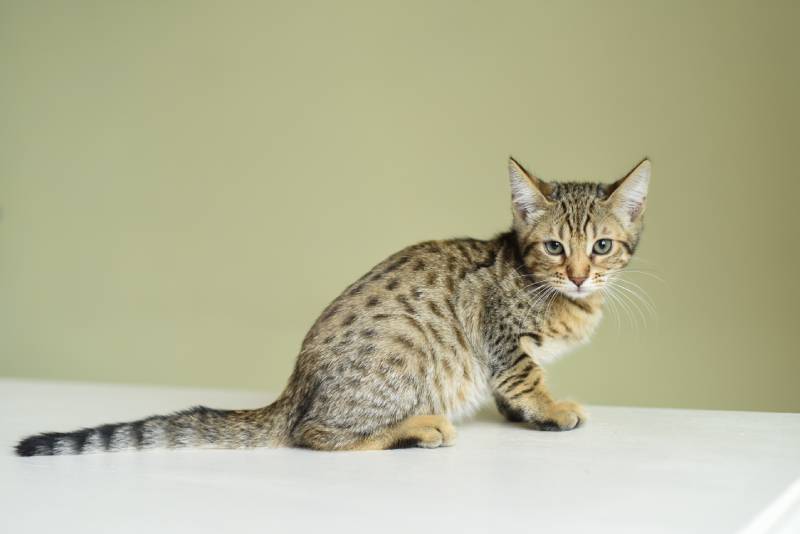
The breeding of Savannah cats took off during the 1990s but their popularity didn’t really soar until the 2000s when more and more people became familiar with these stunning cats. Their looks coupled with their distinctive personalities were all it took to capture the interest of many.
The popularity of F5 Savannahs took off for several reasons – they are smaller, easier to manage, less expensive, and generally don’t have the same issues surrounding exotic animal laws. This filial generation is fairly easy for potential owners to find when they are looking for a kitten from a reputable breeder.
Formal Recognition of the Savannah Cat
After the successful breeding of the first Savannah kitten, breeders Patrick Kelley and Joyce Sroufe created the original breed standard for the Savannah cat and presented it to The International Cat Association (TICA) board. In 2001 the breed was accepted for registration and in 2012 they were accepted as a championship breed.
TICA does not recognize the breed by filial generation but by SBT (Stud Book Traditional) level, which is at least four generations removed from the Serval. Only these cats can be accepted for show.
Top 10 Unique Facts About Savannah Cats
1. The Name Savannah Comes from the First Kitten Ever Produced
The very first Savannah cat was produced by breeder Judee Frank who bred a wild African serval belonging to Suzi Woods with a domestic Siamese cat. The first kitten was born in 1986 and she was named Savannah, which is where the breed got its name.
2. They Are Categorized by Filial Generation or SBT
As mentioned above, Savannahs are identified by filial generation to keep track of how far removed generationally they are from the Serval. TICA recognizes the Savannah but requires them to be at least 4 generations removed. They do not categorize them by filial number, but by SBT status.
3. F1 Savannahs Are Very Difficult to Breed
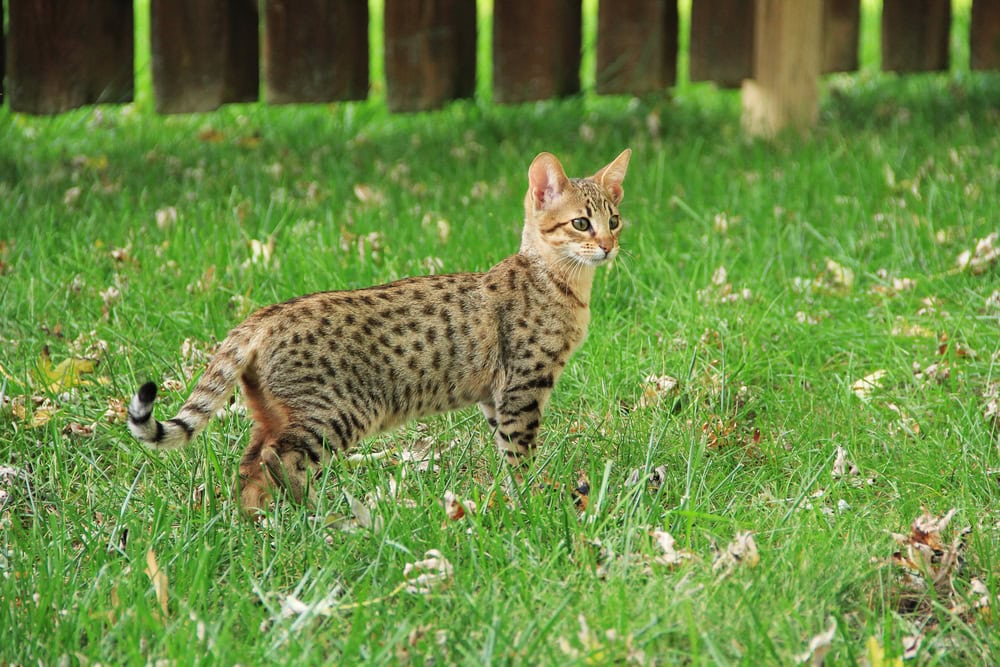
F1 Savannah cats are much harder to produce because of the genetic differences between Serval and domesticated cats. The two also have different gestational periods, often resulting in unsuccessful pregnancies or kittens being born prematurely.
4. They Are Very Unique
Savannah cats are incredibly inquisitive, intelligent, and loyal creatures that are most often compared to dogs. If the effort is put into training, these cats can even learn simple commands and tricks. They have a heightened sense of adventure and can even be a bit mischievous, figuring out how to open doors and cabinets.
This breed often forms very strong bonds with its people. They may even show a bit of a protective nature and wariness toward strangers. They have more mental and physical needs when compared to your average housecat.
5. Savannah Cats Love Water
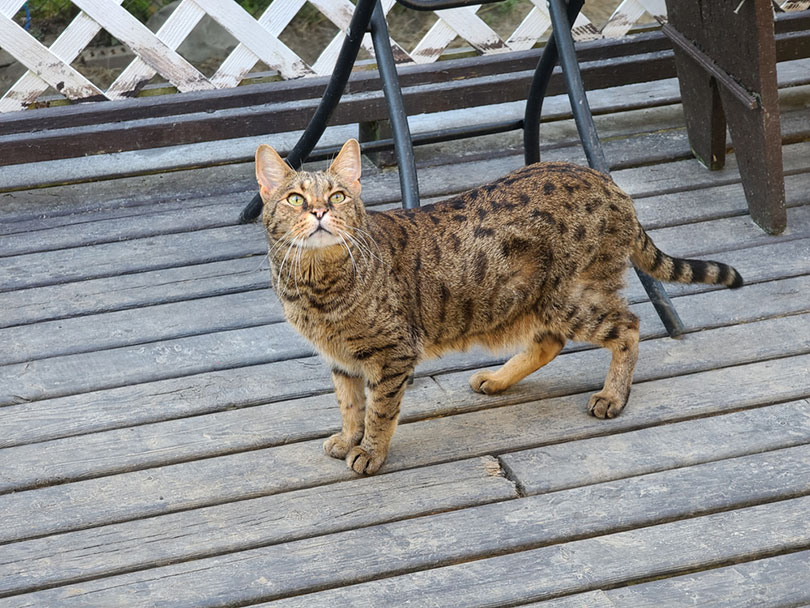
This breed is already known for being more dog-like than cat-like and another reason is that they are known for enjoying the water. Savannahs will try to join in the bath and shower and will absolutely love playing and swimming in any water they gain access to. Of course, the love for water can vary by individual.
6. They Are High Energy
This is a breed that is very active and energetic. They may enjoy sleeping as any other cat would, but they don’t fall into the category of couch potato. Savannahs need lots of physical and mental stimulation to keep them healthy and thriving. They will enjoy various forms of exercise and activity and genuinely enjoy human interaction.
7. They Typically Enjoy Walking on a Leash
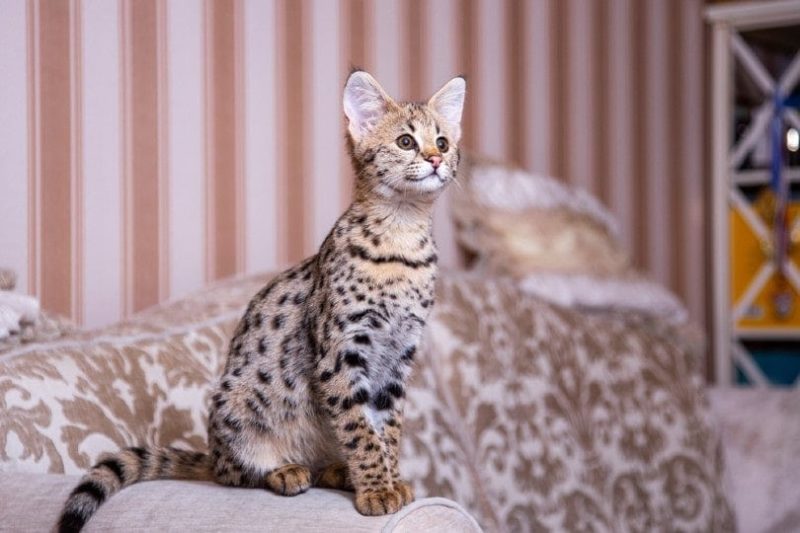
It’s no secret that Savannah cats are different from your average housecat. Not only do they often enjoy swimming and enjoy learning tricks, but they can also be taught to walk with a harness and a leash.
Leash training isn’t always easy and may take some time to perfect, but it offers these cats a chance to get out and explore, which they will likely enjoy. Keep in mind that even though they possess a lot of dog-like traits, they are still cats and will require a leash and harness made especially for their body style
8. Savannahs Can Jump
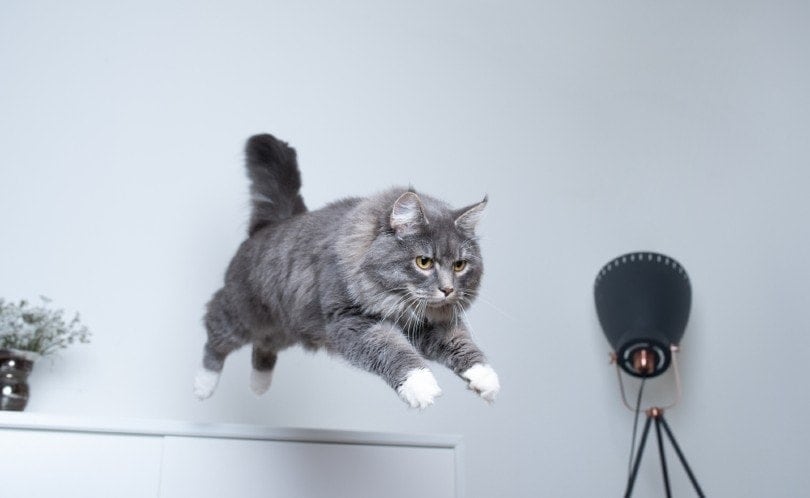
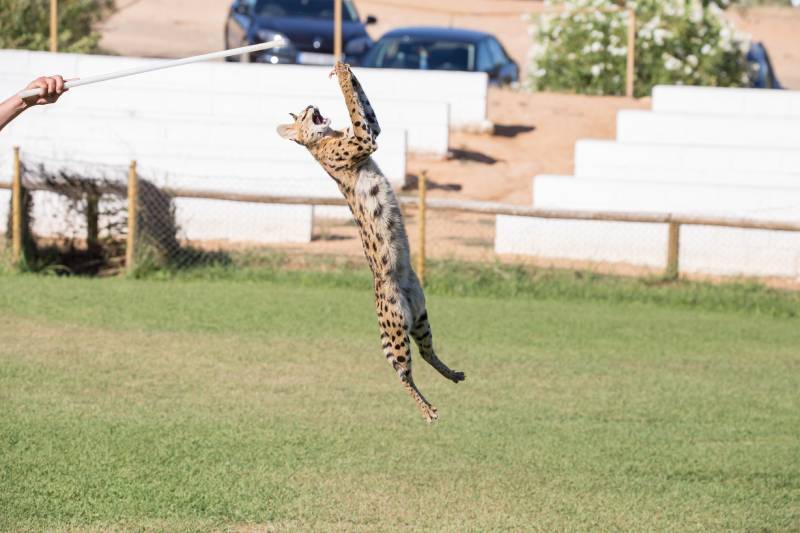
Savannah cats are incredible jumpers, which makes sense considering their top-notch athleticism. They can jump up to 8 feet from a standing position and are well known for jumping up onto cabinets, refrigerators, and other high surfaces throughout the home.
This is largely due to their adventurous nature and incredible curiosity that leads them to explore their environments. It’s highly recommended that Savannah owners be prepared to provide their cats with lots of vertical spaces to keep their cats entertained.
9. They Cost a Pretty Penny
Savannah cats are a very expensive breed. On average, they will cost anywhere from $1,000 up to $20,000 or more. Prices will vary depending on filial generation, gender, color, and show quality.
Filial generations F1 through F3 are the most expensive since they possess a higher percentage of Serval and are more difficult to breed. Males in these generations are typically sterile, making females incredibly valuable.
F5 Savannahs are among the least expensive filial generations and typically cost between $1,000 and $5,000.
10. Legal Restrictions May Apply in Some Areas
Anyone interested in bringing home a Savannah cat should first check with their state and local laws regarding legal ownership of the breed. Since they are so closely related to the wild African Serval, they can easily fall into the classification of exotic animals and will be subject to the laws in your specific area.
While they are legal in most areas the breed may be banned completely or even require special permits for ownership in some places. This is especially true for filial generations F1 through F3.
Do F5 Savannah Cats Make Good Pets?
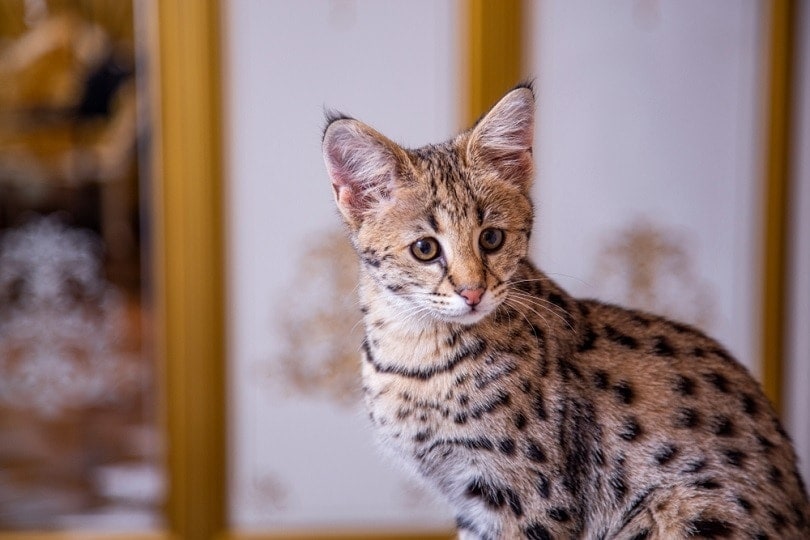
F5 Savannah cats can make excellent pets and are much better adapted to more average lifestyles. They still possess those sought-after temperaments and qualities while being a bit milder overall.
F5 Savannahs will have big personalities and lots of love for their owners. They are very loyal animals and will often shower their humans with affection. They are still energetic and very playful but are smaller in size when compared to generations with more Serval percentage.
They are often considered much more social, playful, and intelligent than your typical housecat, so you will want to ensure they get enough exercise, human interaction, and mental stimulation through play, activities, and toys.
Grooming needs are minimal thanks to their short coats but regular brushing can help control shedding. They do not have any special dietary requirements unless otherwise noted by a veterinarian. They should be fed a well-balanced diet of high-quality cat food that is appropriate for their age and activity level.
F5 Savannah cats typically do very well with children and other pets, including dogs. They can be very energetic, so it’s important to always supervise them when around smaller children. They are natural predators, so if you own any small animals like birds, rodents, or reptiles, you will need to keep them secure and remain cautious.
Final Thoughts
The Savannah breed was first developed in the 1980s and has grown increasingly popular thanks to its exotic look and dog-like temperaments. The F5 Savannah is five generations removed from their wild Serval ancestry and is typically only up to 12% Serval. These cats are slightly smaller and have milder temperaments but still possess those beloved Savannah traits and that stunning look.
Featured Image Credit: Kolomenskaya Kseniya, Shutterstock
Get Hepper In Your Inbox


Pet care tips from our vets and experts, straight to your inbox.
You may opt-out at any time. View our Privacy Policy for more information.

Lindsay is a wife, mother, nature enthusiast, animal lover, and business major. She was born and raised in the United States and now lives in Tulsa, Oklahoma. She shares her home with a German Shepherd, several snakes, tarantulas, and a couple of rescue cats.
Lindsay and her husband enjoy traveling the US with their children and photographing wildlife. Lindsey is passionate about proper animal care and education around it!
Join the conversation
Ask a question, share your story, or send private feedback.