Hepper is reader-supported. When you buy via links on our site, we may earn an affiliate commission at no cost to you. Learn more.
Cat Vision vs Dog Vision: Who Has the Better Eyesight? (Vet-Reviewed)


In this article
Cats and dogs are known for their highly keen senses, such as smell and hearing, that are superior to those of humans. It would make sense that both of these animals have excellent vision, too. Dogs and cats rely on their vision for similar things. Their eyes allow them to navigate their environment and detect prey or predators. Despite both pets having good vision, each one has better visual abilities depending on which characteristic we are referring to.
So, which animal has better night vision and color vision? Which of the two has better visual acuity and a larger visual field? This article has the answers for you.

At a Glance

Overview of Cat Vision
A Cat’s Eyes
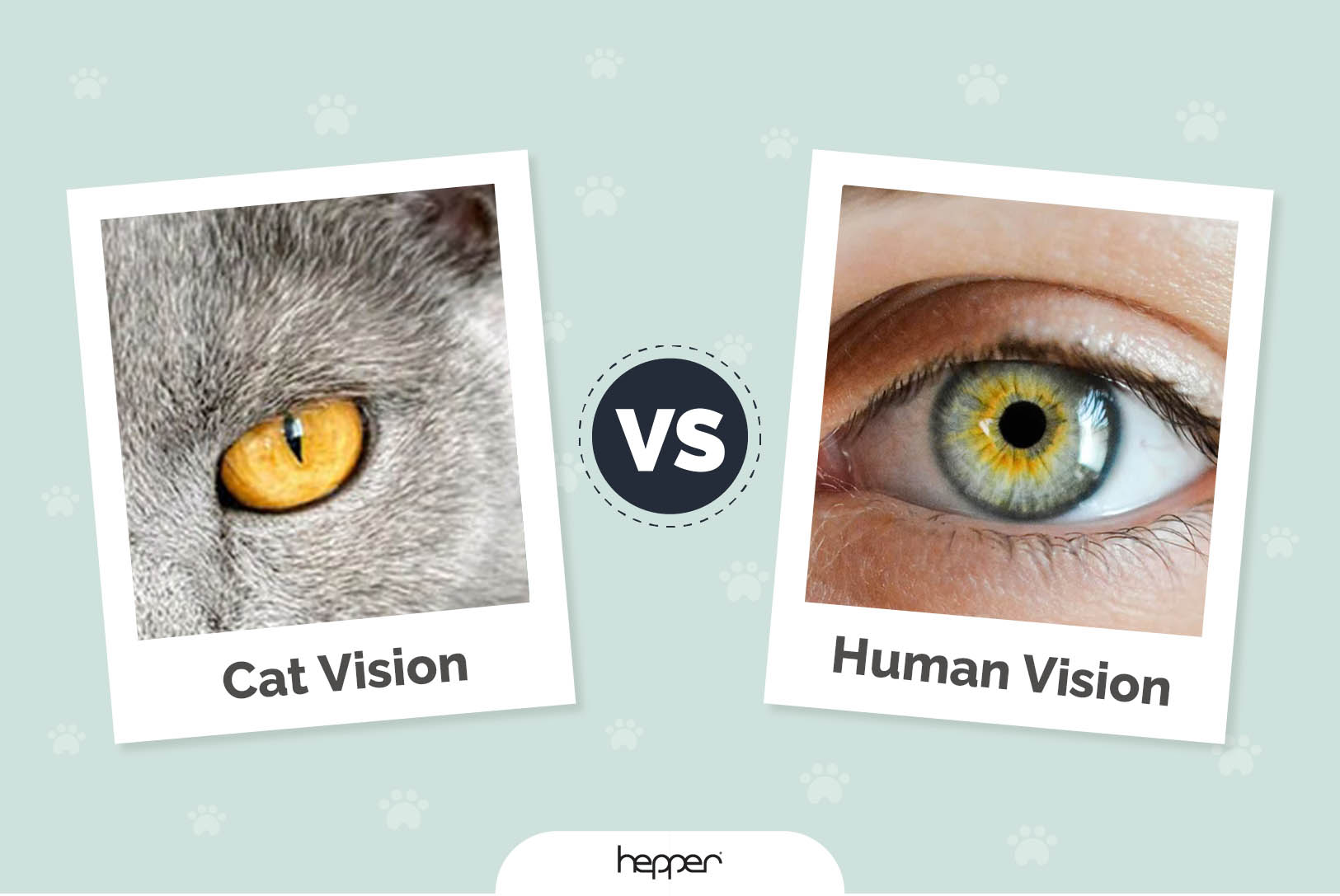
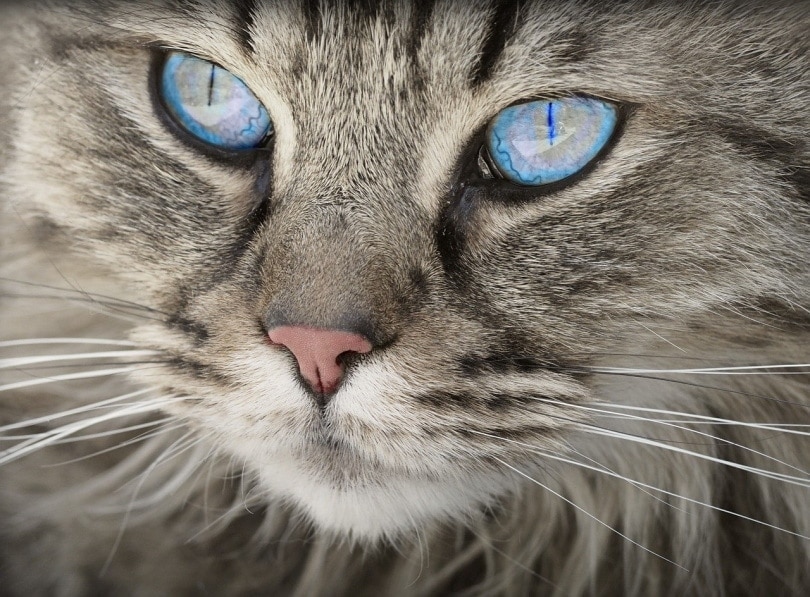
There are several structures of a cat's eyes with specific functions that allow cats to see. A cat's cornea is responsible for the clear dome shape of a cat's eyes which helps light to focus on the retina. The retina contains light-sensitive photoreceptors, called cones and rods.
Cone photoreceptors in the retina are responsible for a cat's color vision and they work well in bright light conditions. Rods, on the other hand, are responsible for vision in low light levels. The numerous rod cells in the cat’s retina give them an advantage when in dimly lit conditions.
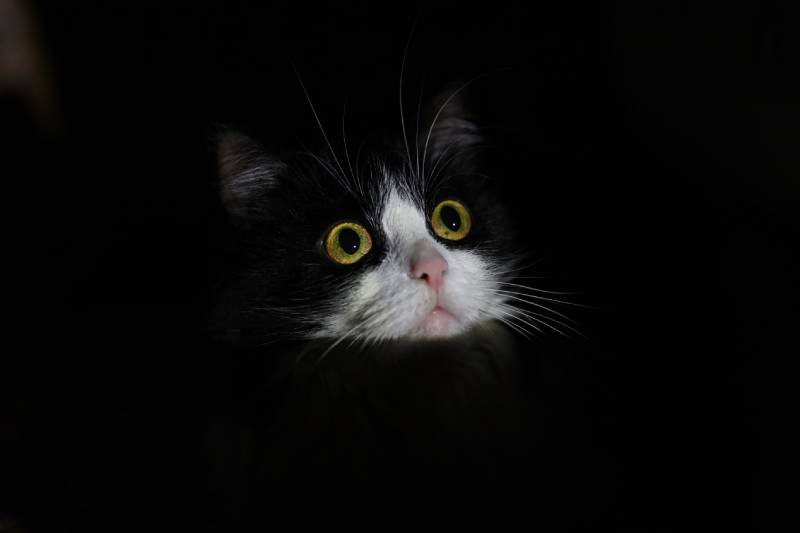
The area centralis is a highly sensitive area of their retina that is specialized for high resolution. Cats also have pupils, which widen or narrow in response to different lighting conditions. A cat's iris, the colorful part of the eye, controls how much light enters. Another interesting structure of the cat's eye is the tapetum lucidum, which is what makes their eyes shine in darkness. The tapetum increases the amount of light available to the photoreceptors.
How Good Is Cat Vision?
Cats have powerful vision that is superior to humans and dogs in certain ways. For starters cats' eyes allow them to see better in dim lighting and at night. This is possible because of several features such as the tapetum lucidum and the higher numbert of rods in their retinas.
Furthermore, cats have about a 200-degree visual field of view which enables them to see a large area when their eyes are fixed in one point. A wide vision field is beneficial for cats, who need to be aware of their surroundings without moving their eyes or heads.
A cat's eyes are forward-facing on their head, which provides them with approximately 140 degrees of binocular vision. This enhances depth perception. Cats need good depth perception to focus on nearby or distant objects and to judge the distance accurately.

Night Vision
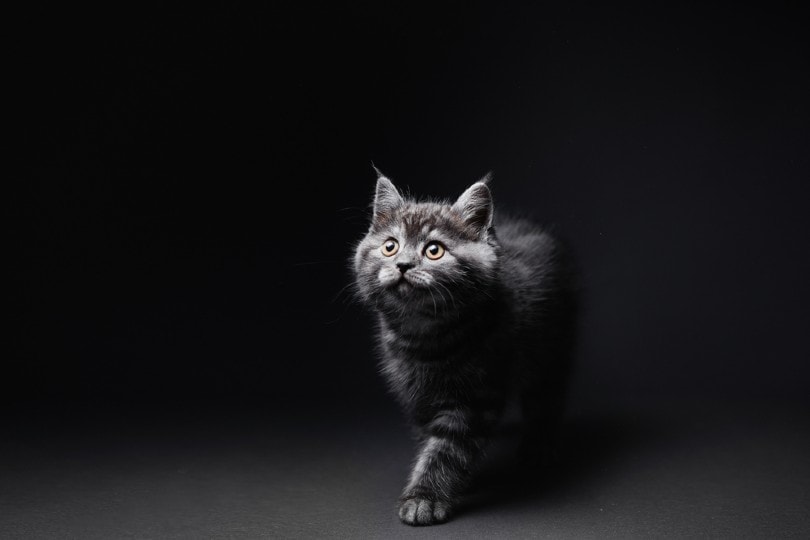
Cats are crepuscular animals and therefore need to see well in darkness. Thanks to their unique eye structure, a cat's eyes are well-equipped to see at night.
Cats have a much higher proportion of rods in their eyes, and their eyes allow them to detect much more light than humans can, which means they have a minimum light detection threshold up to 7 times lower than us.
The more their pupils are, the more light can enter to help them see better at night. The more their pupils dilate, the more light can enter and allow them to see clearer. Even the smallest traces of moonlight can be detected by a cat's eye and are useful for helping them see in the dark.
Color Perception
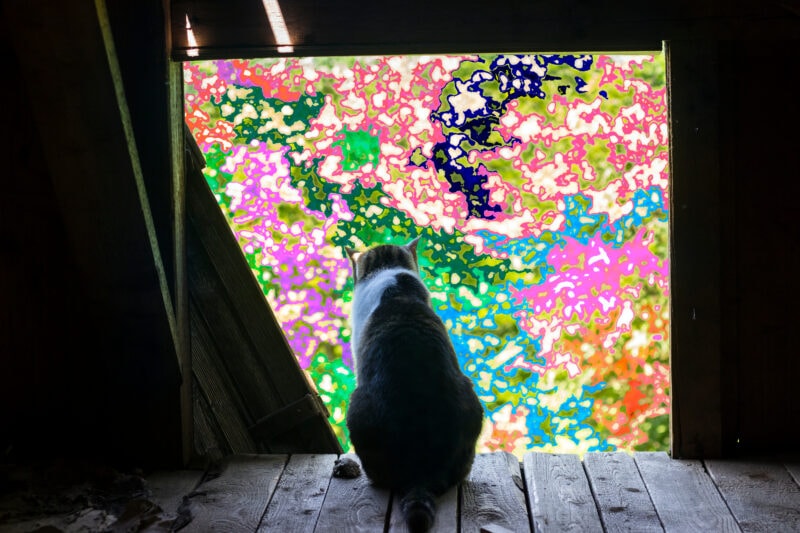
Cats have a lower proportion of cone photoreceptors than rods. Cones are responsible for color perception and function in bright light conditions. The type of cones that cats have allow them to have some color vision, though this is presumably not very rich. It is believed that cats can see yellow, green, and blue, and they can probably see shades of pastel colors that are not as intense as humans, but superior to dogs. Researchers are still unsure about the exact colors cats can see, but they likely have color vision.
Pros
- Better visual acuity
- Good depth perception
- Color vision
- Can see well in dim conditions
Cons
- Color vision is not rich
- Need some level of light to see in total darkness
- Limited ability to accommodate the lens


Overview of Dog Vision
A Dog's Eyes
Dogs have similar structures in their eyes to cats. They have protective dome-shaped corneas, pupils, and light-controlling irises. As with cats, a dog's pupils will contract or dilate to let more or less light in. They have a retina which has rod and cone photoreceptors that send electrical impulses to the brain for visual processing.
Dogs also have an area centralis that gives them visual acuity, although it is relatively poor. The position of the lens of a dog's eye is controlled by ciliary muscles, but their changes are limited, just like with cats. Unlike cats, dogs have round pupils that can’t constrict in the same way as cats’ pupils do. Regardless, both animals are crepuscular hunters. Dogs also have a tapetum lucidum which reflects light, but it seems to be a less efficient reflector than that of cats.

How Good Is Dog Vision?
A dog's sense of sight is excellent, but dogs seem to have poorer visual acuity as their vision may not be as sharp when viewing objects nearby in dim lighting. However, dogs have an advantage with their vision that exceeds humans and cats.
Dogs have a broad field of vision at about 250 degrees. Some experts suggest that the extent of a dog's vision field is dependent on the breed. Short-nosed dog breeds with more laterally placed eyes have a wider field of view than those with longer noses and front-facing eyes. A broad visual field allows dogs to see more of their surroundings at once, making it easier to detect motion within their peripheral view. Since their eyes are positioned laterally, most dog breeds have limited binocular vision and depth perception.
Still, dogs can judge distances fairly accurately and locate objects accordingly. Both animals lack a fovea centralis for a sharp central vision field.
Night Vision
Dogs are crepuscular, despite adjusting their sleeping patterns to match their owners. This means that their eyes are adapted to seeing in dimly lit conditions just like cats. Dogs have many light-sensitive rods in their retinas that allow them to detect motion in dimly lit conditions with any level of available light. Their pupils dilate to allow more light to enter into the eye for increased nighttime visibility, but the tapetum lucidum reflective functions play a role too. Their good nighttime vision is useful when hunting or spotting motion in darker environments.
Color Perception
Dogs are not considered to be completely colorblind because they have cone photoreceptors in their eyes responsible for color detection. Their spectrum of detectable visual colors is relatively poor compared to humans and is believed to be limited to blues/purples and yellows. Experts theorize that dogs have dichromatic vision because they only have two cone populations, which limits their color perception. They instead have more rods in their eyes which allow them to detect motion in darkness with any available light.
Pros
- Broad vision field
- Motion-sensitive eyes
- Great peripheral vision
- Can see in dim lighting
Cons
- Low visual sharpness
- Poor color vision

Conclusion
Although dogs and cats have relatively similar vision, some differences make one better than the other depending on which characteristics we are considering. Cats have better nocturnal vision, while dogs have the advantage of a wider visual field and better visual acuity.
Furthermore, cats’ tapetum lucidum seems to be more efficient than dogs’ tapetum, enabling them to see better at night. Both cats and dogs have color vision, but cats might be able to detect more colors because they have a larger cone population in their retinas. Therefore, both species have visual characteristics and senses adapted to their specific needs, with which they make the most of the world around them.
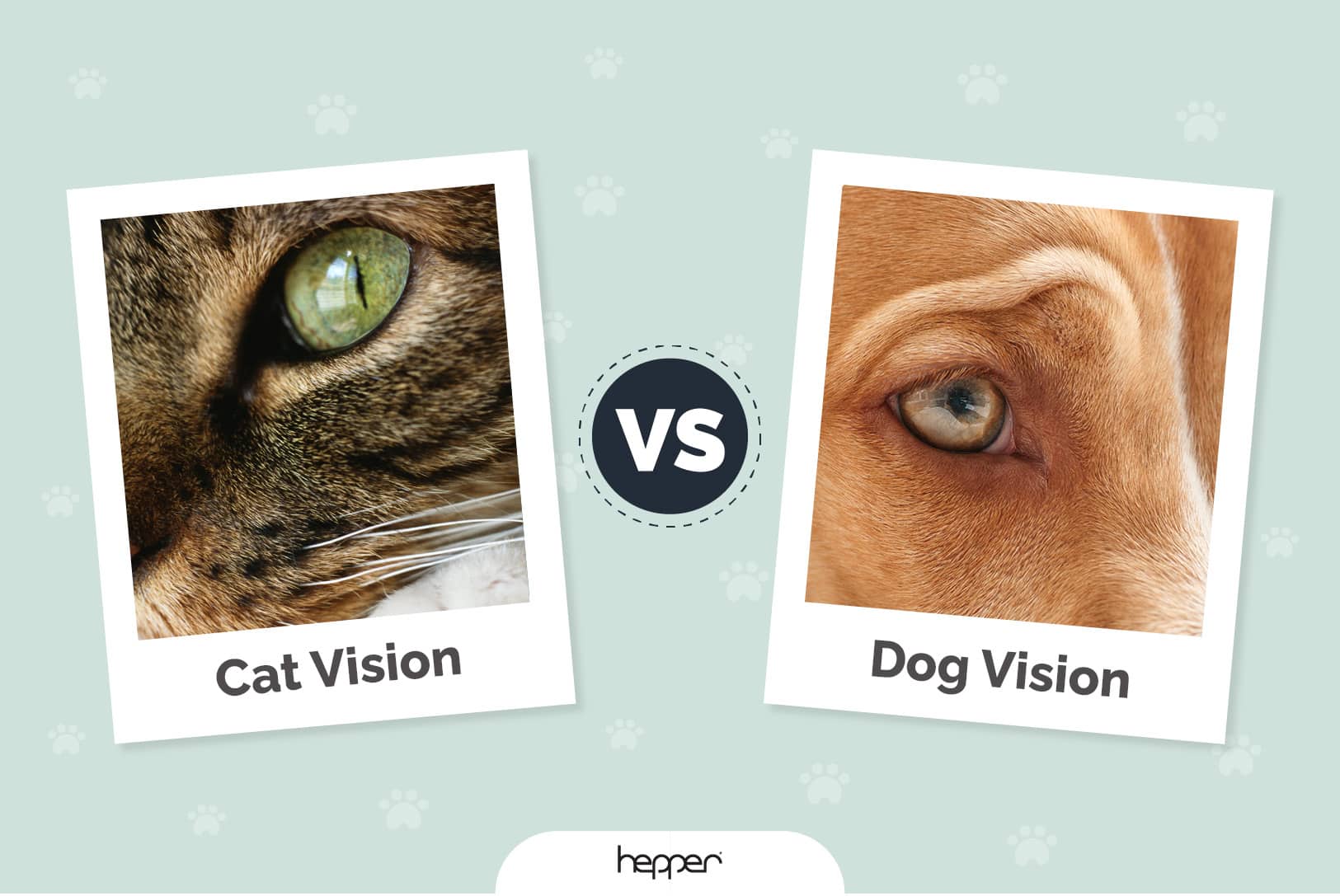
Featured Image Credit: (L) Photick, Shutterstock | (R) sophiecat, Shutterstock
Get Hepper In Your Inbox


Pet care tips from our vets and experts, straight to your inbox.
You may opt-out at any time. View our Privacy Policy for more information.
Sarah is residing in South Africa with her partner and pets. She currently is interested in veterinary science and ichthyology, which she wants to study alongside her main passion: pet content writing. Sarah has over 60 fish including goldfish, tropicals, shrimp, and snails. She also keeps hamsters and a tarantula and wishes to provide quality content for readers and allow others to learn from her knowledge and experience. Sarah has much experience in all aspects of pet care, and providing the world with knowledge on ethical pet ownership is her lifelong dream.
Join the conversation
Ask a question, share your story, or send private feedback.