Hepper is reader-supported. When you buy via links on our site, we may earn an affiliate commission at no cost to you. Learn more.
How Do Vets Deworm Cats? Our Vet Explains the Tips & FAQ

In this article
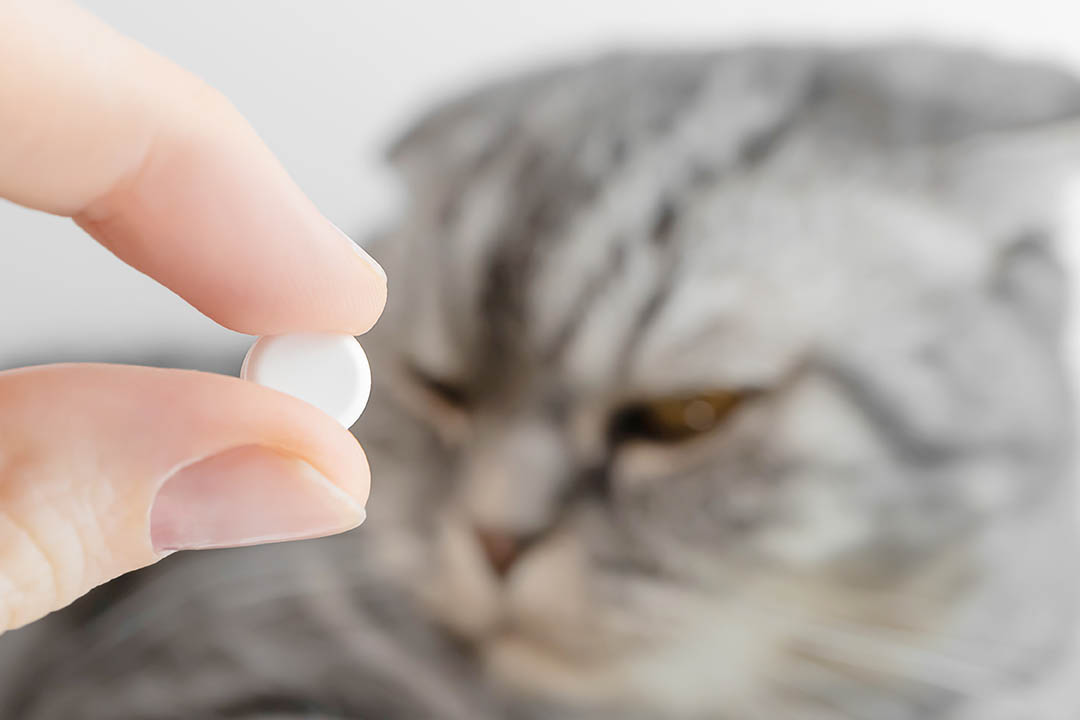
Have you ever wondered how vets deworm cats? If you’ve ever lost your cat under the spare bed when they hear the dewormer packet crinkle, you’re not alone. In fact, many cat parents report having difficulty medicating their pets. Luckily, it doesn’t have to be this hard. We are here to give you the tricks of the veterinary trade to make worming time as stress-free as possible for you and your cat.

Do I Really Have to Deworm My Cat?
Before we delve in, it is worth understanding why we must care about worms in the first place. Worming is an important part of your cat’s preventative health care and protects them from common parasites that can cause ill health, such as roundworms, hookworms, and tapeworms. These worms live in your cat’s gut, feeding on the nutrients there, and shed eggs in their feces. In many cases, your cat may not show any symptoms. However severe infections can cause vomiting, diarrhea, weight loss, and a dull coat.
Did you know that YOU can be infected by worms from your cat? Although the risk is generally low, humans can be infected by feline intestinal worms, as well as other parasites. This is why your veterinarian will recommend that all cats be regularly wormed, whether they are young or old, or live indoors or outdoors.
There Are So Many Products, Which One Do I Choose?
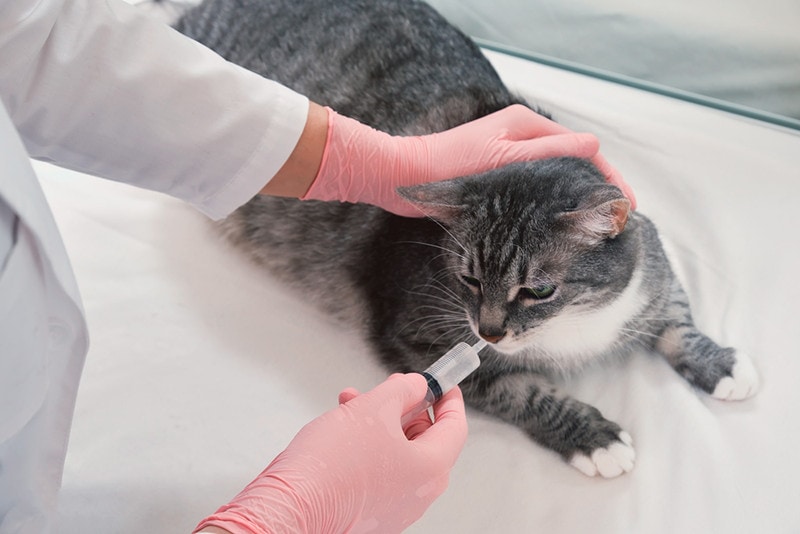
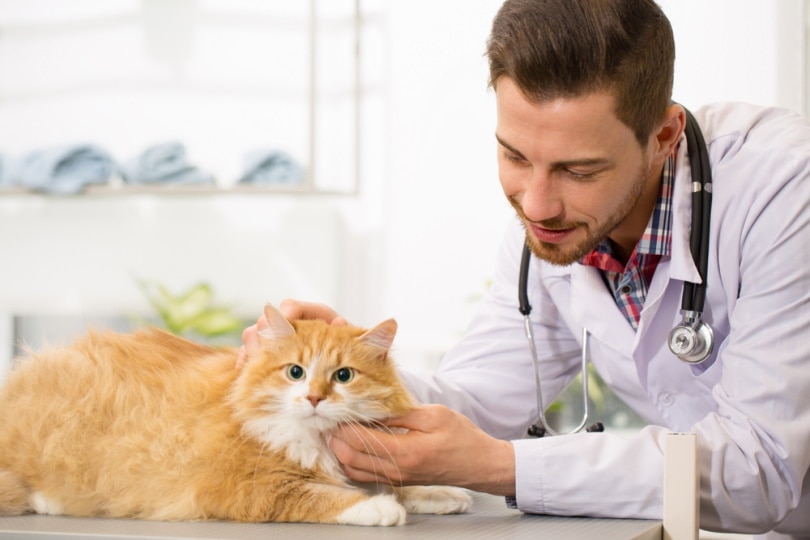
Tablet, liquid, paste, spot-on. With so many drugs, formulations, and advertisements out there, it can be challenging to decide what is best for your cat. It is important to know that not all treatments are created equal, with quality and coverage varying greatly. For example, spot-on treatments may seem like a gloriously easy alternative to tableting, however, most products will treat some, but not all, of the worms you need to eliminate.
The easiest way forward is to talk to your veterinarian. Together, you can tailor a deworming program that considers your cat’s unique health status, temperament, and other preventative health requirements.
Cat Tableting 101
So, when it’s time to give your cat a worming tablet, what do you do? Veterinarians may make it look easy when we slip a tablet into his mouth during a consultation, but trust us when we say, this comes from years of blood, sweat, and tears, and we have the scars to prove it! The best thing is, we have made the mistakes, so you don’t have to.
We have gathered all our hard-earned tips and tricks and created some simple steps to help you become an expert at deworming your cat.
Setting Yourself Up for Success
To give yourself the best chance possible, pick a quiet time when your cat is comfortable. Have everything you need within easy reach. Be calm and deliberate with your actions.
Tools you need for tableting:
The 10 Steps to Deworm Like a Vet
- Lay the towel on a flat surface.
- Put kitty on the towel, facing away from you.
- Prevent rapid reversing: ensure this escape route is blocked by resting his hind end against your body, or in a corner.
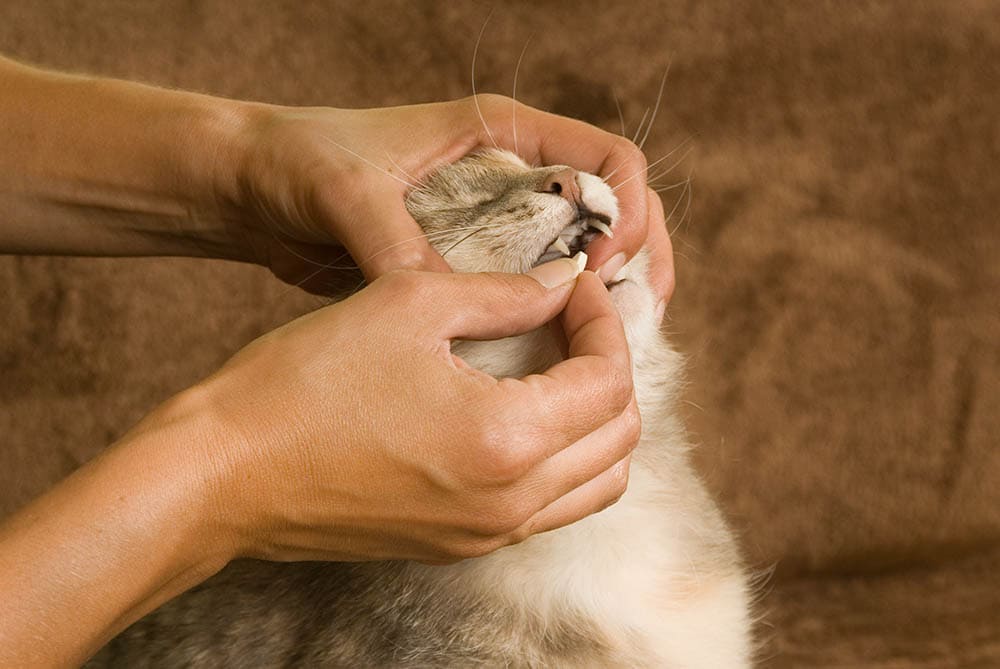
- Place your non-dominant hand over his head and gently grasp the upper lips with your thumb and forefinger.
- Tilt his head backward, nose to the sky. This will make his jaw fall open.
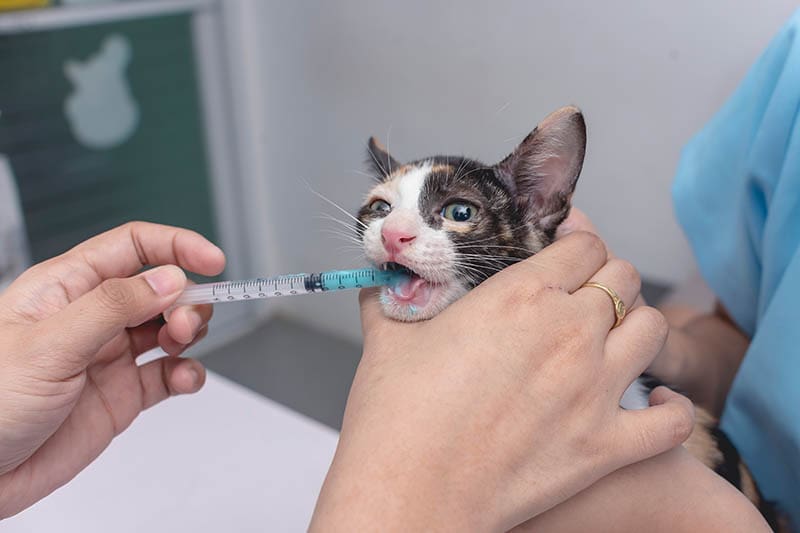
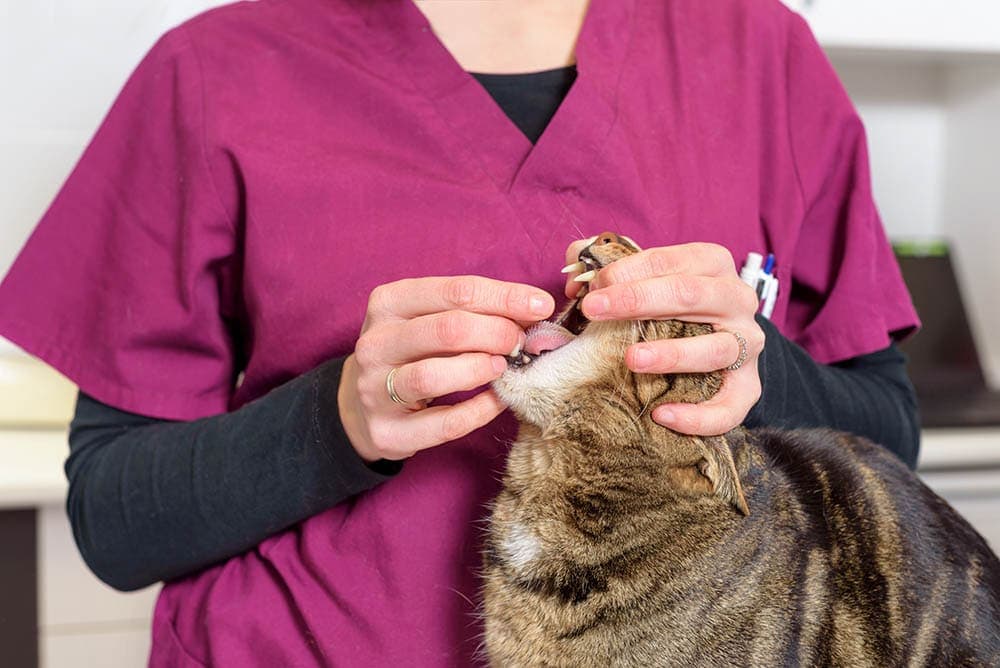
- Take the wormer in your dominant hand, use your pointer finger to open the bottom jaw, then pop the tablet at the back of the tongue.
- Close your cat’s mouth, holding it gently shut, and relax the angle of his head.
- Trickle a small amount of water into the corner of his mouth to help him swallow. (Sometimes rubbing his throat or blowing on his nose will also help)
- If he doesn’t spit the tablet back at you, start celebrations!
- Give him the treat to reward his good behavior!
Tips and Tricks for Clever Cats
- Kitty Burrito. If your feline friend was a kickboxer in a previous life, learning how to make a kitty burrito will change your life. This is a stress-free way to use your towel to wrap your cat’s legs and make it safer for you to administer oral medications.
- Use a tool. Pill-poppers are a handy tool that can be used instead of your finger to place the tablet in your cat’s mouth.
- Grab a human friend. For extra wriggly cats, having an extra person to hold your cat’s body will sometimes give you the extra hand you need to pop that pill in.
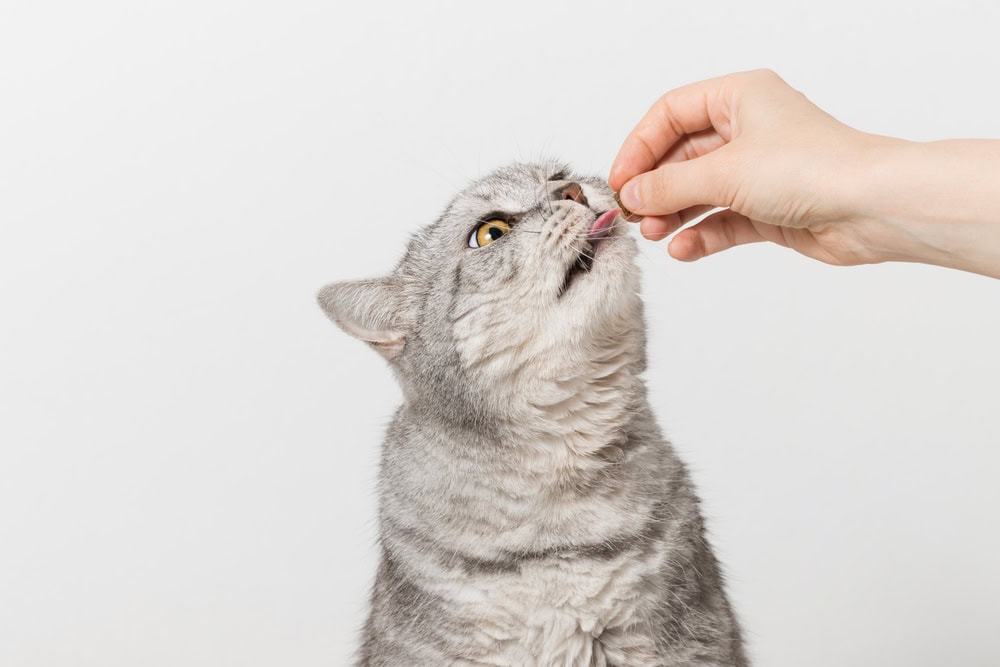
- Train your cat to accept medications. Yes, you read this correctly! Get your feline used to handling and consuming different textures. Cats are creatures of habit. With consistency, you can train them to take tablets in tasty food, pill pockets, or gel caps. The key is to reward well and reward often.
- Ask questions. If you have queries about medications, handling, or tableting techniques then don’t be afraid to ask your veterinarian for advice at your next appointment.
- Be safe. Cats are unique, highly independent creatures that come with a multitude of sharp and pointy weapons. If you are bitten or scratched by your cat, please seek medical attention. The bacteria found in your cat’s mouth, and on their claws, can cause serious illness if left untreated.
- Learn when to accept defeat. Sometimes, despite our best efforts, our pet will become too stressed or aggressive to medicate. It is ok to walk away and try again when your cat is calmer or ask your veterinarian for help.
Final Thoughts
Worming is an important part of your cat’s ongoing health care, but it doesn’t have to cause you concern. With these expert tips, some patience, practice, and lots of treats, worming time can become just another stress-free task on the calendar.
Featured Image Credit: kholywood, Shutterstock
Get Hepper In Your Inbox


Pet care tips from our vets and experts, straight to your inbox.
You may opt-out at any time. View our Privacy Policy for more information.
Joanna is an experienced vet working in the UK. She has written about pets and pet health for many websites, blogs, and pet magazines and loves to help owners understand their pets through her writing.
Joanna is an experienced vet working in the UK who has always loved both writing and science. So, after following her passion for science and graduating as a veterinarian, she was able to begin writing and join her two passions together.
She has written about pets and pet health for many websites, blogs, and pet magazines. She loves to help owners understand their pets better through her writing, and loves to teach and educate her clients. She owns her own freelance company to help even more clients than just the one standing in front of her in a consultation room.
Education
In 2016, Joanna graduated from the University of Nottingham, with a degree in Veterinary Science (BVMedSci) and a degree in Veterinary Medicine and Surgery (BVM BVS).
Experience
Joanna practiced as a clinical vet from 2016 - 2019 and left full-time practice after that to work as a locum/relief vet in the Channel Islands, alongside her freelance writing work.
Join the conversation
Ask a question, share your story, or send private feedback.