Hepper is reader-supported. When you buy via links on our site, we may earn an affiliate commission at no cost to you. Learn more.
How to Give a Cat a Pill: 2 Vet-Recommended Methods

In this article
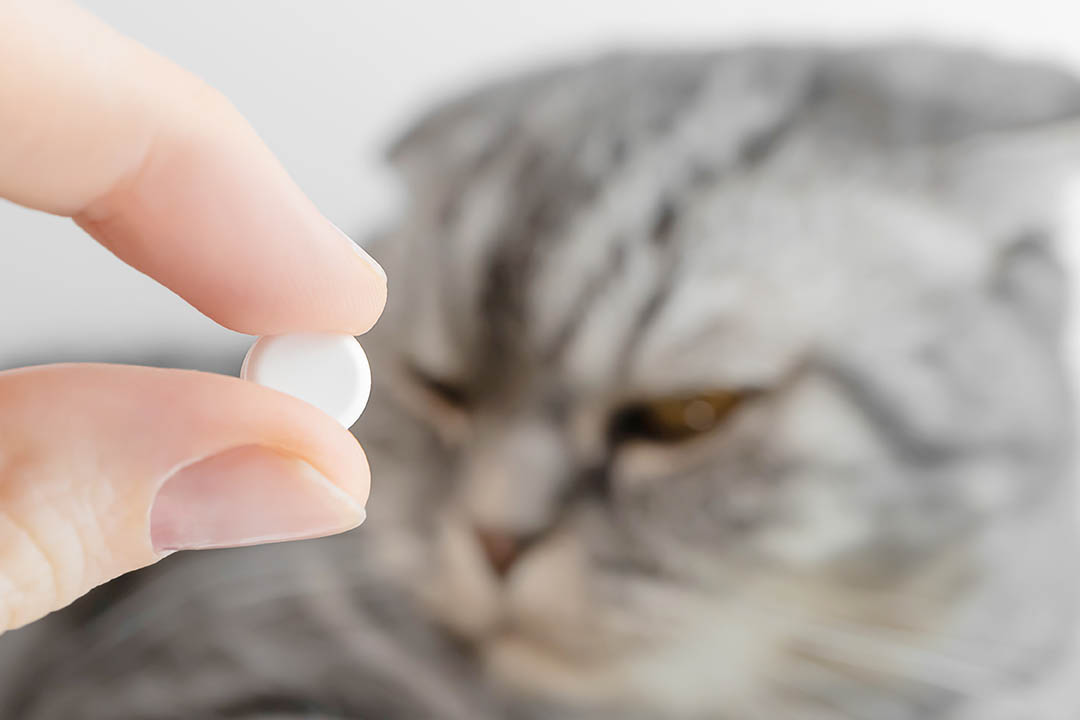
It is not a secret that medicating a cat can be hard work! Although this task may induce anxiety in pet parents, it can be achieved with patience and a little ingenuity. We have put together a few tips that can help with pill administration, as well as provided step-by-step instructions for actually giving your pet their pills. Keep reading to learn how this task can be more efficiently accomplished!

Before You Start
Keep Calm
Although medicating your cat may be stressful, it is important to try to keep calm! Cats are intuitive and observant creatures, so they will pick up on your stress! Attempt to medicate your pet when you are calm and are not rushed, as being rushed can leave room for mistakes.
Medication Confirmation
Before approaching your pet with medications, ensure that you are following the prescribed dosing instructions appropriately. Medication given too soon, too frequently, or at too low or high of a dose can all be problematic for the patient. It is helpful to assign one person in the household with the task of administering medication so that there is a decreased chance of double-dosing.

Gathering Supplies
After confirming the medication dosage, it is time to gather all supplies. If you can, try to do this without drawing the attention of your feline companion. In addition to gathering the medication, ensure you have a food reward, possibly a towel, and another person if needed. Once you start trying to administer the medication to your pet, it will be much harder on you and your companion if you take a break to hunt down missing supplies!
The 2 Ways to Administer Medication
1. Concealed in a Treat
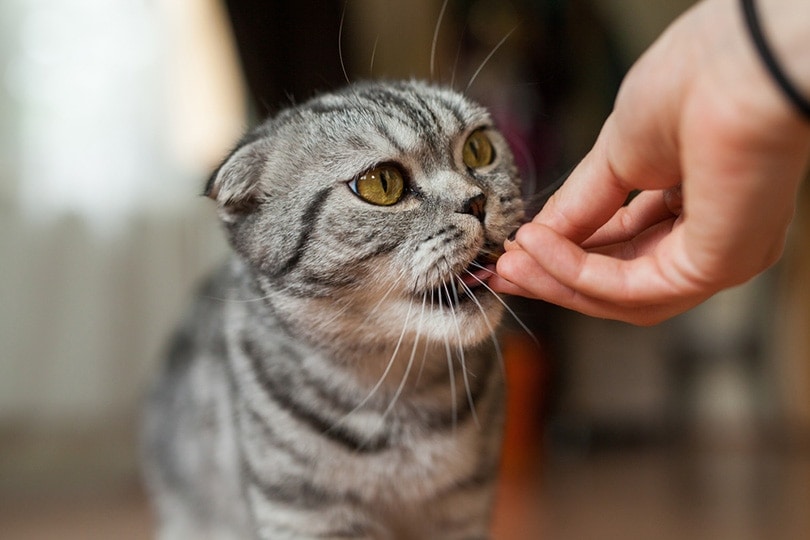
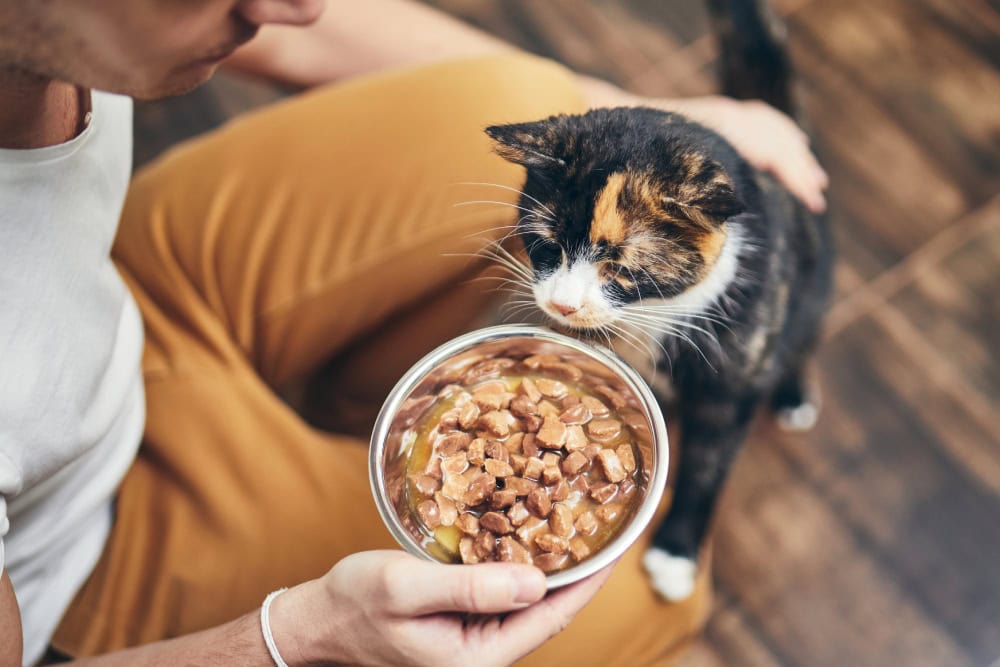
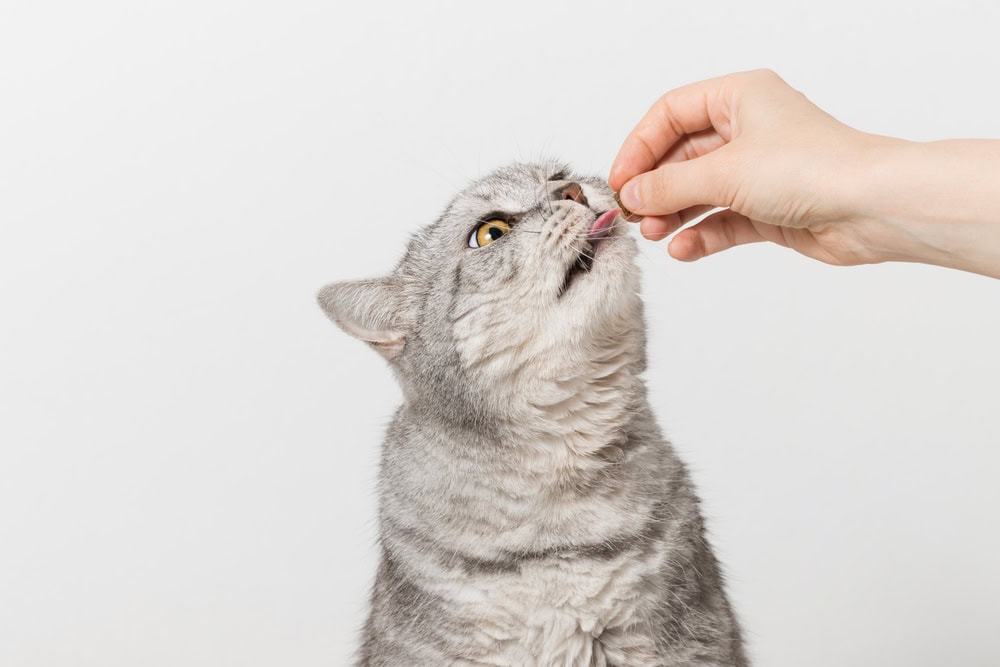
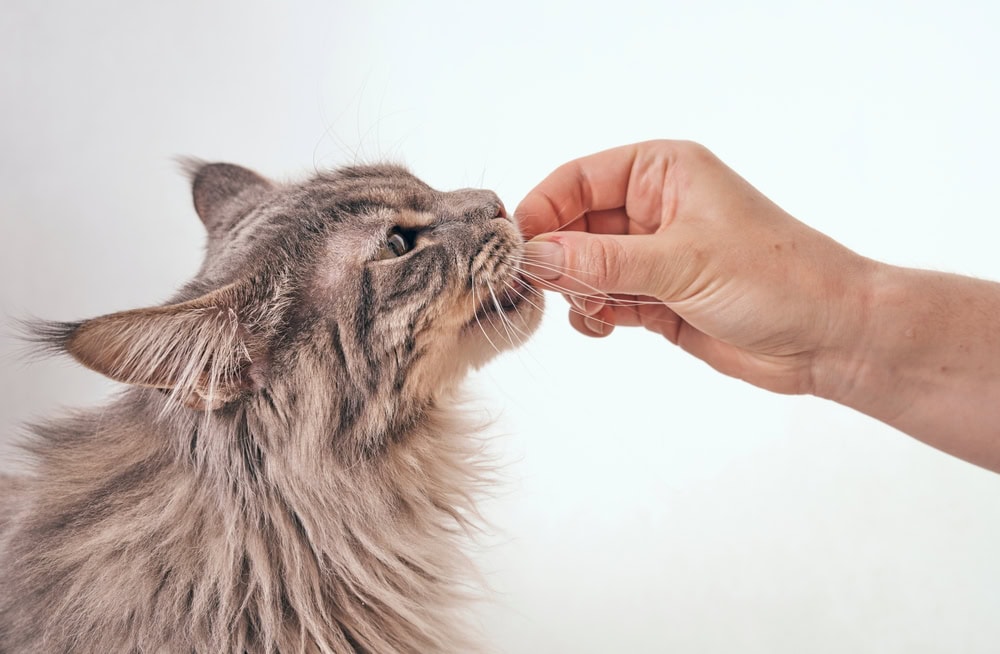
For a food-motivated cat, concealing a medication in a treat is a great, stress-free method of administration. There are tons of different treats out there that can be used for this method. A few favorites are Pill Pockets and lickable pastes. Additionally, a small bite of canned cat food can be just as effective.
Pill Pockets are soft treats that are hollow on the inside, allowing for a pill or tablet to be placed. The Pill Pocket is then molded around the medication and offered as a delectable treat. Similarly, a small dollop of canned food can be used to conceal the tablet or pill. Be sure not to hide the pill in a large amount of food, as this will require your cat to eat the whole amount!
Important to note
2. Down the Hatch
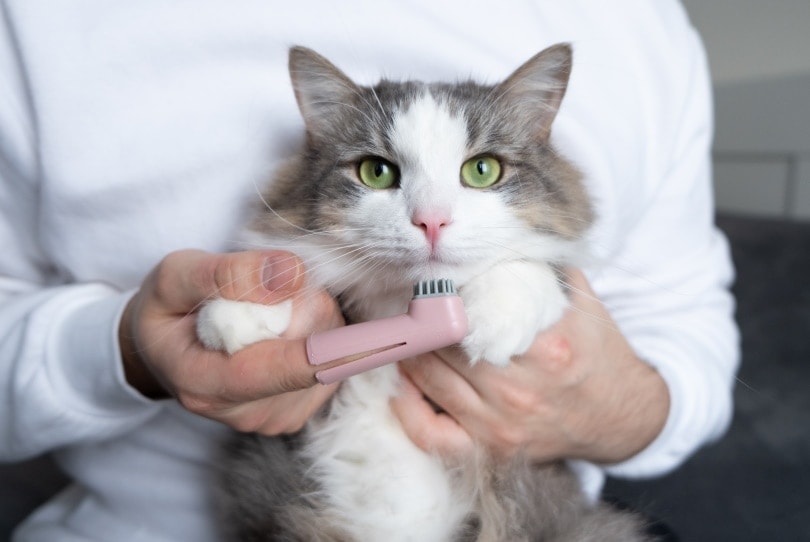
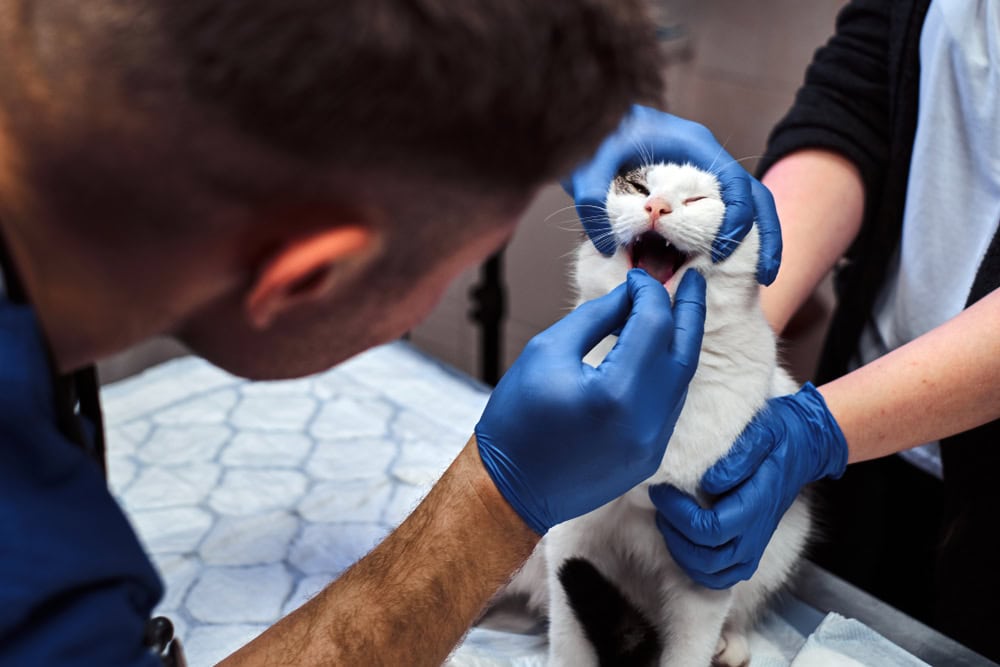
There are some cats that are difficult to trick. For those cats, physically placing the pill into their mouth may be necessary. This certainly can be a big job for owners to tackle, but it can be done! Below are suggested steps to follow for successful pill administration.
- Place your cat on a high surface like a counter or table for better control.
- Either have another person there to help hold your cat, if possible, or position your cat in a sitting/lying position with their back/bottom in the crook of your arm.
- Gently hold your cat’s head with your non-dominant hand, placing your thumb and pointer fingers behind the cheekbones, and elevating their head towards the ceiling.
- Using the middle finger on your dominant hand, pull down on the lower jaw by placing a finger on the lower incisors.
- Quickly place the pill as far back on the tongue as possible and close the mouth.
- Blow on the nose to encourage swallowing.
- Release your cat once swallowing has been confirmed and the pill has not been spat out.
Helpful Hints
If possible, follow the medication with a treat or a small amount of water. This will help ensure the pill successfully travels down the esophagus and into the stomach. Some medications, like doxycycline, can cause irritation if left sitting in the esophagus.
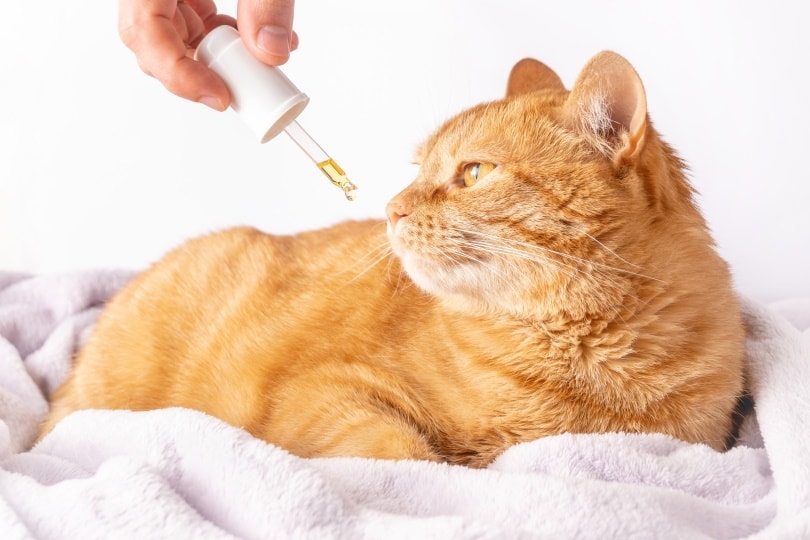
Check with your veterinarian if there are different formulations of the medication you need to give. Perhaps it comes as a liquid or granules that you may find easier with your cat. Some medications can even be compounded at special pharmacies into different forms but there is increased cost for this.
If your cat is combative or if your cat is using its paws to try to push your hand away, consider using a towel to gently wrap your cat. A successful wrap (kitty burrito) will provide restraint to the front feet while having easy access to the head.
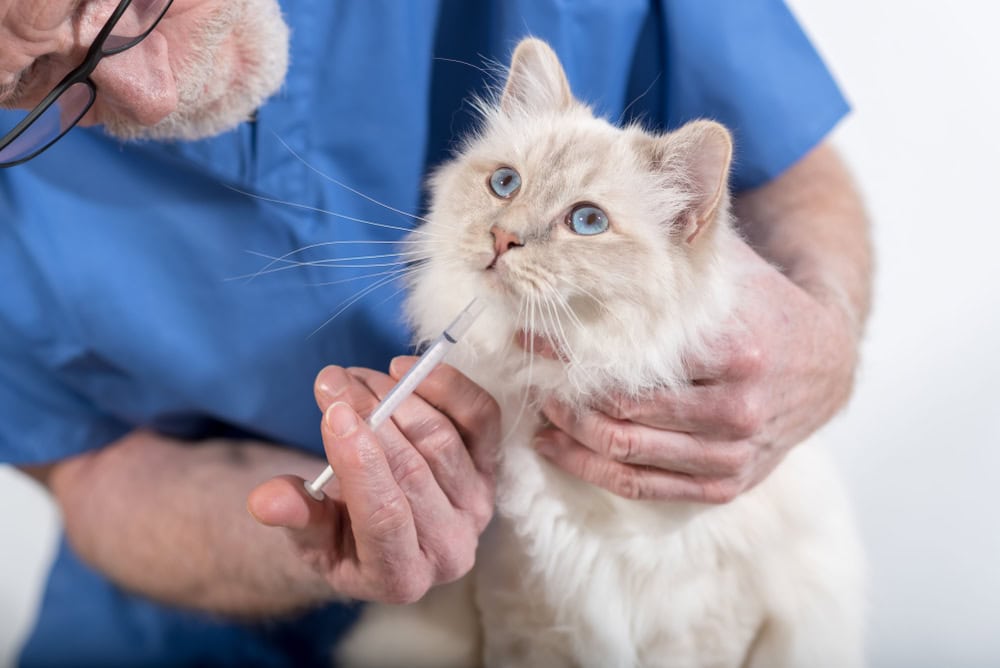
A pill popper or a pilling gun can be purchased from many pet care websites. This is a long, straw-like, plastic dispenser that propels medication into the mouth through the use of a plunger. This gadget can be helpful for the most difficult-to-medicate cats, or the cats that are quite mouthy, as human fingers are not required to be near the mouth.
You should avoid catching your cat for pill administration when they are in the middle of eating, drinking, or using the litter box. Interrupting your cat for pill administration may result in a negative association, deterring your cat from one of these necessary activities.
Conclusion
There are several ways to successfully administer a pill to your four-legged companion. Concealing medication in a treat is certainly the least stressful means of administration. It will be important to find a treat your pet is interested in if this route is pursued. For cats that are not food-motivated, manual pill administration may be necessary. If you are having a difficult time administering medication to your cat, be sure to reach out to your veterinarian. Your veterinarian may be able to compound medication into a transdermal or liquid form which may aid in administration and owner compliance. Be sure to follow your veterinarian’s recommendations regarding medication administration carefully.
Next on Your reading list: Can Cats Eat Margarine? Vet-Approved Health & Safety Guide
Sources
Featured Image Credit: Natureveryday, Shutterstock
Get Hepper In Your Inbox


Pet care tips from our vets and experts, straight to your inbox.
You may opt-out at any time. View our Privacy Policy for more information.
Meet Dr. Marti Dudley, a dedicated small animal veterinarian who possesses a strong passion for preventive medicine and client education. She takes pride in serving as a valuable resource for pet owners, firmly believing that a collaborative approach results in the optimal care for our beloved animal companions. In addition to her clinical work, Dr. Dudley has a fondness for writing, using this skill as an innovative means to educate pet owners beyond the confines of the traditional veterinary office setting.
Meet Dr. Marti Dudley, a dedicated small animal veterinarian who possesses a strong passion for preventive medicine and client education. She takes pride in serving as a valuable resource for pet owners, firmly believing that a collaborative approach results in the optimal care for our beloved animal companions. In addition to her clinical work, Dr. Dudley has a fondness for writing, using this skill as an innovative means to educate pet owners beyond the confines of the traditional veterinary office setting.
Professional Background:
Dr. Dudley has been actively practicing veterinary medicine since 2014, accumulating a wealth of experience. Her special interest lies in preventive care, and she places significant emphasis on the importance of educating clients about the well-being of their pets. Dr. Dudley's professional journey in veterinary medicine has been diverse, having worked as a general practitioner, affording her the opportunity to encounter and address a wide array of medical conditions in animals.
Educational Achievements:
Dr. Dudley's academic background includes a bachelor's degree in biology earned from Longwood University in Virginia. She further pursued her passion by obtaining a Doctor of Veterinary Medicine (DVM) degree from Ross University.
Join the conversation
Ask a question, share your story, or send private feedback.