Hepper is reader-supported. When you buy via links on our site, we may earn an affiliate commission at no cost to you. Learn more.
How to Get a Therapy Dog? Different State Regulations
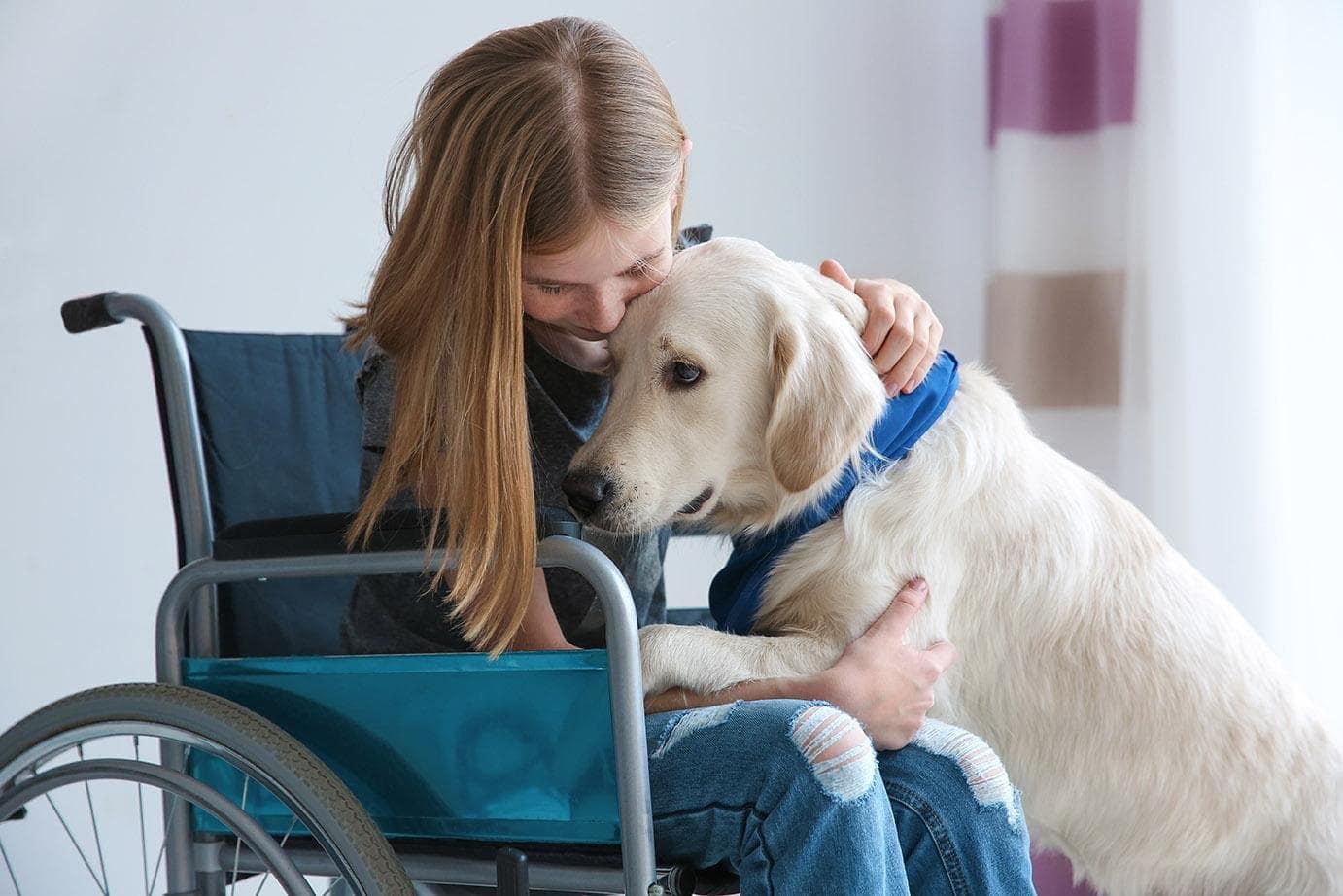
People have recognized the benefits of animal-assisted therapy for decades. Therapy dogs offer comfort and affection to people struggling with mental or physical health conditions in healthcare facilities or schools on a volunteer basis.
A therapy dog is not the same as a service dog, however, which is legally regarded as a working dog, or an emotional support dog. The latter are used to help their owner directly, whereas therapy dogs are volunteers with their owner and provide therapeutic benefits to others.
There’s no regulatory body for therapy dogs on a national or state level. They may be registered with the AKC as therapy dogs, but that doesn’t grant them special access or rights1. The same is true of the emotional support dog. Service dogs are legally protected, so they have different privileges.

What Is a Therapy Dog?
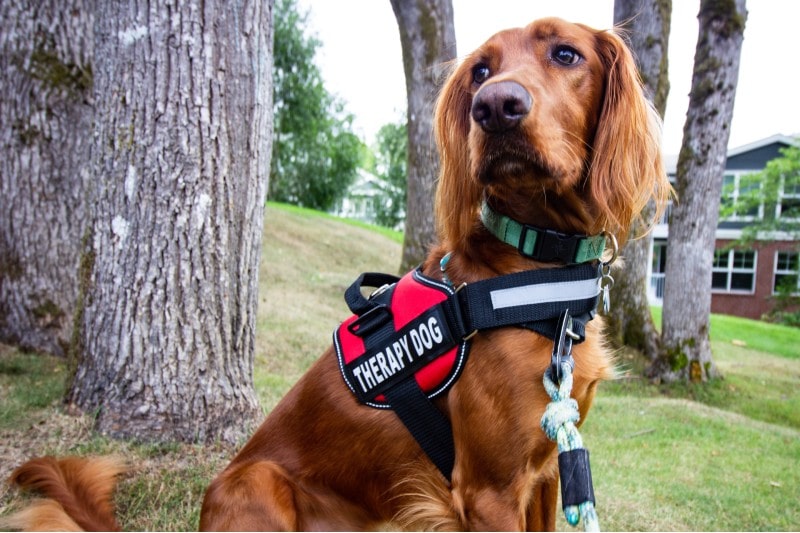
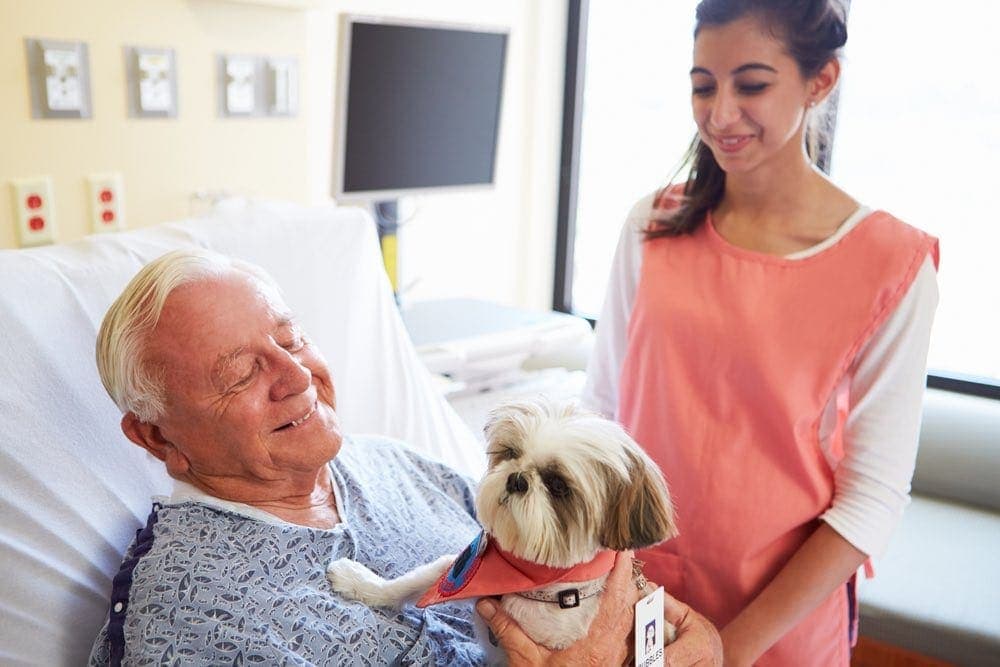
Therapy dogs are dogs that travel with their owners and volunteer in facilities like nursing homes, hospitals, and schools. They may be used to visit seniors in assisted living facilities, work with children with learning disabilities, or comfort people who are ill.
Spending time with a therapy dog has positive effects on many people, including reducing the heart rate and blood pressure, minimizing anxiety, and releasing feel-good hormones like endorphins and oxytocin.
How to Get a Therapy Dog: Step-by-Step Guide
The process to become a therapy dog differs by organization, but any dog certified by AKC-recognized organizations is eligible for the AKC Therapy Dog title. Here are two examples of how this can differ by organization:
Pet Partners
Pet Partners, a nationally recognized therapy dog organization, requires the following steps2:
- Gain six months of active visiting experience (at least six months).
- Register with Pet Partners.
- Attend AACR training and credentialing, which includes psychological first aid concepts and an introduction to the FEMA Incident Command System.
- Once your dog meets the criteria, you can apply for the AKC Therapy Dog title by filling out an application and paying the recording fee.
Dog B.O.N.E.S.
Dog B.O.N.E.S., another organization for therapy dogs of Massachusetts, has a different process:
- Register your dog with an international, national, or local therapy dog organization.
- Become a member of B.O.N.E.S. by attending the Introduction to Becoming a Therapy Dog Team Workshop or the Dog B.O.N.E.S. Workshop. The latter is available to dogs and owners who have completed the introductory class and demonstrate an understanding of the needs of the elderly, disabled, or young.
- If you have a puppy, you can attend P.U.P.S., or Practicing Until Properly Socialized: Therapy Dog In-Training. This program is designed for young pups preparing to become therapy dogs.
- After this training is complete, take the Reading Partner Certification Test to receive the Reading Partner Certification for therapy dog teams.
- Once you become an Active Therapy Dog team member, you can apply for the AKC Therapy Dog title and arrange therapeutic visits on your own.

Therapy Dog vs Service Dog vs Emotional Support Dog
The terms “therapy dog,” “service dog,” and “emotional support dog” are often used interchangeably, but there’s a difference in these dogs’ purposes and the legal rights surrounding them.
Therapy Dogs
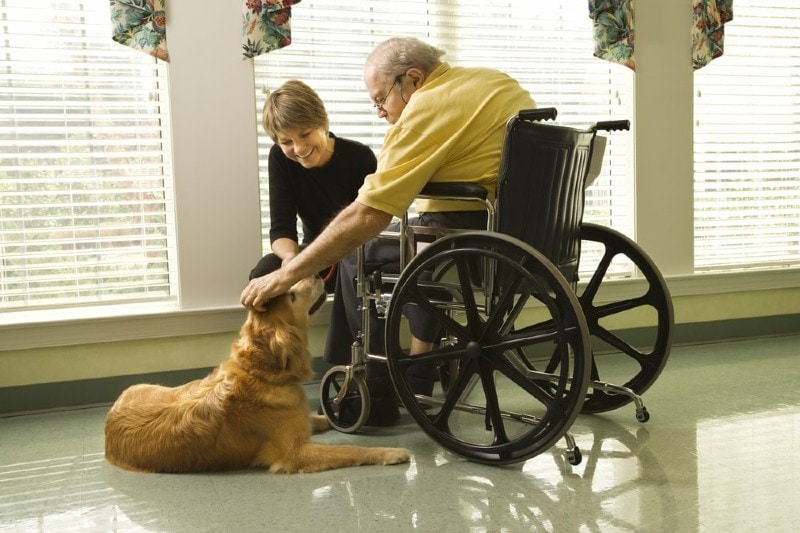
A therapy dog is trained to offer comfort and affection to other people besides the owner. They’re used in assisted-living facilities, nursing homes, hospitals, retirement homes, schools, and other settings.
Therapy dogs don’t require special training to earn their title, but they must be well-suited to the role. Not all dogs are good candidates, as therapy dogs should be affectionate and friendly with strangers, calm, and obedient. Dogs that are naturally aloof, fearful, aggressive, or people- and dog-selective are not a good choice for a therapy dog.
A therapy dog may be registered with a national therapy dog organization. The top choice is the AKC Therapy Dog program, which requires the dog to be certified by a recognized therapy dog organization. These dogs must be registered with the AKC (mixed-breed dogs are permitted) and must complete the required number of visits.
Service Dogs
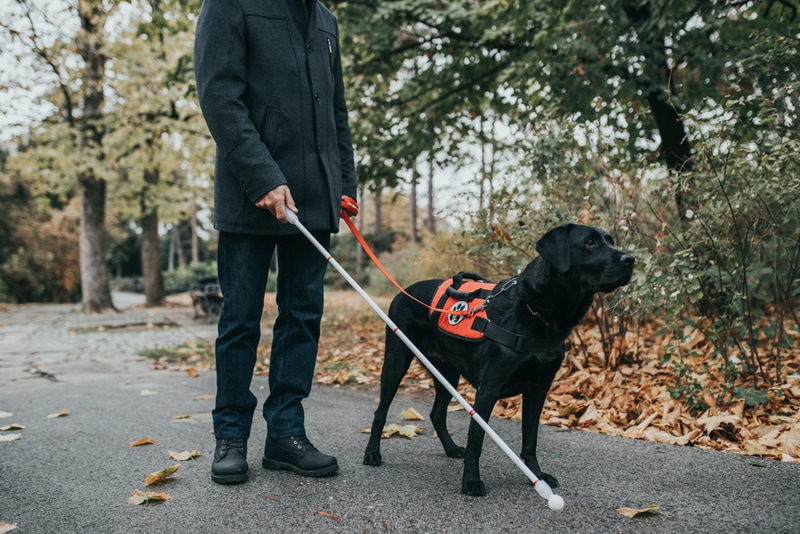
A service dog is a certified and trained animal that assists people with disabilities, such as seizure disorders, mental illnesses, and visual impairments. A seeing-eye dog is an example of a service dog.
Service dogs are separated into service dogs for physical impairments or mental disabilities, but they both have the same legal rights under the Americans with Disabilities Act (ADA) and local governments. In the eyes of the government, service animals are working animals, not pets, and have been specially trained to assist people with specific disabilities.
According to the law, service dogs must be on a leash, harnessed, or tethered, unless it interferes with the person or the dog’s ability to perform its duties. They must be under control and responsive to verbal or hand signals, as well as reliably house-trained.
An owner with a disability isn’t sufficient to categorize a companion dog as a service dog. These dogs must be able to complete tasks on behalf of their owner. Service dogs may require validation of training and a physician’s note to bring the dog into some public places.
Service dogs are permitted into businesses according to the ADA. It’s illegal for a business owner to ask about a disability, but they can ask if the dog is a service dog and what tasks it can perform. It’s illegal to fake a disability to gain access to an area with the dog.
Emotional Support Dogs
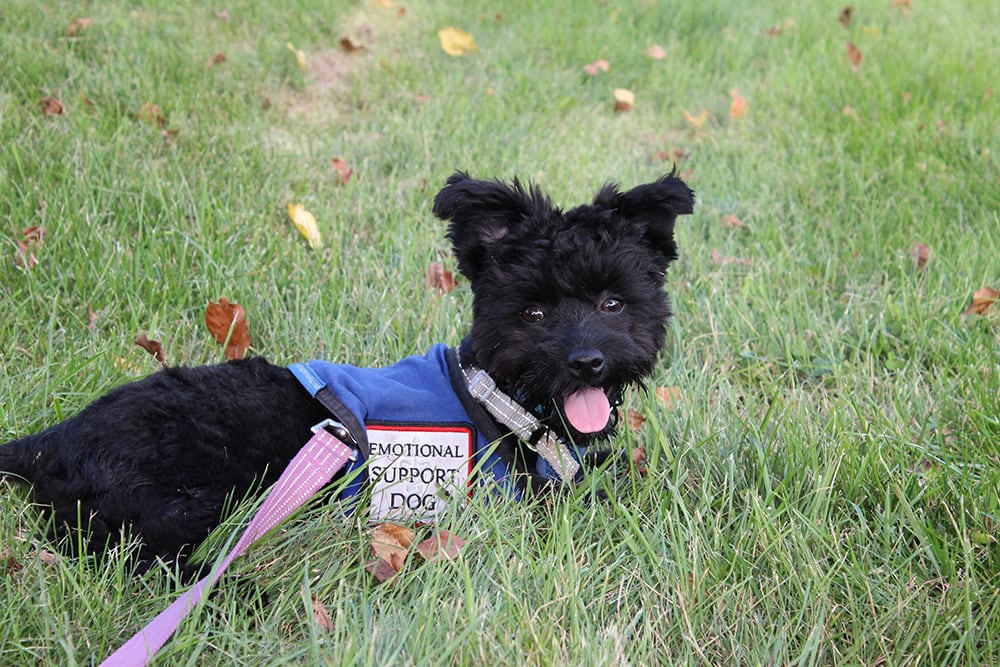
An emotional support dog, or emotional support animal (ESA), is a pet that provides its owner with companionship and therapeutic benefits. People who struggle with mental health disorders may use ESDs, but they don’t require special training.
Emotional support dogs are not regulated, so there aren’t many laws granting them special rights or access. They can’t access all public areas, but they may qualify for no-pet housing. In this case, you may need to present a physician’s note to indicate that you require an ESA, since some people have abused the use of emotional support dogs for special privileges.
Therapy Dog Organizations
Therapy dog organizations advance the work of therapy dogs and provide registration or certification. The AKC is the authority on therapy dogs in the US and recognizes several organizations on the national level.
Dogs that are registered or certified with an AKC-recognized organization are eligible for the AKC Therapy Dog title. The AKC does not certify therapy dogs directly but recognizes certification and training conducted by qualified therapy dog organizations.
There are several levels to the AKC Therapy Dog title, based on the number of visits your dog completes.
These titles are:
The visits must be documented, either on your own form or through the AKC, including the time, date, and location of the visit and the signature of a staff member. You can also use a certificate or wallet card from a certifying organization to indicate that the dog has made 50 or more visits, or a letter from the facility where the dog served as a therapy dog.
Each organization may have its own eligibility criteria in addition to the AKC criteria. There’s no regulatory body for therapy dogs.

Can Therapy Dogs Fly in the Cabin on Airlines?
Service dogs are still allowed by airlines, but therapy dogs are not. In the past, ESAs were allowed to fly in the cabin with adequate documentation.
Then, in 2020, the U.S. Department of Transportation (DOT) announced that ESAs will no longer qualify as a special assistance animal for air travel. Now, discretion is given to the airlines to set their own ESA policies. Many major airlines are following the DOT guidelines and only allow trained service animals.

Summary
Friendly and affectionate dogs are a great choice for a therapy dog that volunteers at schools and healthcare facilities to give people comfort and love. While therapy dogs don’t get the same legal privileges as service dogs, they may be registered with an AKC therapy dog organization for recognition of their public service.
Featured Image Credit to Africa Studio, Shutterstock
Get Hepper In Your Inbox


Pet care tips from our vets and experts, straight to your inbox.
You may opt-out at any time. View our Privacy Policy for more information.

Nicole is a lover of animals of all sizes but is especially fascinated with the feline variety. She’s the proud mom of Baby, a Burmese, and works every day so he can relax in the sunshine or by the fire. She’s always had a cat in her home and has spent countless days with others, observing behaviors and softening up even the grouchiest of the lot. Nicole wants to share her kitty expertise with you so you and your cat can live happy, healthy, and care-free.
Join the conversation
Ask a question, share your story, or send private feedback.